Planning, Search, and Sequential Decision Systems
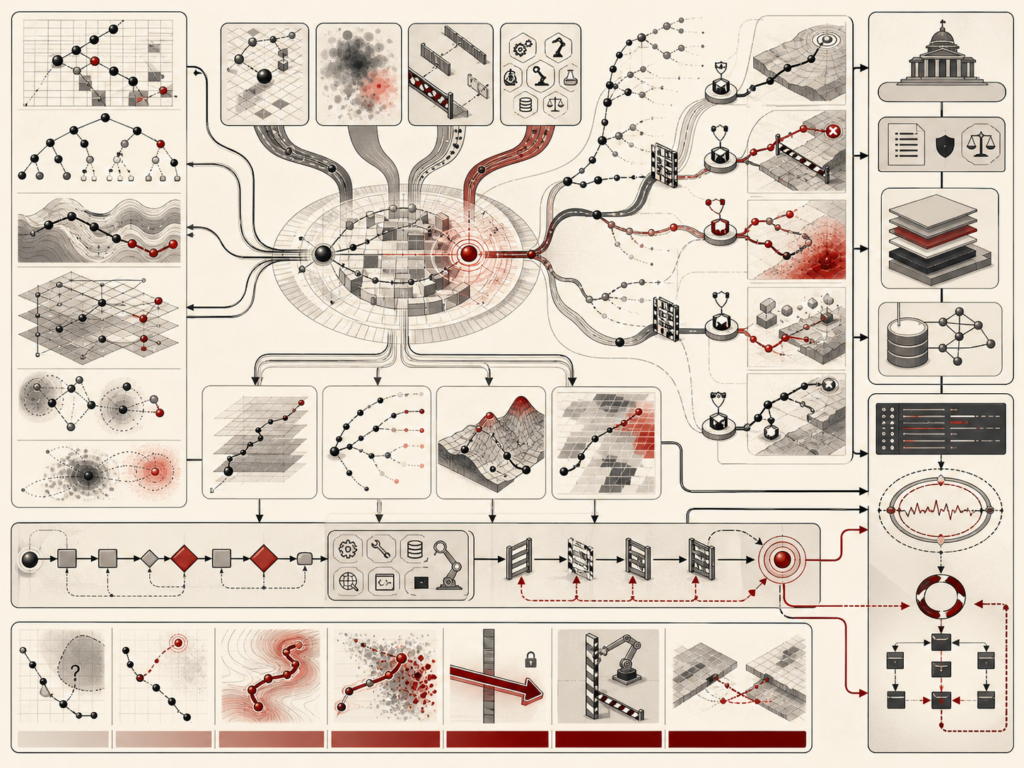
Planning, search, and sequential decision systems describe how artificial intelligence systems choose actions over time, not merely predictions at a single moment. A classifier estimates what something is, but a planner asks what should be done next, what sequence of actions may achieve a goal, what tradeoffs exist among alternatives, and how decisions should adapt as new evidence arrives. This article explains state-space search, heuristic search, A* search, dynamic programming, Bellman recursion, Markov decision processes, partially observable decision systems, reinforcement learning, tree search, Monte Carlo search, receding-horizon control, LLM agent planning, tool-use workflows, safety constraints, human approval gates, rollback, monitoring, and governance. It argues that planning should be treated as a governed systems capability because action sequences shape real-world consequences.