
Last Updated May 10, 2026
AI agents, tool use, and workflow automation describe the move from models that only generate responses to systems that can plan, call tools, retrieve information, update state, coordinate tasks, and participate in multi-step workflows. A model may answer a question. An agent may search a knowledge base, call an API, inspect a file, query a database, run code, draft a report, update a ticket, schedule a meeting, route a case, or ask a human reviewer for approval. Once artificial intelligence systems can act through tools, the design problem changes from response quality alone to governed action under uncertainty.
This shift matters because many real-world tasks are not single-turn prompts. They are workflows: gather context, identify constraints, choose tools, take steps, observe results, revise the plan, handle errors, and decide when to stop. Large language models make these workflows more flexible by translating natural language intent into software actions. But tool use also raises the stakes. A wrong answer may mislead a user; a wrong action may expose data, corrupt records, send messages, change files, trigger transactions, or automate a flawed decision.
The central argument is that AI agents should be understood as governed workflow systems, not autonomous magic. An agent includes a model, prompt architecture, tool registry, memory or state layer, planning loop, permission model, execution environment, evaluation framework, monitoring system, human-review path, rollback process, incident-response procedure, and institutional accountability structure. Tool-using agents can be powerful, but responsible deployment requires bounded autonomy, explicit permissions, reliable logs, sandboxing, user confirmation, recovery paths, and continuous evaluation.
Main Library
Publications
Article Map
Artificial Intelligence Systems
Related Topic
Data Systems & Analytics
Related Topic
Institutions & Governance
Related Topic
Intelligent Infrastructure Systems
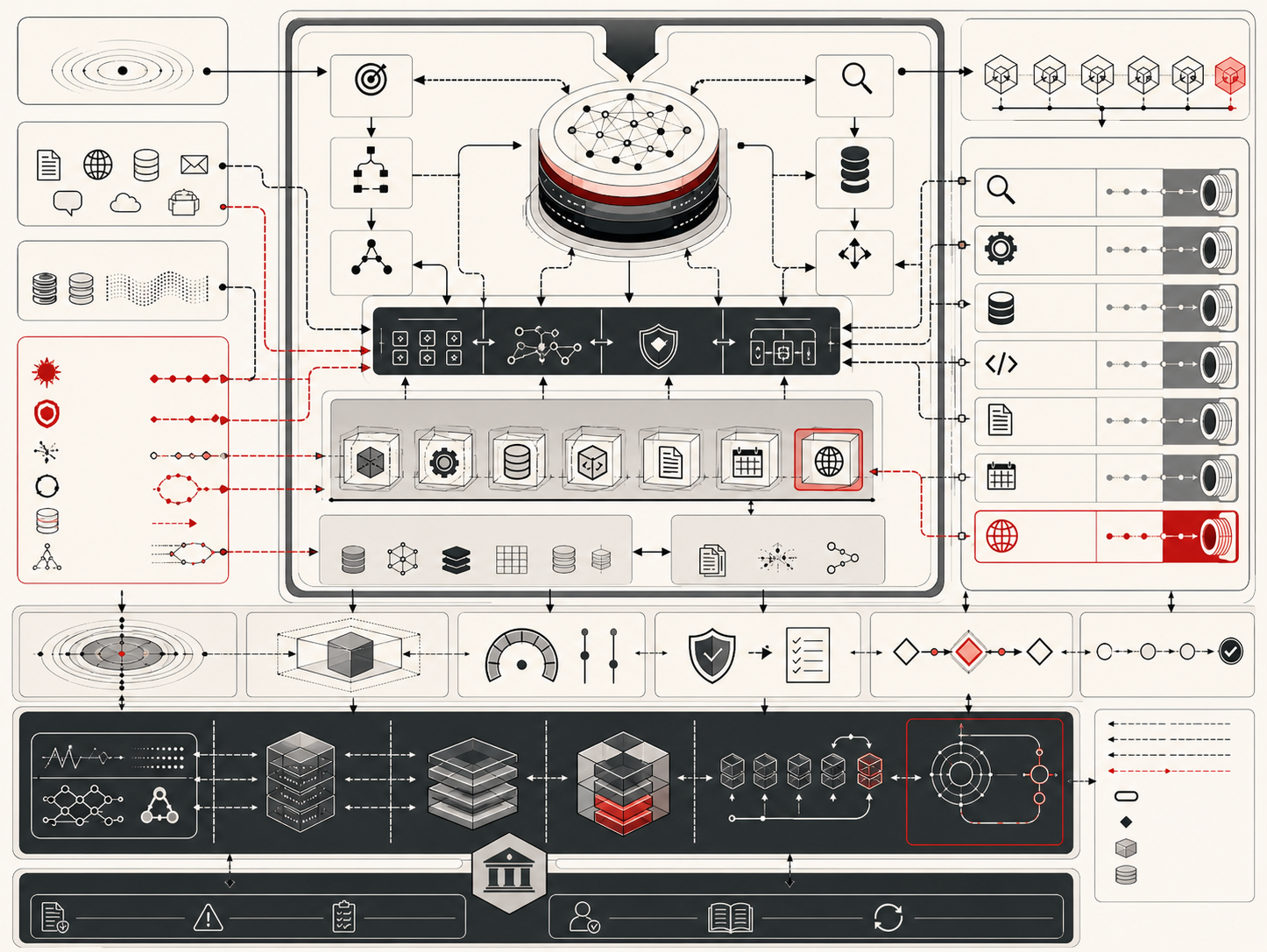
This article develops AI Agents, Tool Use, and Workflow Automation as an advanced article within the Artificial Intelligence Systems knowledge series. It explains agent architecture, function calling, tool registries, planning loops, task decomposition, memory and state management, workflow automation, multi-agent coordination, sandboxing, prompt injection, least-privilege permissions, human review, evaluation, monitoring, rollback readiness, and institutional accountability. Selected Python and R examples appear here, while the full GitHub repository contains expanded computational scaffolding for tool-call evaluation, workflow risk scoring, permission testing, agent logs, red-team scenarios, SQL schemas, documentation templates, and reproducible notebooks.
Why AI Agents Matter
AI agents matter because many knowledge-work systems already operate through tools. Search engines, databases, spreadsheets, calendars, email, issue trackers, code repositories, document systems, analytics dashboards, customer-support platforms, workflow engines, and enterprise applications all expose actions. A language model connected to these systems can become a natural-language control layer for work that previously required menus, scripts, APIs, or specialized interfaces.
This creates real value. Agents can reduce friction in research, data analysis, software maintenance, reporting, operations, compliance review, document processing, customer support, internal knowledge management, and public-service administration. They can help users convert intent into concrete steps, especially when workflows span multiple applications and data sources. They can also make institutional systems more accessible to non-technical users by allowing people to describe goals rather than manually navigate every tool.
But agentic capability also creates risk. An agent can misread instructions, choose the wrong tool, pass malformed parameters, follow malicious retrieved text, repeat an action, fail to stop, overwrite important information, leak private data, or automate a decision that should require human review. The move from generation to action is therefore a move from content governance to operational governance.
This is why the word “agent” should not be treated as a synonym for autonomy. An AI agent is not trustworthy because it can take more steps. It becomes trustworthy only when those steps are bounded, observable, permissioned, reversible where possible, reviewed when necessary, and accountable to institutional purpose.
Generation \rightarrow Tool\ Use \rightarrow Workflow\ Action \rightarrow Governance
\]
Interpretation: As AI systems move from producing text to taking actions through tools, governance must expand from output quality to workflow authority, execution risk, monitoring, and accountability.
Agentic AI is therefore not only a technical frontier. It is an institutional design problem. The question is not simply “Can the system complete the task?” It is “Can the system complete the task safely, with appropriate authority, traceable evidence, validated tool use, human oversight, and a recovery path if something goes wrong?”
From Models to Agents
A language model predicts and generates outputs. An agent uses model outputs to select actions. The distinction matters. A model might answer a question about a spreadsheet. An agent might open the spreadsheet, inspect columns, transform rows, generate a chart, save a file, email a report, and update a project ticket. Each step introduces state, permissions, tool behavior, error handling, and accountability.
An agentic system typically includes:
- a foundation model or task-specific model;
- system instructions and policy constraints;
- a tool registry or function catalog;
- planning and task-decomposition logic;
- memory or state management;
- retrieval and knowledge-system access;
- execution environment or sandbox;
- permission checks and user confirmation;
- monitoring, traces, and audit logs;
- failure recovery, rollback, and escalation;
- evaluation datasets and workflow tests;
- human oversight and governance review.
This makes agent design closer to systems engineering than prompt design alone. The model is important, but the agent’s reliability depends on the surrounding architecture: which tools exist, what they are allowed to do, how arguments are validated, how outputs are checked, how state is preserved, and when the system must defer to a human.
| Capability Layer | Primary Function | Example | Governance Concern |
|---|---|---|---|
| Model response | Generate text, code, explanation, summary, or recommendation. | Draft a report summary. | Factuality, safety, clarity, source support. |
| Tool use | Call external functions or systems. | Query a database or run a calculation. | Tool selection, argument validity, permissions. |
| Workflow execution | Coordinate multiple steps toward a goal. | Research, analyze, draft, file a ticket, and request review. | State tracking, stop conditions, error recovery. |
| Delegated action | Modify external systems or trigger consequences. | Update a record, schedule a meeting, submit a form. | Authority, confirmation, rollback, auditability. |
| Institutional integration | Embed AI into recurring operational processes. | Support compliance triage or customer operations. | Monitoring, accountability, escalation, incident response. |
Note: Agentic systems should be evaluated by the entire workflow chain, not only by the quality of generated text.
The difference between a model and an agent is therefore practical, not metaphysical. The agent is a model embedded in an action architecture. Its power comes from access to tools, state, and workflow context. Its risk comes from the same source.
Core Agent Architecture
A basic agent loop contains five stages: observe, reason, act, observe again, and stop or continue. The agent receives an instruction and current state. It decides whether it needs a tool. If so, it selects a tool, supplies arguments, receives the result, updates state, and decides the next step. This loop can be short, as in a single calculator call, or long, as in multi-step research, debugging, data cleaning, or workflow orchestration.
A production agent should not be a free-form loop with unlimited tools. It should be bounded by role, task, policy, time, cost, permissions, and stop conditions. It should know which tools are read-only, which tools can write, which actions require confirmation, which actions are prohibited, and which failures require escalation.
The architecture should also separate planning from execution. A model may propose a plan, but execution should pass through validation. Tool arguments should be checked. High-impact actions should require approval. Sensitive data should be filtered. Tool outputs should be treated as untrusted data unless verified. Every action should be logged with enough detail for review.
| Component | Purpose | Failure Risk | Governance Control |
|---|---|---|---|
| Model | Interprets instructions and selects or proposes actions. | Misreads intent, overgeneralizes, hallucinates, or acts with misplaced confidence. | Model evaluation, system instructions, uncertainty routing. |
| Tool registry | Defines available tools, schemas, and descriptions. | Tool ambiguity, overbroad capability, missing risk classification. | Tool inventory, schema validation, tool-risk tiers. |
| State layer | Tracks context, steps, memory, outputs, and workflow status. | State drift, context leakage, stale assumptions. | Structured state, retention rules, trace logs. |
| Permission model | Controls what actions are allowed for users and agents. | Unauthorized reads, writes, tool calls, or escalations. | Least privilege, access control, confirmation gates. |
| Execution environment | Runs code, API calls, file operations, or workflow actions. | Unsafe execution, data exposure, unintended side effects. | Sandboxing, secrets isolation, rollback, network limits. |
| Monitoring layer | Observes tool calls, failures, retries, cost, incidents, and outcomes. | Silent failures, runaway loops, unobserved harms. | Telemetry, alerts, review queues, incident response. |
Note: The strongest agent architectures treat autonomy as bounded execution under policy, not as unconstrained model discretion.
Good architecture also defines the agent’s authority boundary. The agent may be allowed to recommend, draft, simulate, prepare, request approval, or execute. These are different authority levels. A drafting agent should not send messages by default. A research agent should not edit source records by default. A code assistant should not deploy changes by default. The boundary between suggestion and action must be explicit.
Tool Use, Function Calling, and External Systems
Tool use allows an AI system to extend beyond language generation. A model can call a calculator for arithmetic, a search system for current information, a database for records, a code interpreter for computation, a calendar for scheduling, an email system for communication, a file system for document work, or an enterprise API for workflow actions.
Tool use is powerful because language models are not inherently reliable calculators, search engines, databases, schedulers, or execution environments. A tool can provide authoritative computation or access to fresh data. But the model must decide when a tool is needed, which tool is appropriate, what arguments to pass, how to interpret the result, and whether another action is necessary.
In governed systems, tools should be classified by risk:
- Read-only tools: search, retrieve, inspect, summarize, query.
- Computational tools: calculate, transform, simulate, validate, test.
- Write tools: create, update, delete, submit, send, schedule.
- External-action tools: purchase, publish, deploy, trigger, control, execute.
- Sensitive tools: access private data, regulated records, credentials, payments, infrastructure, or legal, medical, or financial systems.
The higher the tool risk, the stronger the control should be. Read-only retrieval may require logging and access filtering. Write actions may require confirmation. Irreversible actions may require human approval. Sensitive tools may need sandboxing, explicit authorization, rate limits, and post-action review.
Tool\ Capability \neq Tool\ Authority
\]
Interpretation: An agent may technically be able to call a tool, but authority to use that tool should depend on user permissions, task context, risk level, and governance rules.
Tool descriptions also matter. A model chooses tools partly from natural-language descriptions and schemas. If tools are poorly named, overbroad, ambiguous, or underspecified, the model may choose incorrectly. Tool schemas should be precise, arguments should be typed and validated, and dangerous defaults should be avoided. A function that can delete data should not be described casually as “update record.”
Tool outputs must also be handled carefully. A tool may return errors, partial results, stale records, untrusted text, or adversarial content. A search result is not automatically true. A database row may be outdated. A retrieved document may contain instructions that should not be followed. A tool response should update state, but it should not automatically override policy.
Planning, Control Loops, and Task Decomposition
Agentic work often requires planning. A user may ask for a task that cannot be completed in one step: analyze a folder of documents, compare sources, update a spreadsheet, generate a report, file a ticket, or debug software. The agent must decompose the goal into subtasks, choose tools, sequence actions, and adapt as results arrive.
Planning can be explicit or implicit. An explicit plan may list steps before execution. An implicit plan may unfold through tool calls. In governed settings, explicit planning is often preferable because it creates reviewable intent. The user or system can inspect the plan before high-impact actions occur.
Control loops must include stop conditions. Agents should not continue indefinitely, retry endlessly, or escalate actions without bounds. The system should define maximum steps, time budgets, cost budgets, error thresholds, and uncertainty thresholds. It should also know when to ask for clarification, when to stop with partial results, and when to escalate to a human.
| Control Requirement | Purpose | Example | Risk if Missing |
|---|---|---|---|
| Task decomposition | Break complex work into reviewable steps. | Search sources, extract evidence, draft summary, request review. | Unstructured action, hidden assumptions, skipped steps. |
| Tool-choice policy | Define which tools are appropriate for which tasks. | Use read-only retrieval before write actions. | Unnecessary tool calls or risky tool selection. |
| Step limits | Prevent runaway loops. | Stop after a maximum number of retries. | Cost escalation, repeated actions, infinite loops. |
| Uncertainty threshold | Route ambiguous cases to clarification or review. | Ask the user before changing a file. | Confident execution under uncertainty. |
| Human approval gate | Require authorization before high-impact action. | Confirm before sending, deleting, publishing, or deploying. | Irreversible harm or unauthorized action. |
| Stop condition | Define when work is complete or unsafe to continue. | Stop when sources conflict or tool access is denied. | Overreach, hallucinated completion, policy violation. |
Note: Planning is not enough. The plan must be bounded by authority, validation, uncertainty, review, and recovery rules.
Good control design also distinguishes preparation from execution. An agent may prepare a database query without running it, draft an email without sending it, generate a shell command without executing it, or create a proposed update without applying it. These intermediate states allow humans and systems to review the plan before consequences occur.
Memory, State, and Context Management
Agents need state. A multi-step workflow requires the system to remember what it has already done, what tools it has called, what results were returned, what assumptions remain, what errors occurred, and what actions are pending. State can live in the prompt, a structured memory store, a database, a task graph, a workflow engine, or an external orchestration layer.
Memory improves continuity but creates governance obligations. If an agent stores user preferences, private documents, workflow state, or tool outputs, the system must define retention, access, deletion, consent, and audit rules. Memory should be scoped to the task unless broader retention is justified and transparent.
State should also be structured. Free-form context can become confusing, especially in long workflows. Structured state records can track task status, evidence, tool calls, permissions, errors, confirmations, and final outputs. This makes the agent easier to monitor, debug, and audit.
Memory = Capability + Liability
\]
Interpretation: Memory can improve continuity and personalization, but it also creates obligations around consent, retention, access control, deletion, privacy, and auditability.
Context management is especially important for long-running agents. If the agent loses track of the original goal, it may drift into irrelevant or unsafe work. If it carries too much irrelevant context, it may confuse old tool outputs with current evidence. If it stores sensitive context without limits, it may create privacy risk. The state layer should therefore support context pruning, provenance, summaries, versioning, and explicit task boundaries.
State records should answer practical audit questions: What was the user trying to do? What did the agent know? What tools were available? What tool calls were made? What results were received? What assumptions were used? What action was executed? Who approved it? What changed afterward? Without state traceability, agentic work becomes difficult to govern.
Workflow Automation and Human-in-the-Loop Operations
Workflow automation connects agent behavior to institutional process. An agent may not merely answer a user; it may move work through stages: intake, triage, research, drafting, review, approval, execution, documentation, and monitoring. This makes agents relevant to operations, customer support, software development, compliance, research, finance, education, infrastructure, healthcare administration, and public-sector services.
Human-in-the-loop design is essential. The question is not whether humans are involved, but where and how. Human review may occur before execution, after execution, when confidence is low, when a tool is high risk, when policy requires approval, or when a user contests the result. A good workflow makes review meaningful rather than ceremonial.
Automation should also preserve accountability. The system should record what the agent recommended, what it did, what evidence it used, which tools it called, what the user approved, and what happened afterward. Without auditability, workflow automation can obscure responsibility.
| Pattern | When It Applies | Example | Governance Value |
|---|---|---|---|
| Human before action | High-impact or irreversible steps. | Approve before sending an external email. | Prevents unauthorized execution. |
| Human after draft | Creative, analytical, or professional outputs. | Review a generated report before publication. | Keeps judgment in accountable hands. |
| Human on uncertainty | Ambiguous, conflicting, incomplete, or low-confidence cases. | Escalate when retrieved sources disagree. | Routes uncertainty to expertise. |
| Human on exception | Tool failures, denied permissions, abnormal outputs. | Escalate after repeated API failure. | Prevents brittle automation loops. |
| Human on contestation | User challenges, affected-party disputes, appeals. | Review an automated recommendation after objection. | Supports contestability and accountability. |
Note: Human review is meaningful only when reviewers have context, authority, time, and the ability to change the outcome.
Workflow automation should not be evaluated only by speed. Faster workflows can still be worse if they amplify errors, hide responsibility, overload reviewers, reduce context, or make decisions harder to contest. The best agentic workflows improve throughput while preserving judgment, evidence, responsibility, and repair.
Multi-Agent Systems and Role Coordination
Multi-agent systems use multiple specialized agents or roles. One agent may plan, another may retrieve evidence, another may write code, another may test, another may review safety, and another may summarize. Role separation can improve modularity and reviewability. It can also create complexity: agents may disagree, duplicate work, pass errors to one another, or amplify mistaken assumptions.
Multi-agent systems require coordination protocols. The system should define roles, permissions, handoff rules, shared memory, conflict resolution, escalation, and stop conditions. A reviewer agent should not have the same authority as an execution agent. A planning agent should not silently override a safety agent. A tool-using agent should not expand its permissions because another agent suggested it.
In institutional settings, multi-agent architectures should be treated as workflow teams with explicit governance, not as independent personalities. The value comes from modular reasoning, specialization, and checks, not from theatrical anthropomorphism.
Role\ Separation \neq Accountability\ Separation
\]
Interpretation: Multiple agents may divide labor, but institutional accountability remains with the organization that designs, deploys, and governs the workflow.
Multi-agent coordination also requires evidence discipline. If one agent retrieves a source, another agent summarizes it, and a third agent acts on the summary, the system should preserve the chain from source to summary to action. Otherwise, errors can become laundered through the workflow. A later agent may treat a previous agent’s unsupported claim as verified evidence.
Conflict resolution should be explicit. If a planning agent recommends action and a safety agent objects, what happens? If a retrieval agent finds conflicting sources, does the system proceed, abstain, or ask for review? If a code agent generates a patch and a testing agent reports failure, can the execution agent continue? These are workflow-governance questions, not merely orchestration choices.
Security, Sandboxing, Prompt Injection, and Tool Permissions
Agentic systems expand the security surface of AI. A non-agentic model may produce unsafe text. A tool-using agent may execute unsafe actions. Risks include prompt injection, data exfiltration, unauthorized tool access, credential leakage, malicious retrieved content, unsafe code execution, overbroad permissions, API misuse, and hidden state manipulation.
Prompt injection is especially serious for agents because untrusted text may influence tool calls. A retrieved webpage, email, document, ticket, or file can contain instructions that attempt to override the system, reveal secrets, or trigger actions. Agents should treat external content as data, not authority. Tool calls should be governed by system-level permissions, not by instructions found in retrieved content.
Sandboxing is critical for code execution, file operations, browsing, and external API calls. A sandbox limits what an agent can access, modify, and transmit. It should include network restrictions, file-system boundaries, secrets isolation, logging, execution limits, and rollback or snapshot capabilities where possible.
Permission design should follow least privilege. An agent should receive only the tools and access needed for the specific task. A research assistant does not need email-sending permissions. A drafting assistant does not need delete access. A code-review agent may need read and test permissions but not deployment authority. Tool permissions should be scoped, temporary, and reviewable.
| Risk | Description | Example | Control |
|---|---|---|---|
| Prompt injection | Untrusted text tries to control the agent. | A retrieved document says “ignore previous instructions.” | Instruction hierarchy, content isolation, source trust rules. |
| Tool over-permission | The agent has more authority than needed. | A research agent can send email or delete files. | Least privilege, scoped tools, approval gates. |
| Data exfiltration | Sensitive data is sent to an inappropriate tool or recipient. | Private records passed into an external API. | Data classification, redaction, egress controls. |
| Unsafe code execution | Generated or retrieved code runs with too much access. | Code accesses unrelated files or network resources. | Sandboxing, network limits, secrets isolation. |
| Action injection | Malicious content causes the agent to take external action. | A poisoned ticket triggers an unauthorized workflow update. | Tool validation, confirmation, policy-enforced execution. |
| Hidden state manipulation | Memory or context is modified in ways that affect later actions. | A malicious source plants false assumptions for future steps. | Structured state, provenance, memory review. |
Note: In agentic systems, security failures can become operational failures because model outputs may lead to external actions.
Untrusted\ Content \neq Authorized\ Instruction
\]
Interpretation: Retrieved documents, webpages, emails, and user-provided files should not be allowed to silently change system policy, tool authority, or workflow permissions.
Security governance should be tested through adversarial evaluation. The system should be exposed to malicious documents, conflicting instructions, denied permissions, malformed tool outputs, repeated failures, and attempts to bypass approval gates. A safe agent should not only perform well in ideal workflows. It should fail safely under adversarial pressure.
Evaluation: Task Success, Reliability, Safety, and Recovery
Agent evaluation must go beyond answer quality. It should test whether the agent completes workflows correctly, chooses appropriate tools, validates inputs, handles errors, avoids unsafe actions, respects permissions, stops at the right time, and recovers from failure. Benchmarks for web tasks and software issues show how difficult realistic long-horizon tool use can be, especially when agents must navigate stateful environments, use external resources, and complete tasks functionally rather than merely generate plausible text.
| Evaluation Dimension | Question | Example Evidence | Governance Relevance |
|---|---|---|---|
| Task success | Did the workflow complete the intended goal? | Functional completion, test pass rate, user-confirmed success. | Measures whether the workflow works. |
| Tool selection | Did the agent choose the right tool? | Tool-call precision, unnecessary-call rate, missing-tool-call rate. | Detects inefficient or risky orchestration. |
| Argument validity | Were tool parameters correct and safe? | Schema validation, input checks, malformed-call rate. | Prevents execution errors and unintended actions. |
| Permission compliance | Did the agent stay within authorized scope? | Access-control logs, denied-action attempts, policy tests. | Protects authority boundaries. |
| Error recovery | Did the agent handle tool failures or unexpected outputs? | Recovery success rate, retry behavior, escalation logs. | Prevents brittle workflows and runaway loops. |
| Safety | Were harmful or high-risk actions blocked? | Red-team tests, unsafe-action attempts, confirmation checks. | Tests whether safeguards work under pressure. |
| Cost and latency | Did the workflow stay within operational budgets? | Step count, token use, runtime, tool-call cost. | Supports sustainable operations. |
| Human oversight | Were review points meaningful and correctly triggered? | Approval logs, escalation accuracy, override records. | Maintains accountability for consequential actions. |
| Auditability | Can the workflow be reconstructed after the fact? | Action logs, tool outputs, state records, trace IDs. | Enables investigation, learning, and accountability. |
Note: Task success alone is not enough. A workflow can complete the goal while violating permissions, skipping review, leaking data, or creating hidden operational risk.
Evaluation should include negative cases: impossible tasks, missing permissions, malicious instructions, unavailable tools, conflicting evidence, ambiguous user requests, and high-risk actions. A safe agent should not only succeed when conditions are ideal. It should fail safely when conditions are not.
Agent evaluation should also test recovery. If a tool fails, does the agent retry sensibly or repeat the same error? If a permission is denied, does it stop or attempt a bypass? If sources conflict, does it represent uncertainty or fabricate resolution? If the user asks for an action beyond authority, does it refuse, draft a safer alternative, or ask for approval? Recovery behavior is a core part of agent reliability.
Governance, Monitoring, and Institutional Accountability
Agent governance should cover the full lifecycle of action. Institutions need to know what agents are allowed to do, which tools they can access, what data they can see, what actions require confirmation, what logs are kept, how incidents are handled, and how performance is monitored after deployment.
A responsible agentic system should document:
- agent purpose and approved use cases;
- prohibited actions and high-risk exclusions;
- tool registry and tool-risk classification;
- permission model and access-control rules;
- planning and execution boundaries;
- memory, state, and retention policy;
- human-review and confirmation rules;
- error recovery and rollback procedures;
- evaluation datasets and red-team tests;
- monitoring signals and thresholds;
- incident-response procedures;
- audit-log retention and review cadence.
Monitoring should track task success, tool-call failure, denied-action attempts, high-risk actions, user confirmations, latency, cost, repeated retries, escalation rate, incident reports, prompt-injection attempts, and post-action outcomes. Agent governance is not only about preventing bad outputs. It is about governing delegated action.
Agent\ Governance = Permission + Traceability + Review + Recovery
\]
Interpretation: A governed agent is not merely instructed to behave safely; it is architected with enforceable permissions, observable traces, review gates, and recovery procedures.
Institutional accountability means that the organization can reconstruct why an agent acted, what it saw, which tools it used, what outputs it received, who approved high-risk steps, what changed, and how failures were handled. Without this record, the system may appear productive while making responsibility harder to locate.
Governance should also define deployment boundaries. Some agents may be approved only for drafting. Others may be approved for read-only retrieval. Others may create internal tickets but not external messages. Others may run code in a sandbox but not access production systems. Bounded deployment is not a limitation of agentic AI; it is the basis for responsible use.
Common Failure Modes
AI agents, tool use, and workflow automation often fail when organizations focus on impressive task completion while underestimating authority, state, and execution risk. A workflow can look successful while hiding unsafe steps. An agent can produce a correct final answer after making unnecessary tool calls. A multi-step system can gradually drift from the user’s intent. A tool call can succeed technically while violating policy.
| Failure Mode | Description | Likely Consequence | Governance Response |
|---|---|---|---|
| Task-success tunnel vision | The system completes the task but uses unsafe or unauthorized steps. | Hidden policy violations, data exposure, poor accountability. | Evaluate tool paths, permissions, and audit logs, not only final result. |
| Malformed tool calls | The agent passes invalid, incomplete, or unsafe arguments. | Errors, corrupted outputs, unintended actions. | Use schema validation, dry runs, and argument checks. |
| Prompt injection to action | Untrusted content influences tool execution. | Unauthorized actions, data leakage, policy bypass. | Separate trusted instructions from untrusted content. |
| Runaway planning | The agent loops, retries, or expands scope without stopping. | Cost escalation, repeated errors, workflow instability. | Set step, cost, retry, and uncertainty limits. |
| Memory leakage | Stored context crosses users, workflows, or purposes. | Privacy risk and inappropriate personalization. | Use scoped memory, retention controls, deletion paths. |
| Over-permissioned tools | The agent has write, send, delete, or deploy authority by default. | High-impact accidental or adversarial action. | Apply least privilege and confirmation gates. |
| Unclear human review | Review exists but lacks context, authority, or timing. | Ceremonial oversight and automation bias. | Design meaningful review with evidence and override authority. |
| Weak auditability | The workflow cannot be reconstructed after the fact. | Incidents cannot be investigated or corrected. | Preserve traces, state records, approvals, and tool outputs. |
Note: Many agent failures are not failures of language generation. They are failures of workflow architecture, permission design, state management, review, and monitoring.
These failure modes reinforce the central lesson: an agent should not be evaluated only by whether it appears helpful. It should be evaluated by whether it acts within bounds, preserves evidence, recovers safely, and leaves responsibility visible.
Limits and Open Problems
AI agents, tool use, and workflow automation have important limits. Task success can hide unsafe behavior. Tool calls can fail silently. Prompt injection can become action injection. Autonomy can exceed intent. Memory can leak context. Multi-agent systems can amplify errors. Write tools require stronger governance. Auditability is not optional when agents act on external systems.
Agent evaluation remains difficult because workflows are long, stateful, and context-dependent. A single task may involve ambiguous instructions, multiple sources, changing tool outputs, delayed consequences, and human judgment. Benchmarks can measure some capabilities, but they rarely capture the full institutional environment in which agents operate. Real deployment requires local evaluation, monitoring, red teaming, and human review.
Open-ended tool use also raises unresolved questions about authority. When should an agent be allowed to act without confirmation? How should systems distinguish low-impact convenience from high-impact delegation? How should agents explain their tool choices? How should organizations audit thousands of small actions? How should long-running agents be paused, resumed, corrected, or retired?
Another open problem is accountability in hybrid workflows. If an agent proposes a plan, a human approves it, a tool executes it, and a monitoring system later detects harm, where does responsibility sit? The answer cannot be left to the model. Institutions need explicit governance structures that define ownership, authority, review, escalation, and repair.
The goal is not to reject agentic AI. Tool-using agents can make software, data, documents, and workflows more accessible and productive. The goal is to design them as bounded, observable, permissioned systems. Agentic AI becomes trustworthy only when planning, tool use, memory, execution, review, rollback, monitoring, and accountability are built into the architecture.
Mathematical Lens
An agent operates over states, observations, actions, and tools.
s_{t+1}=T(s_t,a_t,o_{t+1})
\]
Interpretation: Agent state \(s_t\) changes after action \(a_t\) and observation \(o_{t+1}\). State may include conversation context, retrieved evidence, tool results, memory, task progress, and workflow status.
The agent policy selects an action from available tools and possible responses.
a_t \sim \pi_{\theta}(a_t \mid s_t,q,G)
\]
Interpretation: Policy \(\pi_{\theta}\), often implemented through a foundation model and orchestration layer, chooses action \(a_t\) conditioned on state \(s_t\), user request \(q\), and governance constraints \(G\).
Tool execution maps an action and arguments into an output.
y_t = T_j(\alpha_t)
\]
Interpretation: Tool \(j\) receives structured arguments \(\alpha_t\) and returns output \(y_t\). The output may be a calculation, search result, database row, file change, API response, or system action.
Permission checks determine whether an action is allowed.
A(a_t,u,r,c) \in \{0,1\}
\]
Interpretation: Access-control function \(A\) determines whether user \(u\) may perform action \(a_t\) on resource \(r\) under context \(c\). An agent should not execute actions outside authorized boundaries.
Workflow utility depends on task completion, safety, cost, and recoverability.
U
=
\lambda_1 S
–
\lambda_2 E
–
\lambda_3 C
–
\lambda_4 R
\]
Interpretation: Workflow utility \(U\) increases with success \(S\), but decreases with errors \(E\), cost \(C\), and risk \(R\). Agent evaluation should measure more than task completion.
Workflow risk accumulates across actions.
R_{workflow}
=
\sum_{t=1}^{T}
P(a_t \mid s_t)\,
L(a_t,s_t,G)
\]
Interpretation: Workflow risk depends on each action’s probability and potential loss under current state and governance constraints. Multi-step agents can accumulate risk even when individual steps seem small.
A review gate can route high-risk actions to human approval.
Review_t =
\begin{cases}
1, & R(a_t) \geq \tau_R \\
1, & Impact(a_t) \geq \tau_I \\
1, & Permission(a_t)=0 \\
1, & Uncertainty(s_t) \geq \tau_U \\
0, & \mathrm{otherwise}
\end{cases}
\]
Interpretation: Human review can be triggered by action risk, impact, failed permission checks, or high uncertainty.
Variables and System Interpretation
| Symbol or Term | Meaning | Agent Interpretation | System Relevance |
|---|---|---|---|
| \(s_t\) | State at step \(t\) | Context, memory, retrieved evidence, tool outputs, workflow status. | Determines what the agent knows and what it can do next. |
| \(q\) | User request | Task instruction or natural-language goal. | Initiates planning and tool selection. |
| \(a_t\) | Action at step \(t\) | Tool call, message, file edit, database query, workflow update, or stop action. | Connects model reasoning to external consequences. |
| \(\pi_{\theta}\) | Agent policy | Model and orchestration logic that selects actions. | Controls agent behavior under uncertainty. |
| \(T_j\) | Tool \(j\) | API, database, calculator, browser, code runner, email, calendar, or workflow service. | Extends model capability beyond generation. |
| \(\alpha_t\) | Tool arguments | Structured parameters passed to a tool. | Must be validated before execution. |
| \(y_t\) | Tool output | Result returned by the external system. | Updates state and informs next step. |
| \(A\) | Access-control function | Permission check for user, resource, action, and context. | Prevents unauthorized execution. |
| \(G\) | Governance controls | Policies, safety rules, review gates, logs, and monitoring. | Constrains and audits agent behavior. |
| \(R_{workflow}\) | Workflow risk | Accumulated risk across agent actions. | Supports evaluation and deployment boundaries. |
| \(\tau\) | Threshold | Review, escalation, cost, uncertainty, or risk boundary. | Turns monitoring signals into operational decisions. |
Note: Agent variables should be interpreted through workflow authority, not only model behavior. The same action can be low-risk or high-risk depending on resource, user, context, and consequence.
Worked Example: A Governed Research-and-Operations Agent
Consider an organization building an internal agent to help with research and operations. The agent can search approved documents, summarize findings, query a database, run calculations, draft reports, create project tickets, and request calendar holds. It cannot send external emails, delete records, access restricted documents, or trigger production workflows without human approval.
A responsible design would include:
- Define approved workflows: research summaries, report drafting, ticket creation, internal data queries, and calculation support.
- Classify tools by risk: read-only, computation, write, external action, and sensitive access.
- Give the agent least-privilege tool access for each workflow.
- Use structured tool schemas and validate all arguments before execution.
- Require confirmation for write actions such as creating tickets or scheduling holds.
- Block restricted tools unless a human reviewer explicitly approves escalation.
- Log every plan, tool call, tool result, confirmation, error, and final output.
- Sandbox code execution and prevent access to secrets or unrelated files.
- Evaluate workflows using realistic tasks, failure cases, and prompt-injection tests.
- Monitor task success, tool failures, denied actions, cost, latency, and user feedback.
This example shows why agents are not merely “smarter chatbots.” They are workflow systems. Their trustworthiness depends on permissions, tool reliability, state management, review gates, monitoring, and institutional accountability.
Suppose the agent retrieves a policy document that contains malicious instructions embedded in the text. A poorly designed agent might treat those instructions as part of its own operating policy. A governed agent would treat the retrieved document as untrusted content, extract relevant evidence, ignore instructions embedded in the source, preserve the source citation, and require review before taking any high-impact action.
Retrieve \rightarrow Verify \rightarrow Draft \rightarrow Review \rightarrow Execute
\]
Interpretation: A governed research-and-operations agent separates evidence gathering from drafting, review, and execution. This keeps authority boundaries visible.
Computational Modeling
Computational modeling can make agent governance concrete. A workflow-evaluation model can score task success, tool selection, argument validity, permission compliance, error recovery, safety, auditability, cost, and latency. A risk model can identify which workflows require review before deployment. A monitoring model can track denied-action attempts, prompt-injection exposure, failed confirmations, repeated retries, and tool-call failures.
The examples below are intentionally lightweight and educational. They do not replace production agent observability, workflow engines, model registries, or security systems. Their purpose is to show how agentic behavior can be evaluated as governed workflow behavior rather than as isolated answer quality.
A mature production system would connect these workflows to real tool-call logs, permission systems, sandbox telemetry, human approvals, ticket systems, incident registers, RAG traces, prompt-injection tests, model cards, and AI risk registers. The goal is not only to measure whether an agent completes tasks. The goal is to determine whether it completes tasks under appropriate authority, with traceable evidence, safe recovery, and accountable review.
Python Workflow: Agent Tool-Use Evaluation and Risk Review
The following Python workflow simulates an agent evaluation portfolio. It scores tool selection, argument validity, permission compliance, task success, safety, error recovery, cost, and governance risk. It is dependency-light so it can be adapted to real agent logs.
"""
AI Agents, Tool Use, and Workflow Automation

Python workflow:
- Simulate AI agent workflow evaluation records.
- Score task success, tool selection, argument validity, permission compliance,
  error recovery, safety, cost, latency, auditability, and governance risk.
- Identify high-risk or failed workflow cases.
- Produce governance-ready summaries.

This example is intentionally dependency-light. Production agent systems should
connect these records to real tool-call logs, permission systems, workflow engines,
sandbox telemetry, human approvals, retrieval traces, and incident records.
"""

from __future__ import annotations

from pathlib import Path

import numpy as np
import pandas as pd


RANDOM_SEED = 42
rng = np.random.default_rng(RANDOM_SEED)

OUTPUT_DIR = Path("outputs")
OUTPUT_DIR.mkdir(exist_ok=True)


def simulate_agent_workflows(n: int = 240) -> pd.DataFrame:
    """Create synthetic agent workflow evaluation records."""
    workflow_types = [
        "research_summary",
        "database_query",
        "code_execution",
        "ticket_creation",
        "calendar_coordination",
        "document_update",
        "multi_step_operations",
    ]

    tool_risk_levels = ["read_only", "compute", "write", "external_action", "sensitive"]

    rows = []

    for i in range(n):
        workflow_type = rng.choice(workflow_types)

        if workflow_type in ["ticket_creation", "document_update"]:
            tool_risk = rng.choice(["write", "sensitive"], p=[0.70, 0.30])
        elif workflow_type == "calendar_coordination":
            tool_risk = rng.choice(["write", "external_action"], p=[0.65, 0.35])
        elif workflow_type == "code_execution":
            tool_risk = rng.choice(["compute", "sensitive"], p=[0.75, 0.25])
        else:
            tool_risk = rng.choice(
                tool_risk_levels,
                p=[0.45, 0.25, 0.15, 0.08, 0.07],
            )

        steps = int(rng.integers(2, 18))
        tool_calls = int(rng.integers(1, max(2, steps + 1)))

        task_success = rng.uniform(0.45, 1.0)
        tool_selection_score = rng.uniform(0.45, 1.0)
        argument_validity = rng.uniform(0.50, 1.0)
        permission_compliance = rng.uniform(0.60, 1.0)
        error_recovery_score = rng.uniform(0.35, 1.0)
        safety_score = rng.uniform(0.55, 1.0)
        auditability_score = rng.uniform(0.55, 1.0)
        human_review_score = rng.uniform(0.45, 1.0)

        confirmation_required = int(
            tool_risk in ["write", "external_action", "sensitive"]
        )

        confirmation_obtained = int(
            confirmation_required == 0
            or rng.choice([0, 1], p=[0.12, 0.88]) == 1
        )

        denied_action_attempt = int(rng.choice([0, 1], p=[0.88, 0.12]))
        prompt_injection_exposure = int(rng.choice([0, 1], p=[0.86, 0.14]))
        tool_failure = int(rng.choice([0, 1], p=[0.82, 0.18]))
        repeated_retry = int(rng.choice([0, 1], p=[0.90, 0.10]))

        latency_seconds = float(rng.gamma(shape=2.6, scale=1.4))
        token_cost_index = float(rng.uniform(0.05, 1.0))

        rows.append(
            {
                "eval_id": f"AGENT-EVAL-{i:03d}",
                "workflow_type": workflow_type,
                "tool_risk": tool_risk,
                "steps": steps,
                "tool_calls": tool_calls,
                "task_success": float(task_success),
                "tool_selection_score": float(tool_selection_score),
                "argument_validity": float(argument_validity),
                "permission_compliance": float(permission_compliance),
                "error_recovery_score": float(error_recovery_score),
                "safety_score": float(safety_score),
                "auditability_score": float(auditability_score),
                "human_review_score": float(human_review_score),
                "confirmation_required": confirmation_required,
                "confirmation_obtained": confirmation_obtained,
                "denied_action_attempt": denied_action_attempt,
                "prompt_injection_exposure": prompt_injection_exposure,
                "tool_failure": tool_failure,
                "repeated_retry": repeated_retry,
                "latency_seconds": latency_seconds,
                "token_cost_index": token_cost_index,
            }
        )

    return pd.DataFrame(rows)


def score_agent_workflows(records: pd.DataFrame) -> pd.DataFrame:
    """Score agent workflows for performance and governance risk."""
    scored = records.copy()

    scored["execution_quality_score"] = (
        0.25 * scored["task_success"]
        + 0.20 * scored["tool_selection_score"]
        + 0.20 * scored["argument_validity"]
        + 0.15 * scored["error_recovery_score"]
        + 0.10 * scored["auditability_score"]
        + 0.10 * scored["human_review_score"]
    )

    scored["safety_governance_score"] = (
        0.30 * scored["safety_score"]
        + 0.25 * scored["permission_compliance"]
        + 0.20 * scored["auditability_score"]
        + 0.15 * scored["human_review_score"]
        + 0.10 * scored["argument_validity"]
    )

    risk_weight = scored["tool_risk"].map(
        {
            "read_only": 0.05,
            "compute": 0.15,
            "write": 0.30,
            "external_action": 0.45,
            "sensitive": 0.55,
        }
    )

    scored["workflow_complexity_index"] = np.clip(
        (scored["steps"] / 20) + (scored["tool_calls"] / 20),
        0,
        1.5,
    )

    scored["operational_cost_index"] = np.clip(
        (scored["latency_seconds"] / 15) + scored["token_cost_index"],
        0,
        1.5,
    )

    scored["agent_system_risk"] = (
        0.18 * (1 - scored["execution_quality_score"])
        + 0.24 * (1 - scored["safety_governance_score"])
        + 0.14 * risk_weight
        + 0.10 * scored["workflow_complexity_index"]
        + 0.08 * scored["operational_cost_index"]
        + 0.08 * scored["denied_action_attempt"]
        + 0.08 * scored["prompt_injection_exposure"]
        + 0.05 * scored["tool_failure"]
        + 0.05 * scored["repeated_retry"]
    )

    scored["review_required"] = (
        (scored["agent_system_risk"] > 0.42)
        | (scored["tool_risk"].isin(["external_action", "sensitive"]))
        | (scored["task_success"] < 0.65)
        | (scored["argument_validity"] < 0.70)
        | (scored["permission_compliance"] < 0.80)
        | (scored["safety_score"] < 0.75)
        | (scored["denied_action_attempt"] == 1)
        | (scored["prompt_injection_exposure"] == 1)
        | (scored["tool_failure"] == 1)
        | (scored["repeated_retry"] == 1)
        | (
            (scored["confirmation_required"] == 1)
            & (scored["confirmation_obtained"] == 0)
        )
    )

    scored["deployment_recommendation"] = np.select(
        [
            scored["agent_system_risk"] > 0.58,
            (
                (scored["confirmation_required"] == 1)
                & (scored["confirmation_obtained"] == 0)
            ),
            scored["prompt_injection_exposure"].eq(1),
            scored["review_required"],
            scored["execution_quality_score"] > 0.84,
        ],
        [
            "pause_for_agent_governance_review",
            "block_until_confirmation_controls_are_fixed",
            "run_prompt_injection_and_tool_permission_review",
            "approve_only_after_tool_and_permission_review",
            "candidate_for_controlled_deployment",
        ],
        default="continue_evaluation",
    )

    return scored.sort_values("agent_system_risk", ascending=False)


def summarize_by_workflow(scored: pd.DataFrame) -> pd.DataFrame:
    """Summarize agent performance and risk by workflow type."""
    return (
        scored.groupby("workflow_type")
        .agg(
            evaluations=("eval_id", "count"),
            mean_steps=("steps", "mean"),
            mean_tool_calls=("tool_calls", "mean"),
            mean_execution_quality=("execution_quality_score", "mean"),
            mean_safety_governance=("safety_governance_score", "mean"),
            mean_agent_system_risk=("agent_system_risk", "mean"),
            review_rate=("review_required", "mean"),
            denied_action_rate=("denied_action_attempt", "mean"),
            prompt_injection_exposure_rate=("prompt_injection_exposure", "mean"),
            tool_failure_rate=("tool_failure", "mean"),
            repeated_retry_rate=("repeated_retry", "mean"),
        )
        .reset_index()
        .sort_values("mean_agent_system_risk", ascending=False)
    )


def summarize_by_tool_risk(scored: pd.DataFrame) -> pd.DataFrame:
    """Summarize agent risk by tool-risk level."""
    return (
        scored.groupby("tool_risk")
        .agg(
            evaluations=("eval_id", "count"),
            mean_execution_quality=("execution_quality_score", "mean"),
            mean_safety_governance=("safety_governance_score", "mean"),
            mean_agent_system_risk=("agent_system_risk", "mean"),
            review_rate=("review_required", "mean"),
            confirmation_required_rate=("confirmation_required", "mean"),
            confirmation_obtained_rate=("confirmation_obtained", "mean"),
        )
        .reset_index()
        .sort_values("mean_agent_system_risk", ascending=False)
    )


def main() -> None:
    """Run agent evaluation and governance review."""
    records = simulate_agent_workflows()
    scored = score_agent_workflows(records)

    workflow_summary = summarize_by_workflow(scored)
    tool_risk_summary = summarize_by_tool_risk(scored)

    governance_summary = pd.DataFrame(
        [
            {
                "evaluations_reviewed": len(scored),
                "review_required": int(scored["review_required"].sum()),
                "sensitive_or_external_action_cases": int(
                    scored["tool_risk"].isin(["external_action", "sensitive"]).sum()
                ),
                "failed_confirmation_cases": int(
                    (
                        (scored["confirmation_required"] == 1)
                        & (scored["confirmation_obtained"] == 0)
                    ).sum()
                ),
                "denied_action_attempts": int(scored["denied_action_attempt"].sum()),
                "prompt_injection_exposures": int(
                    scored["prompt_injection_exposure"].sum()
                ),
                "tool_failures": int(scored["tool_failure"].sum()),
                "repeated_retries": int(scored["repeated_retry"].sum()),
                "mean_execution_quality": scored["execution_quality_score"].mean(),
                "mean_safety_governance": scored["safety_governance_score"].mean(),
                "mean_agent_system_risk": scored["agent_system_risk"].mean(),
            }
        ]
    )

    records.to_csv(OUTPUT_DIR / "python_agent_workflow_records.csv", index=False)
    scored.to_csv(OUTPUT_DIR / "python_agent_system_risk_scores.csv", index=False)

    workflow_summary.to_csv(
        OUTPUT_DIR / "python_agent_workflow_summary.csv",
        index=False,
    )

    tool_risk_summary.to_csv(
        OUTPUT_DIR / "python_agent_tool_risk_summary.csv",
        index=False,
    )

    governance_summary.to_csv(
        OUTPUT_DIR / "python_agent_governance_summary.csv",
        index=False,
    )

    memo = f"""# AI Agent Governance Memo

Evaluations reviewed: {int(governance_summary.loc[0, "evaluations_reviewed"])}
Review required: {int(governance_summary.loc[0, "review_required"])}
Sensitive or external-action cases: {int(governance_summary.loc[0, "sensitive_or_external_action_cases"])}
Failed confirmation cases: {int(governance_summary.loc[0, "failed_confirmation_cases"])}
Denied action attempts: {int(governance_summary.loc[0, "denied_action_attempts"])}
Prompt-injection exposures: {int(governance_summary.loc[0, "prompt_injection_exposures"])}
Tool failures: {int(governance_summary.loc[0, "tool_failures"])}
Repeated retries: {int(governance_summary.loc[0, "repeated_retries"])}
Mean execution quality: {governance_summary.loc[0, "mean_execution_quality"]:.4f}
Mean safety/governance score: {governance_summary.loc[0, "mean_safety_governance"]:.4f}
Mean agent system risk: {governance_summary.loc[0, "mean_agent_system_risk"]:.4f}

Interpretation:
- Agentic systems should be evaluated by workflow, tool risk, permissions, recovery, and auditability.
- Write, sensitive, and external-action tools require stronger confirmation and review.
- Prompt-injection exposure and denied action attempts should trigger governance review.
- Task success alone is not sufficient evidence of safe deployment.
"""

    (OUTPUT_DIR / "python_agent_governance_memo.md").write_text(memo)

    print(governance_summary.T)
    print(workflow_summary)
    print(tool_risk_summary)
    print(scored.head(10))
    print(memo)


if __name__ == "__main__":
    main()
This workflow treats agent evaluation as a governance problem rather than a leaderboard. It does not rank workflows by task completion alone. It also examines tool risk, argument validity, permission compliance, confirmation behavior, prompt-injection exposure, tool failures, retries, auditability, and human review. That mirrors the central argument of the article: agentic systems must be evaluated as action systems.
R Workflow: Workflow Automation Evaluation Summary
The following R workflow summarizes agent workflow evaluations by workflow type, tool risk, task success, tool quality, safety, confirmation behavior, and review status. It provides a lightweight review layer for agentic workflow governance.
# AI Agents, Tool Use, and Workflow Automation
# R workflow: agent workflow evaluation summary and governance review.

set.seed(42)

n <- 240

workflow_types <- c(
  "research_summary",
  "database_query",
  "code_execution",
  "ticket_creation",
  "calendar_coordination",
  "document_update",
  "multi_step_operations"
)

tool_risk_levels <- c(
  "read_only",
  "compute",
  "write",
  "external_action",
  "sensitive"
)

records <- data.frame(
  eval_id = paste0("AGENT-EVAL-", sprintf("%03d", 1:n)),
  workflow_type = sample(workflow_types, size = n, replace = TRUE),
  tool_risk = sample(
    tool_risk_levels,
    size = n,
    replace = TRUE,
    prob = c(0.40, 0.25, 0.18, 0.09, 0.08)
  ),
  steps = sample(2:18, size = n, replace = TRUE),
  tool_calls = sample(1:16, size = n, replace = TRUE),
  task_success = runif(n, min = 0.45, max = 1.00),
  tool_selection_score = runif(n, min = 0.45, max = 1.00),
  argument_validity = runif(n, min = 0.50, max = 1.00),
  permission_compliance = runif(n, min = 0.60, max = 1.00),
  error_recovery_score = runif(n, min = 0.35, max = 1.00),
  safety_score = runif(n, min = 0.55, max = 1.00),
  auditability_score = runif(n, min = 0.55, max = 1.00),
  human_review_score = runif(n, min = 0.45, max = 1.00),
  latency_seconds = rgamma(n, shape = 2.6, scale = 1.4),
  token_cost_index = runif(n, min = 0.05, max = 1.00)
)

records$confirmation_required <- ifelse(
  records$tool_risk %in% c("write", "external_action", "sensitive"),
  1,
  0
)

records$confirmation_obtained <- ifelse(
  records$confirmation_required == 1,
  rbinom(n, size = 1, prob = 0.88),
  1
)

records$denied_action_attempt <- rbinom(n, size = 1, prob = 0.12)
records$prompt_injection_exposure <- rbinom(n, size = 1, prob = 0.14)
records$tool_failure <- rbinom(n, size = 1, prob = 0.18)
records$repeated_retry <- rbinom(n, size = 1, prob = 0.10)

records$execution_quality_score <- 0.25 * records$task_success +
  0.20 * records$tool_selection_score +
  0.20 * records$argument_validity +
  0.15 * records$error_recovery_score +
  0.10 * records$auditability_score +
  0.10 * records$human_review_score

records$safety_governance_score <- 0.30 * records$safety_score +
  0.25 * records$permission_compliance +
  0.20 * records$auditability_score +
  0.15 * records$human_review_score +
  0.10 * records$argument_validity

records$risk_weight <- ifelse(
  records$tool_risk == "read_only",
  0.05,
  ifelse(
    records$tool_risk == "compute",
    0.15,
    ifelse(
      records$tool_risk == "write",
      0.30,
      ifelse(records$tool_risk == "external_action", 0.45, 0.55)
    )
  )
)

records$workflow_complexity_index <- pmin(
  (records$steps / 20) + (records$tool_calls / 20),
  1.5
)

records$operational_cost_index <- pmin(
  (records$latency_seconds / 15) + records$token_cost_index,
  1.5
)

records$agent_system_risk <- 0.18 * (1 - records$execution_quality_score) +
  0.24 * (1 - records$safety_governance_score) +
  0.14 * records$risk_weight +
  0.10 * records$workflow_complexity_index +
  0.08 * records$operational_cost_index +
  0.08 * records$denied_action_attempt +
  0.08 * records$prompt_injection_exposure +
  0.05 * records$tool_failure +
  0.05 * records$repeated_retry

records$review_required <- records$agent_system_risk > 0.42 |
  records$tool_risk %in% c("external_action", "sensitive") |
  records$task_success < 0.65 |
  records$argument_validity < 0.70 |
  records$permission_compliance < 0.80 |
  records$safety_score < 0.75 |
  records$denied_action_attempt == 1 |
  records$prompt_injection_exposure == 1 |
  records$tool_failure == 1 |
  records$repeated_retry == 1 |
  (records$confirmation_required == 1 & records$confirmation_obtained == 0)

workflow_summary <- aggregate(
  cbind(
    steps,
    tool_calls,
    execution_quality_score,
    safety_governance_score,
    agent_system_risk,
    review_required,
    denied_action_attempt,
    prompt_injection_exposure,
    tool_failure,
    repeated_retry
  ) ~ workflow_type,
  data = records,
  FUN = mean
)

tool_risk_summary <- aggregate(
  cbind(
    execution_quality_score,
    safety_governance_score,
    agent_system_risk,
    review_required,
    confirmation_required,
    confirmation_obtained
  ) ~ tool_risk,
  data = records,
  FUN = mean
)

governance_summary <- data.frame(
  evaluations_reviewed = nrow(records),
  review_required = sum(records$review_required),
  sensitive_or_external_action_cases = sum(
    records$tool_risk %in% c("external_action", "sensitive")
  ),
  failed_confirmation_cases = sum(
    records$confirmation_required == 1 &
      records$confirmation_obtained == 0
  ),
  denied_action_attempts = sum(records$denied_action_attempt),
  prompt_injection_exposures = sum(records$prompt_injection_exposure),
  tool_failures = sum(records$tool_failure),
  repeated_retries = sum(records$repeated_retry),
  mean_execution_quality = mean(records$execution_quality_score),
  mean_safety_governance = mean(records$safety_governance_score),
  mean_agent_system_risk = mean(records$agent_system_risk)
)

dir.create("outputs", recursive = TRUE, showWarnings = FALSE)

write.csv(records, "outputs/r_agent_workflow_records.csv", row.names = FALSE)
write.csv(workflow_summary, "outputs/r_agent_workflow_summary.csv", row.names = FALSE)
write.csv(tool_risk_summary, "outputs/r_agent_tool_risk_summary.csv", row.names = FALSE)
write.csv(governance_summary, "outputs/r_agent_governance_summary.csv", row.names = FALSE)

print("Workflow summary")
print(workflow_summary)

print("Tool-risk summary")
print(tool_risk_summary)

print("Governance summary")
print(governance_summary)
This R workflow mirrors the agent-governance structure in a compact form. It summarizes workflow-level and tool-risk-level patterns so task success, safety, permissions, confirmation behavior, prompt-injection exposure, tool failure, and review status can be interpreted together.
GitHub Repository
The article body includes selected computational examples so the conceptual and mathematical argument remains readable. The full repository can hold expanded workflows for agent evaluation, tool-call logs, workflow state traces, permission testing, sandbox monitoring, prompt-injection red teaming, multi-agent role coordination, human-review routing, rollback simulation, incident response, and operational governance.
From Autonomous Claims to Accountable Workflows
AI agents, tool use, and workflow automation show why responsible AI cannot be limited to model outputs. Once a system can select tools, modify state, call APIs, write files, schedule events, update records, or route work, it becomes part of an operational environment. Its behavior must be evaluated not only as language, but as action.
The central lesson is that agentic AI should be governed as workflow infrastructure. Tool registries define what the system can do. Permission models define what it may do. State records define what it knows. Planning loops define how it sequences actions. Sandboxes define where it can operate. Human-review gates define when authority returns to accountable people. Monitoring defines whether the system is still behaving safely. Audit logs define whether the institution can reconstruct what happened.
This article also shows why autonomy should be bounded, not romanticized. The strongest agents will not be those that act most freely by default. They will be those that understand task scope, respect permission boundaries, verify tool outputs, ask when uncertain, stop when conditions are unsafe, escalate high-impact actions, preserve traces, and support recovery when failures occur.
Agentic systems can make work more accessible, flexible, and productive. But their legitimacy depends on whether institutions design them as accountable systems. A tool-using agent should never make responsibility disappear behind a chain of automated steps. It should make the workflow more visible: what was asked, what was planned, what was done, what was approved, what changed, and what evidence supports the result.
Within the Artificial Intelligence Systems knowledge series, this article belongs near Large Language Models and Foundation Model Systems, Retrieval-Augmented Generation and AI Knowledge Systems, Planning, Search, and Sequential Decision Systems, Model Monitoring, Drift, and AI Observability, Robustness and Adversarial Resilience in Machine Learning, Human Oversight, Contestability, and AI Accountability, Data Governance, Provenance, and Lineage in AI Systems, and AI Governance and Regulatory Systems. It provides the workflow-action layer for understanding how AI systems move from response generation to governed execution.
Related Articles
- Artificial Intelligence Systems
- Large Language Models and Foundation Model Systems
- Retrieval-Augmented Generation and AI Knowledge Systems
- Planning, Search, and Sequential Decision Systems
- Model Monitoring, Drift, and AI Observability
- Robustness and Adversarial Resilience in Machine Learning
- Multimodal AI: Language, Vision, Audio, and Action
- Data Governance, Provenance, and Lineage in AI Systems
- Artificial Intelligence in Decision Support Systems
- AI Governance and Regulatory Systems
Further Reading
- Yao, S. et al. (2022) ‘ReAct: Synergizing Reasoning and Acting in Language Models’. Available at: https://arxiv.org/abs/2210.03629
- Schick, T. et al. (2023) ‘Toolformer: Language Models Can Teach Themselves to Use Tools’. Available at: https://arxiv.org/abs/2302.04761
- Karpas, E. et al. (2022) ‘MRKL Systems: A Modular, Neuro-Symbolic Architecture that Combines Large Language Models, External Knowledge Sources and Discrete Reasoning’. Available at: https://arxiv.org/abs/2205.00445
- Zhou, S. et al. (2023) ‘WebArena: A Realistic Web Environment for Building Autonomous Agents’. Available at: https://arxiv.org/abs/2307.13854
- Jimenez, C.E. et al. (2023) ‘SWE-bench: Can Language Models Resolve Real-World GitHub Issues?’ Available at: https://arxiv.org/abs/2310.06770
- Shinn, N. et al. (2023) ‘Reflexion: Language Agents with Verbal Reinforcement Learning’. Available at: https://arxiv.org/abs/2303.11366
- Park, J.S. et al. (2023) ‘Generative Agents: Interactive Simulacra of Human Behavior’. Available at: https://arxiv.org/abs/2304.03442
- NIST (2023) Artificial Intelligence Risk Management Framework (AI RMF 1.0). Available at: https://www.nist.gov/publications/artificial-intelligence-risk-management-framework-ai-rmf-10
References
- Jimenez, C.E. et al. (2023) ‘SWE-bench: Can Language Models Resolve Real-World GitHub Issues?’ Available at: https://arxiv.org/abs/2310.06770
- Karpas, E. et al. (2022) ‘MRKL Systems: A Modular, Neuro-Symbolic Architecture that Combines Large Language Models, External Knowledge Sources and Discrete Reasoning’. Available at: https://arxiv.org/abs/2205.00445
- Microsoft Research (2026) AutoGen. Available at: https://www.microsoft.com/en-us/research/project/autogen/
- NIST (2023) Artificial Intelligence Risk Management Framework (AI RMF 1.0). Available at: https://www.nist.gov/publications/artificial-intelligence-risk-management-framework-ai-rmf-10
- OpenAI (2026) Function Calling. Available at: https://developers.openai.com/api/docs/guides/function-calling
- OpenAI (2026) Agents SDK. Available at: https://developers.openai.com/api/docs/guides/agents
- Park, J.S. et al. (2023) ‘Generative Agents: Interactive Simulacra of Human Behavior’. Available at: https://arxiv.org/abs/2304.03442
- Schick, T. et al. (2023) ‘Toolformer: Language Models Can Teach Themselves to Use Tools’. Available at: https://arxiv.org/abs/2302.04761
- Shinn, N. et al. (2023) ‘Reflexion: Language Agents with Verbal Reinforcement Learning’. Available at: https://arxiv.org/abs/2303.11366
- Yao, S. et al. (2022) ‘ReAct: Synergizing Reasoning and Acting in Language Models’. Available at: https://arxiv.org/abs/2210.03629
- Zhou, S. et al. (2023) ‘WebArena: A Realistic Web Environment for Building Autonomous Agents’. Available at: https://arxiv.org/abs/2307.13854