
Last Updated May 4, 2026
Herbalism and Traditional Knowledge examine one of the oldest and most globally distributed forms of healing intelligence: the practical, ecological, cultural, and intergenerational knowledge through which human communities have understood medicinal plants, preparation methods, nourishment, toxicity, care, and the living environments that sustain healing. As a major category within the Healing Traditions knowledge series, it studies herbalism first through plant knowledge, ecological familiarity, household care, healer traditions, ethnobotany, materia medica, preparation practices, oral transmission, and community-held knowledge systems, and only after that through pharmacognosy, biomedical research, standardization, conservation policy, and modern evidence debates.
Herbalism is not simply the use of plants as remedies. At its richest, it is a way of knowing the living world through classification, observation, embodied practice, seasonal timing, preparation, dosage, ecological relationship, memory, and care. Traditional plant knowledge has often been maintained not through a single written canon, but through households, healers, gatherers, cultivators, ritual specialists, apprenticeships, oral traditions, regional naming systems, and long familiarity with local ecosystems.
This category explores medicinal plants, roots, leaves, flowers, barks, fungi, resins, oils, infusions, decoctions, tinctures, poultices, powders, food-medicine continuities, household remedies, ethnobotany, pharmacognosy, materia medica, plant identification, sustainable harvesting, biocultural conservation, Indigenous and local knowledge, intellectual property, benefit-sharing, toxicity, adulteration, dosage, standardization, and the ethical responsibilities involved when traditional plant knowledge enters scientific, pharmaceutical, or commercial systems.
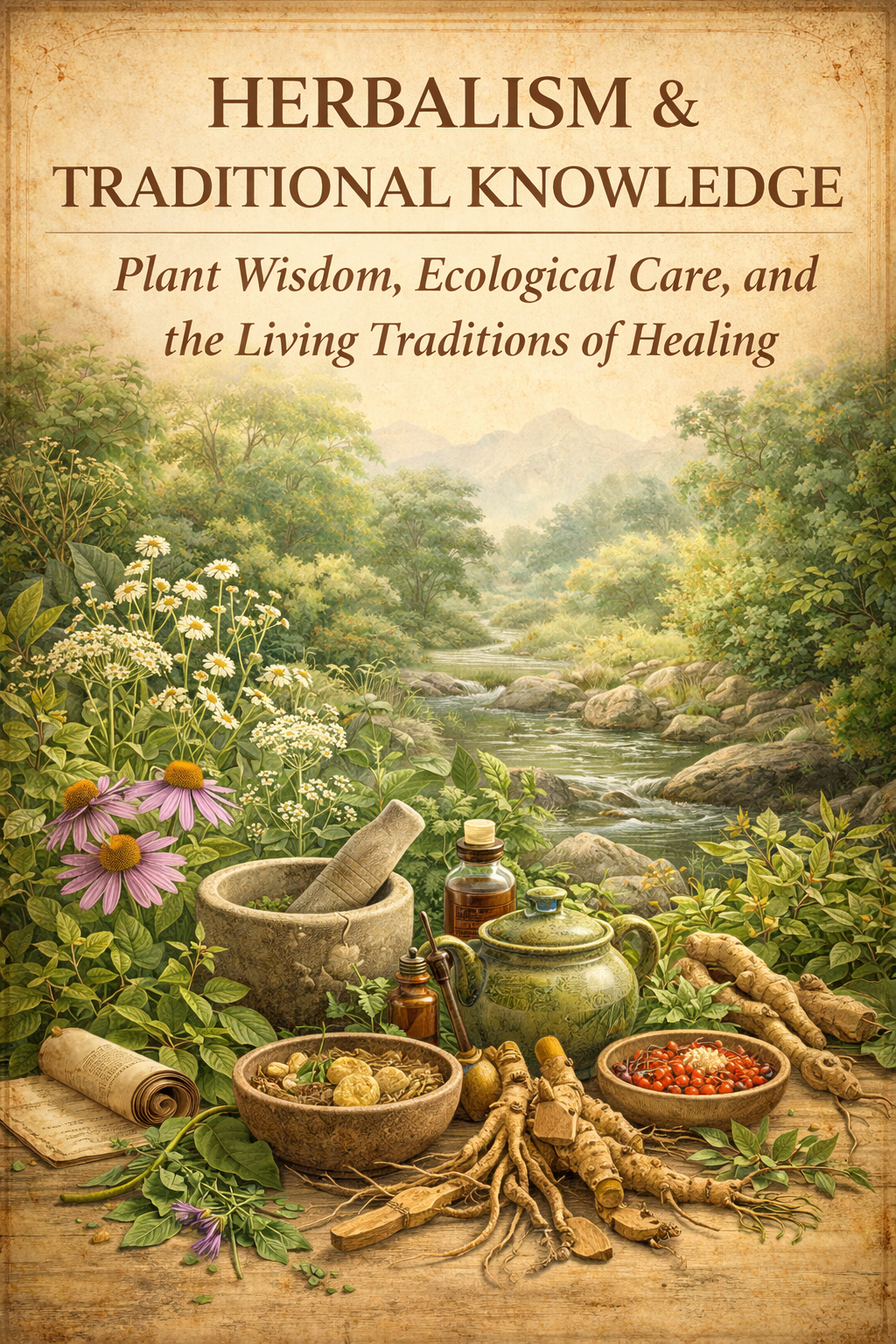
Herbalism and traditional knowledge matter because they reveal how human societies have interpreted the medicinal qualities of the natural world long before the rise of modern biomedicine, and often alongside it. Across cultures, medicinal plant knowledge has linked observation, experimentation, classification, diet, preparation, dosage, ritual practice, and practical experience with broader views of balance, vitality, environment, ancestry, and right relation to land.
This category is especially important within the wider study of healing traditions because it connects Healing Traditions to African Healing Traditions, Ayurveda and South Asian Healing Traditions, Chinese Medicine, Islamic Medicine, Ancient Near Eastern and Mediterranean Healing Traditions, Diet, Nourishment & Food as Medicine, Environment, Place, and Ecological Knowledge, Religion and Ecology, Biology, Environmental Science, and Cultural Anthropology. It shows that healing often depends on living environments, ecological memory, practical preparation, and intergenerational responsibility.
The goal of this pillar is not to romanticize herbal medicine or treat every inherited use as clinically established. It is to study herbalism as a serious field of knowledge at the intersection of medicine, ecology, ethnobotany, pharmacology, household care, ritual life, conservation, and knowledge justice. A rigorous approach must be able to hold several levels together at once: botanical identity, traditional use, cultural meaning, practical efficacy, ecological sustainability, safety, evidence, and the social conditions through which knowledge survives.
Why This Series Matters
Herbalism matters because plant-based healing is one of the most durable and widespread forms of human medical intelligence. Long before modern pharmacology, communities learned to identify, gather, cultivate, prepare, combine, and administer plants in response to pain, fever, childbirth, digestion, wounds, sleep, infection, weakness, grief, protection, and everyday bodily care. Herbal knowledge is therefore central to the history of medicine, but also to the history of ecology, agriculture, household life, ritual practice, and human adaptation to local environments.
This series also matters because medicinal plants remain important in contemporary health practices, pharmaceuticals, traditional medicine systems, integrative medicine, and community care. Many people continue to use herbal preparations because they are accessible, culturally familiar, trusted, affordable, locally available, or embedded in inherited systems of meaning. At the same time, modern herbal use raises serious questions of safety, identification, dosage, quality control, conservation, and clinical evidence.
Herbalism also challenges narrow definitions of medicine. In many traditions, plants are not merely sources of isolated active ingredients. They belong to living environments, cultural classifications, ceremonial practices, household economies, food systems, and local knowledge systems. A plant may be remedy, food, tonic, ritual substance, protective object, seasonal support, or ecological relative depending on the tradition and context.
A serious treatment must therefore avoid two errors. It should not dismiss herbal traditions as unscientific folklore. It should also not romanticize them as automatically safe or effective because they are natural or traditional. Herbalism deserves careful study precisely because it sits at the intersection of inherited wisdom, practical experimentation, ecological knowledge, pharmacological potential, and public-health responsibility.
Scope and Orientation
Herbalism and traditional knowledge are best approached as an interconnected field rather than a loose collection of folk remedies. The subject includes medicinal plants, roots, barks, flowers, fungi, resins, preparation methods, harvesting practices, ecological familiarity, household care, healer traditions, pharmacological observation, ritual use, and the cultural systems through which plant knowledge is named, remembered, tested, and transmitted.
This breadth is necessary because plant-based healing is rarely only about the remedy itself. It also concerns habitat, timing, preparation, combination, dosage, storage, ritual context, and the knowledge structures that make use meaningful and safe. A plant gathered at the wrong time, misidentified, prepared incorrectly, used at the wrong dosage, substituted carelessly, or taken alongside incompatible medication may become ineffective or harmful.
The field requires methodological care. Traditional knowledge is not a vague synonym for inherited belief. It includes accumulated practices, classifications, values, and intergenerational systems of transmission grounded in close relation to ecosystems and biodiversity. In the case of medicinal plants, that means herbal knowledge is often inseparable from local environmental familiarity, stewardship rules, and the practical wisdom of gathering, storing, preparing, and administering plant materials.
At the same time, botanical precision is essential. One of the major modern challenges in herbalism is that vernacular names, substitutions, adulteration, and poor identification can compromise both safety and research. This makes herbalism an important meeting point between traditional knowledge and scientific method: plants must be known culturally, but they must also be identified botanically.
Plants as Medicine and Knowledge
Herbalism studies the medicinal use of plants, but also the systems of observation, naming, preparation, and inheritance by which those uses become intelligible. A plant is not simply “used”; it is recognized, named, classified, gathered, prepared, combined, administered, evaluated, remembered, and transmitted. Each of these steps depends on knowledge.
That knowledge may be written in classical materia medica texts, preserved in oral tradition, taught through apprenticeship, held within households, embedded in ritual practice, or carried by cultivators, healers, midwives, elders, and gatherers. The archive of herbalism is therefore not limited to books. It includes bodies, landscapes, kitchens, gardens, markets, forests, farms, shrines, and seasonal practices.
Plants also require contextual interpretation. A plant may have different uses depending on which part is used, how it is prepared, whether it is fresh or dried, whether it is combined with other substances, what season it is gathered in, and who receives it. Traditional herbal knowledge often encodes these distinctions through local categories that may not map cleanly onto modern scientific language.
For comparative study, plants as medicine reveal one of the oldest human efforts to interpret the living environment therapeutically. Herbalism is not only about plants; it is about the relationship between human vulnerability and botanical life.
Traditional Knowledge as Ecological Knowledge
Traditional plant knowledge is often ecological knowledge. It depends on intimate familiarity with habitat, rainfall, season, soil, forest succession, animal behavior, plant growth cycles, harvesting rules, and environmental signs. The healer, gatherer, farmer, or household practitioner may know not only which plant is used, but where it grows, when it is strongest, which part is appropriate, and how harvesting should avoid destroying future growth.
This ecological dimension matters because medicinal knowledge cannot survive apart from living environments. If forests are cleared, wetlands drained, grasslands degraded, or climates disrupted, medicinal plants may disappear or become harder to access. When plants disappear, the knowledge attached to them may also weaken.
Traditional ecological knowledge also involves values. It may include restrictions on overharvesting, rules about reciprocity, ritual acknowledgments, inherited obligations, taboos, or community norms governing who may gather and how. Such rules should not be dismissed as merely symbolic; they may function as forms of stewardship.
For this reason, herbalism belongs as much to environmental humanities and conservation as to the history of medicine. The preservation of medicinal knowledge requires the preservation of habitats, languages, cultural practices, and community authority.
Ethnobotany and the Study of Medicinal Plant Use
Ethnobotany provides one of the central scholarly frameworks for studying herbalism and traditional plant knowledge. It examines the relationships between people and plants, including naming systems, uses, classifications, ecological practices, ritual meanings, agricultural knowledge, foodways, and medicinal applications. In the case of herbalism, ethnobotany helps show how plant medicine is embedded in culture and environment rather than existing as isolated botanical data.
Ethnobotanical research can document medicinal use, compare practices across communities, identify plants for further pharmacological study, and help preserve knowledge threatened by language loss, migration, land dispossession, or ecological change. It can also expose the complexity of local classification systems that may not match Linnaean taxonomy but remain internally coherent and practically effective.
However, ethnobotany also raises ethical questions. Researchers must consider consent, attribution, benefit-sharing, confidentiality, sacred knowledge, intellectual property, and the risk of extractive research. Documentation can preserve knowledge, but it can also expose it to appropriation.
A serious pillar should therefore treat ethnobotany not only as a research tool, but as an ethical field. The study of medicinal plant use must ask who holds knowledge, who records it, who benefits from it, and how communities retain authority over what they have preserved.
Materia Medica and the Intelligence of Preparation
Materia medica refers to the organized knowledge of medicinal substances. In herbal traditions, this includes plants, plant parts, preparations, actions, properties, combinations, contraindications, and therapeutic uses. It may also include fungi, minerals, resins, animal-derived substances, oils, and foods, depending on the tradition.
The intelligence of materia medica lies not only in knowing what plant is used, but in knowing how it is used. Which part is medicinal? Is the root stronger than the leaf? Is the bark used fresh or dried? Is the preparation a tea, decoction, poultice, tincture, wash, steam, bath, powder, oil, or food? Is it taken alone or in formula? Is it warming, cooling, drying, moistening, purging, soothing, protective, strengthening, or toxic unless prepared correctly?
This level of detail is what distinguishes herbal knowledge from vague plant appreciation. Preparation is not secondary. It is part of efficacy and safety. Many traditional systems understand that a plant’s effect may change depending on processing, dose, combination, route of administration, and patient condition.
A mature article series should therefore give materia medica sustained attention. It is where observation, memory, classification, ecology, preparation, and therapeutic judgment converge.
Roots, Leaves, Flowers, Barks, Resins, and Fungi
Herbal traditions frequently distinguish among plant parts. Roots, rhizomes, leaves, flowers, seeds, fruits, barks, gums, resins, saps, stems, woods, and fungi may have different properties and uses. A plant is not always medicinal in the same way throughout its body. Traditional knowledge often recognizes that different parts may differ in potency, toxicity, timing, and therapeutic purpose.
This matters for both scholarship and safety. A remedy described only by plant name may be incomplete or misleading if the relevant plant part is not specified. The root may be used in one condition, the leaf in another, and the bark in a third. Some parts may be safe while others are toxic. Some require drying, boiling, fermentation, roasting, or other preparation.
Fungi also deserve attention. Many healing traditions include mushrooms, lichens, or fungal preparations, and modern natural-product research has renewed interest in fungal metabolites. These materials expand the category beyond flowering plants into wider biological and ecological relationships.
For this pillar, plant parts and therapeutic forms should be treated as part of the material precision of herbalism. Traditional knowledge is often highly specific, and that specificity is central to responsible interpretation.
Infusions, Decoctions, Tinctures, Poultices, Oils, and Powders
Preparation methods are central to herbal practice. An infusion extracts certain constituents through steeping. A decoction uses longer boiling, often for tougher materials such as roots, barks, seeds, or woody parts. A poultice applies plant material externally. Oils, salves, powders, tinctures, washes, baths, steams, syrups, and fermented preparations each involve different assumptions about extraction, preservation, absorption, and therapeutic action.
The same plant may have different effects depending on preparation. Heat can transform a substance. Alcohol may extract constituents that water does not. External use may be safer than internal use in some cases. Combining herbs may alter potency, tolerability, or intended action.
This means that herbalism cannot be responsibly discussed through plant lists alone. Preparation is part of the medicine. A recipe, method, vessel, duration, timing, and dosage may all matter. Traditional knowledge often preserves these details through apprenticeship, household repetition, recipe books, or healer instruction.
Modern herbal use frequently loses this precision when plants are turned into generic supplements or online recommendations. A scholarly article series should therefore recover the importance of preparation as one of herbalism’s core intellectual practices.
Households, Women’s Knowledge, and Everyday Care
Herbal knowledge has often been preserved in households as much as in formal medical systems. Mothers, grandmothers, midwives, elders, cooks, gardeners, farmers, and household caregivers have transmitted knowledge of teas, foods, poultices, baths, oils, postpartum care, infant remedies, digestive aids, wound care, seasonal tonics, and protective practices. Much of herbalism survives because ordinary people remember how to care for common conditions.
Women’s knowledge is especially important. Across many cultures, women have preserved medicinal plant knowledge through childbirth care, postpartum recovery, infant protection, food preparation, household medicine, and everyday treatment of pain, fever, digestion, sleep, and weakness. Such knowledge is sometimes underrepresented in written archives because it has been transmitted domestically rather than institutionally.
Household herbalism also complicates the boundary between medicine and food. A soup, tea, spice blend, bath, or tonic may be both nourishment and remedy. Care may take place not in a clinic but in a kitchen, garden, field, or bedroom.
A serious pillar should therefore recognize household herbalism as a major form of medical intelligence. It is not less important because it is ordinary. It is often precisely ordinary care that sustains healing knowledge across generations.
Plants, Food, and the Border Between Remedy and Nourishment
Many traditions do not sharply separate remedy from nourishment. Culinary herbs, spices, bitter greens, fermented foods, teas, tonics, roots, fruits, and broths may be used to support digestion, restore strength, clear discomfort, warm or cool the body, promote sleep, support postpartum recovery, or maintain resilience across seasons. Food can be medicine not as a slogan, but as a historical reality in many healing systems.
This overlap matters because it shows that healing is not always episodic. Plant-based care can be part of everyday life: what is eaten, when it is eaten, how it is prepared, and how it is matched to season, labor, age, illness, or recovery. Herbalism often operates as preventive care before it becomes acute treatment.
The food-remedy boundary also raises interpretive challenges. A plant used in cooking may be safe in culinary amounts but unsafe in concentrated medicinal dosage. A tonic may support ordinary wellbeing in one context but become inappropriate in pregnancy, childhood, chronic disease, or medication use. Dosage and context matter.
This section should connect strongly to Diet, Nourishment & Food as Medicine. Herbalism helps show that nourishment, medicine, ecology, and household care have often belonged to the same practical world.
Botanical Identity and the Problem of Misidentification
Botanical identity is one of the most important modern issues in herbalism. Vernacular names may refer to different species in different places, while one species may have many local names. Substitution, adulteration, mislabeling, poor harvesting, and confusion between related plants can create serious safety and research problems.
For scholarly and clinical purposes, accurate identification requires more than common names. Taxonomy, voucher specimens, verified nomenclature, herbarium records, DNA barcoding in some settings, and careful documentation help ensure that researchers and practitioners are discussing the same plant. Without accurate identification, claims about efficacy or safety become unstable.
Misidentification can also affect communities. If commercial demand increases for a plant under a popular name, substitutes may enter the market, sometimes with different chemistry or safety profiles. Local users may also lose access as plants become overharvested or commodified.
A rigorous herbalism pillar should therefore foreground botanical identity. Plant knowledge can be cultural and scientific at the same time. Responsible study requires both local names and botanical precision.
Safety, Dosage, Toxicity, and Adulteration
Herbal medicine requires serious safety language. Natural does not automatically mean safe. Plants can contain potent compounds, interact with medications, affect pregnancy, influence blood clotting, alter sedation, burden the liver or kidneys, or become harmful at high doses. Some plants are safe as food but unsafe as concentrated extracts. Others require careful preparation to reduce toxicity.
Dosage is central. A traditional preparation may use a particular amount, part, timing, or method that does not translate directly into modern capsules, extracts, essential oils, or concentrated powders. Commercial forms can change exposure. A standardized extract may not behave like a household infusion.
Adulteration and contamination are also major concerns. Herbal products may be mixed with incorrect species, undeclared pharmaceuticals, heavy metals, pesticides, microbes, or fillers. Quality control therefore matters not only for research but for public safety.
A responsible article series should make these distinctions clear. Respect for herbal traditions is not opposed to safety; it requires safety. Serious herbal knowledge has always included attention to proper plant, proper part, proper preparation, proper dose, proper person, and proper context.
Standards, Monographs, and Quality Control
Modern herbalism increasingly depends on standards, monographs, and quality-control frameworks. WHO monographs, good agricultural and collection practices, pharmacopoeias, botanical institutions, and national regulatory systems help clarify identity, preparation, quality, contaminants, and known safety concerns for medicinal plants.
Such standards do not replace traditional knowledge, but they provide important tools for public health, research, and responsible circulation. They help address problems of misidentification, adulteration, variable potency, contamination, and poor documentation. They also make comparative research more reliable.
Standardization, however, has limits. Traditional herbalism often uses whole plants, combinations, seasonal timing, and individualized practice. A monograph may document known constituents and safety concerns, but it may not capture the full cultural, ecological, or ritual context of use. Standardization can improve safety while also simplifying complexity.
A strong pillar should therefore present standards as necessary but not sufficient. They are part of responsible herbal study, especially in modern public-facing contexts, but they should be integrated with respect for local knowledge systems and ecological context.
Herbalism Between Tradition and Pharmacology
Modern pharmacology has often looked to medicinal plants as sources of active compounds. This relationship has produced important drugs and scientific insights. It has also created a tendency to treat traditional knowledge as a screening tool for laboratory discovery rather than as a knowledge system in its own right.
The relationship between herbalism and pharmacology is therefore productive but complex. Traditional use may guide research, suggest biological activity, or preserve long-term empirical observation. Laboratory research may identify mechanisms, active constituents, toxicity, interactions, or therapeutic potential. But neither level fully replaces the other.
A plant used traditionally may not have the same effect when isolated into one compound. Conversely, an isolated compound may have properties not obvious from traditional use. A traditional formula may rely on combination, preparation, dose, or pattern of use that reductionist analysis does not capture easily.
A serious article series should therefore avoid both anti-scientific romanticism and crude reductionism. Herbalism between tradition and pharmacology is a field of translation, comparison, and careful testing.
Whole Plants, Compounds, and the Limits of Reduction
Many herbal traditions use whole plants or formulas rather than isolated compounds. This does not mean that chemistry is irrelevant. It means that the therapeutic logic may involve multiple constituents, preparation methods, synergistic or moderating effects, and a broader pattern of use. Whole-plant use often reflects an inherited practical intelligence about preparation and tolerability.
Reduction to active compounds can be powerful for drug development, safety analysis, and mechanism identification. Yet it may also narrow the meaning of herbal medicine by ignoring context, combination, food-medicine continuity, ritual setting, ecological relation, or patient-specific use. The plant becomes a chemical source rather than a participant in a cultural and ecological system.
Traditional formulas also raise complex research questions. How should multi-plant preparations be studied? Which constituent matters? Does the preparation method alter chemistry? Are effects additive, synergistic, antagonistic, or simply misunderstood? What counts as evidence when a traditional system uses plants within a broader regimen?
This section should not reject reductionist science. It should clarify its limits. Medicinal plants can be studied chemically while also being understood culturally, ecologically, and historically.
Ecology, Biodiversity, and Conservation
Herbalism is inseparable from biodiversity. Medicinal plants depend on forests, grasslands, wetlands, deserts, mountains, gardens, farms, pollinators, soils, water, and climate stability. When habitats are degraded, medicinal plant populations decline, and traditional knowledge becomes harder to practice.
Conservation is therefore a medical issue. If healing traditions depend on living species, then the protection of biodiversity is part of preserving health knowledge. Overharvesting, habitat destruction, commercial demand, land dispossession, invasive species, pollution, and climate disruption all threaten medicinal plant systems.
Biocultural conservation is especially important because it protects both biological diversity and cultural knowledge. A plant species may survive in a botanical garden while the community knowledge surrounding its use declines. Conversely, knowledge may remain but become difficult to practice if access to land or plants is lost.
A rigorous herbalism pillar should therefore treat conservation as central. Medicinal plant knowledge is not preserved only in databases or books. It is preserved through living ecosystems, languages, practices, and communities.
Sustainable Harvesting and the Ethics of Care
Sustainable harvesting is one of the practical ethics of herbalism. The way a plant is gathered affects whether it remains available for future use. Harvesting leaves may be less destructive than harvesting roots or bark, but this depends on species, population size, season, method, and ecological setting. Some practices can kill the plant; others can allow regeneration.
Traditional harvesting rules may encode ecological restraint. Communities may restrict gathering by season, require permission, avoid taking the first or last plant, harvest only certain parts, or combine gathering with ritual acknowledgment. Such practices can express respect, but they can also function as ecological management.
Modern commercial demand can disrupt these restraints. When medicinal plants enter global markets, harvesting may intensify beyond local regenerative capacity. A plant once gathered for household or regional use may become threatened when turned into a commodity.
A serious article series should therefore treat harvesting as an ethical and ecological act. The question is not only whether a plant works, but whether its use can be sustained without damaging the ecosystems and communities that hold the knowledge.
Ritual, Symbolism, and Healing
In many traditions, plant use is inseparable from ritual, prayer, sacred timing, offering, song, smoke, purification, or symbolic meaning. A plant may be used not only because of its physiological effects, but because it mediates protection, relation, blessing, cleansing, memory, or transition. This symbolic dimension should not be dismissed as irrelevant to healing.
Ritual plant use may structure the patient’s experience, define the seriousness of the moment, connect the healer to ancestral or divine authority, mark thresholds, or integrate bodily treatment with social and spiritual repair. In such settings, the plant is material and symbolic at once.
However, ritual meaning and pharmacological effect should not be confused. A plant may be ritually powerful without being pharmacologically active in the way modern biomedicine defines activity. Conversely, a plant may have measurable effects while also carrying symbolic value. These layers can coexist.
A scholarly treatment should therefore distinguish without dismissing. Herbalism includes chemical, cultural, sensory, ritual, ecological, and social dimensions, and the most responsible analysis keeps these levels visible.
Knowledge Justice, Extraction, and Benefit-Sharing
Herbalism raises major questions of knowledge justice. Traditional plant knowledge has often been extracted from Indigenous, local, rural, and colonized communities without adequate consent, attribution, compensation, or benefit-sharing. Modern pharmaceutical, cosmetic, wellness, and supplement industries may profit from knowledge that communities preserved across generations.
This issue is not only economic. It concerns authority. Who has the right to define what a plant means, how it should be used, whether it may be commercialized, and who benefits from its circulation? Traditional knowledge may be collective, sacred, gendered, secret, place-based, or governed by community norms that do not fit easily into modern intellectual property law.
Knowledge justice also requires attention to language and erasure. When a plant is renamed, patented, extracted, standardized, or marketed without reference to its knowledge holders, a community’s intellectual labor can disappear from the record. Scientific validation may then be treated as the moment knowledge becomes real, even though the use may have been known for generations.
A rigorous pillar should therefore treat benefit-sharing, consent, attribution, community authority, and biocultural rights as central. Herbalism is not only about plants and health. It is also about justice in the circulation of knowledge.
Core Themes in This Series
One major theme in this field is plant knowledge: the naming, classification, preparation, and use of medicinal species. A second is ecological relation: the dependence of herbal medicine on habitat, season, biodiversity, and local environmental knowledge. A third is preparation: the transformation of plant material into usable forms such as infusions, decoctions, oils, powders, baths, and poultices.
A fourth theme is transmission: the movement of knowledge through households, healers, apprenticeships, oral traditions, texts, gardens, markets, and ritual practice. A fifth is safety: the importance of correct identification, dosage, toxicity awareness, quality control, and clinical caution. A sixth is conservation: the protection of medicinal species and the environments that sustain them.
Additional themes include food-medicine continuity, the overlap of nourishment and remedy; ritual meaning, the symbolic and spiritual life of plants in healing; pharmacological inquiry, the relationship between traditional use and scientific study; and knowledge justice, the ethical responsibility to protect Indigenous and local knowledge from extraction, erasure, and unequal commercialization.
Herbalism and Traditional Knowledge Pillar Map
The following article map is designed as a research agenda for the Herbalism and Traditional Knowledge pillar, with emphasis on medicinal plants, ethnobotany, preparation, households, botanical identity, safety, standardization, pharmacology, ecology, conservation, ritual meaning, food-medicine continuities, and knowledge justice.
Herbalism and Traditional Knowledge is organized to move from foundational questions into medicinal plant use, ethnobotany, materia medica, household care, plant identity, safety, pharmacology, conservation, ritual meaning, food-medicine overlap, and knowledge justice. The goal is to treat herbalism as a serious field of healing knowledge: botanical, ecological, practical, cultural, ethical, and historically durable.
Foundations, Scope, and Method
- What Is Herbalism & Traditional Knowledge? (planned)
Introduces herbalism as a field of plant-based healing grounded in ecology, preparation, observation, memory, and intergenerational transmission. - Medicinal Plants and the Human History of Healing (planned)
Studies the long relationship between human societies and medicinal plants across cultures, environments, and historical periods. - Traditional Knowledge as Ecological Knowledge (planned)
Explores traditional plant knowledge as environmental familiarity, seasonal observation, stewardship, and place-based practice. - Herbalism in Comparative Perspective (planned)
Compares herbal traditions across African, Ayurvedic, Chinese, Islamic, Indigenous, Mediterranean, and household healing systems. - How to Study Herbalism Without Romanticizing It (planned)
Establishes a careful method that balances respect, evidence, safety, cultural meaning, and ecological context. - Herbalism Between Traditional Knowledge and Modern Science (planned)
Introduces the relationship between inherited plant use, ethnobotany, pharmacognosy, laboratory research, and public-health responsibility.
Ethnobotany, Classification, and Transmission
- Ethnobotany and the Study of Medicinal Plant Use (planned)
Examines how communities classify, name, prepare, remember, and transmit medicinal plant knowledge. - How Medicinal Plant Knowledge Is Transmitted (planned)
Studies household learning, apprenticeship, healer lineages, oral tradition, ritual instruction, and embodied practice. - Vernacular Names, Local Classifications, and Botanical Taxonomy (planned)
Explores the relationship between local naming systems and scientific plant identification. - Healers, Gatherers, Gardeners, and Plant Knowledge Keepers (planned)
Studies the people who preserve herbal knowledge through practice, cultivation, gathering, teaching, and care. - Oral Tradition, Memory, and the Living Archive of Herbalism (planned)
Examines herbal knowledge as a living archive carried by language, practice, place, and intergenerational memory. - Documentation, Consent, and the Ethics of Recording Plant Knowledge (planned)
Explores ethical research methods, community authority, sacred knowledge, confidentiality, and informed consent.
Materia Medica and Preparation
- Materia Medica and the Intelligence of Preparation (planned)
Studies the organized knowledge of medicinal substances, therapeutic properties, preparations, and practical use. - Roots, Leaves, Flowers, Barks, Resins, and Fungi (planned)
Examines how different plant parts and related biological materials carry different therapeutic meanings and risks. - Herbal Infusions, Decoctions, Tinctures, and Poultices (planned)
Explores preparation methods and why extraction, heat, timing, solvent, and route of use matter. - Oils, Salves, Baths, Steams, Powders, and Washes (planned)
Studies external and topical forms of herbal preparation across household, ritual, and clinical settings. - Herbal Formulas and the Logic of Combination (planned)
Examines why many traditions combine plants rather than use single substances in isolation. - Preparation, Potency, and the Transformation of Plant Materials (planned)
Studies drying, boiling, roasting, fermenting, grinding, storing, and processing as part of therapeutic intelligence.
Household Care, Food, and Everyday Healing
- Herbalism, Households, and Everyday Care (planned)
Centers household remedies, family care, elder knowledge, everyday illness, and domestic healing practice. - Women’s Knowledge and the Domestic History of Herbal Medicine (planned)
Studies women’s roles in preserving medicinal plant knowledge through birth, childcare, food, household remedies, and care work. - Plants, Food, and the Border Between Remedy and Nourishment (planned)
Explores culinary herbs, spices, tonics, bitter greens, teas, broths, and the overlap between food and medicine. - Seasonal Tonics, Digestive Herbs, and Preventive Care (planned)
Examines plant-based support for digestion, seasonal transition, resilience, recovery, and ordinary maintenance. - Herbal Care for Birth, Postpartum Recovery, and Infancy (planned)
Studies plant knowledge connected with fertility, childbirth, postpartum recovery, infant protection, and maternal care. - Kitchen Medicine and the Therapeutic Life of Food Plants (planned)
Explores the kitchen as a site of medicinal knowledge, nourishment, memory, and practical healing.
Identity, Safety, and Quality Control
- Botanical Identity and the Problem of Plant Misidentification (planned)
Examines vernacular names, substitution, adulteration, taxonomy, voucher specimens, and safety risks. - Safety, Dosage, and Toxicity in Herbal Practice (planned)
Studies toxic plants, dose, contraindications, pregnancy risks, medication interactions, and safe use. - Adulteration, Contamination, and the Modern Herbal Market (planned)
Explores mislabeling, heavy metals, pesticides, microbes, undeclared pharmaceuticals, and quality-control failures. - WHO Monographs and the Standardization of Medicinal Plants (planned)
Introduces medicinal plant monographs, standards, safety summaries, and responsible documentation. - Good Agricultural and Collection Practices for Medicinal Plants (planned)
Studies cultivation, collection, traceability, plant identity, quality, harvesting, and storage standards. - Herbal Medicine and Public-Health Responsibility (planned)
Examines responsible communication, referral, evidence limits, practitioner oversight, and patient safety.
Science, Pharmacology, and Research
- Medicinal Plants Between Tradition and Pharmacology (planned)
Studies the relationship between traditional plant use, pharmacognosy, laboratory research, and drug discovery. - Whole Plants, Compounds, and the Limits of Reduction (planned)
Explores the difference between whole-plant use, formulas, extracts, active compounds, and reductionist analysis. - Ethnobotany as a Guide to Pharmacological Research (planned)
Examines how traditional use can inform research while raising ethical questions of extraction and attribution. - Plant Chemistry, Natural Products, and Therapeutic Potential (planned)
Studies phytochemistry, natural-product research, biological activity, and the scientific evaluation of medicinal plants. - Evidence, Tradition, and the Problem of Clinical Validation (planned)
Explores how traditional use, observational knowledge, laboratory evidence, and clinical trials relate and differ. - Herbal Supplements, Extracts, and the Transformation of Traditional Remedies (planned)
Examines how modern commercial forms alter dosage, meaning, exposure, and safety conditions.
Ecology, Conservation, and Stewardship
- Herbalism and the Ecology of Health (planned)
Connects medicinal plant knowledge to habitat, season, biodiversity, ecological relation, and environmental change. - Plant Knowledge, Biodiversity, and Biocultural Conservation (planned)
Studies the protection of both species and cultural knowledge systems that sustain medicinal use. - Sustainable Harvesting and the Ethics of Care (planned)
Examines harvesting practices, regeneration, overuse, commercial demand, and ecological responsibility. - Medicinal Plants, Climate Change, and Habitat Loss (planned)
Explores how climate disruption, land conversion, deforestation, and pollution threaten plant medicine systems. - Gardens, Forests, Wetlands, and the Landscapes of Herbal Knowledge (planned)
Studies the places where medicinal knowledge is cultivated, gathered, taught, and preserved. - Conservation of Medicinal Plants and the Future of Herbal Medicine (planned)
Examines global conservation frameworks, threatened species, cultivation, and the future of plant-based healing.
Ritual, Symbolism, and Cultural Meaning
- Herbalism, Ritual, and Symbolic Healing (planned)
Explores plants used in prayer, protection, purification, blessing, offering, cleansing, and ritual transition. - Smoke, Bathing, Anointing, and the Sensory Life of Plant Medicine (planned)
Studies smell, touch, heat, water, oil, smoke, and sensory experience in plant-based healing. - Sacred Plants, Ceremonial Use, and Cultural Context (planned)
Examines plants whose therapeutic meaning is inseparable from ritual authority, sacred timing, or cosmological relation. - Plant Medicine, Ancestry, and Memory (planned)
Explores how plant knowledge can carry lineage, household memory, land relation, and cultural continuity. - Herbalism and the Anthropology of Healing (planned)
Studies medicinal plants as cultural, social, ritual, ecological, and therapeutic objects. - Distinguishing Pharmacological, Symbolic, and Social Efficacy (planned)
Clarifies different kinds of efficacy without dismissing or confusing them.
Knowledge Justice, Law, and the Future of Plant Medicine
- Indigenous Knowledge and the Future of Plant Medicine (planned)
Centers Indigenous and local knowledge systems as living bodies of ecological and medicinal knowledge. - Medicinal Plants, Stewardship, and Knowledge Justice (planned)
Explores the ethical relationship among plant use, community authority, land, conservation, and care. - Herbal Knowledge, Extraction, and the Ethics of Benefit-Sharing (planned)
Studies bioprospecting, commercialization, attribution, consent, compensation, and intellectual property. - Biocultural Rights and the Protection of Traditional Knowledge (planned)
Examines legal and ethical frameworks for protecting community-held knowledge and biological heritage. - Global Herbal Markets and the Commodification of Plant Knowledge (planned)
Studies how medicinal plants move through supplement, wellness, pharmaceutical, and cosmetic markets. - Herbalism, Science, and the Ethics of Future Research (planned)
Concludes the series by connecting evidence, safety, community authority, ecological stewardship, and responsible research.
This structure keeps the category scholarly, ecological, and non-promotional. It presents herbalism as a historically durable field of healing knowledge shaped by plants, preparation, households, traditional knowledge, ecology, safety, scientific study, conservation, and knowledge justice.
Closing Perspective
Herbalism and Traditional Knowledge give the Healing Traditions knowledge series one of its most important ecological foundations. They show that healing is not only a relationship between healer and patient, but also a relationship among plants, habitats, seasons, households, memory, preparation, and care. Medicinal plant knowledge is a form of practical intelligence developed through long observation of the living world.
The strongest reason to study this field is that it widens the meaning of medicine. Herbal traditions ask how plants are known, how remedies are prepared, how knowledge is transmitted, how food becomes medicine, how safety is maintained, how habitats sustain healing, and how communities retain authority over what they know. They also force modern scholarship to confront difficult questions of extraction, evidence, conservation, and benefit-sharing.
As a field of study, herbalism is most valuable when approached with precision. It should not be reduced to romantic ideas of natural healing, nor dismissed as pre-scientific practice. It should be studied as a complex body of knowledge shaped by botany, ecology, household care, ethnobotany, pharmacology, ritual life, conservation, and the ethical responsibilities of knowledge transmission.
Related Reading
- Healing Traditions
- African Healing Traditions
- Ayurveda and South Asian Healing Traditions
- Chinese Medicine
- Islamic Medicine
- Ancient Near Eastern and Mediterranean Healing Traditions
- Diet, Nourishment & Food as Medicine
- Shamanism, Ritual & Spiritual Healing
- Religion and Ecology
- Environment, Place, and Ecological Knowledge
- Biology
- Environmental Science
- Cultural Anthropology
Primary Sources and Archives
Medicinal Plant Standards and Health Frameworks
- World Health Organization, WHO Monographs on Selected Medicinal Plants: Important for medicinal use, quality, safety, and standardization of herbal materials. Available at: https://iris.who.int/handle/10665/42052 (Accessed: 4 May 2026).
- World Health Organization, WHO Guidelines on Good Agricultural and Collection Practices (GACP) for Medicinal Plants: Important for plant identity, cultivation, collection, quality, and traceability. Available at: https://iris.who.int/handle/10665/42783 (Accessed: 4 May 2026).
- World Health Organization, IUCN and WWF, Guidelines on the Conservation of Medicinal Plants: Important for biodiversity, conservation, and sustainability dimensions of herbalism. Available at: https://iris.who.int/handle/10665/41651 (Accessed: 4 May 2026).
Botanical and Ethnobotanical Infrastructure
- Royal Botanic Gardens, Kew, “Plants for Health”: Useful for plant-based evidence, taxonomy, medicinal literature, toxicity, and natural-product research. Available at: https://www.kew.org/science/our-science/projects/plants-for-health (Accessed: 4 May 2026).
- Royal Botanic Gardens, Kew, “Plant drug discovery”: Useful for the relationship between traditional knowledge and modern medicinal-plant research. Available at: https://www.kew.org/read-and-watch/plant-medicine-drug-discovery (Accessed: 4 May 2026).
- Royal Botanic Gardens, Kew, “Knowledge for Health”: Useful for the preservation of Indigenous and local medicinal knowledge and its ecological context. Available at: https://www.kew.org/read-and-watch/medicinal-plants-amazon-yekwana-people (Accessed: 4 May 2026).
Traditional Knowledge and Heritage Frameworks
- UNESCO, “Biodiversity: Local, Indigenous and Scientific Knowledge”: Useful for framing Indigenous, traditional, and local knowledge systems as major bodies of knowledge about biodiversity and ecosystems. Available at: https://www.unesco.org/en/biodiversity/knowledge (Accessed: 4 May 2026).
- UNESCO, “Traditional Ecological Knowledge”: Useful for conceptual framing of knowledge developed over generations regarding environment, biodiversity, and ecological relationships. Available at: https://www.unesco.org/en/query-list/t/traditional-ecological-knowledge (Accessed: 4 May 2026).
Internal Interpretive Traditions
- Household herbal traditions: Domestic remedies, kitchen medicine, postpartum care, infant care, digestive herbs, seasonal tonics, elder knowledge, and women’s healing practices.
- Healer and apprenticeship traditions: Plant knowledge transmitted through specialists, apprenticeships, lineages, ritual authority, gathering practice, and direct patient care.
- Ethnobotanical traditions: Local naming systems, ecological knowledge, plant classification, habitat memory, and community-based use of medicinal species.
- Classical materia medica traditions: Written medical systems that organize medicinal substances, plant properties, preparation, dosage, and therapeutic classification.
- Ritual and ceremonial plant traditions: Plants used in purification, protection, prayer, offering, smoke, anointing, bathing, and sacred healing contexts.
- Pharmacognostic and scientific traditions: Botanical identity, natural products, phytochemistry, toxicity, quality control, monographs, and clinical evaluation.
- Conservation and knowledge-sovereignty traditions: Stewardship, biocultural rights, sustainable harvesting, benefit-sharing, Indigenous knowledge protection, and ecological restoration.
Modern Scholarship
- World Health Organization work on medicinal plant monographs, good agricultural and collection practices, and conservation guidelines.
- Royal Botanic Gardens, Kew work on medicinal plants, plant-based evidence, taxonomy, toxicity, and natural-product research.
- UNESCO materials on Indigenous, local, scientific, and traditional ecological knowledge.
- Ethnobotanical and pharmacognostic scholarship on medicinal plants, traditional use, natural products, and clinical research.
- Scholarship on biocultural conservation, Indigenous knowledge protection, benefit-sharing, and intellectual property.
- Research on household medicine, food-medicine continuities, women’s knowledge, ritual plant use, and conservation of medicinal species.
Further Reading
- Kew (n.d.) ‘Plants for Health’. Available at: https://www.kew.org/science/our-science/projects/plants-for-health (Accessed: 4 May 2026).
- Kew (2020) ‘Into the wild: Plant drug discovery’. Available at: https://www.kew.org/read-and-watch/plant-medicine-drug-discovery (Accessed: 4 May 2026).
- Kew (2022) ‘Knowledge for Health’. Available at: https://www.kew.org/read-and-watch/medicinal-plants-amazon-yekwana-people (Accessed: 4 May 2026).
- McClatchey, W. et al. (2009) ‘Ethnobotany as a pharmacological research tool and recent developments in CNS-active natural products from ethnobotanic sources’, Pharmacology & Therapeutics. Indexed via Europe PMC. Available at: https://europepmc.org/article/med/19422851 (Accessed: 4 May 2026).
- UNESCO (2026) ‘Biodiversity: Local, indigenous and scientific knowledge’. Available at: https://www.unesco.org/en/biodiversity/knowledge (Accessed: 4 May 2026).
- UNESCO (n.d.) ‘Traditional ecological knowledge’. Available at: https://www.unesco.org/en/query-list/t/traditional-ecological-knowledge (Accessed: 4 May 2026).
- World Health Organization (1993) Guidelines on the Conservation of Medicinal Plants. Available at: https://iris.who.int/handle/10665/41651 (Accessed: 4 May 2026).
- World Health Organization (2003) WHO Guidelines on Good Agricultural and Collection Practices (GACP) for Medicinal Plants. Available at: https://iris.who.int/handle/10665/42783 (Accessed: 4 May 2026).
- World Health Organization (2006) WHO Monographs on Selected Medicinal Plants. Available at: https://iris.who.int/handle/10665/42052 (Accessed: 4 May 2026).
References
- Kew (n.d.) ‘Plants for Health’. Available at: https://www.kew.org/science/our-science/projects/plants-for-health (Accessed: 4 May 2026).
- Kew (2020) ‘Into the wild: Plant drug discovery’. Available at: https://www.kew.org/read-and-watch/plant-medicine-drug-discovery (Accessed: 4 May 2026).
- Kew (2022) ‘Knowledge for Health’. Available at: https://www.kew.org/read-and-watch/medicinal-plants-amazon-yekwana-people (Accessed: 4 May 2026).
- McClatchey, W. et al. (2009) ‘Ethnobotany as a pharmacological research tool and recent developments in CNS-active natural products from ethnobotanic sources’, Pharmacology & Therapeutics. Indexed via Europe PMC. Available at: https://europepmc.org/article/med/19422851 (Accessed: 4 May 2026).
- UNESCO (2026) ‘Biodiversity: Local, indigenous and scientific knowledge’. Available at: https://www.unesco.org/en/biodiversity/knowledge (Accessed: 4 May 2026).
- UNESCO (n.d.) ‘Traditional ecological knowledge’. Available at: https://www.unesco.org/en/query-list/t/traditional-ecological-knowledge (Accessed: 4 May 2026).
- World Health Organization (1993) Guidelines on the Conservation of Medicinal Plants. Available at: https://iris.who.int/handle/10665/41651 (Accessed: 4 May 2026).
- World Health Organization (2003) WHO Guidelines on Good Agricultural and Collection Practices (GACP) for Medicinal Plants. Available at: https://iris.who.int/handle/10665/42783 (Accessed: 4 May 2026).
- World Health Organization (2006) WHO Monographs on Selected Medicinal Plants. Available at: https://iris.who.int/handle/10665/42052 (Accessed: 4 May 2026).