Technology, Infrastructure, and Everyday Systems
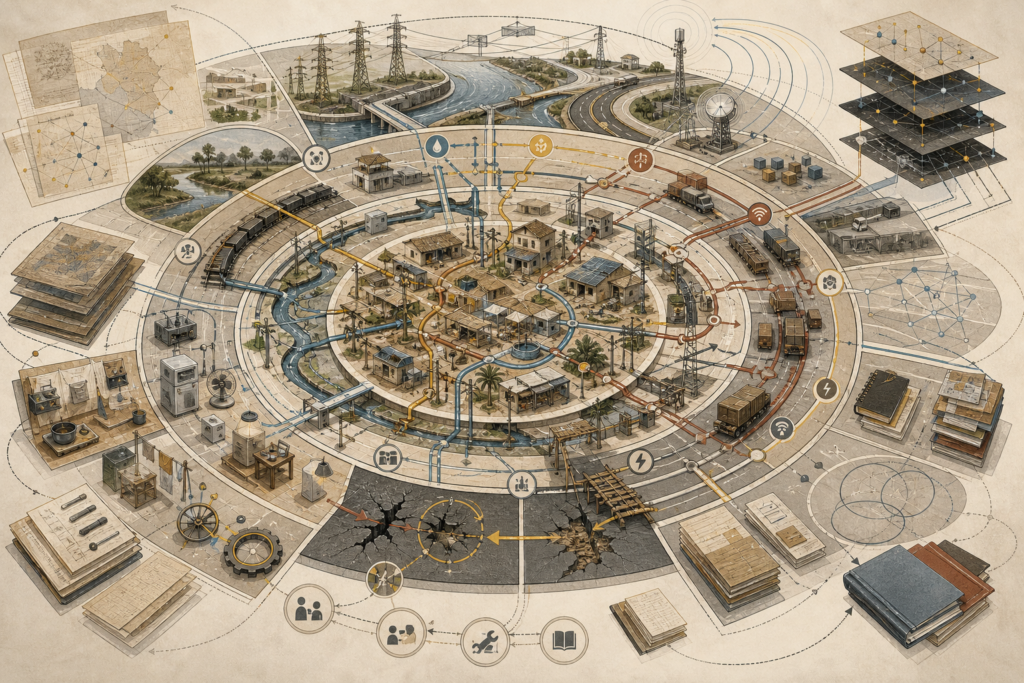
Technology, infrastructure, and everyday systems examine how human beings live with material systems, technical artifacts, built environments, communication networks, platforms, utilities, maintenance regimes, and logistical arrangements in daily life. In cultural anthropology, technologies are not treated as neutral tools imposed on passive users, but as social objects whose meaning, adoption, use, refusal, repair, and consequences are shaped by culture, trust, habit, inequality, institutional power, and lived context. This pillar explores how infrastructures organize movement, connection, access, dependence, and exclusion; how technical systems become visible through breakdown, delay, or failure; how maintenance and repair sustain ordinary life; and how platforms, data systems, utilities, transport networks, and household technologies structure everyday possibility, vulnerability, recognition, and power.