
Last Updated May 3, 2026
Development, modernity, and global change examine how communities experience economic transformation, modernization, globalization, infrastructure, migration, state power, market expansion, expert knowledge, and social upheaval within changing historical conditions. In cultural anthropology, development is not understood only through aggregate growth, institutional reform, poverty reduction, technical assistance, or economic indicators. It is also understood through the lived experiences of people navigating displacement, aspiration, inequality, cultural change, ecological disruption, institutional intervention, and shifting relations of power across local and transnational worlds.
This content pillar brings together the major domains through which cultural anthropology studies development, modernity, and global transformation. It examines development discourse, modernization, state planning, expert authority, infrastructure, urbanization, migration, remittances, global markets, commodity chains, media circulation, platform economies, environmental conflict, extraction, precarity, informality, local knowledge, aspiration, waiting, debt, colonial legacies, postcolonial critique, and uneven access to futures promised in the name of progress. It treats development not as a neutral technical process, but as a cultural, political, historical, moral, institutional, and relational project through which societies are reorganized and through which people reinterpret, resist, inhabit, and transform large-scale change.
Current Space
Cultural Anthropology
Related Topic
Power, Norms & Institutions
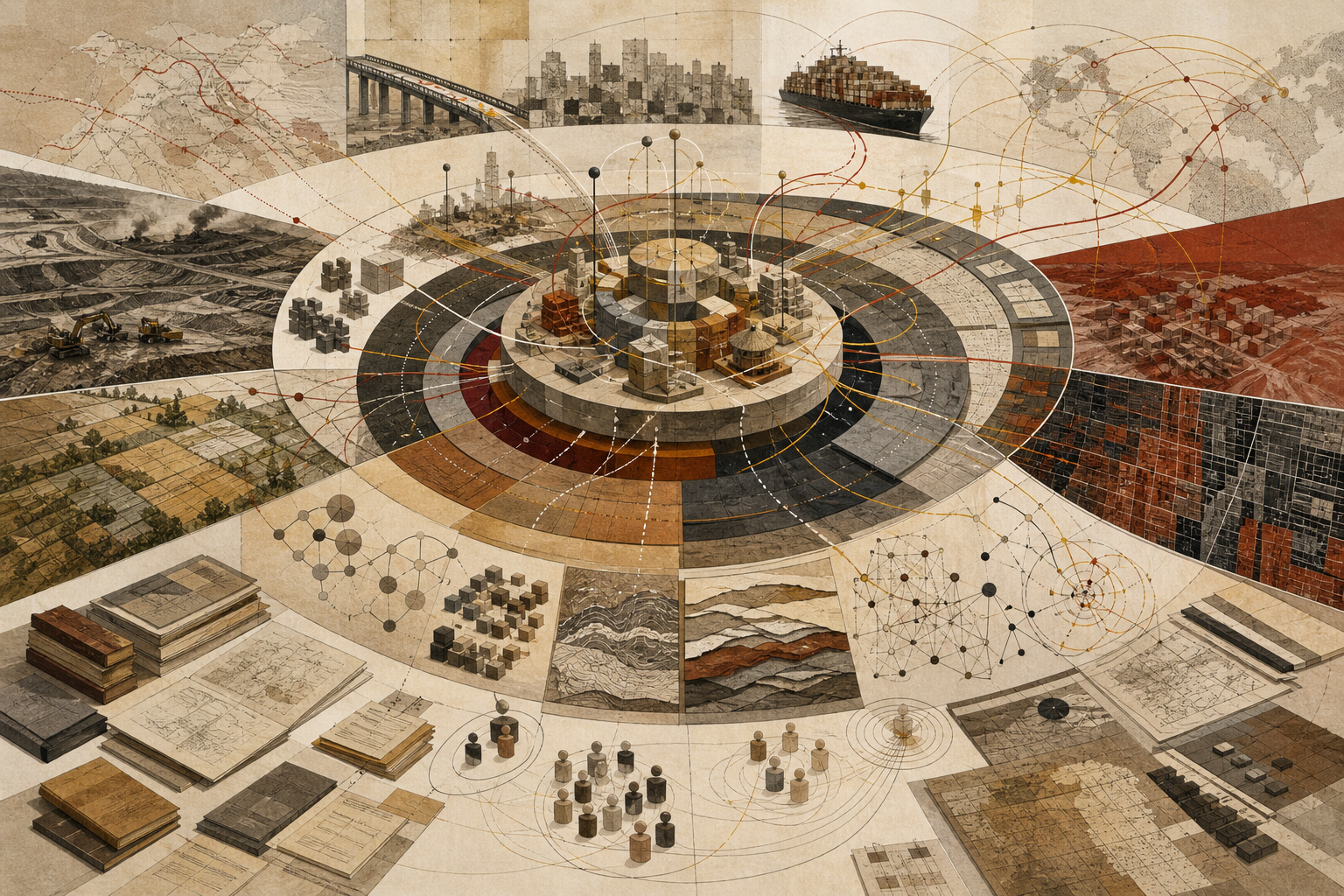
This series also approaches development anthropology as a field that benefits from careful research infrastructure: project-case files, policy-practice comparison templates, infrastructure maps, migration and remittance notes, commodity-chain records, development-discourse codebooks, interview guides, fieldnote templates, local-knowledge memos, ethical review notes, historical timelines, source catalogs, and reproducible research documentation. Cultural anthropology cannot reduce development to indicators, project outputs, economic models, or institutional documents. Development is lived through land, labor, debt, waiting, care, aspiration, displacement, ecological change, bureaucratic encounter, gendered responsibility, mobility, and memory. Yet research repositories can strengthen this work by making sources, interpretive decisions, fieldnote structures, methodological assumptions, and ethical concerns more transparent.
For that reason, this pillar integrates cultural anthropology with open research workflows where appropriate. Python may support synthetic project inventories, migration-flow metadata, commodity-chain examples, policy-document organization, source catalogs, and research utilities. R may support qualitative-code summaries, development-theme comparisons, project-outcome tables, migration and remittance summaries, and reproducible research reports. SQL may support structured catalogs for sources, development projects, institutions, interventions, field sites, infrastructure cases, migration records, commodity-chain nodes, interview excerpts, and interpretive memos. Markdown and notebooks may support research logs, literature reviews, concept maps, reflexive memos, methods documentation, and article-level research packages. These tools do not replace anthropological interpretation. They help make transformation research more organized, auditable, and reusable while preserving context, history, ethics, reflexivity, and the central anthropological responsibility of interpretation.
Development, modernity, and global change therefore appear here not only as classic anthropological concerns, but also as a research architecture for studying how large-scale transformation becomes lived. The aim of the series is to preserve the interpretive and critical richness of development anthropology while building a more transparent scholarly workflow around concepts, cases, sources, institutions, infrastructures, markets, aspirations, and inequalities. In that sense, this pillar treats development not simply as progress or policy, but as a historically situated field of power, meaning, intervention, mobility, and contested futures.
Development, Modernity, and Global Change Research Repository
The Development, Modernity, and Global Change knowledge series is supported by an open research repository with article-level folders, annotated bibliographies, research notes, project-case templates, infrastructure-map templates, migration and remittance examples, ethical fieldwork guidance, qualitative codebooks, synthetic teaching datasets, source metadata, SQL research schemas, Python and R workflow examples, notebooks, and reproducible research scaffolding where appropriate.
View the Development, Modernity, and Global Change Research Repository
Development, Modernity, and Global Change as a Foundational Anthropological Field
Development, modernity, and global change occupy a central place in cultural anthropology because large-scale transformation is never merely economic, administrative, technical, or structural. It is also moral, cultural, historical, relational, ecological, and experiential. Communities do not enter modernity as blank recipients of progress. They reinterpret change through memory, obligation, inequality, local knowledge, symbolic systems, inherited forms of social life, and the unequal conditions under which they encounter states, markets, infrastructures, expert institutions, and global systems.
Anthropology has long treated development as something more complex than economic growth or administrative reform. In a stronger analytical sense, development refers to the broad range of interventions, imaginaries, institutions, infrastructures, categories, technologies, and historical processes through which societies are reorganized in the name of progress, improvement, modernization, security, resilience, sustainability, or global integration. These processes affect livelihoods, moral expectations, kinship structures, labor regimes, ecological relations, migration patterns, generational aspiration, gendered responsibility, and cultural identity. Development is therefore not only a policy project. It is also a lived reordering of social worlds.
This perspective matters because modernity is never a single universal condition unfolding in identical form everywhere. It arrives through uneven histories of industrialization, colonial expansion, state formation, extraction, debt, war, infrastructure, education, media, urbanization, financialization, technological change, and capitalist restructuring. Communities encounter modernity through roads, schools, bureaucracies, wage labor, digital systems, consumer aspirations, development discourse, welfare institutions, and reconfigured temporal horizons, but they do so from radically different historical positions and under unequal relations of power.
A serious anthropology of development therefore asks not only whether change occurs, but whose change it is, under what terms, and with what moral and social consequences. It asks how development projects classify populations, how expert institutions define social problems, how infrastructures transform everyday life, how global markets reshape local livelihoods, how migration reorganizes households, how aspiration becomes socially distributed, and how people make meaningful lives within systems that often exceed their control.
Development as Lived Transformation
Development may be understood as lived transformation. It is not only a set of policies, projects, investments, indicators, or institutional plans. It is something people encounter through land acquisition, school enrollment, road construction, migration, debt, displacement, wage labor, bureaucratic forms, NGO workshops, new crops, mobile phones, market prices, environmental change, and altered expectations about the future. Development becomes real in daily life when people must decide whether to leave, adapt, resist, comply, borrow, relocate, retrain, send money, attend meetings, change farming practices, learn new bureaucratic categories, or reinterpret inherited obligations.
This lived character of development becomes visible when planned change and actual practice diverge. A development project may define itself through poverty reduction while communities experience it through surveillance, debt, altered land rights, labor burdens, or new inequalities. A road may promise mobility while also enabling extraction, policing, land speculation, or cultural disruption. A school may promise opportunity while reorganizing language, authority, generational aspiration, and the value of local knowledge. A sustainability project may promise resilience while shifting costs onto communities with the least power to define what resilience should mean.
Development as lived transformation also helps explain why project outcomes are often unpredictable. Communities are never passive recipients of external intervention. People translate, reinterpret, adapt, redirect, resist, and repurpose development according to local histories, kinship obligations, political alliances, religious meanings, ecological knowledge, and practical constraints. Development may be accepted for reasons different from those imagined by planners. It may be rejected not because people oppose improvement, but because they distrust institutions, remember prior harm, resist loss of autonomy, or understand consequences that external experts fail to see.
To study development anthropologically is therefore to study transformation from the ground up without losing sight of larger structures. It means connecting local experience to states, donors, markets, infrastructures, experts, debt regimes, ecological change, and global histories. It also means recognizing that the language of improvement can carry power, and that people’s own accounts of change are central evidence rather than anecdotal supplement.
Development Anthropology as Interpretive Research Practice
Development anthropology is an interpretive research practice because development cannot be understood fully through project documents, budgets, evaluation metrics, policy frameworks, or economic indicators. Those materials matter, but they do not tell the whole story. Anthropologists ask how development is experienced, how interventions are translated into everyday life, how institutions define problems, how local actors reinterpret projects, how expertise acquires authority, how unintended consequences emerge, and how people navigate transformation under unequal conditions.
This requires close attention to the gap between official development narratives and lived practice. A project may claim participation while actual decision-making remains centralized. A poverty category may simplify complex household realities. A market intervention may assume individual entrepreneurship while people act through kinship obligations, debt relations, and moral economies. A climate-adaptation plan may appear technical while distributing risk unequally. A migration program may generate remittances while also producing separation, care burdens, and legal vulnerability.
Interpretive development research also requires reflexivity. Researchers often work near powerful institutions: states, NGOs, donor agencies, consulting firms, international organizations, universities, and development banks. Fieldwork may involve communities affected by intervention, officials responsible for implementation, experts who produce categories, and people whose lives are translated into reports. A research repository for this pillar can support careful work by organizing sources, project records, policy documents, fieldnote templates, discourse codebooks, migration records, ethical restrictions, and interpretive memos. But the central scholarly task remains contextual interpretation.
The goal is not to turn development into a table detached from history. It is to make the research process more careful: to distinguish official categories from lived categories, to document uncertainty, to protect vulnerable participants, to avoid exposing communities to institutional harm, and to interpret transformation in relation to power, memory, aspiration, and inequality.
What This Pillar Studies
This pillar studies development as intervention, modernity as lived condition, and global change as uneven connection. It examines how states, markets, infrastructures, experts, NGOs, international organizations, corporations, platforms, and transnational networks reshape local worlds. It asks how communities encounter projects of improvement, how progress is defined, how social problems are made legible, how people respond to external models of change, and how large-scale transformation becomes meaningful in everyday life.
At the level of everyday practice, the pillar examines livelihood change, migration, remittances, aspiration, debt, schooling, work, consumption, waiting, care, household strategy, land-use change, informal labor, and altered social expectations. At the level of institutions, it examines development agencies, NGOs, state bureaucracies, expert systems, donor priorities, infrastructure planning, project evaluation, participatory methods, welfare programs, and global governance. At the level of global systems, it examines commodity chains, environmental extraction, platform economies, finance, migration regimes, supply chains, media circulation, and ecological disruption.
The pillar also studies modernity as an uneven and contested condition. Modernity may be experienced as progress, dignity, freedom, recognition, mobility, and new possibility. It may also be experienced as dispossession, acceleration, alienation, waiting, humiliation, dependency, cultural fracture, ecological stress, or loss of control over future horizons. Anthropology resists treating modernity as either pure emancipation or simple decline. It studies the ambivalence of transformation as it is lived.
Finally, this pillar studies agency under constraint. Even under conditions of structural inequality, people improvise, strategize, reinterpret institutions, repurpose projects, sustain kin networks, maintain memory, build livelihoods, and create meaningful futures within systems not of their own making. Anthropology remains attentive to these practices without romanticizing survival as consent or resilience as justice.
Major Intellectual Lineages
The anthropology of development and modernity draws on several major intellectual traditions. One important lineage emerges from classical theories of economic transformation, industrialization, modernization, and social change. In these frameworks, development was often imagined as a directional movement from “traditional” social forms toward “modern” ones, typically modeled on Western industrial and bureaucratic experience. Anthropological work became increasingly critical of such linear assumptions, demonstrating that social change does not follow a single pathway and that the language of modernization often conceals colonial hierarchy, civilizational ranking, and unequal historical incorporation into global systems.
A second lineage comes from the anthropology of development itself, which examines development as both an institutional apparatus and a cultural project. This tradition studies how states, donors, experts, NGOs, and international organizations define social problems, classify populations, produce expert knowledge, and implement interventions in the name of improvement. It also shows how development discourse can depoliticize inequality, frame political conflict as technical deficiency, and render local life legible through categories that may not correspond to lived realities. Development, in this sense, is not only something done to communities. It is also a language through which power organizes problems and proposes futures.
A third lineage centers on globalization, transnationalism, and world-scale interconnection. Here, anthropology examines how local communities are linked to wider flows of capital, labor, media, commodities, governance, technology, migration, finance, expertise, and environmental change. Rather than treating the global and the local as separate levels, this tradition shows how they are mutually constituted. Globalization becomes visible in everyday life through migrant remittances, platform economies, commodity dependence, educational aspiration, transnational kinship, infrastructural expansion, media imaginaries, and shifting standards of success and mobility.
A fourth lineage focuses on modernity as an uneven, contested, and stratified condition rather than a neutral achievement. Anthropological work in this tradition asks how people experience aspiration, abandonment, acceleration, exclusion, waiting, interruption, uncertainty, and fractured expectation under modern conditions. Modernity may promise freedom, advancement, recognition, and participation, yet it can also produce alienation, dispossession, precarious labor, and uneven access to the very futures it claims to open. This makes modernity not only a historical process, but also a moral field in which competing visions of progress, dignity, and personhood are negotiated.
A fifth lineage intersects with postcolonial and critical anthropological thought, which emphasizes that development and global change are inseparable from longer histories of empire, extraction, racialization, land dispossession, administrative classification, and uneven incorporation into capitalist order. From this perspective, modernity is never innocent. It is entangled with domination, expert authority, racialized hierarchy, labor control, environmental transformation, and the restructuring of local life according to external imperatives.
Taken together, these lineages show that development, modernity, and global change are not merely macro-level abstractions. They are lived processes that reorganize social life through institutions, infrastructures, categories, aspirations, technologies, ecological relations, and unequal power. Anthropology’s distinctive contribution lies in showing how large-scale transformation is mediated through local worlds of meaning, memory, social obligation, and everyday practice.
Development as a Cultural and Political Project
Development is often presented as a neutral effort to reduce poverty, improve welfare, increase opportunity, strengthen resilience, or expand access to services. Anthropology complicates this image by showing that development is also a cultural and political project. It defines what counts as backwardness, what constitutes improvement, which populations require intervention, which forms of knowledge count as expertise, and which ways of life are deemed productive, modern, resilient, sustainable, or governable.
Development is therefore not simply about resources. It is also about classification, authority, expertise, and the power to define the terms of change. Development projects can reorder everyday life in ways that exceed their stated objectives. Irrigation systems alter labor patterns, land rights, ecological relations, and political authority. Schooling changes generational aspiration, language, and authority. Roads transform mobility, trade, extraction, policing, and exposure to outside norms. Health interventions reconfigure household care and institutional trust. Microfinance, welfare targeting, agricultural reform, and digital service delivery all carry embedded assumptions about personhood, responsibility, rationality, and social organization.
This field also examines how development discourse can depoliticize conflict by reframing struggles over land, labor, inequality, sovereignty, and ecological harm as technical problems to be solved by expert management. In this way, anthropology reveals development as a site where power operates through benevolent language, administrative categories, indicators, project cycles, and future-oriented promises. Yet anthropology also shows that communities are never passive recipients. People interpret development through existing moral worlds, resist externally imposed categories, adapt projects to local realities, and repurpose interventions for their own ends.
Modernity as Lived Condition
Modernity is often discussed as a large historical transition associated with industrialization, secularization, urbanization, bureaucratic state formation, technological acceleration, mass education, wage labor, consumer culture, and the expansion of formal institutions. Anthropology adds another dimension by treating modernity as a lived condition. It asks what it feels like to inhabit worlds shaped by intensified speed, institutional abstraction, mobility, aspiration, fragmentation, consumer desire, bureaucratic encounter, digital mediation, ecological uncertainty, and unstable futures.
From this perspective, modernity is not a singular achievement but an uneven and often unstable experience. It may bring access to education, media, wage labor, mobility, public services, and political participation, while simultaneously producing dispossession, social fragmentation, ecological stress, loneliness, precarious labor, or temporal dislocation. Communities may experience modern life as liberation, threat, obligation, promise, or loss, often at the same time.
This attention to lived modernity also reveals that people do not simply abandon prior worlds when new institutions or infrastructures emerge. They often inhabit multiple temporalities at once, moving between inherited obligations and future-oriented aspirations, between ritual continuity and technological change, between local belonging and transnational imagination, between memory of prior harm and promise of improvement. Modernity is therefore not a clean break with tradition. It is often a layered condition in which older moral forms persist, adapt, or become newly meaningful under altered circumstances.
Global Change and Uneven Connection
Global change refers not only to globalization in the economic sense, but to the broader reorganization of life under intensifying transnational interdependence. Anthropologists study how communities are connected to wider worlds through migration, environmental change, labor regimes, financial systems, commodity chains, development institutions, media circulation, infrastructure corridors, digital platforms, and planetary ecological pressures. These connections are not abstract. They are embodied in family separation, remittance economies, precarious work, supply-chain dependency, debt, infrastructural expansion, and changing expectations about mobility, success, care, and obligation.
The key anthropological insight is that connection is never symmetrical. Communities are inserted into global systems under unequal conditions. Some benefit from access to education, capital, mobility, recognition, and transnational networks. Others experience extraction, dependency, land loss, environmental exposure, volatile markets, degraded labor conditions, and chronic vulnerability to crises generated elsewhere. Global change therefore creates differentiated forms of opportunity and risk, reconfiguring both material life and moral expectation.
This perspective is especially important for understanding how local worlds are transformed without disappearing. Anthropologists show that even under intense global pressure, communities do not simply dissolve into abstract modernity. They continue to interpret global processes through kinship, memory, religion, symbolic systems, local politics, ecological knowledge, and everyday practical reasoning. Global change is therefore always mediated. It becomes real through specific livelihoods, landscapes, institutions, households, and aspirations.
Core Themes in the Anthropology of Transformation
One major theme in this field is development as intervention. Anthropologists ask how projects of improvement are designed, justified, implemented, evaluated, and inhabited, and how they reshape communities through categories such as poverty, productivity, empowerment, sustainability, resilience, modernization, inclusion, and capacity-building. Development is studied not simply as policy, but as a set of classificatory and institutional practices that make populations governable and futures actionable.
A second major theme is modernity and everyday life. Anthropology examines how infrastructures, media, labor systems, education, platforms, consumer worlds, welfare systems, and bureaucracies alter everyday rhythms of work, family life, aspiration, mobility, intimacy, authority, and expectation. Modernity is approached not merely as a period label, but as a lived condition marked by altered temporalities, social differentiation, and uneven access to promised forms of progress.
A third theme is globalization and transnational connection. Communities are linked to wider worlds through migration, communication systems, commodity circulation, labor mobility, ecological disruption, transnational governance, financial systems, and platform-mediated exchange. Anthropology studies how these connections are made meaningful on the ground and how distant forces become intimate through household strategies, remittances, education, debt, media, and infrastructural dependence.
A fourth theme is inequality, dispossession, and uneven development. Development and global integration do not distribute gains evenly. Some groups gain mobility, protection, recognition, income, and institutional access, while others experience extraction, displacement, informalization, degraded labor conditions, loss of land, intensified precarity, or ecological harm. Anthropology therefore pays close attention to how transformation reorganizes inequality across class, gender, ethnicity, caste, race, region, generation, citizenship, migration status, and political status.
A fifth theme is cultural mediation and reinterpretation. Communities do not simply absorb external models of development or modernity. They translate them through local moral worlds, symbolic systems, kinship structures, religious commitments, ecological knowledge, and practical constraints. Anthropological analysis focuses on these mediations, showing how people adapt, resist, hybridize, redirect, or repurpose larger structures of change within everyday life.
A sixth theme is temporality. Development is often justified through future-oriented promises of improvement, while communities may experience change through waiting, deferred hope, interrupted continuity, nostalgia, uncertainty, or moral loss. Anthropology therefore examines not only what transformation does, but how it is narrated, anticipated, remembered, and endured across time.
Finally, this field raises persistent questions of agency and survival. Even under conditions of structural inequality, people improvise, strategize, rework institutions, maintain households, sustain relations, and build meaningful lives within systems not of their own making. Anthropology remains attentive to these practices of adaptation without romanticizing survival, resilience, or informality as substitutes for justice.
Development, Modernity, and Global Change Pillar Map
The map below organizes the Development, Modernity, and Global Change series into conceptual domains, moving from development theory and modernization critique into state planning, expert knowledge, infrastructure, migration, globalization, markets, media, extraction, precarity, local knowledge, temporality, ethics, and research practice.
This pillar is organized to move from foundations and first principles into development discourse, modernization, state planning, expert authority, infrastructure, urbanization, migration, remittances, markets, commodities, globalization, colonial legacies, environmental conflict, platform economies, informality, precarity, aspiration, waiting, local knowledge, development ethics, and the cultural mediation of transformation. Research infrastructure is integrated where it strengthens scholarly practice, especially through annotated bibliographies, project-case templates, policy-practice comparison tables, infrastructure maps, migration and remittance examples, discourse codebooks, fieldnote templates, synthetic teaching datasets, Python utilities, R summaries, SQL research catalogs, and reproducible notebooks. The goal is a pillar that remains fully anthropological while making its research practices more transparent, organized, historically grounded, and ethically responsible.
Foundations of Development Anthropology
- What Is Development in Anthropological Thought? (planned) — A foundational article defining development as a cultural, political, institutional, and historical project rather than a neutral technical process.
- Modernity, Modernization, and Their Discontents (planned) — An article on modernization theory, critiques of linear progress, and the ambivalent lived experience of modernity.
- The Anthropology of Development as Critique (planned) — A core article on development anthropology’s critique of expert authority, project logic, classification, depoliticization, and unintended consequences.
- Development Discourse and the Making of Social Problems (planned) — An article on how poverty, underdevelopment, resilience, capacity, and empowerment become institutional categories.
- Progress, Improvement, and the Moral Language of Development (planned) — An article on how development defines desirable futures and morally ranks forms of life, labor, knowledge, and aspiration.
- Emic and Etic Categories in Development Research (planned) — A methodological article on distinguishing community categories, expert categories, policy categories, and researcher categories.
States, Experts, and the Administration of Progress
- States, Experts, and the Administration of Progress (planned) — A major article on how states, donors, NGOs, consultants, and expert institutions define problems and govern interventions.
- Development as Governmentality and Social Management (planned) — An article on development as a way of shaping conduct, organizing populations, and producing governable subjects.
- Project Cycles, Indicators, and the Institutional Life of Development (planned) — A practical article on planning, monitoring, evaluation, indicators, logframes, and the bureaucratic form of development work.
- Participation, Consultation, and the Politics of Voice (planned) — An article on participatory development, consultation, tokenism, community voice, and institutional legitimacy.
- Development Projects and Unintended Consequences (planned) — An article on why interventions produce effects beyond their stated aims and why local interpretation matters.
- Policy, Practice, and the Work of Maintaining Development Narratives (planned) — A Mosse-oriented article on how development actors sustain coherent representations of policy even when practice diverges.
Infrastructure, Urbanization, and Uneven Modernization
- Infrastructure, Mobility, and Uneven Modernization (planned) — A major article on roads, grids, water systems, ports, corridors, communications, and the social transformation produced by infrastructure.
- Urbanization, Migration, and Social Transformation (planned) — An article on cities, informal settlements, labor mobility, housing, public services, aspiration, and changing social identities.
- Roads, Corridors, and the Spatial Politics of Development (planned) — A focused article on transport corridors, extraction routes, markets, policing, land speculation, and mobility.
- Housing, Informality, and the Making of Urban Futures (planned) — An article on informal housing, eviction, tenure, settlement politics, services, and urban belonging.
- Energy, Water, and the Infrastructure of Modern Life (planned) — An article on utilities, service provision, inequality, public trust, technical systems, and everyday dependence.
- Smart Cities, Digital Governance, and Platform Modernity (planned) — A contemporary article on data systems, digital service delivery, urban governance, surveillance risk, and unequal access.
Markets, Commodities, Labor, and Global Capitalism
- Markets, Commodities, and Global Cultural Change (planned) — A major article on commodities, consumer worlds, market integration, labor, value, and cultural transformation.
- Commodity Chains and the Anthropology of Global Connection (planned) — An article on how distant consumers, workers, landscapes, and institutions become linked through global production.
- Precarity, Informality, and Life Under Global Change (planned) — An article on insecure work, informal labor, unstable livelihoods, risk, and survival under global restructuring.
- Debt, Credit, and the Moral Economy of Development (planned) — An article on microfinance, household debt, moral pressure, entrepreneurship, obligation, and risk transfer.
- Consumption, Aspiration, and the Moral Economy of Modern Life (planned) — An article on consumer desire, status, media, mobility, class, and the moral imagination of success.
- Supply Chains, Extraction, and Unequal Value (planned) — An article on how value moves through global systems while risk, labor, and ecological damage are distributed unevenly.
Migration, Transnationalism, and Cross-Border Life
- Transnationalism, Remittances, and Cross-Border Belonging (planned) — A major article on migration, remittances, family separation, obligation, mobility, and transnational kinship.
- Migration, Labor, and the Reorganization of Households (planned) — An article on how mobility reshapes care, gender, elder support, childcare, and household strategy.
- Remittances, Aspiration, and the Development Promise (planned) — An article on remittances as financial support, moral obligation, social investment, and development narrative.
- Borders, Documents, and Unequal Mobility (planned) — An article on legal status, visas, deportation, documentation, citizenship, and the institutional regulation of movement.
- Diaspora, Media, and Long-Distance Belonging (planned) — An article on digital communication, memory, homeland, ritual, language, and transnational identity.
- Return Migration, Status, and the Ambivalence of Homecoming (planned) — An article on return, expectation, disappointment, reintegration, and transformed belonging.
Colonial Legacies, Postcolonial Critique, and Uneven Development
- Colonial Legacies and the Politics of Modernization (planned) — A major article on how development inherits colonial categories, infrastructures, land systems, administrative habits, and civilizational hierarchies.
- Postdevelopment and the Critique of Expert Futures (planned) — An article on critiques of development as discourse, control, and externally imposed futurity.
- Planning, Legibility, and the High-Modernist State (planned) — A Scott-oriented article on administrative legibility, local knowledge, standardization, and the failures of schematic planning.
- Inequality, Marginality, and the Uneven Geography of Development (planned) — An article on unequal development across region, class, race, caste, gender, ethnicity, and citizenship.
- Development, Race, and the Afterlives of Empire (planned) — A critical article on racialized hierarchy, aid, expertise, global inequality, and historical responsibility.
- Sovereignty, Dependency, and the Politics of Aid (planned) — An article on donor power, national sovereignty, dependency, conditionality, and institutional influence.
Environment, Extraction, and Planetary Change
- Environment, Extraction, and Development Conflict (planned) — A major article on mining, dams, forests, energy, conservation, land rights, ecological harm, and contested development.
- Climate Adaptation, Resilience, and the Politics of Vulnerability (planned) — An article on adaptation projects, resilience discourse, risk transfer, community knowledge, and climate inequality.
- Conservation, Displacement, and Green Development (planned) — An article on protected areas, conservation finance, livelihood restriction, Indigenous rights, and environmental governance.
- Land, Territory, and Development Dispossession (planned) — An article on land acquisition, tenure, displacement, infrastructure, extraction, and the politics of place.
- Food Systems, Agricultural Reform, and Rural Transformation (planned) — An article on agricultural modernization, seed systems, markets, subsidies, rural labor, and ecological change.
- Development in the Anthropocene (planned) — A capstone-style article on development under planetary crisis, ecological limits, extraction, climate risk, and alternative futures.
Media, Platforms, and Cultural Globalization
- Media, Platforms, and Digital Globalization (planned) — A major article on media circulation, digital platforms, online labor, social media, identity, aspiration, and global cultural forms.
- Electronic Mediation and the Imagination of Modern Life (planned) — An Appadurai-oriented article on media, migration, imagination, and the social production of aspiration.
- Platform Economies and Everyday Dependency (planned) — An article on gig work, platform governance, mobile payments, ranking, data extraction, and informal labor.
- Digital Development and the Politics of Inclusion (planned) — An article on digital ID, financial inclusion, e-governance, mobile services, and unequal access.
- Global Brands, Consumer Desire, and Cultural Translation (planned) — An article on branding, status, local adaptation, consumer aspiration, and global cultural circulation.
- Information, Rumor, and Trust Under Global Change (planned) — An article on media trust, rumor, public belief, institutional credibility, and crisis communication.
Time, Aspiration, Waiting, and Everyday Futures
- Waiting, Hope, and the Temporal Politics of Development (planned) — A major article on waiting, deferred promise, project delay, bureaucratic time, aspiration, and interrupted futures.
- Aspiration, Mobility, and the Unequal Distribution of Futures (planned) — An article on education, migration, class mobility, youth expectation, and who is allowed to imagine advancement.
- Nostalgia, Loss, and the Memory of Prior Worlds (planned) — An article on cultural memory, moral loss, environmental loss, displacement, and the ambivalence of change.
- Acceleration, Uncertainty, and Life Under Permanent Transition (planned) — An article on speed, instability, crisis, technological change, and the feeling of living inside unfinished transformation.
- Resilience, Survival, and the Burden of Adaptation (planned) — A critical article on resilience discourse, survival labor, community burden, and the difference between adaptation and justice.
- Development, Modernity, and the Cultural Mediation of Global Transformation (planned) — A capstone article on how large-scale change is interpreted, resisted, inhabited, and transformed through local worlds.
Research Methods, Ethics, and Development Data
- Fieldnotes, Project Documents, and the Study of Development (planned) — A methodological article on documenting development through fieldnotes, policy documents, interviews, meetings, sites, and project archives.
- Interviewing About Development, Aspiration, and Displacement (planned) — A research-practice article on ethical interviews about intervention, loss, mobility, debt, hope, and institutional experience.
- Project Maps, Infrastructure Diagrams, and Ethical Representation (planned) — An article on mapping development without exposing vulnerable communities or flattening lived experience into project diagrams.
- Codebooks for Development, Modernity, and Global Change (planned) — A practical article on qualitative coding for discourse, aspiration, migration, infrastructure, policy-practice gaps, and local knowledge.
- Development Data, Confidentiality, and Anthropological Ethics (planned) — A critical article on why development research can expose communities, workers, migrants, and vulnerable participants.
- Digital Research Repositories for Development Anthropology (planned) — A practical article on organizing sources, notes, synthetic examples, project inventories, ethics notes, and reproducible workflows without reducing development to data.
Python Workflow: Development Project Inventory and Discourse Metadata
A useful Python workflow for this pillar is a synthetic development-project inventory and discourse-metadata workflow. The workflow can begin with a small synthetic teaching dataset containing project names, institutional actors, intervention types, target categories, stated goals, affected domains, field sites, participation claims, implementation notes, policy-practice gap flags, and ethical sensitivity indicators. Python can be used to validate records, classify intervention types, summarize recurring development keywords, identify categories used to define social problems, and export structured tables for research review. In a more advanced version, the workflow can incorporate policy documents, project reports, NGO materials, meeting notes, interview excerpts, infrastructure cases, migration records, and links between development discourse and interpretive memos.
This workflow belongs naturally with articles on development discourse, expert authority, state planning, development projects, unintended consequences, infrastructure, participation, and rule-practice gaps. It demonstrates how research infrastructure can support interpretation without replacing it. The purpose is not to automate the study of development or assume that project metadata explains lived transformation. The purpose is to show how synthetic examples and transparent documentation can help researchers think carefully about categories, intervention logic, project narratives, and institutional assumptions while foregrounding history, power, consent, and context.
R Workflow: Development Themes, Migration, and Global Change Summaries
A useful R workflow for this pillar is a development-theme, migration, and global-change summary workflow. The workflow can begin with a synthetic coding table containing excerpt identifiers, source types, development themes, institutional actors, migration contexts, infrastructure categories, aspiration codes, displacement indicators, environmental conflict tags, and researcher memos. R can be used to summarize code frequencies, compare development themes across source types, visualize migration and remittance categories, and create reproducible tables for article drafting. In a more advanced version, the workflow can incorporate qualitative coding for participation, resilience, expertise, waiting, informality, dependency, infrastructure, extraction, and local reinterpretation.
This workflow belongs naturally with articles on development critique, migration, remittances, globalization, infrastructure, precarity, environmental conflict, and modernity as lived condition. It demonstrates that computational summaries can support development anthropology only when they remain subordinate to ethnographic interpretation. A table showing that “resilience,” “participation,” and “policy-practice gap” co-occur in a synthetic corpus does not explain a development project by itself. It simply identifies a pattern that requires close reading, institutional history, participant context, and ethical care.
Fieldwork Ethics and the Sensitivity of Development Research
Development research requires particular ethical care because information about projects, institutions, land, migration, debt, displacement, corruption, labor, environmental harm, or community conflict can place people at risk. A fieldnote about a project meeting, a household debt strategy, a land dispute, an NGO failure, an informal payment, a migration route, or a critique of local authority can expose participants to retaliation, stigma, legal vulnerability, institutional exclusion, or loss of access to services.
For that reason, research infrastructure for this pillar must treat development data as sensitive by default. Real fieldnotes, interviews, internal project documents, community maps, migration records, or project-conflict notes should not be stored in public repositories unless there is explicit permission, careful anonymization, and a clear ethical basis. Synthetic teaching datasets are preferable for public code examples. Project maps should be generalized. Fieldnotes should separate public observations from confidential information. Institutional actors should be named only when doing so is already public, necessary, and ethically justified.
Ethical development research also requires attention to power. Researchers may work near donors, states, NGOs, consultants, experts, and institutions that already hold authority over communities. Participants may depend on those institutions for services, recognition, employment, protection, or permission. The researcher’s responsibility is not merely to describe transformation, but to avoid increasing the vulnerability of those affected by it. A repository can support this responsibility by including consent notes, restricted-data warnings, anonymization guidance, ethical checklists, and clear distinctions between synthetic examples and real research material.
Development, Modernity, and Power
Development often becomes durable when it becomes morally persuasive. It speaks in the language of improvement, empowerment, capacity, productivity, resilience, inclusion, sustainability, and modernization. These terms can name real needs and legitimate aspirations. They can also conceal power. A project may appear benevolent while reorganizing land, labor, authority, and knowledge. A technical category may appear neutral while defining who is deficient, who requires intervention, and whose expertise counts.
Modernity also carries power because it ranks futures. Some ways of living are framed as advanced, efficient, rational, productive, and forward-looking. Others are framed as backward, informal, traditional, inefficient, vulnerable, or in need of reform. These classifications shape policy, investment, education, media, and institutional recognition. They affect how people understand themselves and how they are judged by others.
At the same time, people reinterpret modernity. They may desire schooling, mobility, technology, and opportunity without accepting the loss of land, language, memory, or autonomy. They may accept development funds while resisting the categories attached to them. They may use infrastructures for purposes planners did not anticipate. Development is therefore not only imposed. It is negotiated, contested, translated, and sometimes remade from below.
Development and Modern Institutions
Modern development depends on institutions, but institutions do not operate only through formal design. Policies, donor programs, NGOs, state agencies, consultancies, infrastructure authorities, development banks, schools, clinics, platforms, and public programs all depend on norms, trust, documents, expertise, role performance, categories, and everyday interpretation. A project may be written centrally but implemented locally. A poverty category may exist in a database but become meaningful through household visits, eligibility rules, documents, and social recognition. A climate adaptation plan may depend as much on trust and participation as on technical modeling.
This matters for sustainability, infrastructure, public health, migration, digital governance, and social policy. A development project may fail if it misunderstands local authority, kinship obligations, ecological knowledge, land rights, gendered labor, or historical memory. A digital-service system may increase access for some while excluding people without documents, connectivity, literacy, or institutional trust. A resilience program may shift responsibility from institutions to households already carrying heavy burdens.
Development institutions therefore mediate between global models and local life. They translate policy into encounter, categories into consequences, funding into projects, and future-oriented promises into everyday obligations. To understand development anthropologically is to study how institutions are actually lived.
Development, Modernity, and Global Change in a Wider Intellectual Context
Development, modernity, and global change occupy a distinctive place in human knowledge because they explain how historical transformation becomes lived. They show that communities are not shaped only by local custom, national policy, or economic structure, but by overlapping systems of state power, markets, infrastructure, migration, media, expertise, environmental change, and global inequality.
This wider intellectual significance makes development anthropology indispensable for understanding contemporary life. Climate adaptation, infrastructure expansion, digital governance, migration policy, development finance, public health, welfare reform, education, labor platforms, conservation, and sustainability all depend on development logics. Yet development is not self-executing. It requires people to accept categories, trust institutions, reinterpret obligations, use new systems, adjust livelihoods, or resist imposed futures.
A serious Development, Modernity, and Global Change pillar therefore belongs within a larger architecture of cultural anthropology, political anthropology, economic anthropology, development studies, postcolonial theory, environmental anthropology, migration studies, infrastructure studies, global governance, ethics, and sustainability. It gives readers a way to understand transformation not as an abstract march toward progress, but as a contested field of power, aspiration, inequality, memory, and lived social change.
Related Reading
- Cultural Anthropology
- Culture, Meaning, and Symbolism
- Power, Norms, and Institutions
- Environment, Place, and Ecological Knowledge
- Technology, Infrastructure, and Everyday Systems
- Sustainable Development
Further Reading
- Appadurai, A. (1996). Modernity at Large: Cultural Dimensions of Globalization. Minneapolis: University of Minnesota Press. https://www.upress.umn.edu/9780816627936/modernity-at-large/
- Edelman, M. and Haugerud, A. (eds.) (2005). The Anthropology of Development and Globalization: From Classical Political Economy to Contemporary Neoliberalism. Malden, MA: Blackwell.
- Escobar, A. (1995). Encountering Development: The Making and Unmaking of the Third World. Princeton: Princeton University Press. https://www.jstor.org/stable/j.ctt7rtgw
- Ferguson, J. (1994). The Anti-Politics Machine: “Development,” Depoliticization, and Bureaucratic Power in Lesotho. Minneapolis: University of Minnesota Press. https://www.upress.umn.edu/9780816624379/anti-politics-machine/
- Li, T. M. (2007). The Will to Improve: Governmentality, Development, and the Practice of Politics. Durham: Duke University Press. https://www.dukeupress.edu/the-will-to-improve/
- Mosse, D. (2005). Cultivating Development: An Ethnography of Aid Policy and Practice. London: Pluto Press. https://www.plutobooks.com/product/cultivating-development/
- Scott, J. C. (1998). Seeing Like a State: How Certain Schemes to Improve the Human Condition Have Failed. New Haven: Yale University Press. https://politicalscience.yale.edu/publications/seeing-state-how-certain-schemes-improve-human-condition-have-failed
- Tsing, A. L. (2005). Friction: An Ethnography of Global Connection. Princeton: Princeton University Press.
- Brown, N. (2020). Globalization. In Perspectives: An Open Introduction to Cultural Anthropology. American Anthropological Association. https://perspectives.americananthro.org/Chapters/Globalization.pdf
References
- Appadurai, A. (1996). Modernity at Large: Cultural Dimensions of Globalization. Minneapolis: University of Minnesota Press. https://www.upress.umn.edu/9780816627936/modernity-at-large/
- Brown, N. (2020). Globalization. In Perspectives: An Open Introduction to Cultural Anthropology. American Anthropological Association. https://perspectives.americananthro.org/Chapters/Globalization.pdf
- Edelman, M. and Haugerud, A. (eds.) (2005). The Anthropology of Development and Globalization: From Classical Political Economy to Contemporary Neoliberalism. Malden, MA: Blackwell.
- Escobar, A. (1995). Encountering Development: The Making and Unmaking of the Third World. Princeton: Princeton University Press. https://www.jstor.org/stable/j.ctt7rtgw
- Ferguson, J. (1994). The Anti-Politics Machine: “Development,” Depoliticization, and Bureaucratic Power in Lesotho. Minneapolis: University of Minnesota Press. https://www.upress.umn.edu/9780816624379/anti-politics-machine/
- Gupta, A. (2012). Red Tape: Bureaucracy, Structural Violence, and Poverty in India. Durham: Duke University Press.
- Harvey, D. (1989). The Condition of Postmodernity: An Enquiry into the Origins of Cultural Change. Oxford: Blackwell.
- Li, T. M. (2007). The Will to Improve: Governmentality, Development, and the Practice of Politics. Durham: Duke University Press. https://www.dukeupress.edu/the-will-to-improve/
- Mosse, D. (2005). Cultivating Development: An Ethnography of Aid Policy and Practice. London: Pluto Press. https://www.plutobooks.com/product/cultivating-development/
- Ong, A. (1999). Flexible Citizenship: The Cultural Logics of Transnationality. Durham: Duke University Press.
- Rist, G. (2008). The History of Development: From Western Origins to Global Faith. 3rd edn. London: Zed Books.
- Scott, J. C. (1998). Seeing Like a State: How Certain Schemes to Improve the Human Condition Have Failed. New Haven: Yale University Press. https://politicalscience.yale.edu/publications/seeing-state-how-certain-schemes-improve-human-condition-have-failed
- Tsing, A. L. (2005). Friction: An Ethnography of Global Connection. Princeton: Princeton University Press.