Meaning

Meaning examines how human beings interpret experience, create symbols, tell stories, recognize beauty, express value, and build shared worlds of understanding. It sits between thinking and problem solving: where perception, memory, imagination, language, art, narrative, and culture become ways of making sense of life.

This category explores the forms through which meaning is created and communicated, including aesthetics, storytelling, symbolism, design, music, myth, metaphor, style, ritual, interpretation, and cultural memory. Within the broader research library, Meaning serves as a bridge between cognition and practice: thinking helps explain how we understand, meaning explores how we interpret and value, and problem solving focuses on how we decide, design, govern, and act.

Scholarly archival music-study room with abstract musical structures, rhythm grids, harmonic diagrams, tuning circles, waveform studies, instrument fragments, performance-study sheets, and layered compositional forms representing music theory, form, and meaning.

Music Theory, Form, and Meaning: How Sound Organizes Experience

This article map introduces music theory, form, and meaning as a study of how sound organizes time, feeling, memory, expectation, and human experience. It treats music as meaningful without requiring ordinary language, examining melody, harmony, rhythm, meter, phrase, cadence, texture, timbre, repetition, development, notation, performance, and interpretation. The map moves from foundations of musical understanding into structure, emotional expression, improvisation, tuning systems, genre, ritual, technology, culture, identity, protest, platforms, and algorithmic music. It helps readers understand how music can carry emotion, shape collective life, and create patterns of tension, resolution, return, and transformation. The series also connects musical meaning to ethics, cultural exchange, listening practices, archives, media systems, public culture, and the changing conditions of musical experience across everyday listening, performance spaces, and institutions. while opening pathways into aesthetics, culture, technology, ritual, and the philosophy of sound. today. collectively.

Scholarly archival research studio with abstract artworks, sculptural fragments, color studies, musical structure diagrams, symbolic objects, geometric pattern sheets, natural forms, architectural studies, and interpretive materials representing beauty, aesthetics, and meaning.

Beauty, Aesthetics, and Meaning: Form, Pattern, and Human Understanding

This umbrella article map introduces beauty, aesthetics, and meaning as a broad inquiry into how form, perception, art, design, music, symbolism, pattern, and creative practice shape human understanding. It treats beauty as more than prettiness or preference, showing how aesthetic experience organizes attention, feeling, memory, value, cultural identity, and public life. The map moves from foundations of beauty and aesthetic awareness into form, pattern, harmony, rhythm, proportion, the sublime, art, design, music, symbols, style, composition, taste, interpretation, accessibility, power, public beauty, and human flourishing. It provides the gateway for the Meaning category’s aesthetics cluster. The series also explores responsible interpretation, computational tools, visual archives, and the future of aesthetic judgment in an algorithmic culture shaped by platforms, synthetic media, design automation, public taste, and everyday experience. across education, civic space, culture, technology, and shared human experience. today. and meaningfully.

Scholarly archival studio wall and worktable with sketches, drafts, layered manuscripts, compositional studies, visual frames, folded study panels, abstract revision marks, craft materials, symbolic fragments, and interpretive diagrams representing creative form and meaning-making.

Creative Form, Composition, and Interpretation: Studio Practice and Meaning-Making

This article map explores creative form, composition, and interpretation as a study of how works are made, structured, revised, performed, received, and understood. It treats creativity as disciplined meaning-making rather than inspiration alone, emphasizing medium, material, constraint, process, craft, revision, audience, context, performance, and responsibility. The map moves from foundations of creative form into composition, unity, contrast, rhythm, framing, scale, openness, drafts, technique, practice, failure, reception, ambiguity, genre, embodiment, improvisation, collaboration, authorship, creative credit, technology, and agency. It helps readers understand making as a form of thinking and interpretation as part of a work’s continuing life. The series also addresses influence, cultural responsibility, audience care, AI-assisted creation, archives, adaptation, collaboration, and the ethics of responsible form-making across media, institutions, communities, and traditions. that keep works meaningful through drafts, performances, archives, adaptations, tools, and interpretive afterlives. across public life. responsibly.

Scholarly archival research table with symbolic objects, masks, textile motifs, ritual patterns, public emblems, monument fragments, cultural artifacts, animal and plant motifs, labyrinth forms, and interpretive diagrams representing symbolism, style, and cultural meaning.

Symbolism, Style, and Cultural Meaning: Icons, Motifs, and Public Memory

This article map examines symbolism, style, and cultural meaning as a study of how signs, images, motifs, objects, rituals, public symbols, and visual traditions carry memory, identity, power, and interpretation. It treats symbols as more than decorative signs, showing how they condense belief, conflict, belonging, sacredness, authority, grief, resistance, and collective memory. The map moves from foundations of symbolic meaning into iconography, sacred art, mythic imagery, archetypes, natural symbols, masks, journeys, style, genre, ornament, fashion, monuments, propaganda, memes, public memory, ambiguity, and responsible interpretation. It helps readers read symbols without reducing them to fixed definitions. The series also emphasizes context, cultural authority, appropriation, symbolic harm, misreading, layered meanings, public spaces, media environments, communities, institutions, and the ethical responsibilities involved in interpreting powerful forms. across traditions where signs remain contested, emotionally charged, and historically alive. in public life today. responsibly.

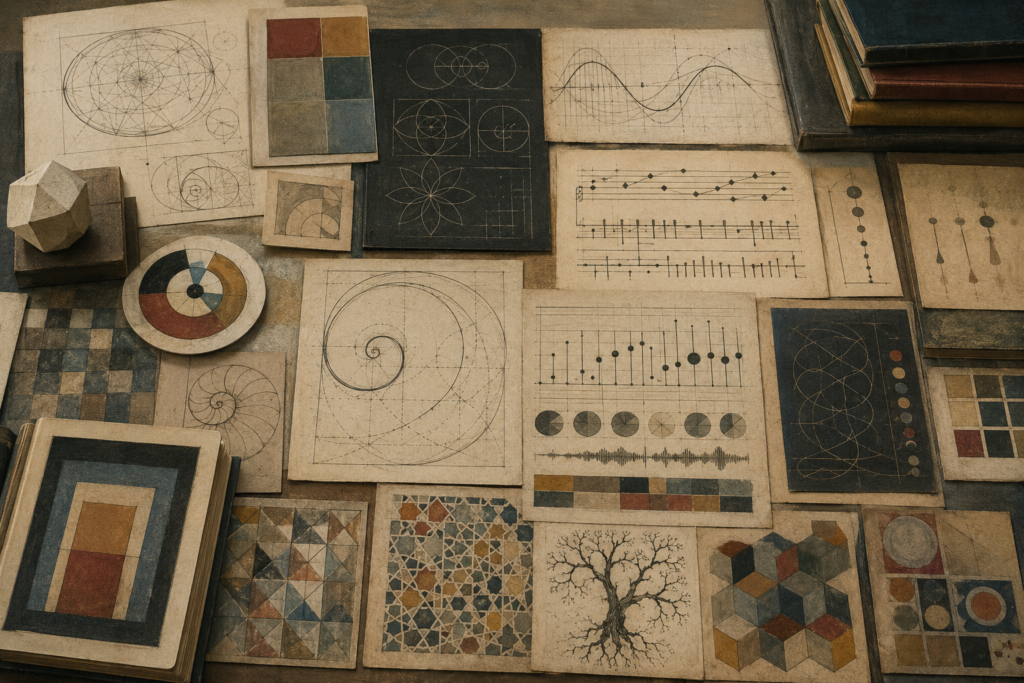
Scholarly archival studio table with geometric studies, spirals, tessellations, rhythm grids, waveform diagrams, abstract musical structures, color blocks, proportional layouts, and branching patterns representing mathematics, art, music, and pattern.

Mathematics, Art, Music, and Pattern: Geometry, Rhythm, and Aesthetic Structure

This article map explores mathematics, art, music, and pattern as overlapping ways of studying proportion, symmetry, rhythm, geometry, repetition, variation, tuning, complexity, and aesthetic meaning. It treats mathematics not only as calculation, but as a language of relation, transformation, structure, emergence, and formal beauty. The map moves from foundations of pattern and aesthetic order into geometry, visual form, musical ratios, tuning systems, rhythm, cycles, Fourier thinking, algorithmic art, generative design, cellular automata, randomness, perception, complexity, and AI-generated form. It helps readers understand why patterns feel meaningful and how formal structures shape visual and musical experience. The series also warns against reducing art or music to formulas, emphasizing cultural context, authorship, interpretation, embodied perception, history, human judgment, and responsible computational exploration across traditions, media, and creative systems. while preserving aesthetic ambiguity, cultural depth, and interpretive care across contexts. today. responsibly.

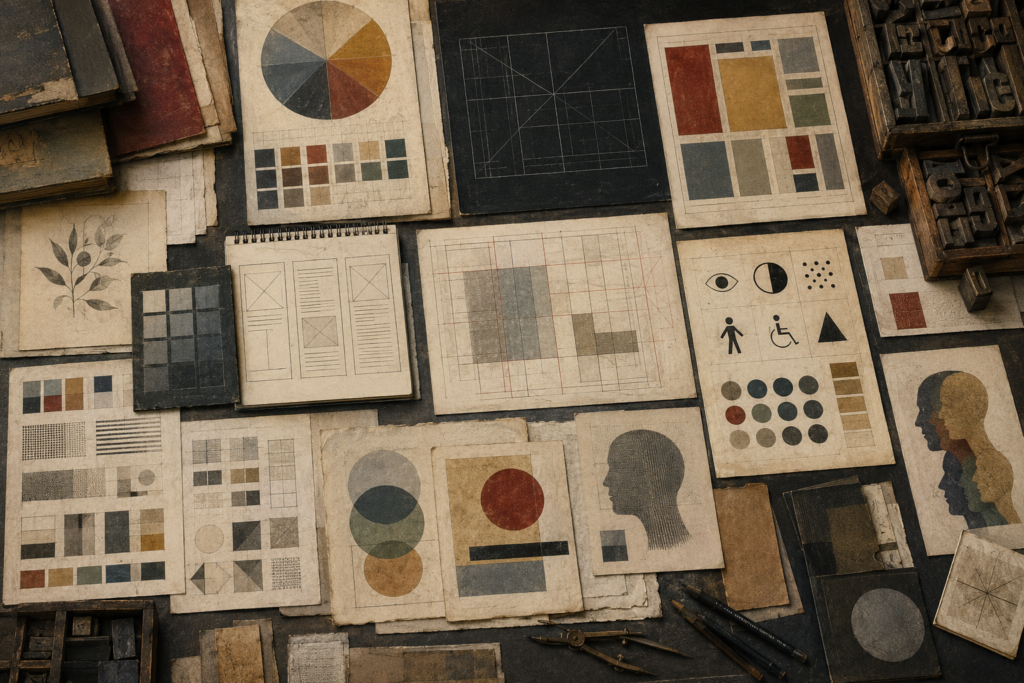
Scholarly archival design studio table with muted color palettes, grid systems, layout studies, typographic blocks, contrast swatches, accessibility symbols, geometric diagrams, and editorial design materials representing visual communication and responsible design.

Color Theory, Typography, and Design: Visual Systems of Meaning

This article map examines color theory, typography, and design as visual systems through which knowledge becomes readable, recognizable, accessible, and meaningful. It treats design as more than surface style, showing how color, type, layout, grids, hierarchy, spacing, identity, interfaces, and accessibility shape attention, trust, comprehension, and public interpretation. The map moves from foundations of visual communication into color perception, palette systems, typographic form, readability, editorial layout, information architecture, branding, interface aesthetics, design systems, data visualization, and responsible visual communication. It gives readers a framework for understanding how visual choices organize meaning before content is fully read. The series also emphasizes design ethics, inclusive access, dark patterns, and the responsibility to make information clear without oversimplifying complexity or excluding audiences from shared knowledge, public research, civic life, websites, dashboards, archives, and digital institutions. where clarity, trust, and access matter. online.

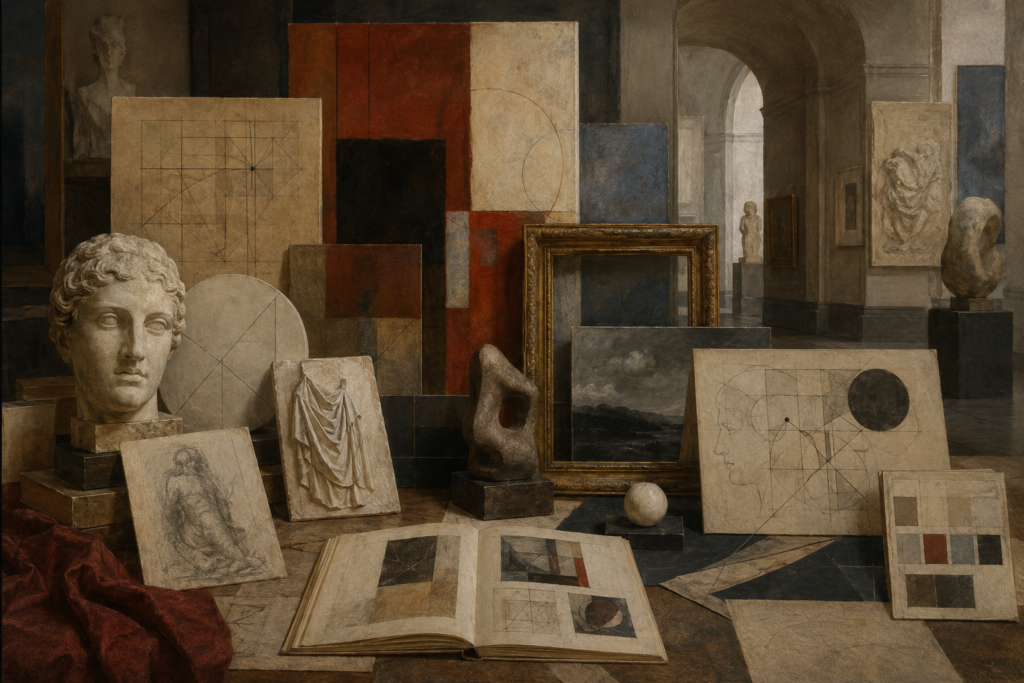
Scholarly illustration of a museum-like study space with abstract paintings, classical sculpture fragments, symbolic frames, sketch studies, geometric diagrams, and muted color studies representing beauty, judgment, form, expression, and interpretation.

Aesthetics and the Philosophy of Art: Beauty, Judgment, and Meaning

This article map introduces aesthetics and the philosophy of art as a focused inquiry into beauty, taste, judgment, artistic value, representation, expression, interpretation, medium, and cultural authority. It frames art as more than decoration or entertainment, treating works as forms through which human beings perceive, feel, question, remember, and understand. The map moves from foundational questions about beauty, art, and aesthetic experience into classical theories, modern judgment, theories of art, interpretation, medium, ethics, museums, canons, and contemporary practice. It helps readers understand why aesthetic disagreement matters, how works invite meaning, and why art remains central to human self-understanding. The series also supports responsible interpretation across cultures, showing how beauty, form, power, memory, and meaning interact in historical, institutional, and public life while preparing readers for deeper studies of design, music, symbolism, and creative form. within a wider Meaning architecture.

Scroll to Top