
Last Updated May 4, 2026
Liberation theology is one of the most important and contested developments in modern religious thought, organized around the conviction that faith cannot be separated from poverty, oppression, empire, structural injustice, and the historical suffering of the poor. It is not a single doctrine, party program, or denominational platform. It is a broad and internally diverse family of theological approaches that read scripture, salvation, sin, church, discipleship, and moral responsibility from the standpoint of those whose lives are shaped by exploitation, exclusion, racial domination, occupation, debt, displacement, and political violence.
At its core lies a defining theological and political question: what does it mean to speak of God in a world structured by suffering? Liberation theology asks whether religious language about grace, redemption, neighbor-love, covenant, kingdom, church, justice, and hope becomes morally compromised when it ignores the institutions that produce misery. It asks whether theology can remain neutral where poverty is organized, where land is taken, where labor is exploited, where racial hierarchy is normalized, where occupation is justified, and where the poor are treated as objects of charity rather than subjects of history.
Liberation theology emerged most famously in twentieth-century Latin American Catholicism, especially in the decades after the Second Vatican Council and the 1968 Medellín conference. Yet it quickly developed beyond a narrow regional or denominational frame. It became a wider mode of Christian reflection grounded in the lives of oppressed peoples and in the conviction that theology must not remain abstract, elite, or detached from history. It sought to unite biblical interpretation, social analysis, pastoral action, and political commitment, insisting that faith must confront the structures that produce suffering rather than merely console those who suffer within them.
The movement is often associated with the phrase preferential option for the poor, a formulation that became central to liberationist theology and pastoral practice. Liberation theologians argued that poverty should not be treated only as misfortune or charity’s occasion, but as a political and moral reality embedded in systems of exploitation, dependency, exclusion, land concentration, labor discipline, imperial power, and domination. The poor were not simply objects of aid. They were historical subjects, bearers of agency, and privileged interlocutors for theology itself.
Current Space
Political Philosophy & Justice
Related Topic
Religious Studies
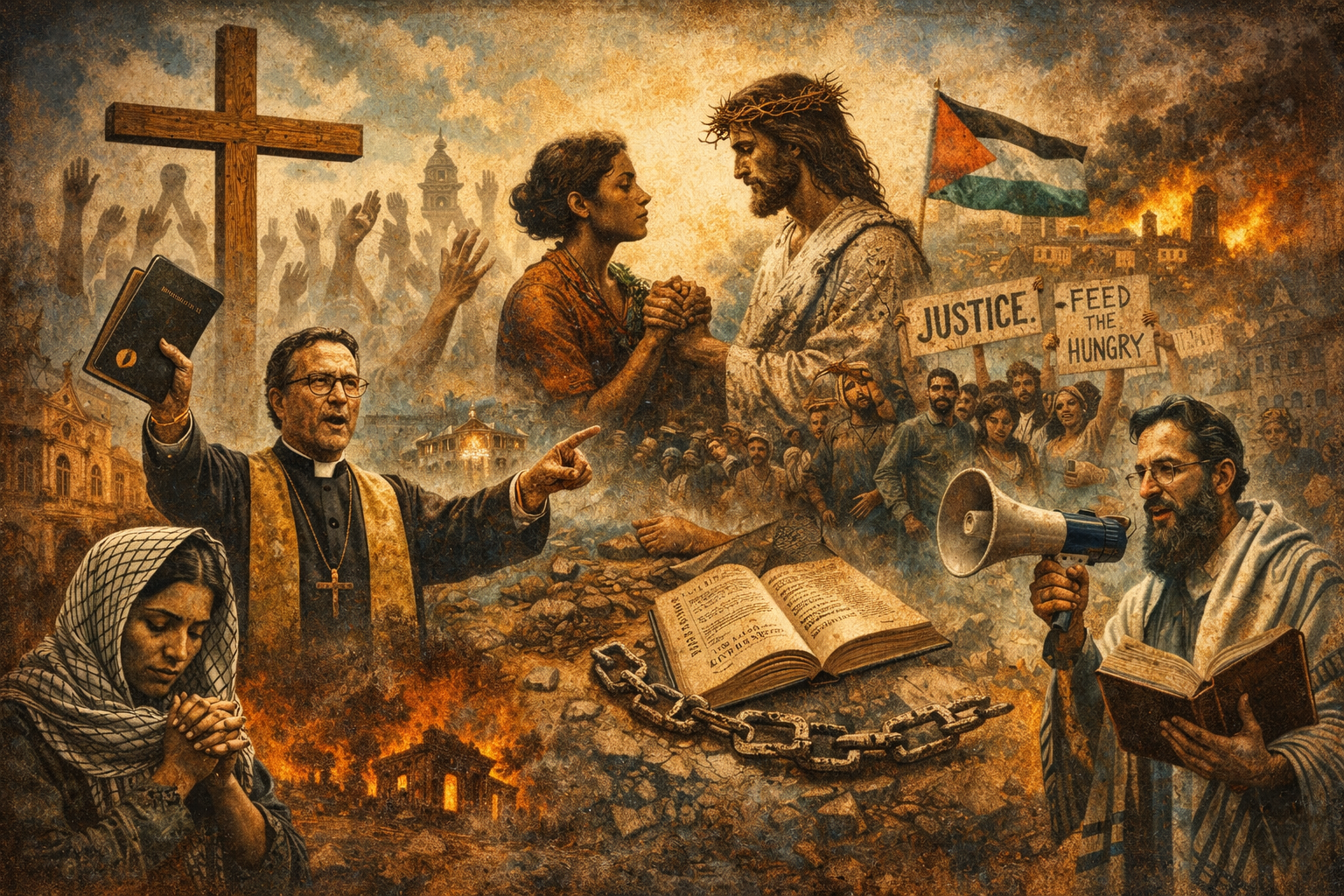
The significance of liberation theology extends far beyond Catholic history. It reshaped debates about scripture, ecclesiology, sin, salvation, politics, social ethics, pastoral responsibility, martyrdom, empire, and the relation between religion and structures of domination. It also inspired or intersected with Black theology, womanist theology, mujerista theology, feminist liberation theology, Indigenous theology, minjung theology, Dalit theology, Palestinian liberation theology, ecological liberation theology, and other contextually grounded traditions that asked how God is to be understood from the standpoint of the oppressed.
A serious treatment of liberation theology must also recognize that liberationist religious thought cannot be contained entirely within Christianity. Jewish, Muslim, and interfaith voices have likewise developed powerful traditions of prophetic justice, anti-colonial ethics, solidarity with the poor, resistance to occupation, and theological critique of empire. These should not be collapsed into Christian liberation theology, but they belong in sustained conversation with it where scripture, poverty, exile, land, covenant, oppression, and historical repair are concerned.
This article pillar is designed as a long-horizon knowledge series. It moves from the Latin American origins of liberation theology through Vatican II, Medellín, Gustavo Gutiérrez, base communities, social sin, praxis, scripture, ecclesial controversy, Marxist social analysis, dependency theory, Vatican critique, martyrdom, Black theology, womanist theology, Indigenous theology, Palestinian liberation theology, Jewish and Muslim liberationist voices, ecological theology, migration, debt, land, empire, and the continuing struggle to connect faith with justice.
Why Liberation Theology Matters
Liberation theology matters because it refuses to let theology remain socially innocent. It asks whether religious language about love, redemption, grace, salvation, and hope becomes morally compromised when it ignores the historical realities of exploitation and domination. Rather than treating poverty as accidental background, liberation theology insists that social suffering is structured and that theology must take those structures seriously. In that sense, it turns religious reflection toward questions of land, labor, class, race, debt, political repression, occupation, migration, ecological destruction, and institutional power.
It also matters because it transforms who counts as a theological subject. Classical theological writing often centered clerical, academic, or elite voices. Liberation theology insists that the poor, the marginalized, and the oppressed are not merely recipients of doctrine but interpreters of history and bearers of insight. This shifts theology from detached speculation toward a praxis-oriented mode of reflection in which experience, struggle, scripture, and action become mutually illuminating.
Liberation theology also matters because it challenged powerful religious and political institutions. Its engagement with Marxist social analysis, dependency theory, and structural critique made it deeply controversial. Critics argued that some forms of liberation theology reduced faith to politics, misused social theory, or endangered doctrinal fidelity. Yet defenders of the movement argued that the deeper danger lay in a religion reconciled to oligarchy, empire, racial hierarchy, military dictatorship, and economic exclusion.
The field remains important because the conditions that produced it have not disappeared. Poverty, debt, displacement, occupation, extractive development, racial capitalism, environmental sacrifice zones, border violence, militarized policing, and unequal global power remain central features of modern life. Liberation theology continues to ask whether religion will serve the powerful by blessing order, or whether it will stand with those whose lives reveal the moral failure of that order.
What This Pillar Covers
This pillar is designed as a comprehensive foundation for the study of liberation theology. It combines historical depth, conceptual analysis, ecclesial context, political theology, biblical interpretation, social ethics, anti-imperial critique, and global religious struggles for justice.
Latin American Origins
Liberation theology emerged most visibly in Latin America, where extreme inequality, oligarchic landholding, military repression, U.S. influence, dependency, and poverty shaped both ecclesial life and theological reflection. The Latin American context is not decorative background. It is the historical ground from which the movement’s central questions emerged.
Vatican II and Medellín
The Second Vatican Council opened new theological space for the church’s engagement with the modern world, the dignity of the laity, historical responsibility, and pastoral renewal. The 1968 Medellín conference then interpreted that opening in the context of Latin American poverty and structural injustice, giving liberationist language major ecclesial force.
Preferential Option for the Poor
The preferential option for the poor is one of the movement’s defining ideas. It does not mean that only the poor matter, nor that poverty itself is spiritually idealized. Rather, it means that the poor occupy a morally privileged place in theological discernment because systems of domination tend to conceal their suffering while centering the interests of the powerful. This option is therefore both a hermeneutic and an ethical demand.
Praxis, Action, and Reflection
Liberation theology is often described as critical reflection on praxis. Theology begins not only from doctrine but from historical action, communal struggle, and the effort to transform unjust realities. Reflection and action are held together so that theology becomes accountable to lived history.
Sin, Salvation, and Structural Injustice
Many liberation theologians argue that sin must be understood not only as personal wrongdoing but as embedded in institutions and social structures. Exploitation, racial domination, exclusion, occupation, economic dependency, environmental destruction, and militarized rule are treated as forms of social or structural sin. Salvation, correspondingly, is not reduced to an afterlife or inner experience, but is linked to human dignity, reconciliation, liberation, and historical transformation.
Scripture from the Standpoint of the Oppressed
Liberation theology rereads scripture through the lives of oppressed communities. Exodus, the prophets, the ministry of Jesus, the Beatitudes, the Magnificat, the early Christian communities, and apocalyptic hope become central sites for interpreting divine concern with justice, captivity, poverty, and liberation.
Church, Power, and Ecclesial Conflict
The movement also raises difficult questions about the church itself. Can the church be an institution of liberation, or does it too often function as a stabilizer of unequal order? What is the role of bishops, clergy, religious communities, lay organizers, base communities, schools, and parishes in confronting dictatorship, oligarchy, empire, and social exclusion?
Marxism, Dependency Theory, and Social Analysis
Liberation theologians often used tools from Marxism, dependency theory, and critical social analysis to understand poverty and underdevelopment. This did not always mean adopting Marxism as a complete worldview. Rather, many theologians treated social analysis as necessary for diagnosing the causes of suffering and identifying the structures through which injustice reproduced itself.
Global Liberation Theologies
Although liberation theology is rooted in Latin America, the movement expanded into many contextual forms. Black theology, womanist theology, feminist theology, mujerista theology, minjung theology, Dalit theology, Palestinian liberation theology, Indigenous theologies, and ecological liberation theology all developed in relation to specific structures of oppression while sharing liberation theology’s concern for praxis, justice, and historical suffering.
Jewish, Muslim, and Interfaith Liberationist Voices
A stronger contemporary treatment of liberation theology also requires attention to justice-centered Jewish and Muslim voices. These should not be collapsed into Christian theology, but they do belong in sustained dialogue with liberation theology where prophetic ethics, anti-colonial struggle, solidarity with the poor, occupation, exile, empire, and historical repair are concerned.
Historical Formation: Vatican II, Medellín, and the Latin American Context
A serious account of liberation theology begins with the political and religious transformations of the mid-twentieth century. Latin America was marked by extreme inequality, oligarchic landholding, military repression, dependency, and chronic poverty. At the same time, the Catholic Church was being reshaped by the Second Vatican Council, which encouraged renewed attention to history, the laity, pastoral engagement, and the church’s role in the modern world. These conditions helped make possible a theology that would no longer treat poverty as merely an occasion for charity but as a demand for structural change.
The Second Vatican Council did not create liberation theology by itself, but it helped open the ecclesial and theological horizon in which liberation theology could develop. The church’s relation to the modern world, the dignity of the human person, the responsibility of the laity, and the moral demands of social life became unavoidable questions. Liberation theologians then pressed those questions in contexts where poverty was not abstract, but visible in landlessness, hunger, repression, debt, labor exploitation, and political violence.
The 1968 Medellín conference became a decisive moment in this development. There, the language of liberation and structural injustice gained major ecclesial force. The church in Latin America increasingly confronted the fact that pastoral concern could not be separated from the political realities of land concentration, class domination, authoritarian rule, and imperial dependency. Theological reflection thus moved closer to social struggle, and social struggle reshaped theology in return.
Gustavo Gutiérrez’s A Theology of Liberation became the foundational text of the movement, developing a spirituality and theological framework centered on solidarity with the poor and the transformation of unjust institutions. Around it emerged a wider field of theologians, pastoral communities, base communities, educators, and activists whose work shaped theology, politics, and church life across the region and beyond.
The Preferential Option for the Poor
The preferential option for the poor is one of liberation theology’s central contributions to modern religious thought. It does not mean sentimental concern for poverty, nor does it treat the poor as passive objects of charity. It means that the suffering of the poor reveals something morally decisive about the social order. If a society produces poverty, hunger, landlessness, debt, exclusion, and premature death, then theology must ask how that society is organized and whose interests it serves.
The preferential option is therefore both ethical and interpretive. It changes what theology notices. It asks how scripture sounds when read by the hungry, the displaced, the imprisoned, the colonized, the occupied, the indebted, the racially excluded, the migrant, and the worker whose life is consumed by systems of extraction. It also asks how doctrines of creation, sin, salvation, church, and hope appear when viewed from the underside of history.
This does not mean that theological truth is reducible to social position. It means that dominant social positions often conceal their own interests under the appearance of neutrality. Liberation theology insists that the poor disclose realities that privileged theology often avoids: the violence of property, the fragility of bodies, the false innocence of institutions, and the difference between charity and justice.
At its strongest, the preferential option for the poor also challenges paternalism. The poor are not simply to be helped, spoken for, or administered. They are agents of history, subjects of faith, interpreters of scripture, and makers of political life. Liberation theology therefore transforms pastoral practice into solidarity, and solidarity into a demand for institutional conversion.
Praxis and Theological Method
Liberation theology is often described as critical reflection on praxis. This means that theology does not begin only in abstract doctrine and then apply itself to the world. It begins in the historical activity of communities struggling to survive, resist, organize, worship, interpret scripture, and transform unjust conditions. Praxis does not replace doctrine, but it changes the way doctrine is heard, tested, and embodied.
This method rejects the illusion that theology can stand outside history. All theology is formed somewhere: in institutions, languages, economies, communities, and relations of power. Liberation theology makes that fact explicit. It asks whether theology is being formed in proximity to the powerful or in solidarity with those who bear the cost of social order.
Praxis also means that reflection and action must correct each other. Action without reflection can become romantic, reckless, or ideologically captive. Reflection without action can become sterile, complicit, or self-protective. Liberation theology seeks a disciplined movement between social analysis, scriptural interpretation, prayer, communal discernment, pastoral work, and political responsibility.
This method has made liberation theology both influential and controversial. It refuses to let theology remain a spectator discipline. It asks what theology becomes when it must answer not only to academic debate or ecclesial authority, but to communities facing hunger, repression, eviction, occupation, racial terror, and death.
Scripture from the Underside of History
Liberation theology’s biblical interpretation often begins with the Exodus, the prophets, the ministry of Jesus, and the early Christian communities. The Exodus becomes a memory of deliverance from bondage. The prophets become witnesses against exploitation, idolatry, false worship, and elite injustice. Jesus’ proclamation of the kingdom of God becomes a sign of divine concern for the poor, the sick, the excluded, and those crushed by religious and imperial power.
Reading scripture from the underside of history does not mean forcing modern ideology onto ancient texts. It means asking how scripture has often been domesticated by those with social power. When the Bible is read from the standpoint of empire, it can become a tool of obedience. When it is read from the standpoint of the oppressed, its themes of liberation, judgment, mercy, land, covenant, exile, poverty, and hope become harder to ignore.
The prophets are especially important because they refuse to separate worship from justice. They condemn religious practice that coexists with exploitation. They expose the moral failure of rulers, merchants, judges, priests, and nations that trample the vulnerable while preserving ritual respectability. Liberation theology inherits this prophetic structure: faith becomes false when it is severed from justice.
The ministry of Jesus is read in this light. Liberation theologians often emphasize his solidarity with the poor, his challenge to religious hypocrisy, his healing ministry, his table fellowship with the excluded, his confrontation with imperial and temple power, and his announcement of a kingdom that judges existing orders. The crucifixion, in this reading, is not only a spiritual mystery but also the execution of one who threatened the powers of his time.
Sin, Salvation, and Structural Injustice
One of liberation theology’s most important claims is that sin must be understood structurally as well as personally. Sin is not only individual wrongdoing. It is also embedded in laws, economies, institutions, habits, borders, racial systems, property regimes, labor systems, and political arrangements that produce suffering while appearing normal. Social sin names the way injustice becomes organized and inherited.
This approach does not eliminate personal responsibility. It deepens it. If people participate in unjust structures, benefit from them, excuse them, or refuse to see them, then moral responsibility cannot be limited to private intention. A person may avoid direct cruelty while still living within and benefiting from systems that degrade others. Liberation theology therefore expands moral analysis from personal guilt to historical accountability.
Salvation is also widened. It does not cease to be theological, spiritual, or eschatological. But it cannot be separated from the liberation of persons and communities from conditions that deny their dignity. Salvation is not reduced to politics, but neither can it be detached from history. A faith that promises salvation while tolerating structures of death becomes morally incoherent.
This is why liberation theology speaks of liberation in multiple dimensions: liberation from oppressive social structures, liberation for human dignity and communion, and liberation from sin itself. These dimensions are distinct but inseparable. Political liberation without spiritual conversion can reproduce domination. Spiritual language without historical liberation can become consolation for injustice.
Church, Power, and Ecclesial Conflict
Liberation theology created deep conflict within church institutions because it asked whether the church stood with the poor or with the stability of existing power. In Latin America, this question was not abstract. Churches operated in societies marked by military dictatorships, landholding elites, U.S. influence, death squads, poverty, and repression. Pastoral neutrality was often impossible because silence protected the powerful.
Base ecclesial communities became one of the most important institutional forms of liberation theology. These communities brought ordinary people together to read scripture, discuss social conditions, pray, organize, and interpret their lives in the light of faith. They represented a more participatory and grassroots vision of church life, one in which the poor were not merely recipients of pastoral care but active theological subjects.
Yet the movement also provoked ecclesial criticism. Vatican officials and other critics worried that some forms of liberation theology subordinated Christianity to Marxism, confused salvation with political revolution, or encouraged class struggle in ways incompatible with Catholic doctrine. The Congregation for the Doctrine of the Faith issued major instructions in 1984 and 1986, warning against ideological distortions while also affirming that Christian faith includes a serious concern for freedom, justice, and liberation.
The conflict was therefore not simply between justice and orthodoxy. It was a struggle over how to understand Christianity itself: whether the gospel primarily consoles the poor, reforms institutions gradually, critiques social sin, supports revolutionary transformation, or calls the church into costly solidarity with those facing historical violence.
Martyrdom, Witness, and the Church of the Poor
Liberation theology cannot be understood without martyrdom. In Latin America, priests, nuns, catechists, lay organizers, workers, peasants, Indigenous leaders, and church communities faced surveillance, threats, torture, assassination, and massacre. This history gave liberation theology a seriousness that abstract debate cannot capture. Its questions were written in lives and deaths.
Óscar Romero became one of the central figures in this history. As archbishop of San Salvador, Romero increasingly denounced repression, military violence, and the suffering of the poor. His assassination while celebrating Mass made him a global symbol of a church that chose public witness over institutional safety. His legacy shows how liberation theology joins pastoral care to political courage.
Martyrdom in this tradition is not a romantic cult of suffering. It is witness to truth under conditions of organized violence. It asks what faith requires when neutrality protects death. It also reveals the cost of a theology that refuses to bless unjust order. The martyr is not important because death is desirable, but because the willingness to risk death exposes the moral bankruptcy of systems that depend on fear.
The church of the poor is therefore not simply a slogan. It is a test of ecclesial identity. A church aligned with the poor must examine its property, hierarchy, language, alliances, education, liturgy, and political silences. Liberation theology asks whether the church can become credible without undergoing conversion toward those whose suffering reveals the failure of the world.
Global Liberation Theologies
Liberation theology became global because the questions it raised were never only Latin American. Black theology in the United States asked what Christianity means in a society built through slavery, segregation, lynching, racial capitalism, and white supremacy. James Cone’s work insisted that Christian theology must confront Black suffering and Black liberation as central theological realities, not sociological footnotes.
Womanist theology and Black feminist liberation theology deepened this critique by showing that race and class could not be separated from gender, family, labor, embodiment, and survival. Mujerista theology developed from Latina experience, borderlands, migration, labor, culture, and Catholic practice. Feminist liberation theology challenged patriarchal structures within church, society, and theology itself.
Minjung theology emerged in Korea in relation to dictatorship, poverty, labor struggle, and democratic resistance. Dalit theology in South Asia addressed caste oppression, social humiliation, religious exclusion, and the struggle for dignity. Indigenous theologies challenged colonial Christianity, land theft, boarding schools, cultural destruction, and the theological justification of conquest.
Palestinian liberation theology developed in relation to occupation, land, exile, checkpoints, displacement, Christian Zionism, and the theological meaning of justice in a contested sacred geography. Ecological liberation theology connected poverty, extraction, Indigenous struggle, climate harm, and the cry of the earth with the cry of the poor.
These traditions should not be treated as interchangeable. Each arises from specific histories, languages, communities, and structures of oppression. What they share is not a single ideology but a method: theology from below, theology accountable to suffering, and theology oriented toward liberation.
Jewish, Muslim, and Interfaith Liberationist Voices
Liberation theology is historically Christian, but liberationist religious thought is broader than Christianity. Jewish traditions of prophetic justice, covenant, exile, remembrance, Sabbath economics, and critique of empire have long provided resources for resistance to domination. Jewish liberationist voices have interpreted oppression through memory, diaspora, law, ethical responsibility, and the demand that worship be joined to justice.
Muslim liberationist thought also belongs in this conversation, though it should not be collapsed into Christian categories. Islamic traditions contain deep resources for thinking about justice, oppression, social obligation, poverty, anti-imperial struggle, and moral accountability before God. Qur’anic themes of justice, care for the poor, resistance to tyranny, and the equality of human beings before divine judgment have been interpreted by many Muslim thinkers in relation to colonialism, racism, occupation, class domination, and liberation.
The Arabic word Allah is also important in interfaith clarity. It is not a narrowly Muslim deity-name. It is the Arabic word for God used by Arabic-speaking Muslims, Christians, and Jews. In liberationist interfaith contexts, this matters because it resists false civilizational divisions that separate communities linguistically and theologically more sharply than their histories require. The shared language of God, prophecy, mercy, justice, and moral accountability can become a basis for solidarity without erasing doctrinal difference.
Palestinian liberation theology is one of the most important interfaith bridges because it involves Christians, Muslims, and Jews in debates over land, occupation, exile, scripture, law, memory, and justice. It asks whether theology blesses domination or challenges it. It also asks how sacred history can be interpreted without turning land, scripture, or divine promise into instruments of dispossession.
Interfaith liberationist thought does not require flattening religious traditions into one universal ethic. It requires a more disciplined form of solidarity: each tradition speaks from its own sources while recognizing shared struggles against empire, poverty, occupation, racism, and exclusion.
Liberation Theology Within Religious and Political Thought
Within religious thought, liberation theology occupies a foundational but contested position. It is foundational because it transformed how theology understands scripture, sin, salvation, discipleship, and the church’s place in history. It is contested because it raised enduring questions about whether theology should explicitly align itself with social movements, structural critique, or revolutionary transformation, and whether such alignment clarifies or distorts religious faith.
The movement also sits at the intersection of theology and political philosophy. It asks whether social order can be morally legitimate when built on structural exclusion. It challenges churches and religious institutions to confront empire, dictatorship, racial hierarchy, occupation, and economic exploitation rather than providing them moral cover. In this respect, liberation theology belongs not only to doctrinal history but to the wider intellectual world of anti-colonial thought, political ethics, and critiques of domination.
Liberation theology also exposes the limits of purely private religion. If faith is treated only as personal consolation, it can become harmless to injustice. If it is treated only as political ideology, it can lose its spiritual depth and become captive to worldly power. The field’s most serious thinkers work within that tension, refusing both quietism and reductionism.
For that reason, this pillar treats liberation theology not as a narrow confessional specialty but as a living field of argument about God, justice, poverty, empire, solidarity, and historical transformation. To study it seriously is to study one of the most important attempts in modern religious thought to bind spiritual language to the practical struggle against oppression.
Core Themes in Liberation Theology
One major theme is the preferential option for the poor. Liberation theology asks what theology becomes when the poor are treated not as objects of charity but as subjects of history and privileged witnesses to social truth.
A second theme is praxis. Theology is understood as reflection rooted in action, struggle, communal discernment, and the attempt to transform unjust reality.
A third theme is structural sin. Poverty, exploitation, racial domination, occupation, debt, and exclusion are analyzed not only as personal failures but as organized systems of harm.
A fourth theme is biblical liberation. Exodus, prophecy, the ministry of Jesus, the kingdom of God, and the early church are interpreted through the experience of oppressed communities.
A fifth theme is ecclesial conversion. Liberation theology asks whether churches stand with the poor or preserve the stability of unjust orders.
A sixth theme is martyrdom and witness. The history of murdered clergy, lay leaders, organizers, and communities shows the cost of faith that confronts power.
A seventh theme is anti-imperial critique. Liberation theology examines how empire, foreign intervention, dependency, and militarized order shape poverty and political repression.
An eighth theme is contextual theology. Black, womanist, mujerista, Indigenous, Dalit, minjung, Palestinian, and ecological theologies emerge from specific histories of domination and resistance.
A ninth theme is interfaith liberation. Jewish, Muslim, and Christian voices can enter serious conversation around prophetic justice, exile, occupation, poverty, and historical repair without collapsing their traditions into one another.
A tenth theme is hope. Liberation theology refuses despair without offering cheap consolation. Its hope is disciplined by history, suffering, struggle, and the conviction that another order of life must be made possible.
Expanded Article Architecture
The following structure gathers the article pillar into a long-range architecture suitable for a major religious, philosophical, and political theology knowledge series. It expands the original article index into a fuller publication architecture while maintaining a scholarly, structural, anti-imperial, and historically grounded frame.
Foundations of Liberation Theology
- What Is Liberation Theology? (planned)
Introduces liberation theology as a family of theological approaches that interpret faith through poverty, oppression, social sin, praxis, and the struggle for justice. - Why Liberation Theology Still Matters (planned)
Explains why liberation theology remains relevant in a world shaped by inequality, empire, occupation, debt, migration, climate harm, and religious complicity with power. - The Preferential Option for the Poor (planned)
Studies the preferential option for the poor as a theological, ethical, and interpretive principle that centers the poor as subjects of history. - Praxis, Reflection, and Historical Responsibility (planned)
Examines liberation theology’s method of critical reflection on action, showing how theology becomes accountable to lived struggle. - Can Theology Be Neutral in an Unjust World? (planned)
Asks whether theological neutrality is possible where social order is structured by exploitation, poverty, racial domination, and violence. - Faith, Justice, and the Problem of Political Complicity (planned)
Explores how religious institutions become complicit in domination when they bless order, silence dissent, or spiritualize suffering. - Charity, Justice, and Structural Transformation (planned)
Distinguishes charity from justice and asks why liberation theology insists on transforming the structures that produce suffering.
Vatican II, Medellín, and Latin American Origins
- Vatican II and the Opening of a New Theological Horizon (planned)
Studies how the Second Vatican Council reshaped Catholic engagement with history, the modern world, social responsibility, and pastoral renewal. - Gaudium et Spes and the Church in the Modern World (planned)
Examines the council’s pastoral constitution as a key context for later liberationist theological reflection. - Medellín and the Ecclesial Birth of Liberation Theology (planned)
Explores the 1968 Medellín conference as a decisive moment in Latin American Catholic engagement with structural injustice. - Puebla, the Poor, and the Development of Latin American Catholic Social Thought (planned)
Studies the later development of Latin American ecclesial reflection on poverty, evangelization, and social responsibility. - Latin America, Dependency, and the Historical Ground of Liberation Theology (planned)
Places liberation theology within the context of land concentration, dependency, poverty, dictatorship, and imperial power. - Base Communities and the People’s Church (planned)
Examines base ecclesial communities as grassroots spaces of scripture reading, political consciousness, pastoral action, and community organization.
Major Latin American Liberation Theologians
- Gustavo Gutiérrez and A Theology of Liberation (planned)
Studies Gutiérrez’s foundational work on poverty, praxis, salvation, solidarity, and the theological meaning of liberation. - Leonardo Boff, Ecclesiology, and Church Conflict (planned)
Examines Boff’s account of church, power, hierarchy, base communities, and conflict with ecclesial authority. - Jon Sobrino and Christology from the Underside of History (planned)
Studies Sobrino’s Christology through the crucified peoples of history, martyrdom, poverty, and the suffering of the oppressed. - Juan Luis Segundo and the Liberation of Theology (planned)
Examines Segundo’s method and his argument that theology itself must be liberated from ideological captivity. - Ignacio Ellacuría and the Crucified Peoples of History (planned)
Studies Ellacuría’s philosophy and theology of historical reality, university responsibility, and the suffering of oppressed peoples. - Dom Hélder Câmara and the Pastoral Politics of the Poor (planned)
Explores Câmara’s pastoral witness, critique of poverty, and role in the moral imagination of Latin American liberation theology. - Óscar Romero, Martyrdom, and the Church of the Poor (planned)
Examines Romero’s prophetic witness, assassination, and legacy as a central figure of the church of the poor. - Camilo Torres and Revolutionary Christianity (planned)
Studies Torres as a controversial figure in debates over Christian faith, revolution, violence, and solidarity with the oppressed.
Biblical Theology, Scripture, and Hermeneutics of Liberation
- Reading Exodus from the Standpoint of the Oppressed (planned)
Interprets Exodus as a foundational memory of deliverance from bondage and a key text for liberationist theology. - The Prophets, Justice, and the Biblical Critique of Empire (planned)
Studies prophetic denunciations of injustice, false worship, elite exploitation, and political violence. - Jesus, the Kingdom of God, and Political Hope (planned)
Examines Jesus’ proclamation of the kingdom through poverty, healing, table fellowship, judgment, and hope. - The Beatitudes and the Theology of the Poor (planned)
Studies the Beatitudes as a theological challenge to power, wealth, violence, and false security. - The Magnificat, Reversal, and the Politics of Divine Mercy (planned)
Explores Mary’s song as a scriptural text of reversal, mercy, hunger, power, and divine justice. - The Cross, State Violence, and the Crucified Peoples (planned)
Examines the crucifixion in relation to imperial violence, public execution, and the suffering of oppressed communities. - The Resurrection and Historical Hope (planned)
Studies resurrection hope as neither escapism nor political triumphalism, but a theological ground for resistance and renewal. - Early Christian Communities, Shared Goods, and Economic Witness (planned)
Examines early Christian practices of sharing, mutual aid, and community in relation to economic justice.
Sin, Salvation, and Social Structures
- Sin as Structure: Social Sin and Historical Injustice (planned)
Explains social sin as injustice embedded in institutions, economies, laws, borders, racial systems, and political arrangements. - Salvation, History, and Human Liberation (planned)
Studies salvation as spiritual, historical, communal, and social without reducing theology to politics. - Poverty, Death, and the Theological Meaning of Structural Violence (planned)
Examines poverty and premature death as signs of unjust social structures rather than natural misfortune. - Grace, Conversion, and Institutional Repentance (planned)
Explores conversion not only as personal transformation but as institutional repentance and social repair. - Hope, Eschatology, and the Refusal of Despair (planned)
Studies liberation theology’s account of hope as disciplined by suffering, struggle, and the promise of historical transformation.
Church, Power, and Ecclesial Controversy
- Church, Oligarchy, and the Politics of Pastoral Complicity (planned)
Examines how churches can become aligned with elites, military regimes, landholding power, and social stability at the expense of the poor. - Pastoral Neutrality and the Moral Failure of Silence (planned)
Asks whether religious neutrality becomes complicity where oppression is organized and public. - Liberation Theology and the Vatican Response (planned)
Studies the Vatican’s response to liberation theology, including concern over Marxist analysis and doctrinal reductionism. - John Paul II, Ratzinger, and the Critique of Liberation Theology (planned)
Examines the critique of liberation theology during the pontificate of John Paul II and the leadership of Joseph Ratzinger at the CDF. - Libertatis Nuntius and the Limits of Liberation Theology (planned)
Studies the 1984 CDF instruction on certain aspects of liberation theology and its warnings against ideological distortions. - Libertatis Conscientia and Christian Freedom (planned)
Examines the 1986 CDF instruction as an attempt to articulate a positive Christian account of freedom and liberation. - Francis, the Poor, and the Partial Rehabilitation of Liberationist Themes (planned)
Studies how later Catholic discourse returned to themes of poverty, inequality, ecology, and pastoral closeness to the poor.
Marxism, Dependency Theory, and Political Economy
- Marxism, Dependency Theory, and Liberationist Social Analysis (planned)
Examines how liberation theologians used Marxist and dependency-theory tools to analyze poverty, class, and underdevelopment. - Capitalism, Idolatry, and the Theology of the Market (planned)
Studies liberationist critiques of market absolutism, commodification, and economic systems treated as beyond moral judgment. - Debt, Development, and Global Structures of Sin (planned)
Examines debt, development policy, dependency, and global inequality as theological questions of structural sin. - Land, Labor, and the Religious Critique of Oligarchy (planned)
Studies land concentration, agrarian inequality, labor exploitation, and the moral critique of elite power. - Empire, Intervention, and the Political Economy of Poverty (planned)
Explores how foreign intervention, military power, trade dependency, and resource extraction shape the conditions liberation theology confronts. - Secular Critiques of Liberation Theology (planned)
Examines secular critiques that question whether liberation theology remains too ecclesial, too reformist, too doctrinal, or too politically ambiguous.
Martyrdom, Repression, and the Church of the Poor
- Martyrdom and Witness in Liberation Theology (planned)
Introduces martyrdom as a central theme in communities where faith, justice, and political repression intersect. - Óscar Romero and the Voice of the Crucified People (planned)
Studies Romero’s sermons, pastoral witness, assassination, and continuing theological significance. - The Jesuit Martyrs of El Salvador and the University as Witness (planned)
Examines the murder of Jesuit scholars and coworkers in El Salvador as a case of theology, education, and state violence. - Women Martyrs, Lay Witness, and the Hidden History of Liberation Theology (planned)
Recovers the witness of women, lay leaders, catechists, religious sisters, and community organizers often marginalized in theological memory. - Death Squads, Dictatorship, and the Cost of Pastoral Solidarity (planned)
Studies repression against church workers, peasants, labor organizers, and communities associated with liberationist pastoral practice.
Black Theology and Black Liberation Theology
- Black Theology and the Struggle Against White Supremacy (planned)
Introduces Black theology as a liberationist theological tradition formed through slavery, segregation, racial violence, and Black freedom struggle. - James Cone and the Meaning of Black Liberation Theology (planned)
Studies Cone’s account of God, Christ, Blackness, liberation, and the theological critique of white supremacy. - The Cross and the Lynching Tree (planned)
Examines Cone’s interpretation of the cross in relation to racial terror, lynching, suffering, and Christian memory. - Black Churches, Civil Rights, and Prophetic Political Theology (planned)
Studies Black church traditions as institutions of survival, organizing, preaching, and liberationist public witness. - Black Theology, Pan-Africanism, and Anti-Colonial Solidarity (planned)
Connects Black theology to Pan-African, anti-colonial, and global liberation struggles.
Womanist, Feminist, Mujerista, and Gendered Liberation Theologies
- Womanist and Black Feminist Liberation Theology (planned)
Studies womanist theology as a critique of racism, sexism, class domination, family struggle, survival, and spiritual resilience. - Feminist Liberation Theology and the Coloniality of Gender (planned)
Examines feminist liberation theology in relation to patriarchy, empire, labor, church authority, and gendered violence. - Mujerista Theology and Latina Liberation (planned)
Studies mujerista theology through Latina experience, migration, labor, Catholic practice, community, and cultural survival. - Mary, the Magnificat, and Women’s Liberationist Readings of Scripture (planned)
Examines Marian traditions and the Magnificat through gender, poverty, reversal, and theological hope. - Care, Reproduction, and the Theology of Social Survival (planned)
Explores care work, family survival, community labor, and reproduction as theological and political questions.
Indigenous, Dalit, Minjung, and Contextual Liberation Theologies
- Indigenous Theologies and Decolonial Christianity (planned)
Studies Indigenous theological responses to conquest, missionization, land theft, boarding schools, and cultural survival. - Land, Ceremony, and the Decolonization of Christian Theology (planned)
Examines how Indigenous traditions challenge Christian theology to confront land, treaty, ceremony, ecology, and colonial violence. - Minjung Theology and Democratic Struggle in Korea (planned)
Studies minjung theology as a Korean liberation theology shaped by poverty, dictatorship, labor, and democratic resistance. - Dalit Theology, Caste, and Liberation in South Asia (planned)
Examines Dalit theology as a response to caste oppression, humiliation, exclusion, and the struggle for dignity. - Adivasi, Tribal, and Indigenous Christian Theologies in South Asia (planned)
Explores Christian theological reflection shaped by land, displacement, tribal identity, ecological struggle, and state power. - Asian Liberation Theologies and the Critique of Empire (planned)
Studies Asian contextual theologies in relation to colonialism, militarization, poverty, development, and religious plurality.
Palestinian Liberation Theology and Theologies of Occupation
- Palestinian Liberation Theology and the Theology of Occupation (planned)
Introduces Palestinian liberation theology as Christian reflection shaped by occupation, land, exile, checkpoints, displacement, and hope. - Naim Ateek, Sabeel, and Palestinian Christian Witness (planned)
Studies Naim Ateek and Sabeel as major voices in Palestinian liberation theology and Christian nonviolent resistance. - The Kairos Palestine Document and Faith Under Occupation (planned)
Examines the 2009 Kairos Palestine document as a theological statement of hope, justice, resistance, and global Christian responsibility. - Christian Zionism, Scripture, and the Politics of Land (planned)
Studies how biblical interpretation can be used to justify or challenge occupation, dispossession, and political theology of land. - Palestine, Occupation, and Interfaith Liberation Thought (planned)
Explores Christian, Muslim, Jewish, and interfaith responses to occupation, exile, land, and justice. - Bethlehem, Jerusalem, and the Sacred Geography of Liberation (planned)
Examines sacred place, pilgrimage, separation, walls, memory, and theological resistance in Palestinian Christian thought.
Jewish Liberationist Voices and Prophetic Justice
- Jewish Voices, Prophetic Justice, and Liberationist Readings of Oppression (planned)
Studies Jewish traditions of prophetic critique, covenant, exile, justice, memory, and solidarity with the oppressed. - Exodus, Exile, and Jewish Theologies of Liberation (planned)
Examines Exodus and exile as Jewish theological memories that can inform justice-centered readings of liberation. - Abraham Joshua Heschel, Prophetic Religion, and Civil Rights (planned)
Studies Heschel’s account of prophetic faith, moral responsibility, civil rights, and religious public witness. - Jewish Anti-Occupation Theology and the Ethics of Solidarity (planned)
Explores Jewish theological critiques of occupation, nationalism, militarism, and injustice. - Holocaust Memory, Universal Human Dignity, and the Limits of Political Instrumentalization (planned)
Examines how sacred memory can call communities toward justice without being used to sanctify domination.
Muslim Liberationist Voices and Islamic Ethics of Justice
- Muslim Voices, Anti-Colonial Ethics, and Liberation in Islamic Thought (planned)
Introduces Muslim liberationist thought through justice, anti-colonial struggle, poverty, tyranny, and moral accountability before God. - Qur’anic Justice, the Poor, and the Moral Critique of Oppression (planned)
Studies Qur’anic themes of justice, mercy, care for the poor, moral accountability, and resistance to oppression. - Ali Shariati, Islam, and Anti-Colonial Liberation Thought (planned)
Examines Shariati’s thought in relation to Islam, colonialism, revolution, social justice, and intellectual awakening. - Farid Esack and Qur’an, Liberation, and Pluralism (planned)
Studies Esack’s liberationist Qur’anic hermeneutics in relation to apartheid, justice, and interreligious solidarity. - Islam, Empire, and the Ethics of the Oppressed (planned)
Explores Muslim responses to imperial power, occupation, poverty, authoritarianism, and social injustice. - Allah, Abrahamic Continuity, and Interfaith Liberation (planned)
Explains the shared Arabic use of Allah among Muslims, Christians, and Jews while exploring interfaith solidarity around justice and moral accountability.
Interfaith and Comparative Liberationist Thought
- Liberation Theology Beyond Christianity: Jewish, Muslim, and Interfaith Struggles for Justice (planned)
Studies liberationist religious thought across traditions without collapsing theological differences or erasing distinctive sources. - Scripture, Empire, and the Interfaith Critique of Domination (planned)
Compares how Jewish, Christian, and Muslim sources can be read against empire, oppression, and exploitation. - Prophecy, Revelation, and Public Justice Across Abrahamic Traditions (planned)
Examines shared Abrahamic themes of prophecy, law, mercy, judgment, covenant, and moral responsibility. - Interfaith Solidarity Without Theological Flattening (planned)
Studies how religious communities can cooperate for justice while preserving doctrinal seriousness and difference. - Occupation, Exile, and Sacred Memory in Interfaith Liberation Thought (planned)
Explores how sacred memory can become a resource for solidarity rather than domination.
Ecology, Land, Climate, and Liberation
- Eco-Liberation Theology and Ecological Justice (planned)
Introduces ecological liberation theology through climate injustice, extraction, poverty, Indigenous struggle, and the cry of the earth. - Liberation Theology and the Cry of the Earth (planned)
Studies the relation between ecological destruction, social suffering, and theological responsibility. - Land, Water, and the Sacramental Politics of Place (planned)
Examines land and water as theological, ecological, and political realities rather than mere resources. - Climate Colonialism and the Theology of Historical Responsibility (planned)
Explores climate harm through colonial history, unequal vulnerability, extraction, and global responsibility. - Extraction, Sacrifice Zones, and the Religious Critique of Development (planned)
Studies mining, pollution, agribusiness, and destructive development as theological problems of land, life, and power. - Pope Francis, Laudato Si’, and Integral Ecology (planned)
Examines integral ecology, poverty, climate, technocracy, and care for creation in relation to liberationist themes.
Migration, Borders, Debt, and Global Structures of Sin
- Migration, Borders, and the Religious Ethics of Exile (planned)
Studies migration, displacement, border regimes, hospitality, exile, and the moral responsibilities of religious communities. - Refugees, Sanctuary, and the Theology of Welcome (planned)
Examines sanctuary traditions, refugee protection, border violence, and religious ethics of hospitality. - Debt, Austerity, and the Theology of Economic Captivity (planned)
Studies debt and austerity as structures that shape poverty, sovereignty, and moral responsibility. - Development, Dependency, and the Religious Critique of Progress (planned)
Examines development ideology through dependency, extraction, neocolonialism, and the dignity of communities. - Global Supply Chains, Labor, and the Hidden Poor (planned)
Studies global labor exploitation as a theological question of invisibility, consumption, and social sin.
Anti-Imperial Political Theology
- Liberation Theology and Anti-Imperial Political Thought (planned)
Connects liberation theology to anti-imperial critique, colonial history, military intervention, and global structures of domination. - Empire, Idolatry, and the Theology of Political Power (planned)
Studies empire as a theological problem involving idolatry, domination, violence, and false claims to sovereignty. - War, Militarism, and Christian Responsibility (planned)
Examines liberationist critiques of war, militarization, foreign intervention, and religious support for state violence. - National Security, Counterinsurgency, and the Suppression of the Poor (planned)
Studies how security language can be used to repress peasants, workers, Indigenous communities, migrants, and dissidents. - Religious Institutions, Intelligence Power, and Cold War Anti-Communism (planned)
Explores how Cold War politics shaped religious institutions, liberation theology, anti-communism, and repression.
Contemporary Religious Activism and Liberationist Public Witness
- Claudia De la Cruz, Liberation Theology, and Anti-Imperialism Across the Americas (planned)
Studies De la Cruz as a contemporary religious-political activist in relation to liberation theology, anti-imperial critique, community organizing, and the Americas. - Faith-Based Organizing, Labor, and Community Power (planned)
Examines religious organizing around labor, housing, immigration, poverty, and public accountability. - Prison Abolition, Redemption, and Liberationist Theology (planned)
Studies prisons, punishment, redemption, abolition, and the theological critique of carceral society. - Public Theology, Protest, and the Ethics of Direct Action (planned)
Examines protest, civil disobedience, nonviolent action, and public witness through liberationist ethics. - Liberation Theology in the Twenty-First Century (planned)
Studies the movement’s contemporary relevance in relation to climate, migration, occupation, racism, poverty, and global inequality.
Critique, Limits, and Future Directions
- Does Liberation Theology Reduce Faith to Politics? (planned)
Examines one of the major critiques of liberation theology and asks how theology can remain spiritually serious while confronting injustice. - The Dangers of Romanticizing the Poor (planned)
Studies the risk of turning the poor into symbols rather than recognizing their agency, plurality, dignity, and complexity. - Violence, Revolution, and the Moral Limits of Liberationist Politics (planned)
Examines difficult questions about armed struggle, repression, revolutionary ethics, and theological responsibility. - Institutional Religion and the Capture of Liberationist Language (planned)
Studies how liberationist language can be domesticated by institutions without transforming their relation to power. - Can Liberation Theology Survive Professionalization? (planned)
Asks whether liberation theology loses its force when it becomes an academic field detached from communities of struggle. - The Future of Liberation Theology (planned)
Concludes the series by asking how liberation theology can remain faithful to the poor, spiritually serious, politically clear, and historically accountable.
Closing Perspective
Liberation theology remains indispensable because the realities that produced it remain unresolved. Poverty has not disappeared. Empire has not disappeared. Occupation, racial domination, debt, land theft, border violence, extractive development, ecological destruction, and religious complicity with power have not disappeared. The question that gave birth to liberation theology therefore remains alive: what does faith mean in a world where suffering is organized?
This is what makes the field so important within religious and political thought. It joins scripture to history, doctrine to social analysis, prayer to action, and hope to struggle. It asks whether religious institutions will protect the powerful or undergo conversion toward the poor. It asks whether salvation can be proclaimed without confronting the conditions that destroy human dignity. It asks whether theology can speak truthfully about God while remaining silent about the crucified peoples of history.
The strongest reason to study liberation theology is that it trains moral and theological judgment where religion is most tempted to become respectable. It teaches that faith without justice becomes abstraction, charity without structural change becomes management, and hope without solidarity becomes evasion. It also teaches that liberation is not merely political victory. It is the difficult work of restoring persons, communities, institutions, and histories to the dignity intended for them before God.
Related Reading
- Political Philosophy and Justice — for authority, legitimacy, law, justice, rights, coercion, and the moral foundations of collective life.
- Liberation, Anti-Colonial, and Decolonial Thought — for empire, coloniality, sovereignty, land, resistance, and the unfinished work of decolonization.
- Pan-African and Black Political Thought — for Black theology, racial capitalism, diaspora, reparations, anti-colonial struggle, and Black liberation.
- Socialism and Socialist Thought — for class, labor, capitalism, public goods, welfare, and democratic economic transformation.
- Abrahamic Traditions — for prophecy, revelation, law, sacred history, interfaith continuity, and religious ethics.
- Religion and Society — for the social role of religion, institutions, public ethics, community, and political life.
- Religion and Law — for religious authority, legal traditions, human rights, public order, and moral accountability.
- Religion and Ecology — for ecological ethics, creation, stewardship, climate justice, land, and sacred responsibility.
Further Reading
- Ateek, N. (2017) A Palestinian Theology of Liberation. Maryknoll, NY: Orbis Books. Available at: https://orbisbooks.com/products/a-palestinian-theology-of-liberation.
- Boff, L. and Boff, C. (1987) Introducing Liberation Theology. Maryknoll, NY: Orbis Books. Available at: https://orbisbooks.com/products/introducing-liberation-theology.
- Cone, J.H. (2010) A Black Theology of Liberation. 40th anniversary edn. Maryknoll, NY: Orbis Books. Available at: https://orbisbooks.com/products/a-black-theology-of-liberation.
- Cone, J.H. (2011) The Cross and the Lynching Tree. Maryknoll, NY: Orbis Books. Available at: https://orbisbooks.com/products/the-cross-and-the-lynching-tree.
- Esack, F. (1997) Qur’an, Liberation and Pluralism. Oxford: Oneworld.
- Gutiérrez, G. (1988) A Theology of Liberation: History, Politics, and Salvation. Rev. edn. Maryknoll, NY: Orbis Books. Available at: https://orbisbooks.com/products/a-theology-of-liberation.
- Hopkins, D.N. (1999) Introducing Black Theology of Liberation. Maryknoll, NY: Orbis Books.
- Isasi-Díaz, A.M. (1996) Mujerista Theology. Maryknoll, NY: Orbis Books.
- Sobrino, J. (1994) Jesus the Liberator. Maryknoll, NY: Orbis Books.
- Segundo, J.L. (1976) The Liberation of Theology. Maryknoll, NY: Orbis Books.
- Smith, L.T. (2021) Decolonizing Methodologies: Research and Indigenous Peoples. 3rd edn. London: Bloomsbury Academic. Available at: https://www.bloomsbury.com/us/decolonizing-methodologies-9781786998132/.
- Welch, S.D. (1985) Communities of Resistance and Solidarity. Maryknoll, NY: Orbis Books.
References
- Britannica (2026) ‘Liberation theology’, Encyclopaedia Britannica. Available at: https://www.britannica.com/topic/liberation-theology.
- Britannica (2026) ‘Gustavo Gutiérrez’, Encyclopaedia Britannica. Available at: https://www.britannica.com/biography/Gustavo-Gutierrez.
- Britannica (n.d.) ‘A Theology of Liberation’, Encyclopaedia Britannica. Available at: https://www.britannica.com/topic/A-Theology-of-Liberation.
- Congregation for the Doctrine of the Faith (1984) Instruction on Certain Aspects of the “Theology of Liberation”. Vatican. Available at: https://www.vatican.va/roman_curia/congregations/cfaith/documents/rc_con_cfaith_doc_19840806_theology-liberation_en.html.
- Congregation for the Doctrine of the Faith (1986) Instruction on Christian Freedom and Liberation. Vatican. Available at: https://www.vatican.va/roman_curia/congregations/cfaith/documents/rc_con_cfaith_doc_19860322_freedom-liberation_en.html.
- Education for Justice (n.d.) The Medellín Conference Documents (1968). Available at: https://educationforjustice.org/events/the-medellin-conference-documents-1968/.
- Mendieta, E. (2016) ‘Philosophy of Liberation’, in Zalta, E.N. and Nodelman, U. (eds.) The Stanford Encyclopedia of Philosophy. Available at: https://plato.stanford.edu/entries/liberation/.
- Paul VI (1965) Gaudium et Spes: Pastoral Constitution on the Church in the Modern World. Vatican. Available at: https://www.vatican.va/archive/hist_councils/ii_vatican_council/documents/vat-ii_const_19651207_gaudium-et-spes_en.html.
- Sabeel-Kairos (n.d.) Kairos Palestine. Available at: https://www.sabeel-kairos.org.uk/kairos-palestine/.
- Sabeel (2026) A Congregational Study Guide for Kairos Palestine II. Available at: https://sabeel.org/a-congregational-study-guide-for-kairos-palestine-ii/.