Natural Science

Natural Science examines the physical and living world through the systematic study of matter, energy, life, Earth systems, and the broader universe. It seeks to explain the structures, processes, laws, and transformations that govern the natural order, from the smallest physical interactions to the largest planetary and cosmic systems.

This field brings together disciplines that investigate how nature is organized, how change occurs, and how physical and biological systems develop across time and scale. It includes the study of material composition, chemical transformation, living organisms, planetary processes, celestial phenomena, and the environmental conditions that sustain or constrain life.

Natural Science plays a foundational role in human knowledge because it provides disciplined methods for understanding reality beyond opinion, intuition, or custom. By clarifying how the natural world functions, it shapes scientific reasoning, technological development, environmental awareness, and humanity’s broader understanding of life, matter, and the universe.

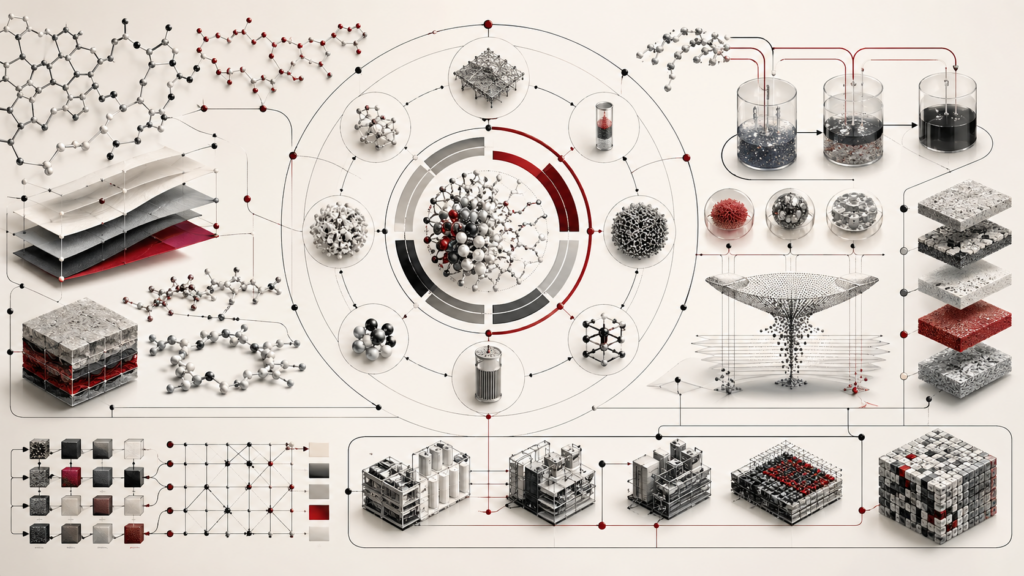
A layered institutional illustration showing material samples, crystalline structures, microscopy, tensile testing, semiconductor wafers, battery components, solar panels, infrastructure materials, recycling, and sustainable technological systems.

Materials Science: Structure, Properties, Sustainability, and Technological Systems

Materials Science examines the substances, structures, properties, processes, and design principles that make modern technology, infrastructure, energy systems, medicine, electronics, manufacturing, transportation, and environmental transition possible. This article map organizes the series across atomic structure, bonding, crystallography, defects, thermodynamics, phase behavior, mechanical properties, diffusion, thermal transport, electrical properties, semiconductors, metals, ceramics, polymers, composites, biomaterials, nanomaterials, energy materials, degradation, corrosion, lifecycle assessment, circularity, and computational materials science. The series treats materials not as passive inputs, but as active foundations of technological capability, industrial strategy, ecological responsibility, and long-term social development. It provides a structured pathway for planned articles, mathematical models, scientific code, reproducible datasets, engineering examples, and sustainability analysis across the material foundations of contemporary systems.
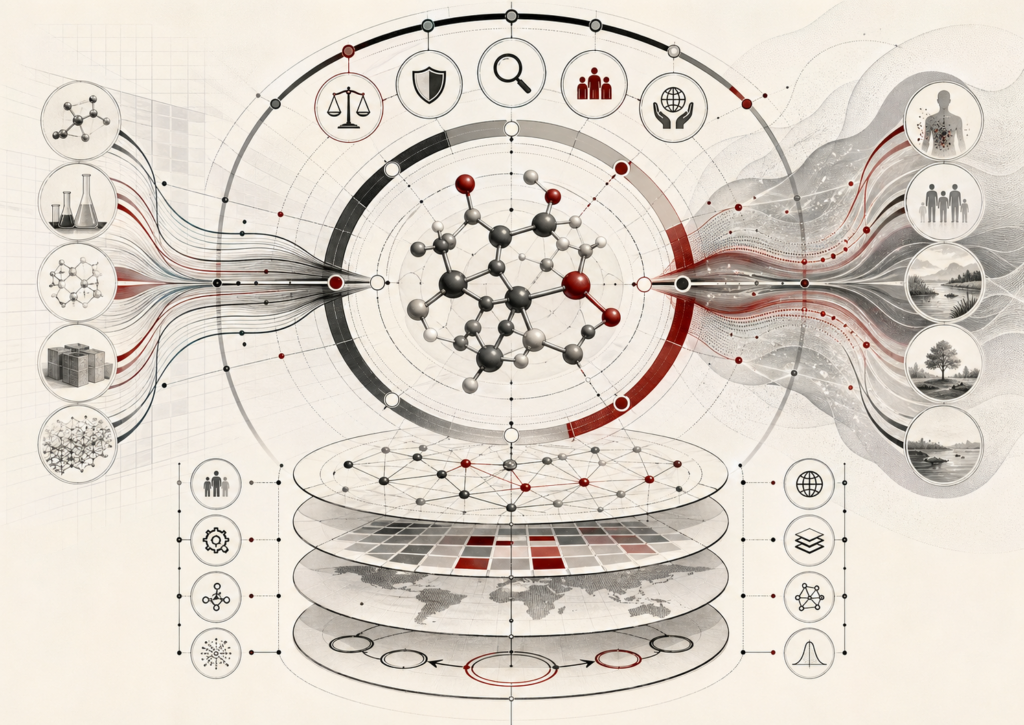
Editorial scientific illustration of chemistry ethics and molecular governance showing a central molecular structure, risk boundaries, decision layers, public-health pathways, environmental flows, transparency grids, stewardship systems, and governance structures in cream, black, white, muted gray, and deep red.

Chemistry, Ethics, and the Governance of Molecular Power

Chemistry gives human beings extraordinary power over matter. It can synthesize medicines, fertilizers, semiconductors, polymers, batteries, catalysts, fuels, sensors, coatings, dyes, disinfectants, pesticides, explosives, refrigerants, and materials that transform civilization. But molecular power also creates ethical responsibility. This article examines chemistry through the lens of governance: who designs chemicals, who benefits, who bears risk, who is exposed, who decides acceptable harm, and how societies should regulate substances that move through bodies, workplaces, ecosystems, markets, and generations. It introduces chemical ethics, precaution, risk assessment, toxicology, environmental justice, dual-use research, industrial accountability, green chemistry, chemical weapons prohibition, public communication, data transparency, product stewardship, and responsible innovation. Chemistry is not only a technical science of substances and reactions; it is also a public power that must be governed with evidence, humility, justice, and care.

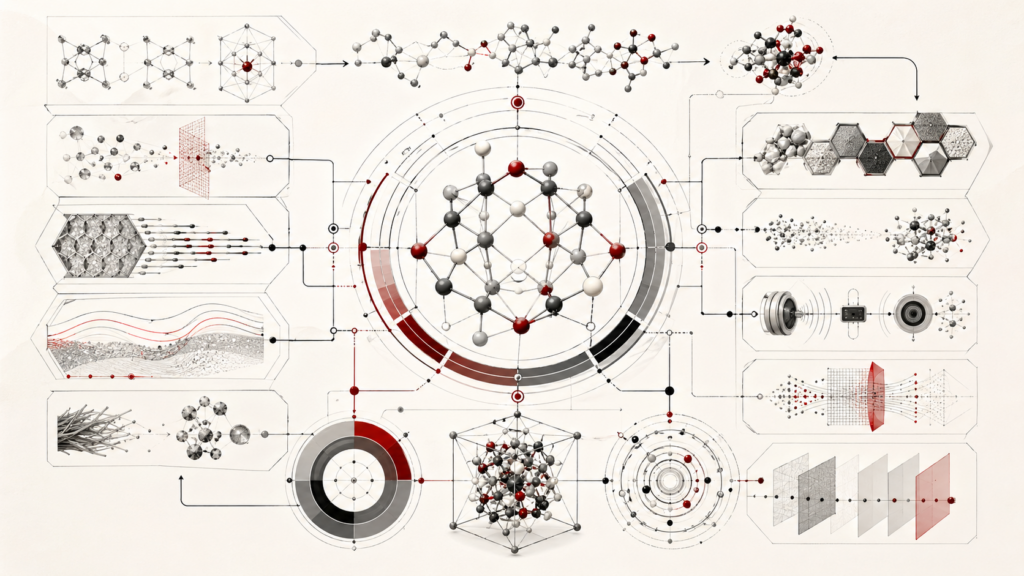
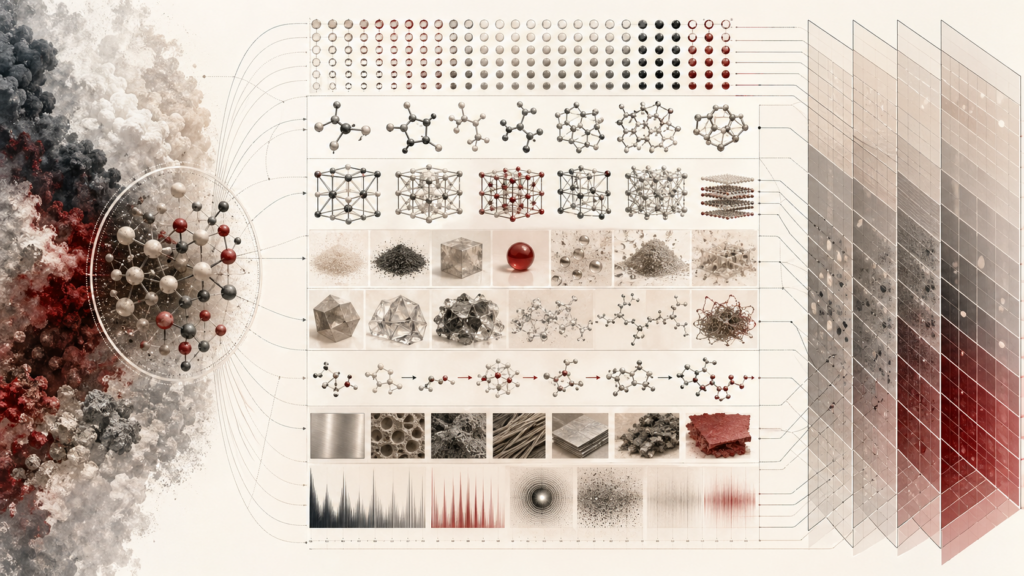
Editorial scientific illustration of chemical classification showing abstract matter, molecular structures, ionic lattices, phase layers, crystalline and amorphous materials, reaction pathways, analytical signatures, classification grids, and scientific models in cream, black, white, muted gray, and deep red.

Chemistry, Classification, and the Human Understanding of Matter

Chemistry depends on classification because matter becomes intelligible only when its patterns can be named, compared, grouped, measured, and explained. This article examines how humans understand matter through categories such as elements, compounds, mixtures, atoms, molecules, ions, phases, functional groups, minerals, polymers, materials, reaction types, oxidation states, periodic trends, bonding models, thermodynamic states, kinetic behavior, and analytical signatures. It shows that chemical classification is not merely a school exercise or a naming system, but a scientific practice that connects observation to theory, measurement to meaning, and substances to systems. Classification helps chemists predict behavior, identify unknowns, organize complexity, communicate evidence, build models, design materials, assess risk, and revise knowledge when old categories fail. Chemistry, in this sense, is both the study of matter and the disciplined art of making matter understandable.

Editorial scientific illustration of circular chemistry showing molecular materials, polymer-like structures, recovery pathways, depolymerization arcs, solvent-recovery systems, catalyst-reuse nodes, material-quality layers, traceability grids, contamination filters, and accountable material futures in cream, black, white, muted gray, and deep red.

Circular Chemistry, Waste, and Material Futures

Circular chemistry examines how molecules, materials, products, and waste streams can be redesigned for longer use, safer recovery, lower toxicity, and more responsible material futures. This article introduces circularity as a chemical design challenge involving waste prevention, material durability, reuse, repair, recycling, depolymerization, solvent recovery, catalyst recovery, biodegradation, compostability, critical materials, industrial symbiosis, product stewardship, and life-cycle thinking. It explains why circularity is not achieved by recycling symbols or end-of-pipe waste management alone, but by designing chemical systems whose materials can remain useful, separable, traceable, recoverable, and safe across multiple cycles. Circular chemistry connects green chemistry, materials science, environmental chemistry, toxicology, industrial ecology, public policy, infrastructure, and justice. It shows how chemistry can move beyond linear extraction, production, consumption, and disposal toward accountable material systems built for reuse, recovery, and long-term stewardship.

Editorial scientific illustration of green chemistry as a responsible chemical design system, showing molecular frameworks, reaction pathways, circular material flows, catalytic nodes, monitoring structures, solvent-reduction layers, degradation pathways, safety boundaries, and sustainable transformation logic in cream, black, white, muted gray, and deep red.

Green Chemistry, Responsibility, and Sustainable Transformation

Green chemistry reframes chemistry as a design discipline for safer, cleaner, and more responsible transformation. This article introduces the principles of green chemistry, including waste prevention, atom economy, safer solvents, energy efficiency, renewable feedstocks, catalysis, degradation design, toxicity reduction, real-time monitoring, accident prevention, circular materials, and life-cycle thinking. It explains why sustainability in chemistry is not limited to pollution control after damage occurs, but begins with molecular design, reaction choice, process efficiency, material selection, exposure reduction, and systems responsibility. Green chemistry connects laboratory practice, industrial production, environmental chemistry, toxicology, public health, climate strategy, regulation, ethics, and innovation. It shows how chemistry can move from extraction, hazard, and disposal toward safer design, circularity, accountability, and durable planetary stewardship.

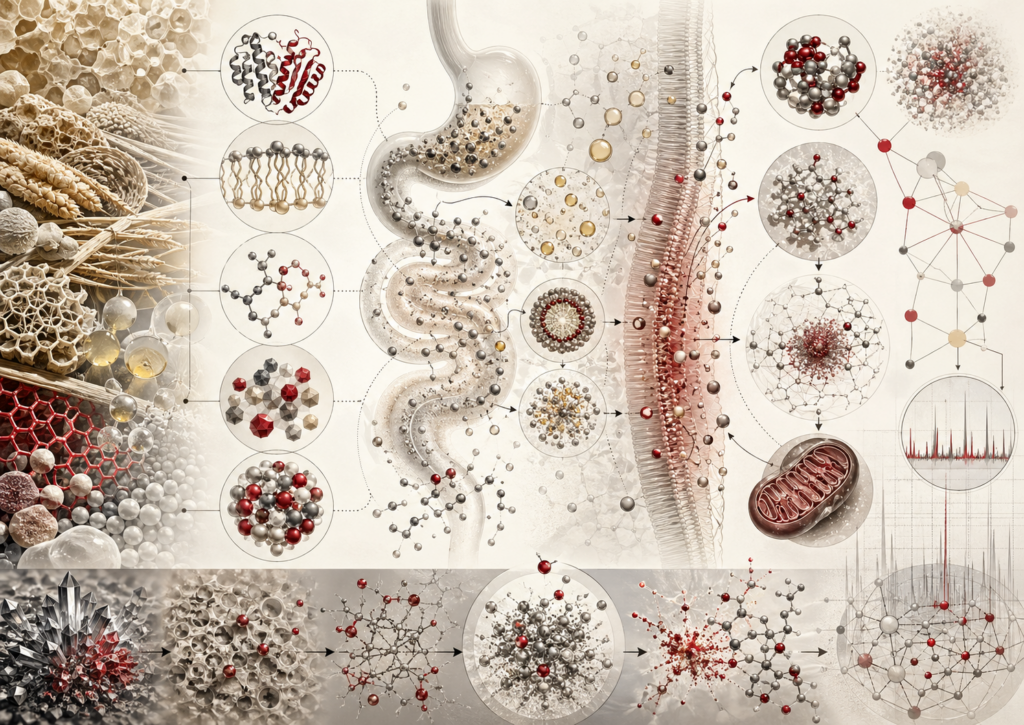
Editorial scientific illustration of food chemistry and nutrition showing molecular food structures, proteins, lipids, carbohydrates, micronutrient forms, digestion pathways, intestinal absorption, bioavailability, food matrix geometry, metabolic transformation, and nutrition evidence systems in cream, black, white, muted gray, and deep red.

Food Chemistry and the Molecular Basis of Nutrition

Food chemistry explains how molecules become nourishment, flavor, texture, safety, and biological function. This article introduces the chemistry of proteins, carbohydrates, lipids, vitamins, minerals, water, fiber, phytochemicals, enzymes, pigments, aroma compounds, emulsions, gels, fermentation, browning reactions, oxidation, food preservation, digestion, absorption, bioavailability, metabolism, and nutrient interactions. It shows why nutrition is not simply the presence of nutrients on a label, but the result of molecular structure, food matrix effects, processing, cooking, storage, gut transformation, microbiome interactions, and human physiology. Food chemistry connects agriculture, biochemistry, public health, sensory science, analytical chemistry, toxicology, sustainability, and food systems. It reveals food as a chemically complex interface between ecosystems, culture, metabolism, health, and responsible nourishment.

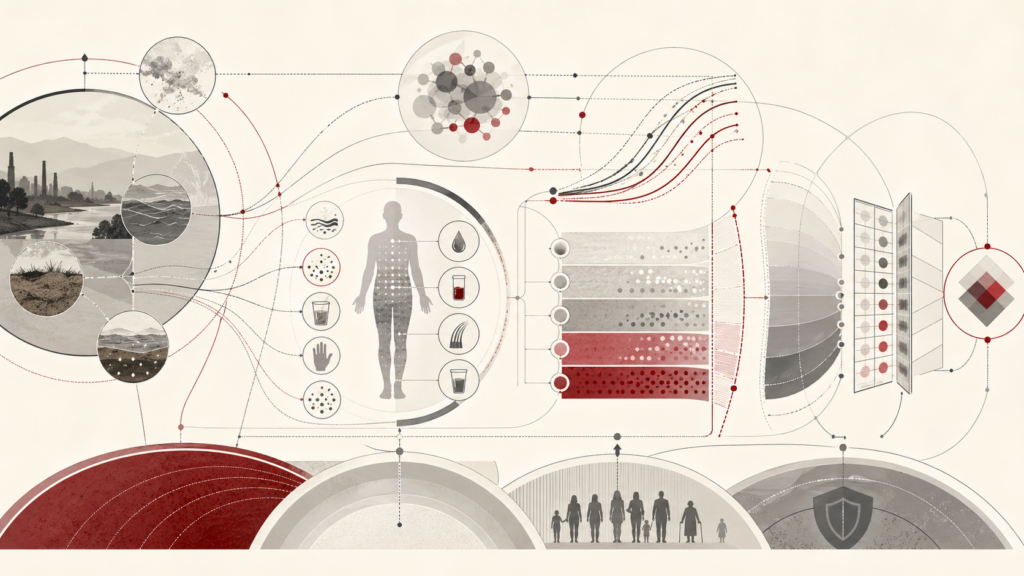
Editorial scientific illustration of toxicology as a chemical risk assessment system, showing environmental exposure pathways, molecular hazard evidence, biomonitoring forms, human vulnerability, dose-response layers, mixture uncertainty, threshold boundaries, safety margins, and protective decision structures in cream, black, muted gray, white, and deep red.

Toxicology, Exposure, and Chemical Risk

Toxicology explains how chemicals interact with living systems and why chemical risk depends on hazard, dose, exposure, timing, susceptibility, and context. This article introduces toxicology as a scientific bridge between chemistry, biology, medicine, environmental health, public health, occupational safety, regulatory science, and ethics. It examines dose-response relationships, exposure pathways, absorption, distribution, metabolism, excretion, target-organ toxicity, acute and chronic effects, endocrine disruption, developmental toxicity, carcinogenicity, mixtures, vulnerable populations, uncertainty factors, risk assessment, hazard communication, biomonitoring, environmental monitoring, and chemical safety. It emphasizes that toxicity is not determined by a substance’s name alone, but by concentration, route, duration, biological sensitivity, cumulative burden, and evidence quality. Toxicology becomes a disciplined way to evaluate chemical harm, protect communities, and govern substances responsibly.

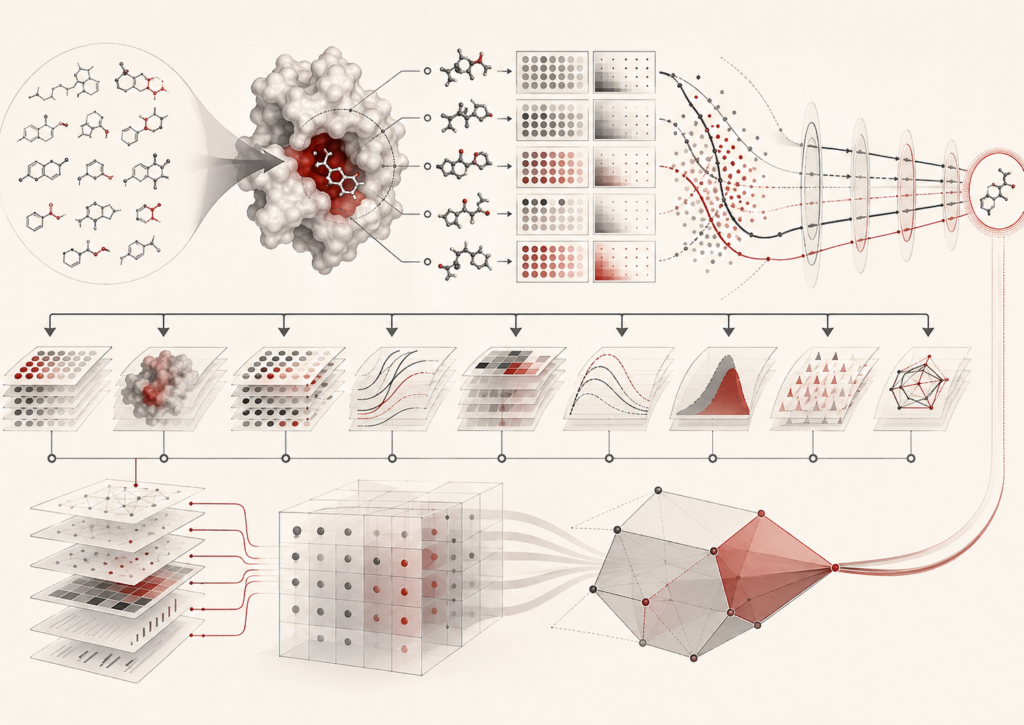
Editorial scientific illustration of medicinal chemistry as an integrated drug-discovery workflow, showing abstract molecular structures, target-binding forms, assay arrays, ADMET screening layers, pharmacokinetic pathway arcs, safety-liability signals, decision matrices, and candidate-selection geometry in cream, black, muted gray, white, and deep red.

Medicinal Chemistry and Drug Discovery

Medicinal chemistry turns biological hypotheses into chemically testable therapeutic possibilities. This article introduces the discipline as a decision system that connects molecular structure, target biology, potency, selectivity, physicochemical properties, ADMET, pharmacokinetics, toxicology, safety liabilities, assay quality, developability, and regulatory evidence. It explains why the strongest molecule is not always the best candidate: potency must be balanced against solubility, permeability, metabolic stability, off-target activity, hERG and CYP risks, exposure, formulation, and translational relevance. The article also introduces key discovery metrics such as pIC50, ligand efficiency, lipophilic ligand efficiency, selectivity windows, multiparameter optimization, Pareto frontier thinking, and assay progression logic. Medicinal chemistry emerges as the science of making molecular decisions under biological uncertainty.

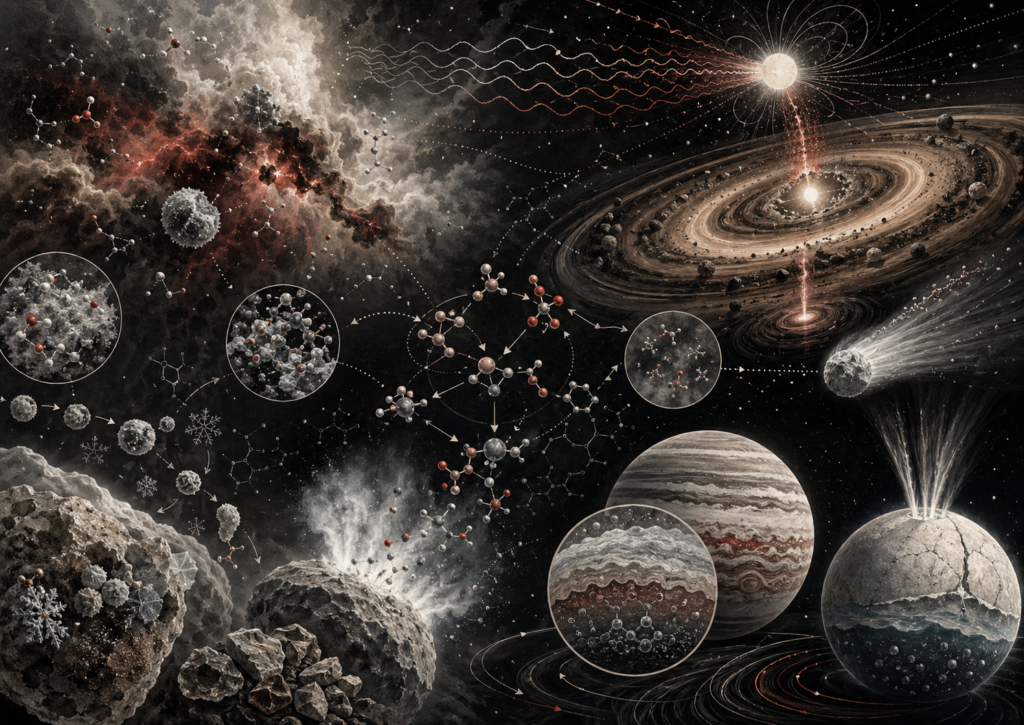
Editorial scientific illustration of astrochemistry showing molecular clouds, interstellar molecules, icy dust grains, radiation pathways, protoplanetary disk chemistry, cometary volatile plumes, meteorite fragments, planetary atmospheres, icy worlds, and molecular networks in cream, black, white, muted gray, and deep red.

Astrochemistry and the Molecular Universe

Astrochemistry studies the molecules, reactions, ices, dust grains, radiation fields, and chemical networks that shape the molecular universe. It covers the chemistry of interstellar clouds, star-forming regions, protoplanetary disks, comets, meteorites, planetary atmospheres, icy moons, circumstellar envelopes, and diffuse interstellar gas. It examines how molecules form, freeze, desorb, react, fragment, ionize, absorb radiation, emit spectra, and preserve chemical memory across space and time. It connects quantum chemistry, spectroscopy, thermodynamics, kinetics, surface chemistry, photochemistry, plasma chemistry, isotopic chemistry, organic chemistry, geochemistry, planetary science, and astrobiology. Molecular evidence helps scientists reconstruct cosmic environments, trace star and planet formation, identify organic precursors, evaluate habitability, and understand how ordinary chemical bonds participate in the larger history of galaxies, planets, and life.

Scroll to Top