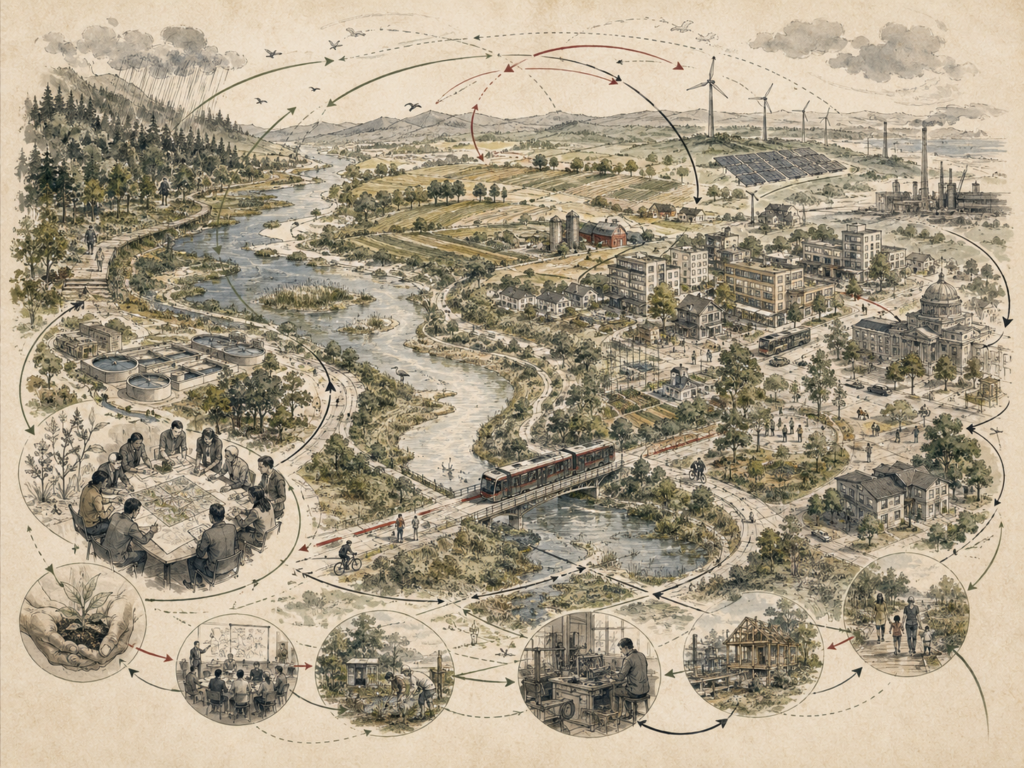
Systems Thinking and Sustainability
Systems Thinking and Sustainability explains sustainability as a dynamic relationship among ecological limits, social foundations, resource flows, infrastructure, governance, resilience, equity, and long-term system learning. The article shows why sustainability cannot be reduced to individual behavior, isolated technologies, efficiency metrics, recycling, or short-term impact reduction. Instead, it examines the feedback loops, delays, stocks, flows, thresholds, path dependencies, and power structures that keep unsustainable systems in place. Through examples from climate, energy, water, food, cities, biodiversity, waste, and public institutions, the article connects sustainability to ecological regeneration, social dignity, institutional memory, just transition, and intergenerational responsibility. Readers gain a practical method for diagnosing sustainability systems, mapping stocks and flows, identifying feedback loops, testing scenarios, analyzing distributional effects, and redesigning systems so ecological foundations and human wellbeing can be sustained over time.