Embedded & Edge Systems

Embedded and edge systems examine how computational intelligence is integrated directly into physical devices, sensors, and distributed technological infrastructure. Unlike centralized computing systems that rely on remote servers or cloud environments, embedded and edge systems perform computation close to where data is generated, enabling faster response times, improved efficiency, and reduced reliance on centralized networks.

Embedded systems appear across a wide range of technologies, including microcontrollers, sensor networks, robotics platforms, industrial automation, environmental monitoring devices, and Internet of Things (IoT) infrastructure. These systems often operate under strict constraints related to power consumption, processing capacity, reliability, and real-time performance.

The study of embedded and edge systems therefore involves both hardware and software design. It includes firmware development, real-time operating systems, distributed computing architectures, and low-power processing strategies that enable intelligent devices to function reliably in complex environments. As technological infrastructure becomes increasingly decentralized, embedded and edge systems play a growing role in shaping how information is collected, processed, and acted upon across physical systems.

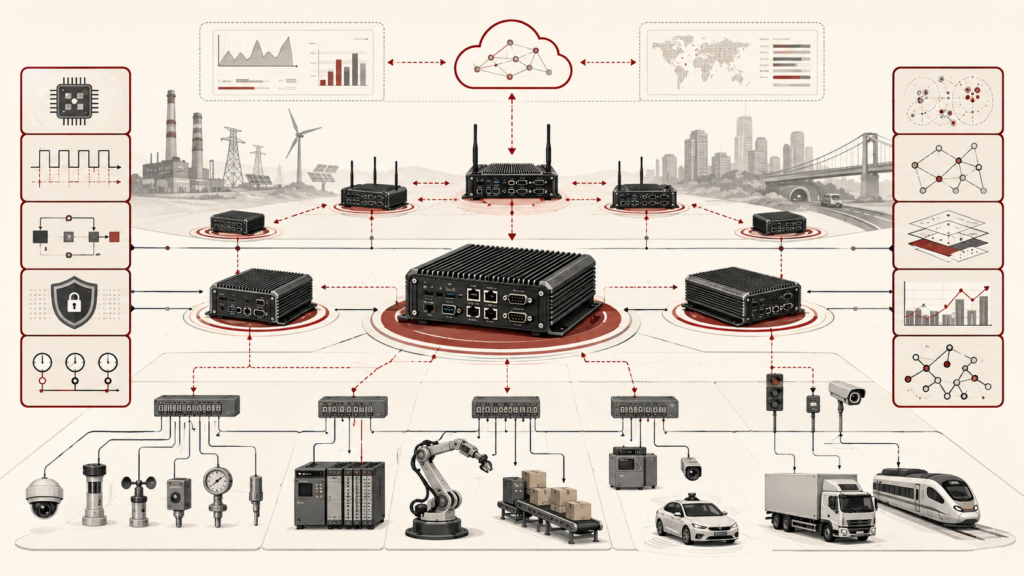
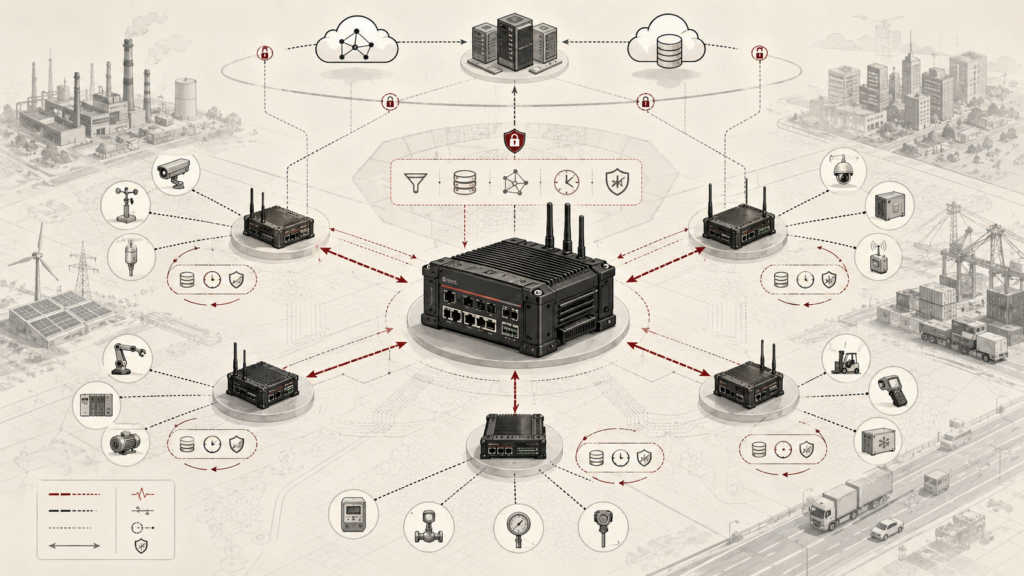
Institutional systems-research illustration of distributed edge infrastructure with central gateways aggregating data from sensors, devices, robotics, logistics systems, and cloud services.

Gateways, Aggregation Layers, and Distributed Edge Infrastructure

Gateways, aggregation layers, and distributed edge infrastructure determine whether field devices, local networks, site systems, and upstream platforms can operate as a coherent embedded system. These intermediary layers are not passive networking components; they preserve identity, timing, quality, protocol meaning, buffering, replay semantics, local policy, and site-level evidence. Strong gateway architecture distinguishes raw device signals from normalized telemetry, local acquisition time from upload time, device identity from gateway identity, and site summaries from the lineage that produced them. This article examines gateways as evidence infrastructure: systems that translate protocols, parent child devices, buffer data during outages, aggregate local state, enforce selective uplink, support partial autonomy, and make distributed edge systems observable, secure, recoverable, and governable across real-world operating conditions.
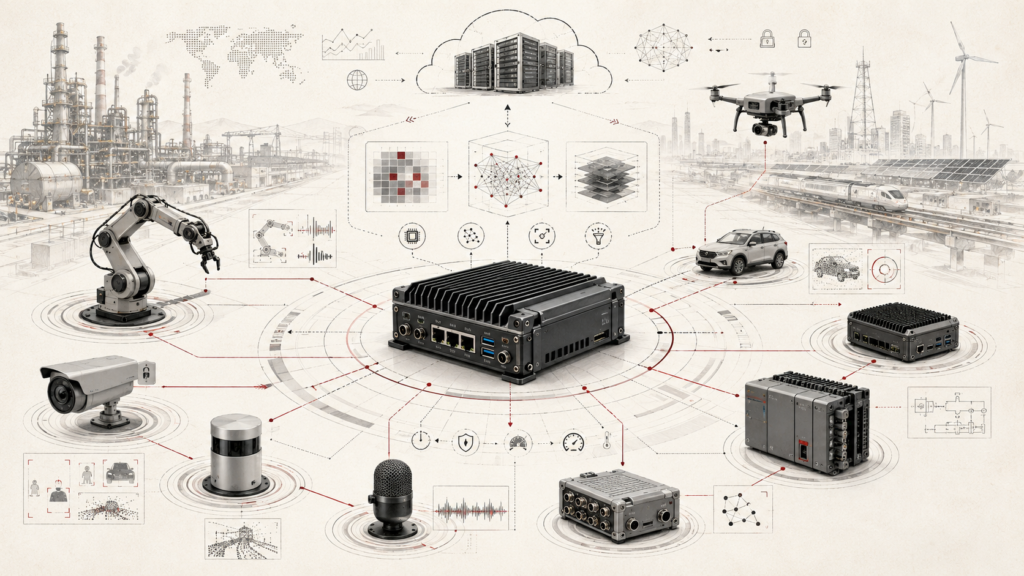
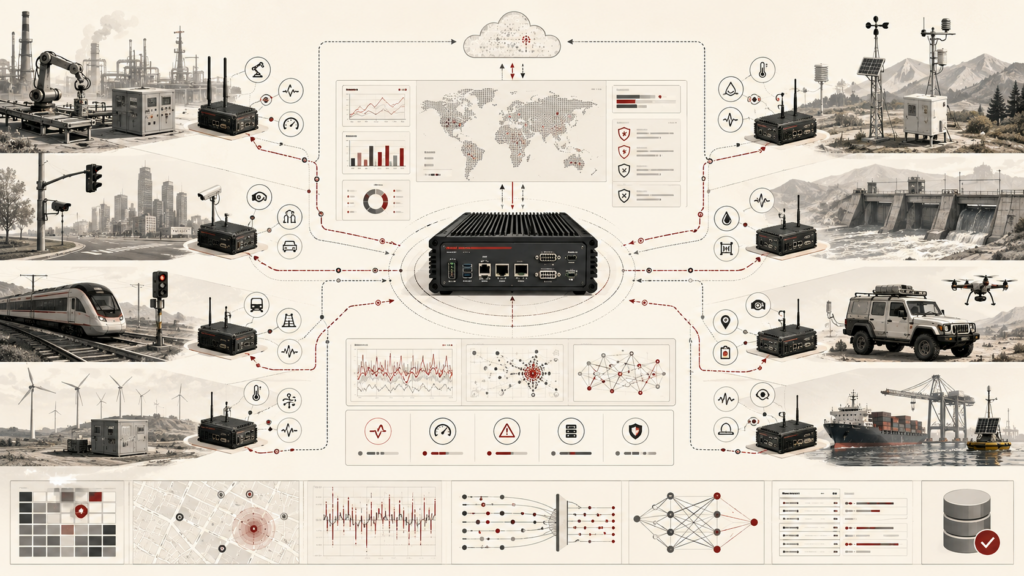
Institutional systems-research illustration of edge AI and on-device machine learning connecting embedded computers, sensors, robotics, cameras, drones, vehicles, and cloud infrastructure.

Edge AI and On-Device Machine Learning for Embedded Systems

Edge AI and on-device machine learning bring inference into embedded devices, gateways, accelerators, and local edge systems where latency, privacy, bandwidth, power, autonomy, and operational continuity matter. This article examines edge AI as local interpretation infrastructure, not simply a smaller version of cloud AI. It explains how sensors, feature pipelines, quantized models, runtimes, confidence thresholds, fallback behavior, hardware accelerators, model lifecycle governance, and fleet monitoring must work together for local intelligence to remain trustworthy. The article also frames on-device ML as an engineering discipline shaped by memory budgets, tensor arenas, operator compatibility, backend validation, latency constraints, drift monitoring, secure updates, and rollback readiness. Strong edge AI systems do not merely run models locally; they preserve evidence, bound local authority, and make deployed inference observable, testable, recoverable, and governable.

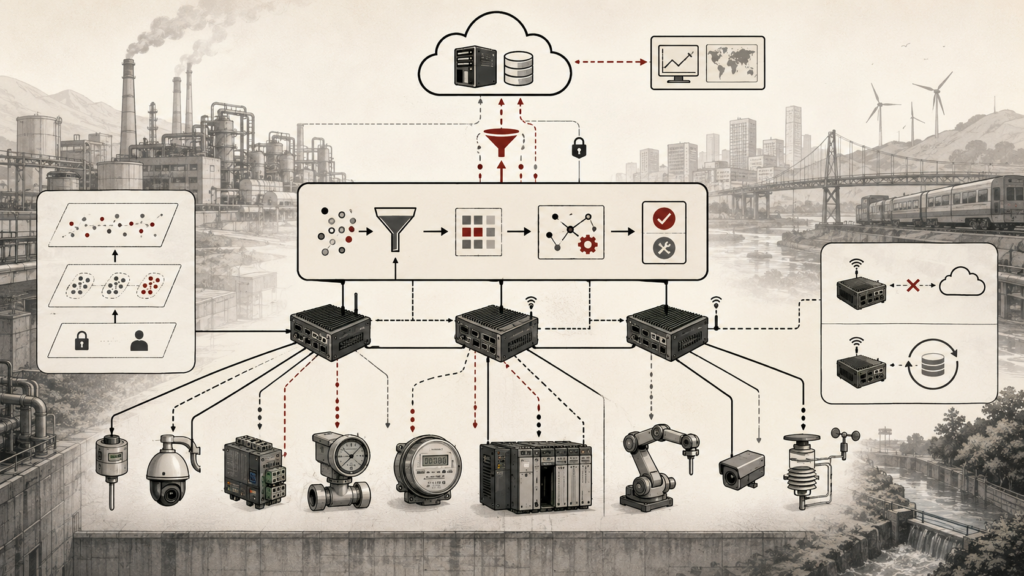
Institutional systems-research illustration of embedded edge analytics, showing local data processing pipelines, edge nodes, industrial devices, filtering, and selective cloud communication.

Edge Analytics and Local Data Processing for Embedded Systems

Edge analytics and local data processing explain how embedded and edge systems transform raw local signals into timely, selective, and operationally useful outputs before data move upstream. This article frames edge analytics as local meaning infrastructure: the layer where sensing, preprocessing, windowing, feature extraction, event logic, buffering, replay handling, and selective uplink determine what a wider system can know. It examines how engineers preserve acquisition time, freshness, lineage, feature completeness, quality flags, local latency, buffer state, and replay semantics so that summarized or delayed outputs remain interpretable. Strong edge analytics systems do more than reduce bandwidth. They decide what is retained, forwarded, suppressed, sampled, or backfilled while preserving enough evidence for debugging, governance, incident review, and downstream trust.

Institutional systems-research illustration of edge computing architecture for embedded and real-time systems, connecting edge nodes, sensors, controllers, robotics, vehicles, and cloud coordination layers.

Edge Computing Architectures for Embedded and Real-Time Systems

Edge computing architectures explain how embedded systems distribute computation across devices, gateways, local edge nodes, regional infrastructure, and cloud services. This article frames edge computing as responsibility placement: deciding where sensing, control, analytics, buffering, inference, security, observability, and recovery should occur under real latency, bandwidth, privacy, trust, and continuity constraints. It examines how engineers design edge systems that can continue operating during disconnection, preserve local evidence, enforce data-locality rules, manage software versions, validate trust boundaries, and recover through staged rollback. Strong edge architecture is not simply about moving workloads closer to devices. It is about making local computation bounded, observable, secure, updateable, and explainable across the full lifecycle of distributed physical systems.

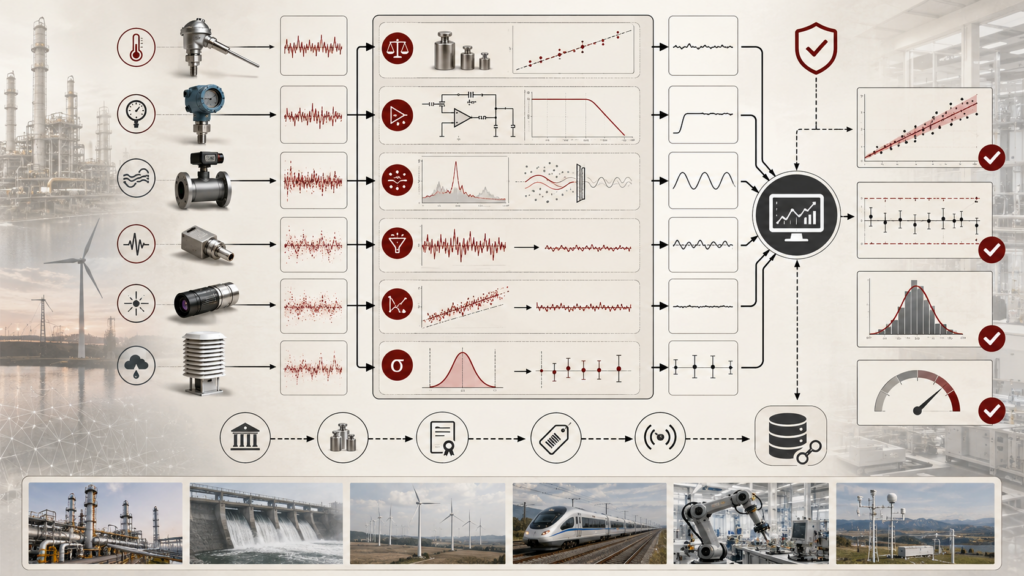
Institutional systems-research illustration of sensor calibration, noise filtering, measurement validation, uncertainty analysis, and data integrity across industrial and environmental sensor systems.

Calibration, Noise, and Measurement Integrity in Sensor Systems

Calibration, noise, and measurement integrity determine whether sensor values in embedded and edge systems can be trusted, not merely collected. This article examines the full measurement chain: sensing elements, analog front ends, references, wiring, ADC sampling, calibration coefficients, firmware filtering, uncertainty, quality flags, traceability, and downstream interpretation. It explains why sensor accuracy is a systems property rather than a datasheet claim, and why engineers must preserve calibration state, noise characteristics, provenance, and confidence metadata alongside reported values. The article also introduces practical patterns for uncertainty budgeting, drift monitoring, quality gating, fault containment, and fleet-level measurement reporting. Strong sensor systems do not simply produce stable-looking numbers; they produce qualified measurements whose limits, lineage, and fitness for use remain visible throughout the device lifecycle.

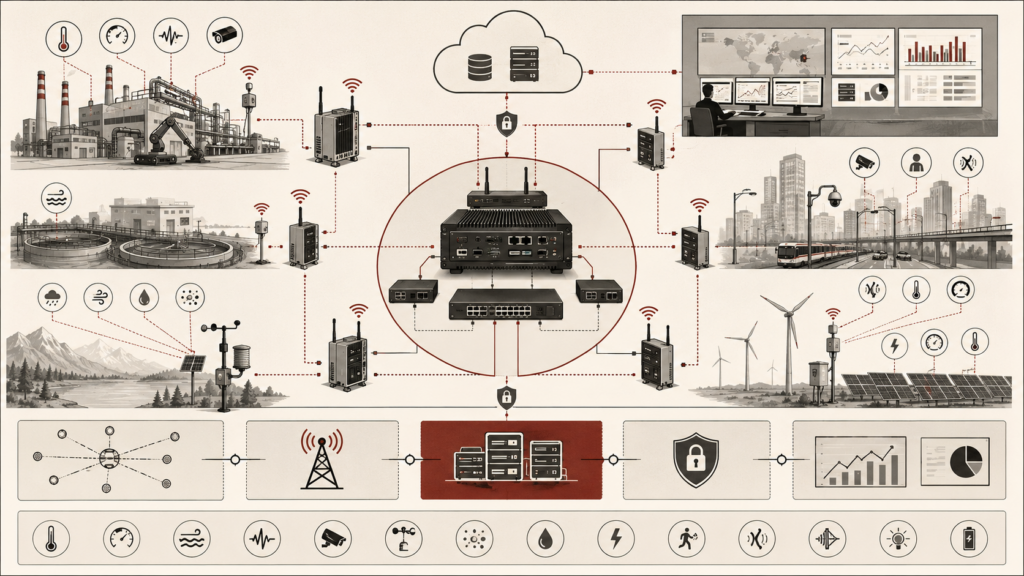
Institutional systems-research illustration of Internet of Things sensor architecture connecting industrial, environmental, urban, energy, and infrastructure sensors through gateways, cloud systems, and monitoring layers.

Internet of Things Sensor Architectures

Internet of Things sensor architectures explain how connected sensing becomes a governable embedded and edge system rather than a loose collection of devices. This article examines how sensors, endpoints, gateways, protocols, brokers, edge runtimes, cloud services, identity systems, security controls, OTA updates, and observability layers work together to preserve the meaning of distributed measurements. It emphasizes that IoT architecture is not merely connectivity: engineers must manage device identity, telemetry schemas, event time, freshness, buffering, replay, idempotency, quality flags, trust state, lifecycle status, command authority, and incident reconstruction. Strong IoT sensor fleets do not simply transmit data. They preserve where data came from, when it was measured, how it moved, whether it can be trusted, and what downstream systems are allowed to infer from it.

Institutional systems-research illustration of distributed monitoring systems connecting embedded edge nodes across industrial, urban, transport, environmental, energy, water, and logistics environments.

Distributed Monitoring Systems for Embedded and Edge Environments

Distributed monitoring systems turn many local sensor readings into coordinated system awareness. This article examines how embedded and edge monitoring networks preserve meaning across nodes, topology, timing, gateways, buffering, calibration, quality flags, aggregation, fault containment, and observability. It emphasizes that distributed monitoring is not simply deploying more sensors; engineers must ensure that measurements remain fresh, synchronized, spatially meaningful, quality-qualified, and traceable from node to system-level interpretation. The article introduces practical patterns for monitoring-state classification, inference boundaries, partial-failure detection, gateway supervision, replay handling, aggregation lineage, and deployment readiness. Strong distributed monitoring systems do not merely show data on dashboards. They reveal what the system can see, what it cannot see, and how trustworthy each claim remains under real field conditions.

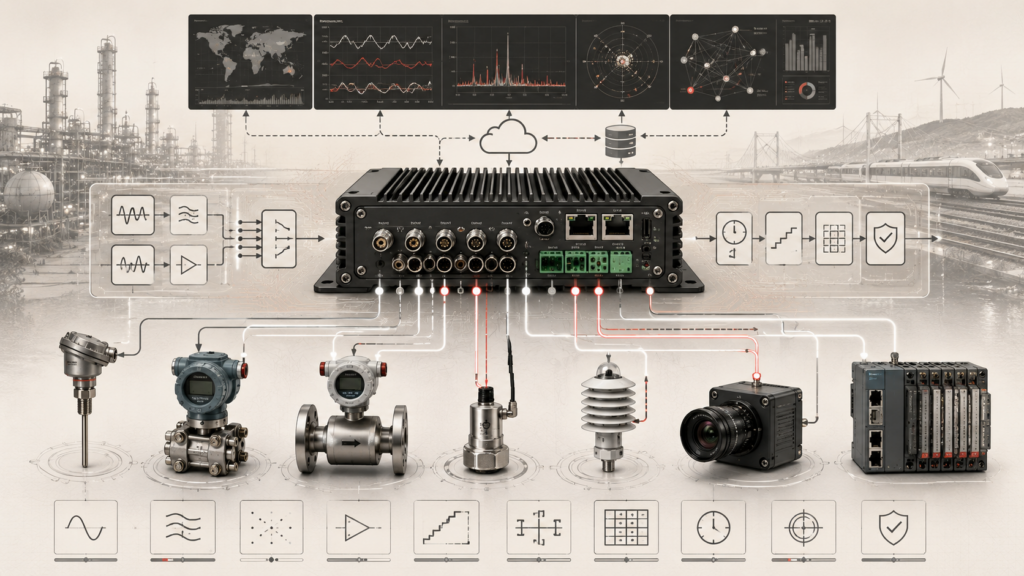
Institutional systems-research illustration of embedded data acquisition, showing sensor interfaces, signal conditioning, timing, validation, edge processing, and monitoring systems.

Data Acquisition and Embedded Sensor Interfaces for Embedded Systems

Data acquisition and embedded sensor interfaces define how physical signals become trustworthy digital measurements inside embedded and edge systems. This article examines the full measurement chain: transduction, analog front-end design, ADC behavior, digital sensor buses, timing, buffering, DMA, timestamping, calibration, validation, and measurement lineage. Rather than treating sensors as simple inputs, it frames acquisition as measurement infrastructure: the layer that determines whether software, control logic, edge analytics, and operational decisions are grounded in physically meaningful data. The article explains how noise, reference drift, aliasing, settling error, bus faults, stale readings, buffer pressure, and weak provenance can produce precise-looking but unreliable numbers. It also introduces mathematical models, Python and R workflows, systems-code scaffolding, and engineering verification gates for building acquisition systems that are accurate, diagnosable, observable, and fit for use.

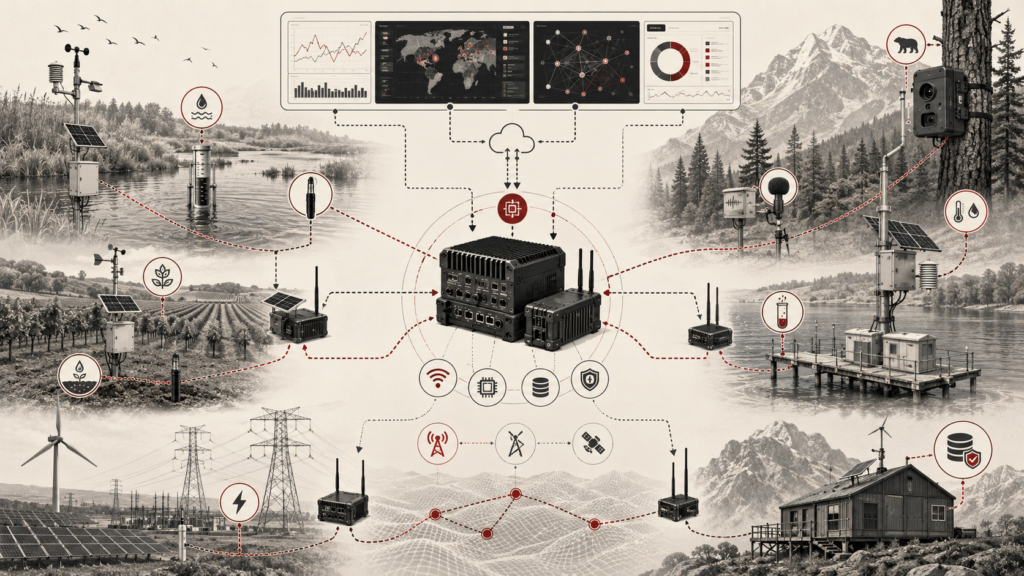
Institutional systems-research illustration of environmental sensor networks connecting wetlands, forests, farms, rivers, energy sites, remote stations, edge nodes, and monitoring dashboards.

Environmental Sensor Networks for Embedded and Edge Systems

Environmental sensor networks are distributed embedded systems that collect, validate, transmit, and interpret measurements of physical, chemical, and ecological conditions across landscapes, watersheds, farms, cities, and infrastructure. This article frames environmental sensing as measurement infrastructure, not simply field deployment. It examines how site selection, calibration, sensor drift, sampling strategy, timestamping, communications, power budgets, edge processing, maintenance, data quality, and governance determine whether environmental data remain meaningful over time. The article explains why technically functioning sensors can still produce misleading records when placement, uncertainty, provenance, or maintenance are weak. It also introduces mathematical models, Python and R workflows, systems-code scaffolding, and verification gates for designing networks that are observable, diagnosable, energy-aware, scientifically defensible, and fit for environmental decision support.

Scroll to Top