Macroeconomic Stability, Business Cycles, and Crisis
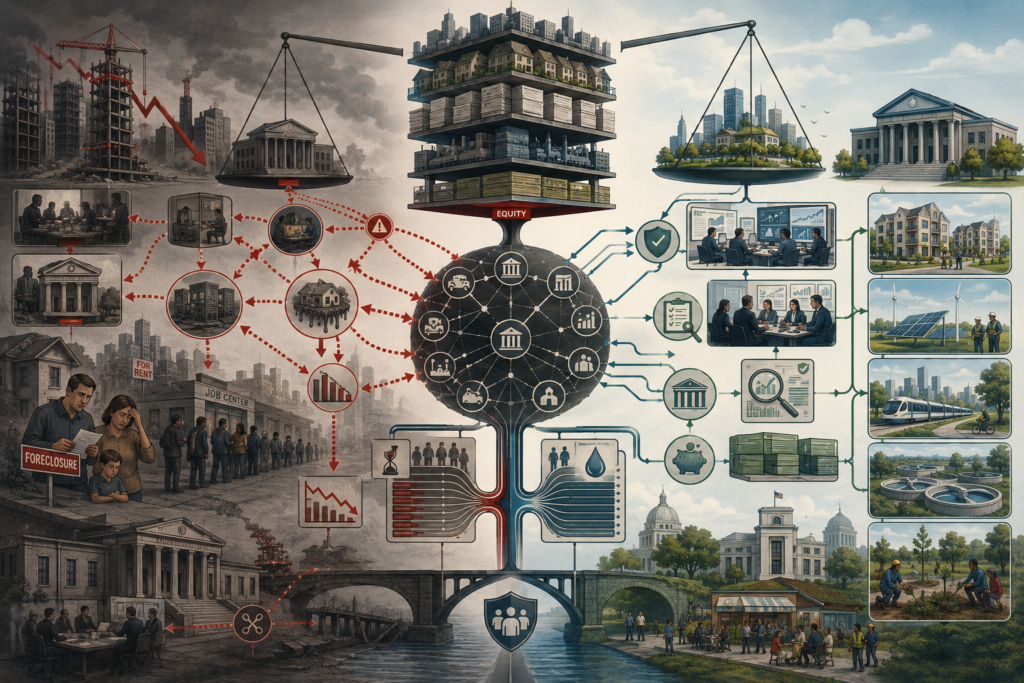
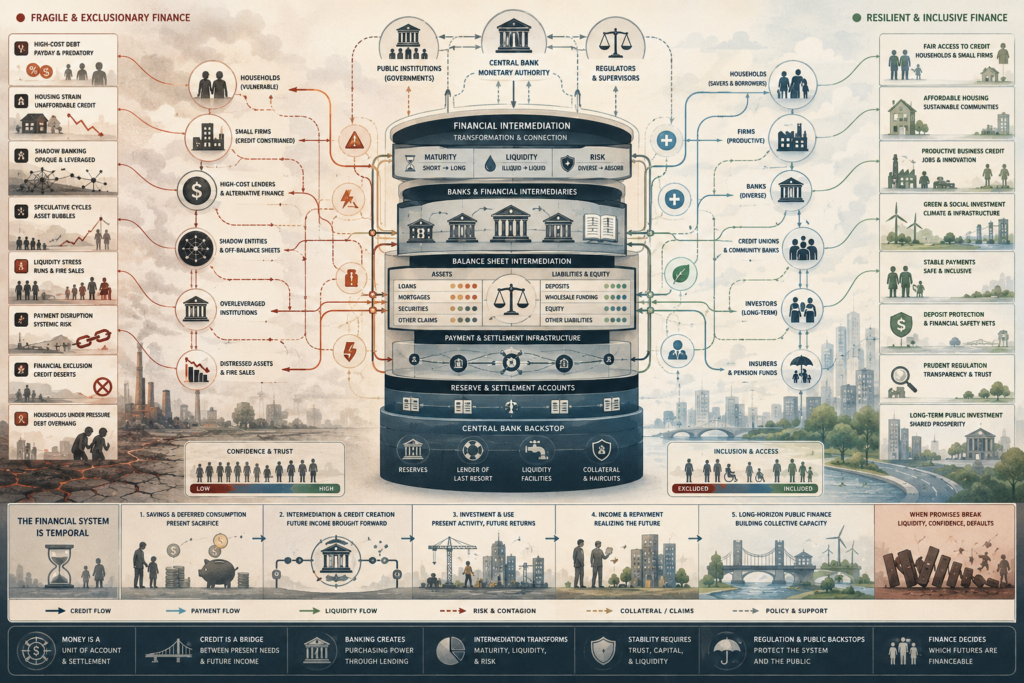
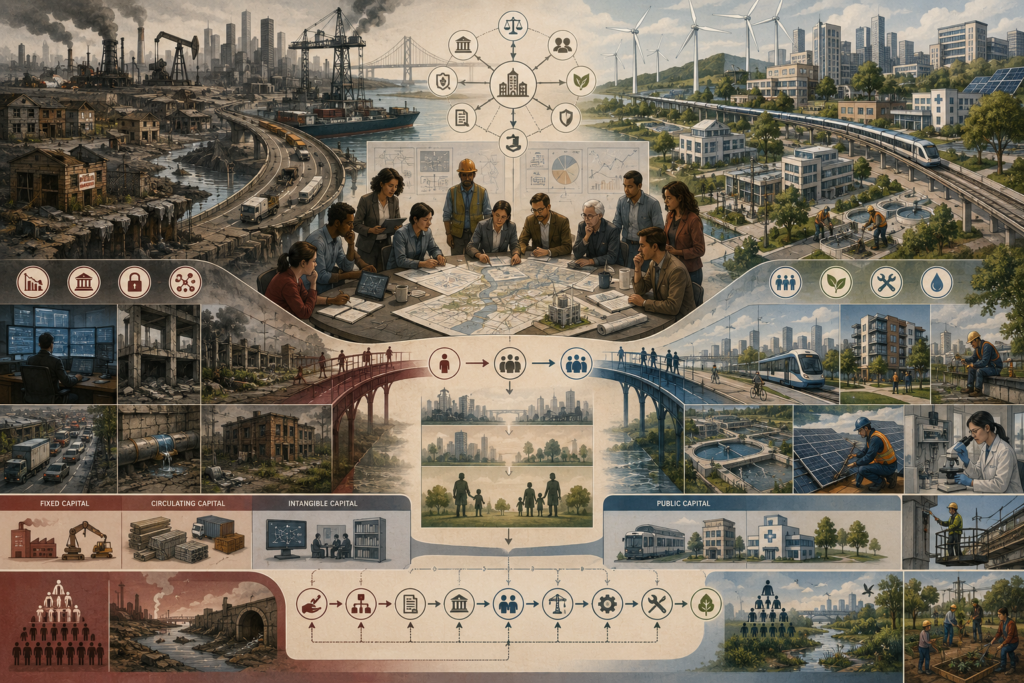
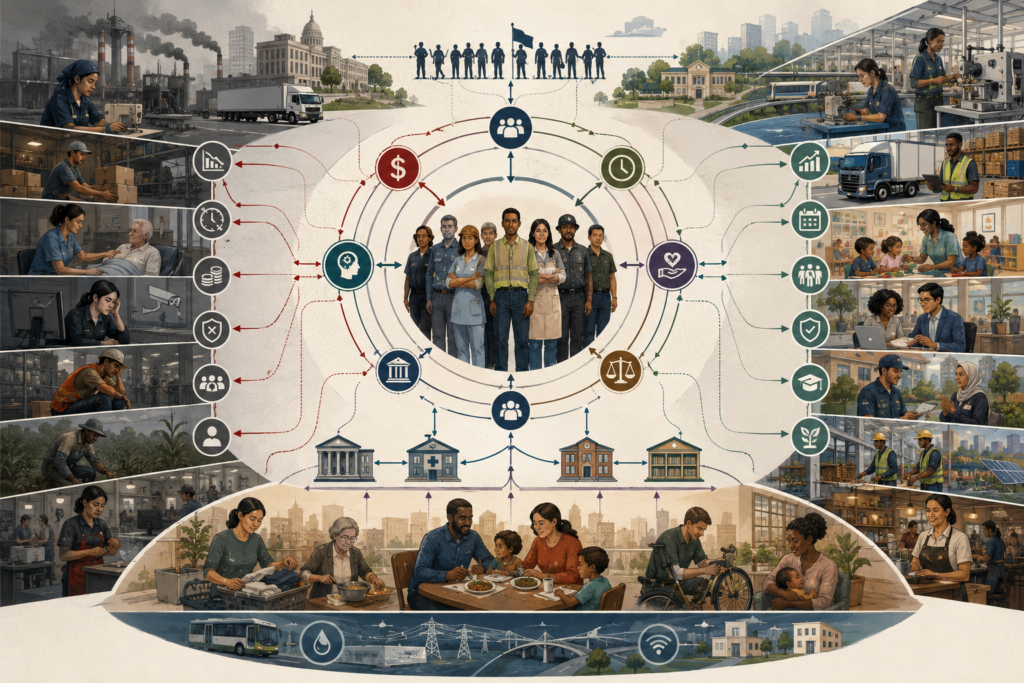
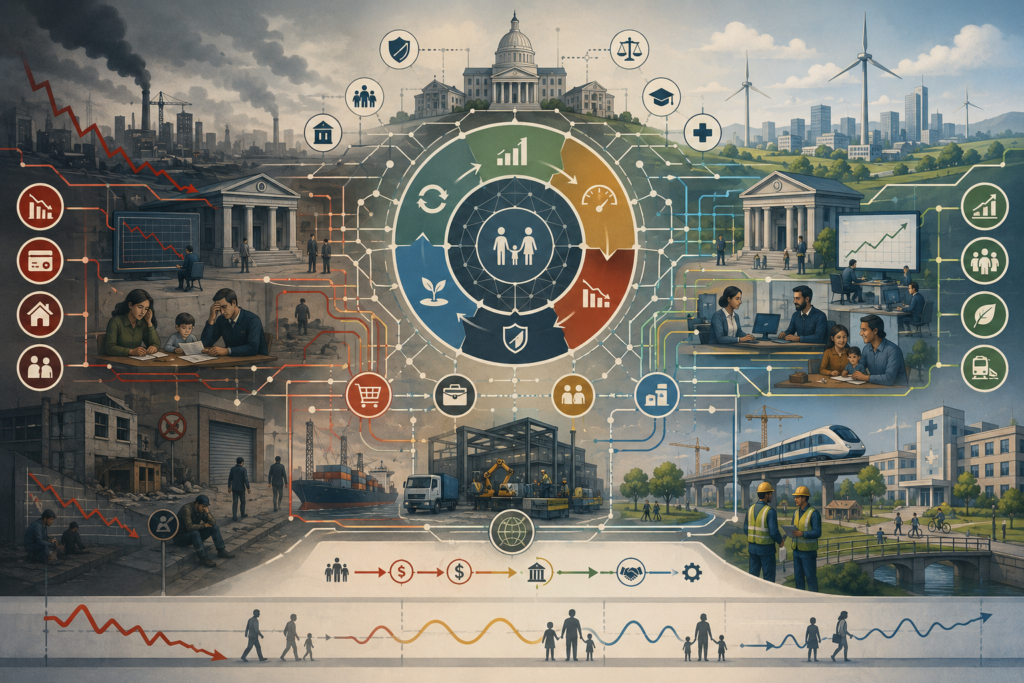
Macroeconomic stability, business cycles, and crisis are central to economic analysis because modern economies do not move smoothly through time, but oscillate through changing patterns of demand, investment, credit, employment, prices, and institutional confidence. This article examines why business cycles emerge from decentralized decisions under uncertainty, how aggregate demand, finance, inventories, debt burdens, and expectations can amplify both expansion and contraction, and why crises occur when the ordinary mechanisms of coordination begin to fail. It also explores how fiscal capacity, automatic stabilizers, monetary policy, household security, and global transmission shape the depth and durability of downturns. Within sustainable systems, the deeper issue is not only whether growth resumes after shock, but whether macroeconomic order is resilient enough to preserve employment, public capacity, infrastructure, adaptation, and long-horizon social stability across periods of structural change and disruption.