Digital Infrastructure and Development Capacity
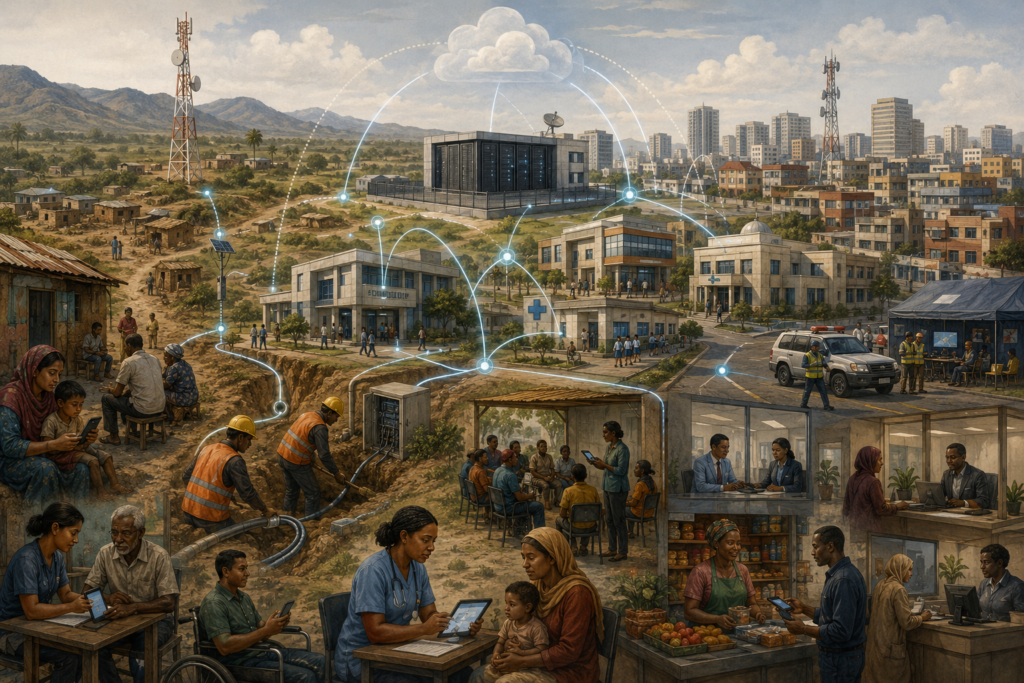
Digital infrastructure and development capacity examines why development now depends not only on connectivity, but on whether shared digital systems can support identification, payments, data exchange, service delivery, and institutional coordination at scale. The article argues that digital infrastructure is not a technical sidebar to development. It is part of the operational foundation through which states, public services, and economies become capable of acting with reach, speed, traceability, and resilience. It explores the difference between simple connectivity and deeper operational capacity, the role of digital public infrastructure in strengthening state capability, the importance of identity, payments, and interoperable registries, the risks of exclusion and weak trust, and the growing significance of cloud, compute, and systemic resilience. The core claim is that sustainable development requires digital systems that are not only extensive, but equitable, secure, interoperable, and institutionally robust.