Risk, Shock, and Fragility in Development Systems
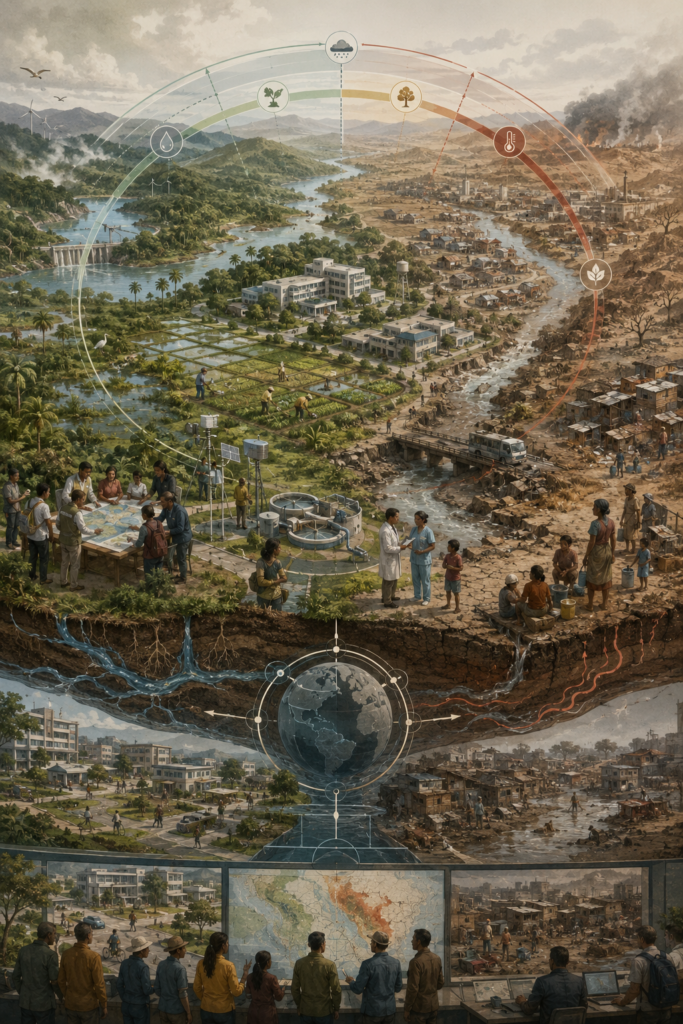
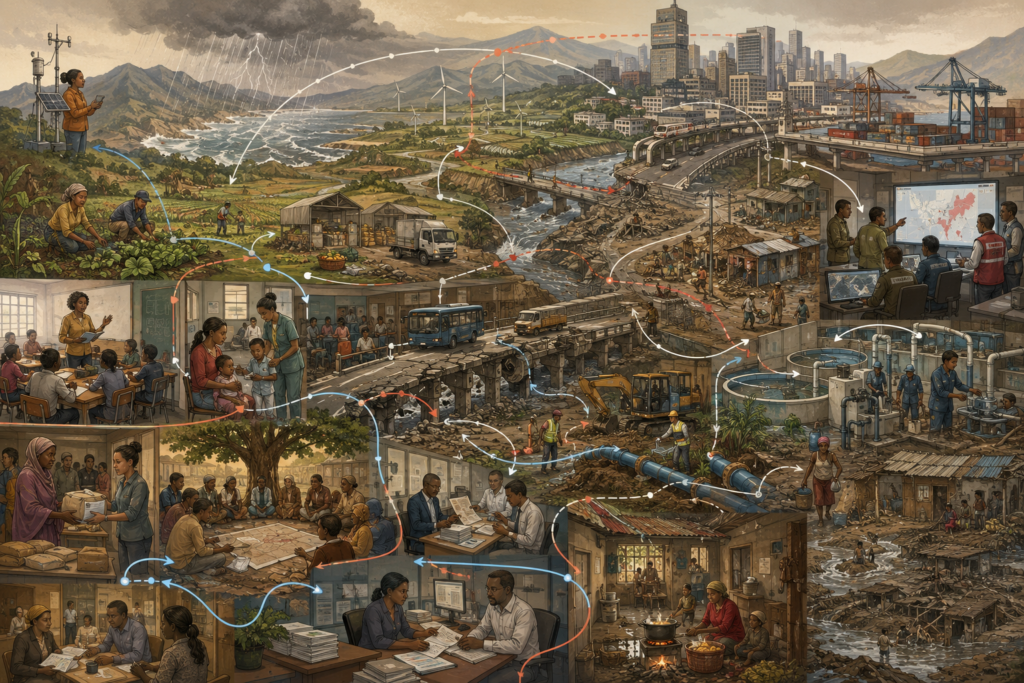
Risk, shock, and fragility in development systems examines why sustainable development cannot be judged only by the gains societies achieve, but also by how well those gains endure under pressure. The article argues that economic crises, climate hazards, conflict, food insecurity, institutional breakdown, and infrastructure failures are not external interruptions to development, but part of the conditions through which development pathways are tested and sometimes reversed. It explores fragility as the interaction of exposure and insufficient resilience, emphasizes the multidimensional nature of risk across economic, environmental, political, security, societal, and human domains, and shows how compound shocks can cascade across systems. The core claim is that development remains fragile when progress depends on favorable conditions rather than on institutions, infrastructures, and social protections capable of absorbing disturbance, adapting under strain, and preserving human wellbeing across time.