Social Dilemmas: Why Individual Rationality Often Undermines Collective Welfare
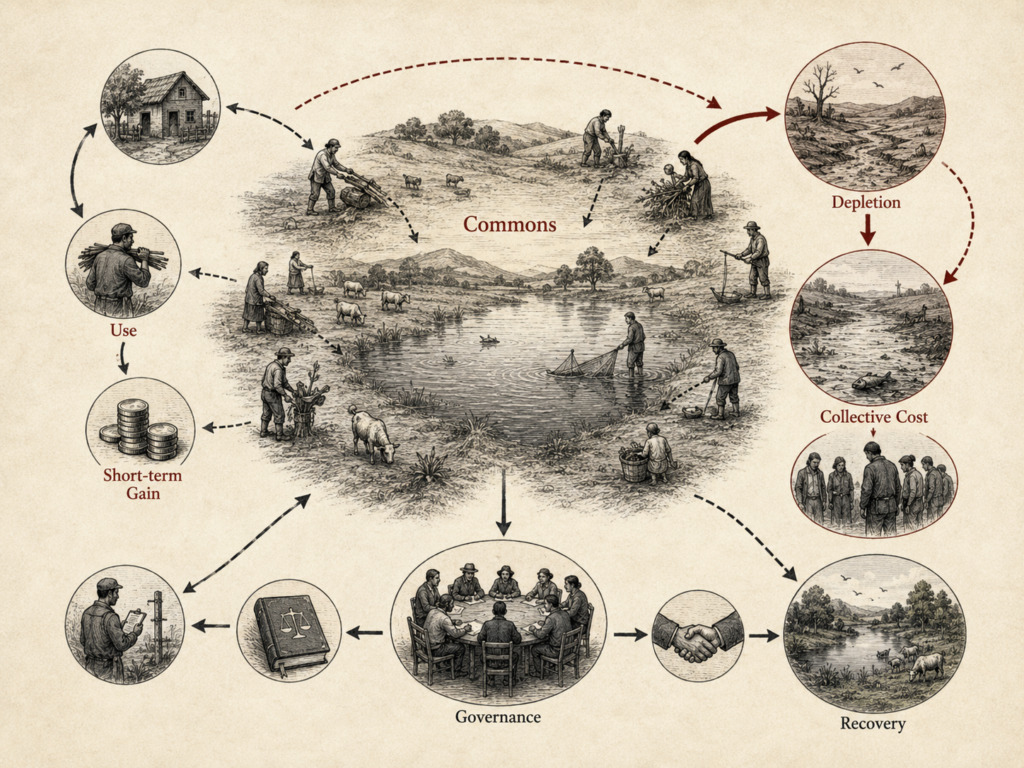
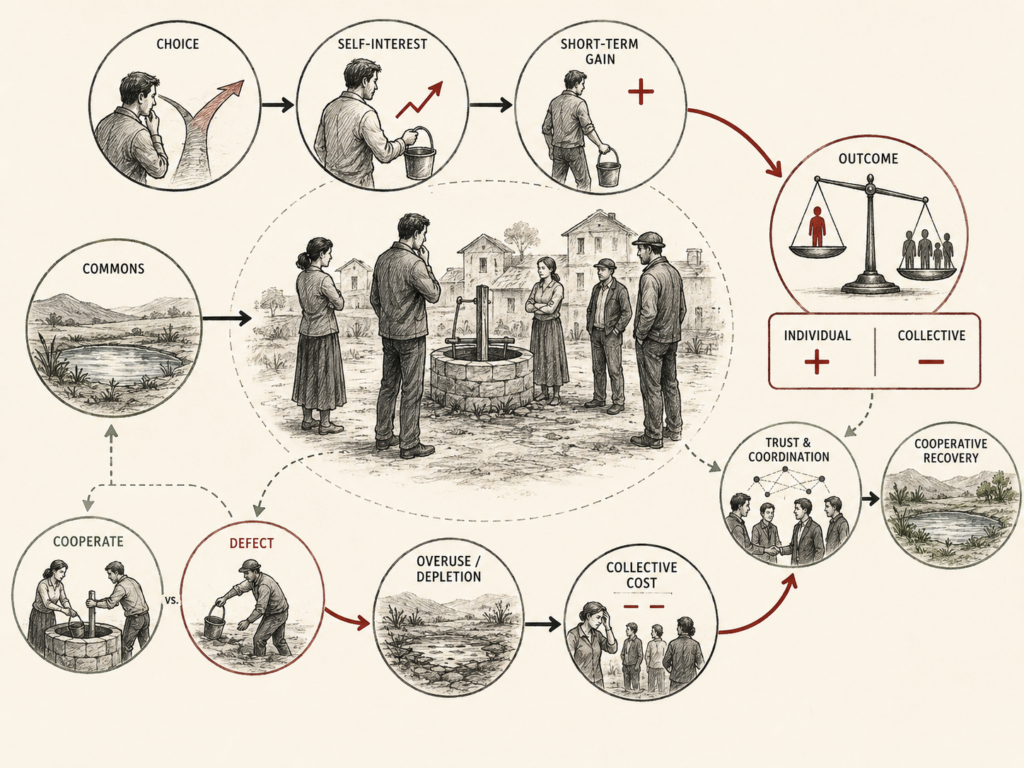
Social dilemmas arise when individually rational decisions produce collectively suboptimal outcomes. Their importance lies in the fact that they reveal one of the most persistent tensions in social life: the strategy that maximizes short-term private benefit can undermine collective welfare when adopted widely. This makes social dilemmas central to social psychology, political economy, and institutional governance, because they explain why cooperation so often fails even when individuals understand that mutual restraint would produce better outcomes for everyone involved. Climate mitigation, public goods provision, biodiversity conservation, tax compliance, and institutional trust all exhibit this logic. In each case, actors face a structural conflict between immediate self-interest and long-term collective stability. For that reason, social dilemmas are analytically powerful not simply because they describe cooperation problems, but because they show why trust, reciprocity, norms, and institutions are indispensable. They help explain how rational individuals can produce irrational systems, and why sustainable cooperation depends on social arrangements that make collective welfare compatible with individual incentive.