Social Comparison Theory: How Individuals Evaluate Themselves Through Others
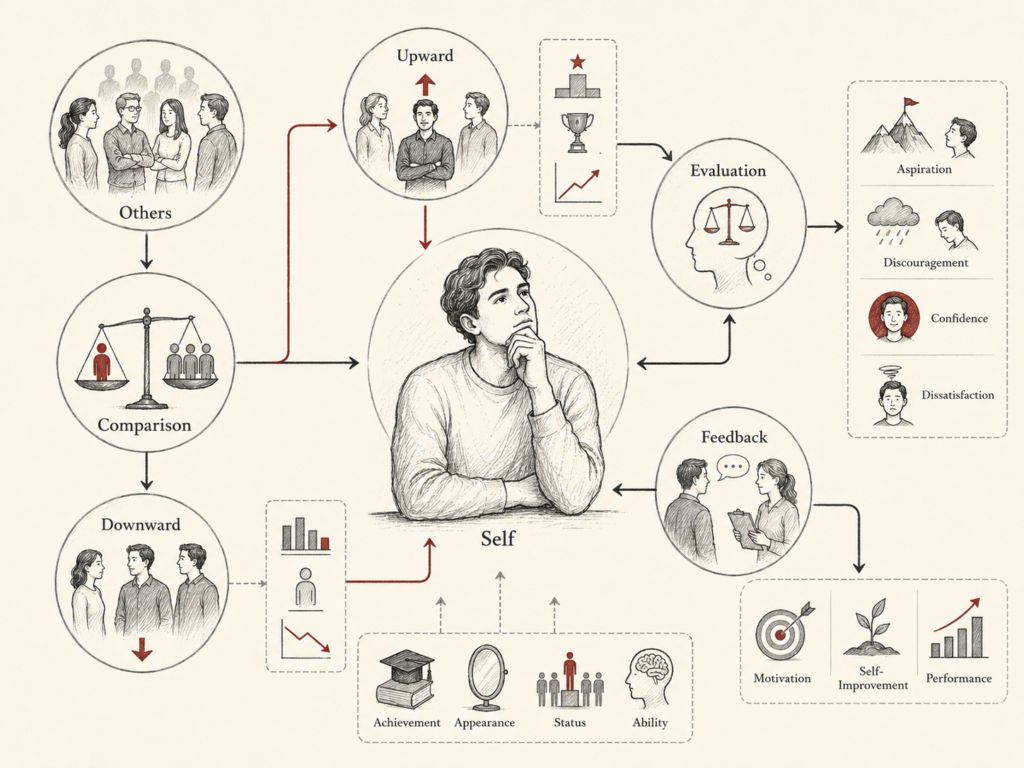
Social comparison theory describes the process through which individuals evaluate their abilities, opinions, and social standing by comparing themselves to other people. First articulated by Leon Festinger, the theory begins from a simple but powerful premise: many of the qualities that matter most in human life do not come with clear objective measures. People often cannot determine in absolute terms whether they are successful, competent, attractive, moral, or respected, so they turn instead to relevant others as social reference points. Through these comparisons, individuals construct implicit benchmarks for achievement, status, belonging, and self-worth. This makes self-evaluation inherently relational rather than isolated. Social comparison is therefore central not only to identity formation and motivation, but also to self-esteem, emotional experience, organizational life, digital media behavior, and institutional competition. By showing that people understand themselves through comparison with others, the theory provides one of the clearest accounts of how self-knowledge, aspiration, hierarchy, and social order become psychologically linked.