Storytelling

Storytelling examines the narrative structures, symbolic patterns, rhetorical forms, and imaginative frameworks through which human beings organize experience, communicate meaning, and make sense of themselves and the world. In the history of culture and communication, storytelling has served not only as a mode of entertainment, but as a fundamental medium for memory, identity, persuasion, moral reflection, and the transmission of knowledge across generations.

This category explores storytelling as both an ancient human practice and a contemporary framework for shaping meaning, including its use of plot, character, voice, conflict, transformation, archetype, and narrative sequence. It considers how stories create emotional resonance, how they structure perception and expectation, how they encode values and worldviews, and how narrative forms influence the ways individuals, institutions, and cultures interpret reality.

Storytelling plays an important role in content frameworks and the wider study of communication because it reveals how ideas become memorable, how narratives shape belief and behavior, and how symbolic structure gives force to language and thought. By engaging storytelling seriously, this category deepens understanding of narrative as a foundational human practice and broadens reflection on meaning, persuasion, imagination, and the forms through which experience becomes intelligible.

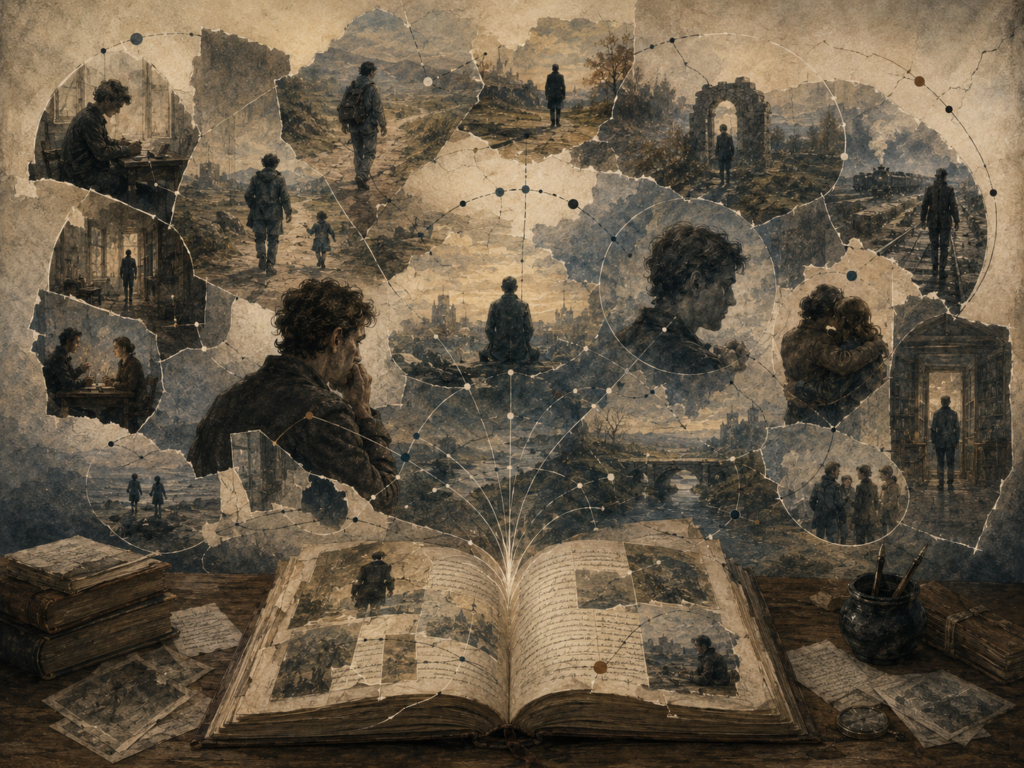
Editorial illustration of an open manuscript releasing fragmented scenes of memory, isolation, loss, rupture, and partial reconnection.

Memory, Trauma, and Fragmented Narrative: How Stories Hold Broken Experience

Memory, Trauma, and Fragmented Narrative examines how stories represent experience when memory resists smooth chronology. This article explores trauma testimony, fragmented narration, silence, repetition, gaps, delayed recognition, public memory, institutional documentation, digital circulation, and the ethics of witness. It explains why fragmented form is not automatically failed storytelling: broken sequence, recurring scenes, missing archives, interrupted voice, and unfinished endings can reveal rupture, fear, grief, repression, censorship, or unresolved responsibility. The article also warns against forced coherence, redemptive shortcut, trauma extraction, spectacle, identity reduction, institutional closure, and algorithmic compression of painful testimony. As part of the Storytelling series, it connects narrative theory, trauma studies, memoir, literary form, cultural memory, history, law, media ethics, and public reasoning to show why some truths arrive in pieces and require careful interpretation, consent, context, and restraint rather than pressure toward tidy narrative repair too.

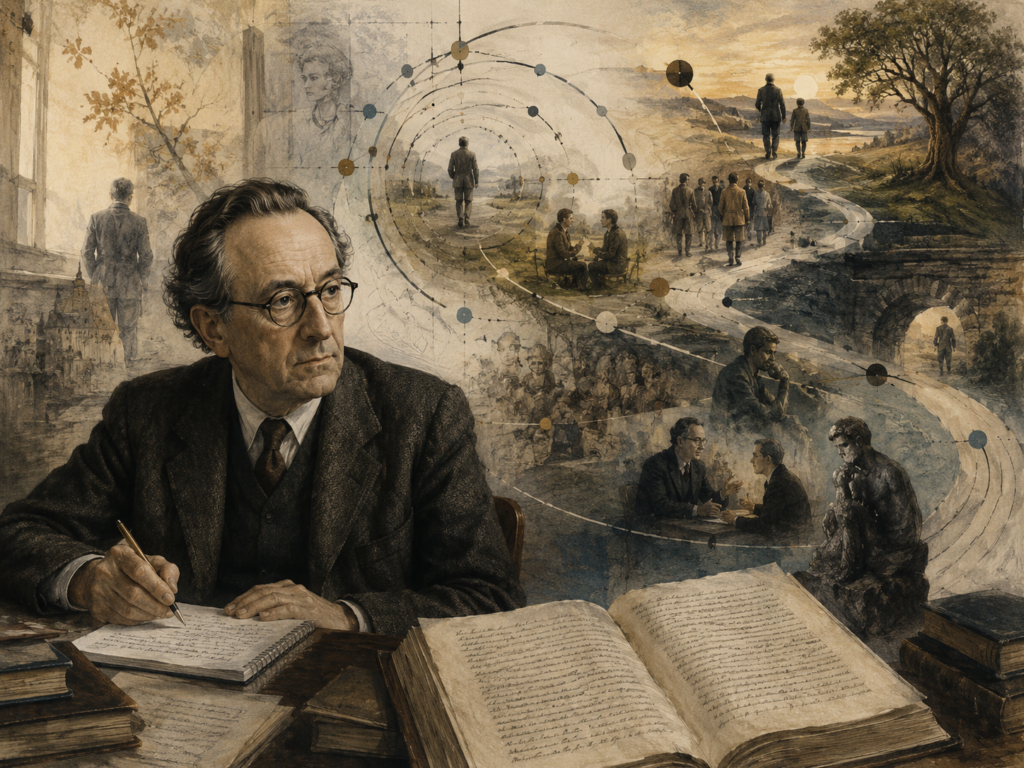
Editorial illustration of a central reflective figure surrounded by connected scenes of memory, relationships, life paths, solitude, and self-understanding emerging from an open manuscript.

Narrative Identity and the Story of the Self: How Life Stories Shape Selfhood

Narrative Identity and the Story of the Self examines how people understand who they are by arranging memory, agency, relation, promise, loss, change, and future possibility into life stories. This article explains narrative identity through Paul Ricoeur’s distinction between sameness and selfhood, the psychology of life stories, memoir, autobiography, trauma testimony, cultural recognition, institutional biography, and digital selfhood. It shows how identity is neither fixed essence nor disconnected episode, but an ongoing interpretation shaped by memory, responsibility, community, language, power, and revision. The article also addresses ethical risks, including forced coherence, redemptive pressure, identity reduction, trauma extraction, diagnostic capture, institutional narration, algorithmic profiling, and the loss of consent or context. As part of the Storytelling series, it connects philosophy, psychology, narrative theory, cultural memory, ethics, and public reasoning to show why selves are storied but never exhausted by story.

Editorial illustration of a philosopher seated at a desk with manuscripts, surrounded by layered scenes of memory, life paths, reflection, and unfolding narrative time.

Paul Ricoeur and Narrative Time: How Stories Make Human Time Intelligible

Paul Ricoeur and Narrative Time examines how stories make human time intelligible by configuring memory, action, expectation, suffering, promise, identity, and responsibility. This article explains Ricoeur’s encounter with Augustine’s problem of lived time and Aristotle’s theory of plot, showing how emplotment gathers dispersed events into meaningful temporal wholes. It explores Time and Narrative, threefold mimesis, prefiguration, configuration, refiguration, concordance and discordance, historical narrative, fiction, testimony, public memory, institutional storytelling, and narrative identity. The article also addresses ethical risks in narrative time, including premature closure, redemptive shortcut, erased continuity, delayed accountability, nostalgic origin, false repair, and institutional self-protection. As part of the Storytelling series, it connects narratology, hermeneutics, cultural memory, memoir, history, ethics, and public reasoning, showing why stories shape how people understand the past, inhabit the present, and imagine responsible futures across personal, historical, institutional, and civic contexts today.

Editorial illustration of an open archival manuscript unfolding into connected narrative scenes, circular vignettes, readers, writers, and diagrammatic pathways of story structure.

Narratology and the Grammar of Story: How Narrative Structure Creates Meaning

Narratology and the Grammar of Story examines how narratives are built, arranged, voiced, perceived, timed, framed, and interpreted. This article explains narratology as the structural study of story, including fabula and discourse, plot and sequence, narrator and narratee, voice and focalization, narrative time, analepsis, prolepsis, duration, frequency, embedded stories, character function, reliability, information control, genre, medium, and closure. It shows how the same events can produce different meanings depending on who tells them, who sees them, what is delayed, what is repeated, what is omitted, and how the ending organizes responsibility. The article also addresses ethical questions involving voice allocation, interiority, agency, witness framing, power blindness, closure pressure, and institutional narrative control. As part of the Storytelling series, it connects narrative theory with interpretation, ethics, media, and public reasoning.

Editorial illustration of an open manuscript connecting four sacred narrative patterns: creation, flood, exile, and return.

Creation, Flood, Exile, and Return: Narrative Patterns of Origin, Rupture, and Renewal

Creation, Flood, Exile, and Return as Narrative Patterns examines four durable story structures that organize origin, catastrophe, displacement, memory, restoration, and responsibility. This article explains how creation stories establish world order, relation, boundary, and obligation; how flood stories dramatize overwhelming rupture, cleansing, survival, covenant, and dangerous renewal; how exile stories preserve longing, identity, lament, witness, and hope under displacement; and how return stories test restoration, repair, homecoming, justice, and contested belonging. It explores sacred history, myth, ritual, oral tradition, literature, media, civic memory, institutional storytelling, climate narrative, systems collapse, and renewal language. The article also warns against origin nostalgia, cleansing fantasy, exile romanticization, false return, historical flattening, political entitlement, and institutional mythmaking. As part of the Storytelling series, it connects narrative pattern analysis with ethics, cultural memory, and responsible interpretation.

Editorial illustration of an open sacred codex with branching circular scenes of ancestral procession, ritual gathering, revelatory encounter, ruins, celestial patterns, and a path toward renewal.

Sacred History and Revelatory Narrative: How Stories Turn Memory Into Meaning

Sacred History and Revelatory Narrative examines stories in which history is remembered as revelation, covenant, judgment, promise, exile, deliverance, witness, and responsibility. This article explains how sacred history differs from ordinary chronology by treating events as disclosures of sacred, divine, ancestral, moral, or ultimate meaning. It explores revelatory narrative, sacred time, covenant memory, prophecy, command, exile and return, apocalypse, testimony, martyrdom, scripture, oral tradition, interpretive authority, communal identity, and public memory. The article also addresses ethical risks including sacred certainty, historical flattening, victim-blaming, political sanctification, exclusion, appropriation, witness extraction, false repair, and institutional mythology. As part of the Storytelling series, it connects myth studies, religious narrative, cultural memory, narrative ethics, institutional storytelling, and responsible interpretation across sacred, civic, organizational, literary, and public narrative systems, while preserving humility before belief, history, community authority, and contested meanings in inherited traditions today.

Editorial illustration of a central storytelling circle surrounded by four symbolic mythic domains: cosmic ritual, natural order, community ceremony, and individual journey.

The Four Functions of Myth: How Stories Shape Culture, Meaning, and Social Order

The Four Functions of Myth and the Cultural Work of Story examines Joseph Campbell’s framework for understanding how myths shape human meaning, culture, and social life. This article explains the mystical function, which awakens awe before existence; the cosmological function, which offers a picture of the world; the sociological function, which authorizes order, belonging, roles, and norms; and the pedagogical function, which guides people through life passages, crisis, maturity, suffering, and death. It explores myth as cultural work, ritual memory, social power, institutional storytelling, secular mythmaking, and ethical responsibility. The article also warns against sacred reduction, functional approval, power blindness, cultural flattening, institutional mythology, and the misuse of mythic authority. As part of the Storytelling series, it connects myth studies, cultural memory, narrative ethics, analytical psychology, and responsible interpretation across sacred, civic, organizational, and modern media contexts.

Editorial illustration of an open manuscript surrounded by connected scenes of threshold crossing, storm, cave passage, confrontation, mountain ascent, battle, and transformation.

Thresholds, Trials, and Transformative Ordeals

Thresholds, Trials, and Transformative Ordeals examines the pressure zone where a story’s journey becomes costly, meaningful, and transformative. This article explains how thresholds mark the passage from known to unknown, how guardians and boundary tests reveal readiness, how trials differ from ordinary obstacles, and how ordeals create the conditions for symbolic death, descent, revelation, and change. It explores the road of trials, threshold crossing, trial depth, ordeal transformation, descent imagery, ethical risk, trauma framing, cultural specificity, collective agency, and the difference between spectacle and transformation. The article also warns against romanticized suffering, false closure, monster-making, formula drift, and the misuse of ordeal language in media, memoir, public narrative, and brand storytelling. As part of the Storytelling series, it connects myth studies, hero’s journey analysis, narrative ethics, cultural memory, and responsible interpretation across sacred, literary, civic, and institutional story systems.

Editorial illustration of an open manuscript surrounded by connected journey scenes, including departure, sea crossing, mentor encounter, cave threshold, ordeal, transformation, and return.

The Hero’s Journey: Departure, Initiation, and Return

The Hero’s Journey: Departure, Initiation, and Return examines Joseph Campbell’s most familiar story pattern as a symbolic structure of transformation rather than a rigid plot formula. This article explains how departure separates the hero from the known world, how initiation subjects the hero to trial, descent, symbolic death, revelation, and change, and how return brings the boon, insight, healing, or responsibility back into ordinary life. It explores the call to adventure, refusal, threshold crossing, helpers, guardians, trials, descent imagery, transformation, return difficulty, reintegration, and the ethical meaning of the boon. The article also addresses formula drift, gender critique, cultural specificity, collective agency, false closure, and the misuse of heroic framing in modern media, memoir, public narrative, and brand storytelling. As part of the Storytelling series, it connects myth studies with responsible narrative interpretation.

Scroll to Top