Storytelling

Storytelling examines the narrative structures, symbolic patterns, rhetorical forms, and imaginative frameworks through which human beings organize experience, communicate meaning, and make sense of themselves and the world. In the history of culture and communication, storytelling has served not only as a mode of entertainment, but as a fundamental medium for memory, identity, persuasion, moral reflection, and the transmission of knowledge across generations.

This category explores storytelling as both an ancient human practice and a contemporary framework for shaping meaning, including its use of plot, character, voice, conflict, transformation, archetype, and narrative sequence. It considers how stories create emotional resonance, how they structure perception and expectation, how they encode values and worldviews, and how narrative forms influence the ways individuals, institutions, and cultures interpret reality.

Storytelling plays an important role in content frameworks and the wider study of communication because it reveals how ideas become memorable, how narratives shape belief and behavior, and how symbolic structure gives force to language and thought. By engaging storytelling seriously, this category deepens understanding of narrative as a foundational human practice and broadens reflection on meaning, persuasion, imagination, and the forms through which experience becomes intelligible.

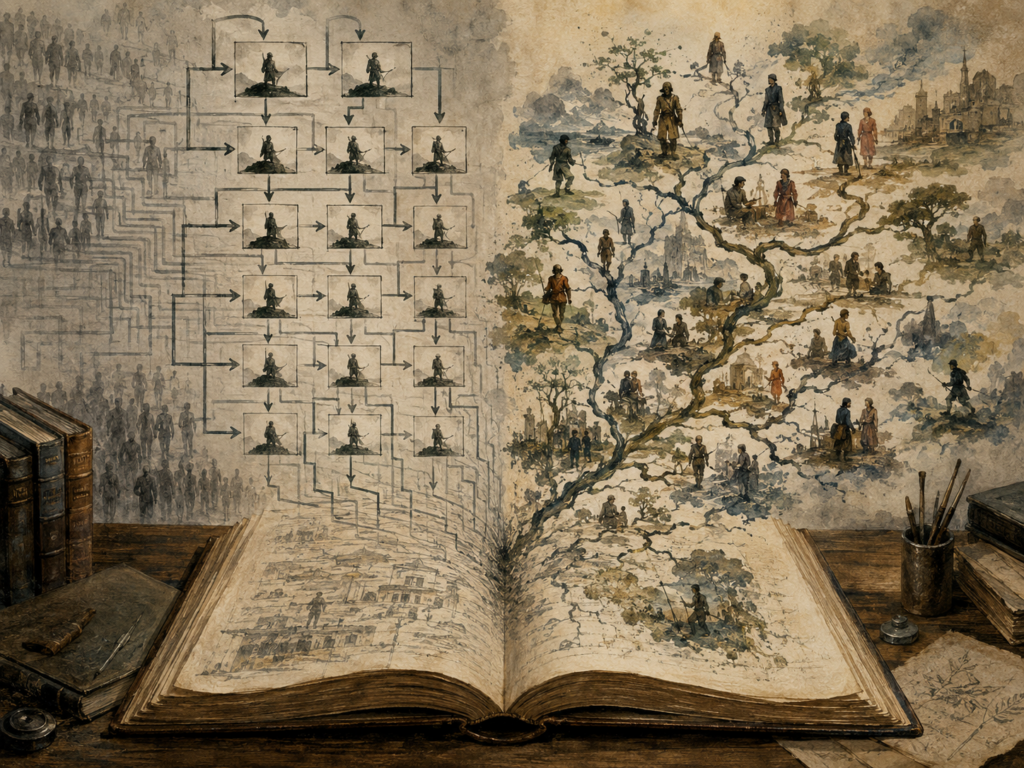
Editorial illustration of an open manuscript split between rigid formulaic story diagrams and organic branching narrative pathways.

When Narrative Framework Becomes Formula: How Story Models Turn Into Templates

When Narrative Framework Becomes Formula examines how useful story models harden into rigid templates, predictable arcs, and repeatable narrative machinery. This article explains the difference between a framework as a flexible lens and a formula as a prescriptive script. It shows how hero’s journey shortcuts, three-act sameness, character-arc reduction, genre convention, platform metrics, marketing templates, and AI-generated story defaults can flatten voice, culture, memory, ethics, place, care, grief, collective agency, and experimental form. The article also warns against treating one structure as universal, forcing closure, making every protagonist heroic, psychologizing systemic harm, or letting automation normalize cliché at scale. As part of the Storytelling series, it argues that narrative frameworks should increase attention and judgment, not replace them: a responsible framework helps a story become more fully itself, while formula makes every story resemble the framework much too closely.
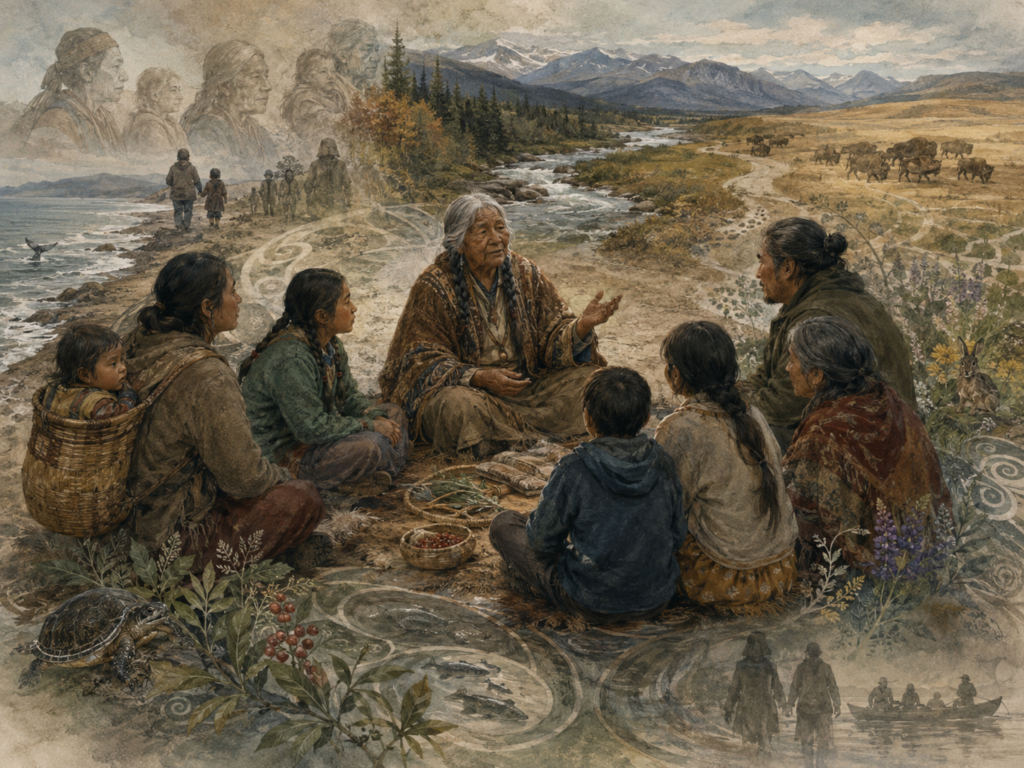
Editorial illustration of an elder sharing stories with an intergenerational circle in a natural landscape of mountains, river, animals, plants, and ancestral memory.

Indigenous Storytelling, Place, and Relational Memory: Story, Land, Protocol, and Responsibility

Indigenous Storytelling, Place, and Relational Memory examines how story works as a living relation among people, land, language, ancestors, more-than-human beings, community, protocol, and time. This article argues that Indigenous storytelling cannot be responsibly separated from place, sovereignty, kinship, oral tradition, relational accountability, seasonal timing, ecological knowledge, translation limits, archive ethics, and cultural governance. It explains why stories may carry law, memory, ceremony, warning, humor, place-based knowledge, and obligations that exceed plot or theme. The article also warns against pan-Indigenous generalization, myth extraction, unauthorized adaptation, over-translation, archive misuse, digital exposure, and AI-generated cultural imitation. As part of the Storytelling series, it shows why relational memory matters: stories are not only texts to interpret, but responsibilities to receive, protect, contextualize, and answer to across generations, places, communities, and future relationships with humility, specificity, consent, reciprocity, protocol, care, and ethical restraint.

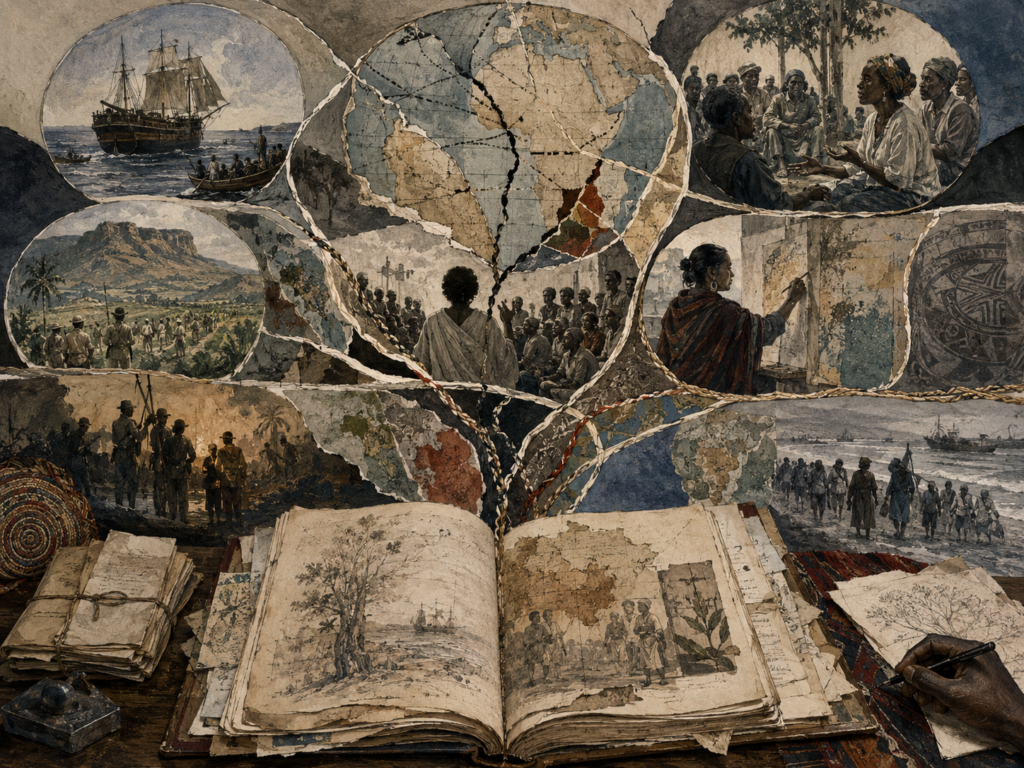
Editorial illustration of an open manuscript branching into fragmented maps, ships, colonial scenes, oral testimony, cultural memory, and acts of narrative reclamation.

Postcolonial Storytelling and the Politics of Narrative Form: Language, Archive, Memory, and Power

Postcolonial Storytelling and the Politics of Narrative Form examines how colonial history, anti-colonial resistance, migration, language, archive, translation, hybridity, oral tradition, gender, land, and digital systems shape the structures through which stories are told. This article argues that postcolonial storytelling is not only about theme or setting; it is also about who speaks, whose language carries authority, what counts as evidence, how memory is arranged, how place is represented, and what forms resist colonial ways of knowing. It explores counter-archives, multilingual narration, code-switching, fragmented time, diasporic braids, oral-written hybrids, satirical mimicry, collective voice, opacity, and AI-mediated representation risk. As part of the Storytelling series, it shows why narrative form itself is political: stories after empire must challenge inherited structures of gaze, classification, extraction, translation, and authority while protecting memory, context, and voice across literature, archives, media, and public culture.

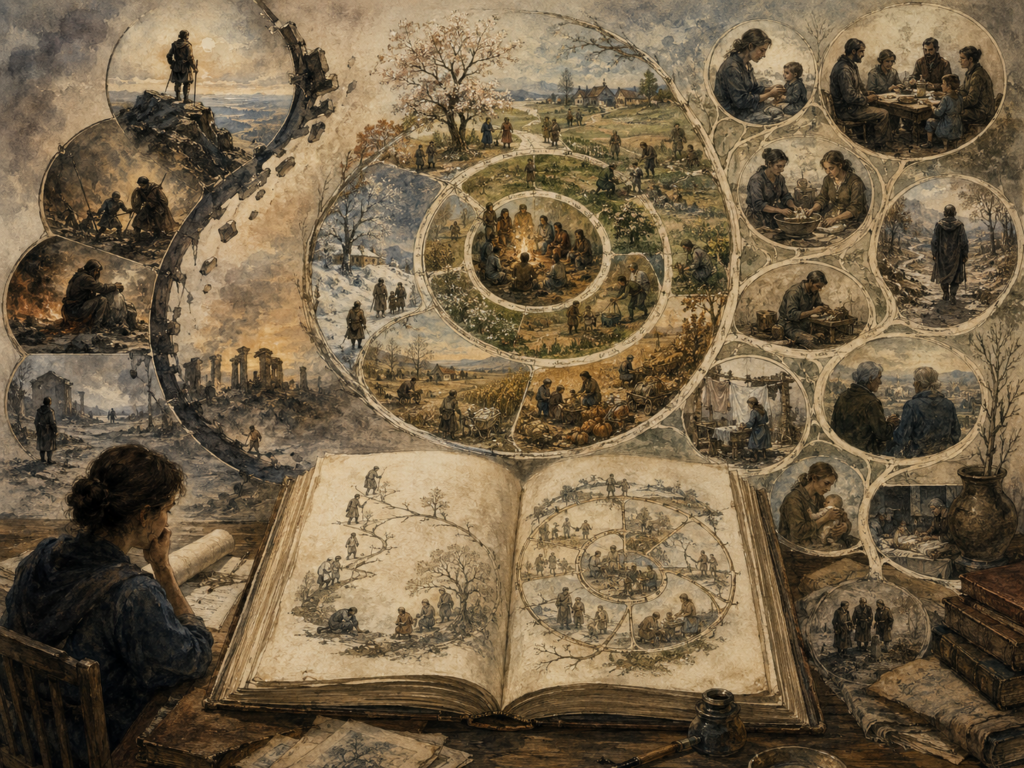
Editorial illustration of an open manuscript branching into scenes of tragedy, seasonal cycles, ordinary lives, grief, endurance, and non-heroic narrative paths.

Tragedy, Cyclical Story, and Non-Heroic Narrative: Story Forms Beyond Heroic Victory

Tragedy, Cyclical Story, and Non-Heroic Narrative examines story forms that do not depend on heroic victory, conquest, return, or redemptive transformation. This article explains how tragedy, cyclical structure, ritual repetition, seasonal return, generational recurrence, institutional failure, ecological feedback, care, endurance, witness, refusal, maintenance, and survival organize narrative meaning outside the hero’s journey. It treats tragedy as a structure of consequence, recognition, limit, reversal, irreversibility, and moral knowledge, while showing how cyclical stories reveal repetition, inherited harm, ritual renewal, and return with variation. The article also warns against forcing catharsis, heroic agency, false closure, individual growth, or AI-generated triumph onto stories that require mourning, accountability, recurrence, or unresolved witness. As part of the Storytelling series, it shows why non-heroic narrative matters for understanding loss, responsibility, systems, memory, and forms of action beyond conquest in literature, media, institutions, and public life.

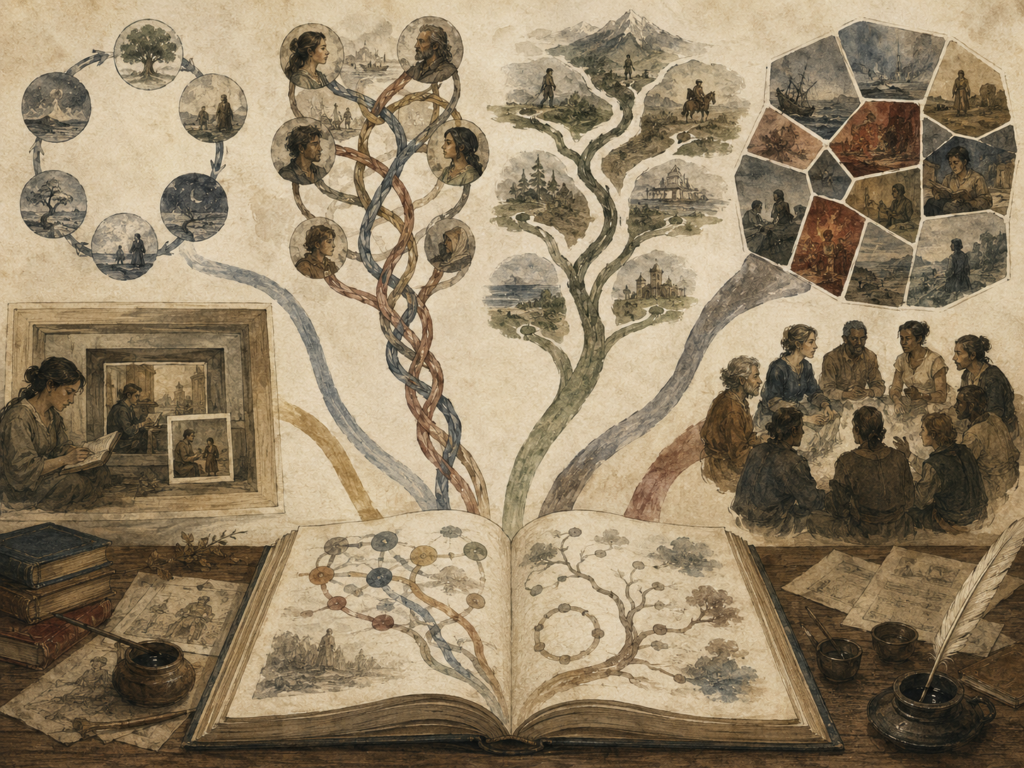
Editorial illustration of an open manuscript branching into multiple story structures, including cycles, braided paths, nested frames, branching trees, mosaic panels, and communal storytelling.

Alternative Story Structures Beyond the Monomyth: Cycles, Braids, Archives, and Networks

Alternative Story Structures Beyond the Monomyth examines narrative forms that do not depend on heroic departure, ordeal, conquest, transformation, and return. This article explains how stories can move through cycles, spirals, episodes, relational plots, care labor, braided timelines, polyphonic voices, ensemble casts, fragmented memory, mosaic construction, archive evidence, kishōtenketsu, lyric association, interactive branching, networks, institutions, and ecological systems. It argues that the monomyth remains useful for some quest narratives but becomes limiting when treated as the master structure of all storytelling. The article also warns against forcing closure, overvaluing conflict, individualizing systemic stories, smoothing trauma, dismissing care as low action, or making AI tools default to conventional arcs. As part of the Storytelling series, it shows why structural pluralism helps writers and readers choose forms that fit the material, medium, culture, ethics, and truth of each story.

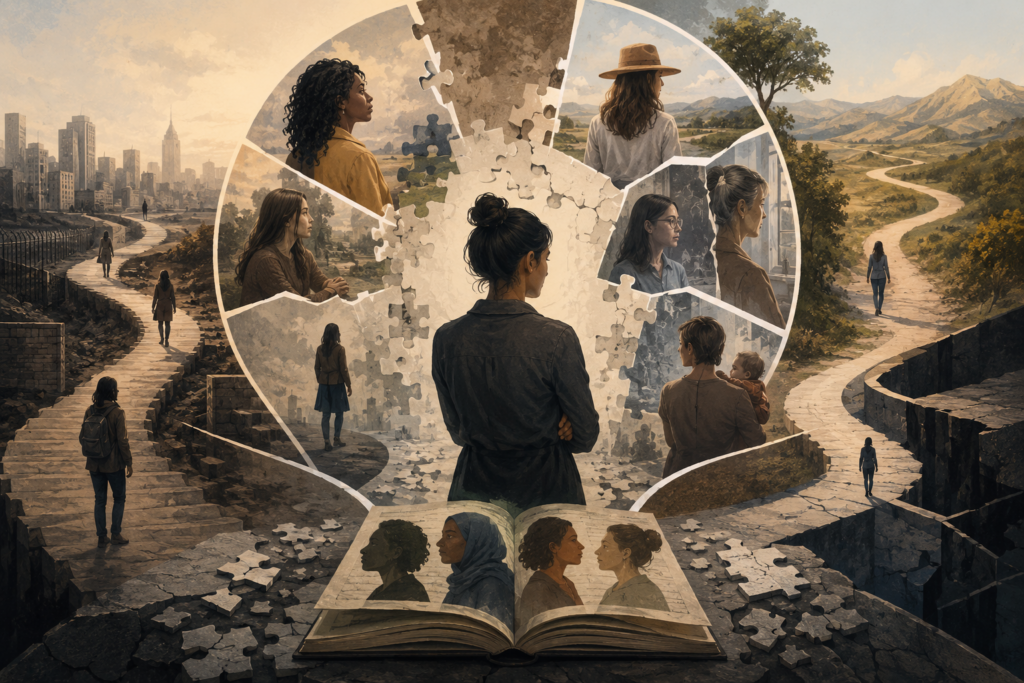
Editorial illustration of a central woman facing fragmented narrative pathways, surrounded by diverse women, life stages, landscapes, and broken story-model structures.

Gender, Critique, and the Limits of Universal Story Models: Why Narrative Frameworks Need Context

Universal story models can clarify recurring narrative patterns, but they also carry limits. This article examines how gender critique helps writers, readers, educators, and analysts use frameworks such as the hero’s journey, the heroine’s journey, archetypal models, transformation arcs, and plot templates with greater care. A story model can reveal structure, symbolic movement, conflict, reversal, and change. But when treated as universal law, it may flatten cultural difference, naturalize gender roles, privilege heroic agency, or dismiss stories built around care, endurance, memory, refusal, relation, or cyclical renewal. Responsible critique does not reject story models. It asks what a model assumes, what it excludes, where it overclaims, and when another framework may fit better. The strongest story frameworks remain useful, limited, accountable, and open to correction by the stories they cannot explain.

Editorial illustration of a reflective woman scholar writing in an open manuscript, surrounded by symbolic scenes of threshold crossing, separation, struggle, healing, and return.

Maureen Murdock and the Heroine’s Journey: Wholeness, Descent, and Integration

Maureen Murdock and the Heroine’s Journey examines Murdock’s influential alternative to the hero’s journey as a model of separation, achievement, disillusionment, descent, healing, and integration. This article explains how Murdock’s framework responds to Joseph Campbell by centering the cost of success in masculine-coded systems, the rejection and recovery of devalued feminine values, the mother-daughter wound, spiritual aridity, descent to neglected inner life, healing of the wounded masculine, and the quest for wholeness. It also treats the model critically, warning against gender essentialism, universal womanhood claims, template forcing, psychological overreach, healing pressure, commercial empowerment clichés, and automated stage assignment. As part of the Storytelling series, it connects myth studies, memoir, analytical psychology, gender critique, narrative ethics, and story structure to show why Murdock’s model remains powerful when used as a lens, not a formula, for reading transformation with care today.

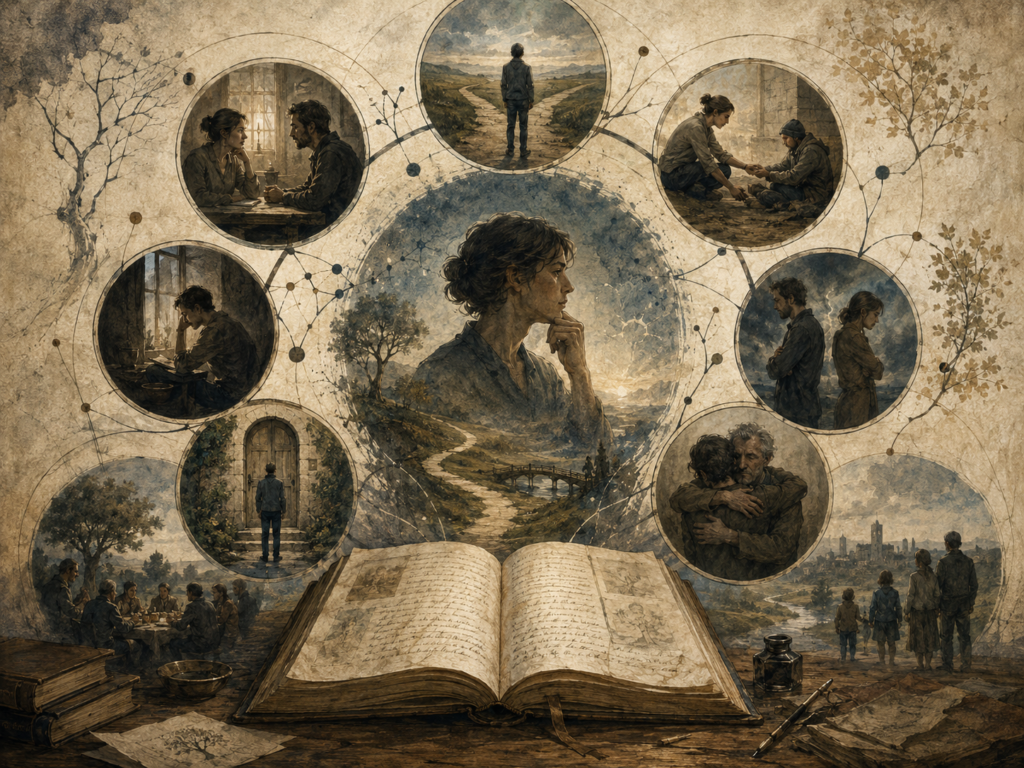
Editorial illustration of a contemplative figure surrounded by connected scenes of choice, care, conflict, responsibility, forgiveness, and life direction.

Moral Agency and the Stories We Tell About Ourselves: Responsibility, Excuse, and Repair

Moral Agency and the Stories We Tell About Ourselves examines how self-narratives shape responsibility, excuse, confession, repair, blame, self-deception, and moral growth. This article explains moral agency as the capacity to act, deliberate, affect others, recognize reasons, accept accountability, and respond to moral claims over time. It explores intention, action, consequence, excuse, justification, victimhood, harm, retrospective judgment, public moral narratives, digital reputation, AI-generated apology, and the ethics of self-narration. The article also warns against using personal context, good intentions, suffering, growth language, institutional reform stories, or moral identity to avoid responsibility for harm caused. As part of the Storytelling series, it connects narrative identity, moral philosophy, memoir, public accountability, digital culture, and narrative ethics to show why the stories people tell about themselves can either deepen answerability or protect them from moral truth in personal, institutional, and public life.

Editorial illustration of a reflective writer surrounded by connected scenes of memory, childhood, travel, relationships, solitude, and personal history emerging from an open journal.

Autobiography, Memoir, and Life-Writing: How Lives Become Stories

Autobiography, Memoir, and Life-Writing examines how people turn lived experience into narrative form through memory, evidence, voice, scene, relation, and ethical reflection. This article explains the differences among autobiography, memoir, and the broader field of life-writing, including diaries, letters, testimony, oral history, biography, institutional records, digital archives, and AI-mediated self-narration. It explores retrospective voice, focused memory, the autobiographical subject, truth practices, public record, private life, embodiment, place, family representation, trauma, silence, confession, witness, consent, privacy, and the responsibilities of representing others. The article also warns against self-mythology, forced coherence, factual carelessness, trauma extraction, relational exposure, institutional reduction, and automated over-smoothing. As part of the Storytelling series, it connects narrative identity, memoir studies, cultural memory, ethics, literary form, digital life-writing, and public reasoning to show why every written life remains partial, powerful, and accountable across memory, genre, media, and institutions.

Scroll to Top