Storytelling

Storytelling examines the narrative structures, symbolic patterns, rhetorical forms, and imaginative frameworks through which human beings organize experience, communicate meaning, and make sense of themselves and the world. In the history of culture and communication, storytelling has served not only as a mode of entertainment, but as a fundamental medium for memory, identity, persuasion, moral reflection, and the transmission of knowledge across generations.

This category explores storytelling as both an ancient human practice and a contemporary framework for shaping meaning, including its use of plot, character, voice, conflict, transformation, archetype, and narrative sequence. It considers how stories create emotional resonance, how they structure perception and expectation, how they encode values and worldviews, and how narrative forms influence the ways individuals, institutions, and cultures interpret reality.

Storytelling plays an important role in content frameworks and the wider study of communication because it reveals how ideas become memorable, how narratives shape belief and behavior, and how symbolic structure gives force to language and thought. By engaging storytelling seriously, this category deepens understanding of narrative as a foundational human practice and broadens reflection on meaning, persuasion, imagination, and the forms through which experience becomes intelligible.

Editorial illustration of an open manuscript branching into oral storytelling, writing, theatre, illustrated panels, film, and audience scenes.

Adaptation and the Migration of Stories Across Media: How Stories Change Across Forms

Adaptation and the Migration of Stories Across Media examines how narratives change as they move from oral performance, literature, comics, film, television, games, archives, platforms, franchises, and AI-mediated formats into new cultural contexts. This article explains why adaptation is not simple copying or betrayal, but accountable transformation: every adaptation selects, compresses, expands, translates, reframes, or contests a source. It moves beyond fidelity debates to ask what a new version preserves, loses, gains, and makes newly visible. The article explores medium affordances, story migration, audience memory, reception, cultural authority, remakes, reboots, transmedia storyworlds, participatory adaptation, platform remix, franchise drift, and automated adaptation. As part of the Storytelling series, it argues that responsible adaptation should preserve provenance, consent, source authority, cultural context, ethical governance, human review, and the dignity of stories as they change form across media, institutions, markets, and time.

Editorial illustration of an open manuscript connected to cinematic scenes of departure, mentor guidance, threshold crossing, ordeal, transformation, and return.

The Hero’s Journey in Film and Popular Narrative: How Mythic Structure Shapes Popular Storytelling

The Hero’s Journey in Film and Popular Narrative examines how mythic departure, initiation, ordeal, transformation, and return became a powerful structure in cinema, screenwriting, genre storytelling, franchises, and popular culture. This article explains how the hero’s journey helps films make inner change visible through thresholds, mentors, trials, cinematic movement, image, sound, performance, editing, and return with responsibility. It also warns against treating the pattern as a universal law or rigid template: heroic structure can clarify transformation, but it can also flatten culture, gender, collective agency, tragedy, ambiguity, non-heroic forms, and ethical consequence. The article explores Campbell, Vogler, film narration, audience identification, genre logic, formula risk, antiheroes, ensembles, AI-generated beat sheets, and screenwriting shortcuts. As part of the Storytelling series, it argues that responsible heroic narratives should transform recognition into accountability, not domination, spectacle, cliché, forced closure, or commercial formula.

Editorial illustration of an open manuscript branching into oral storytelling, written literature, visual art, manuscripts, film, and shared cultural memory.

Storytelling Across Oral, Literary, and Visual Media: How Stories Change Across Forms

Storytelling Across Oral, Literary, and Visual Media examines how stories change as they move through voice, performance, writing, print, image, comics, photography, film, television, digital platforms, archives, and AI-mediated forms across institutions, communities, publics, and memory. This article explains why media are not neutral containers: each medium shapes presence, pacing, memory, authority, embodiment, sequence, circulation, interpretation, and trust. It explores oral tradition, gesture, writing and literacy, literary interiority, visual composition, sequential art, moving images, photographic evidence, adaptation, platform circulation, multimodal storytelling, and synthetic media. The article also warns against transcript reduction, context collapse, visual immediacy, performance erasure, archive flattening, consent drift, and AI-generated synthetic authority. As part of the Storytelling series, it argues that responsible cross-media storytelling should preserve provenance, consent, cultural context, source authority, audience relation, uncertainty, human review, and the dignity of stories as they change form.

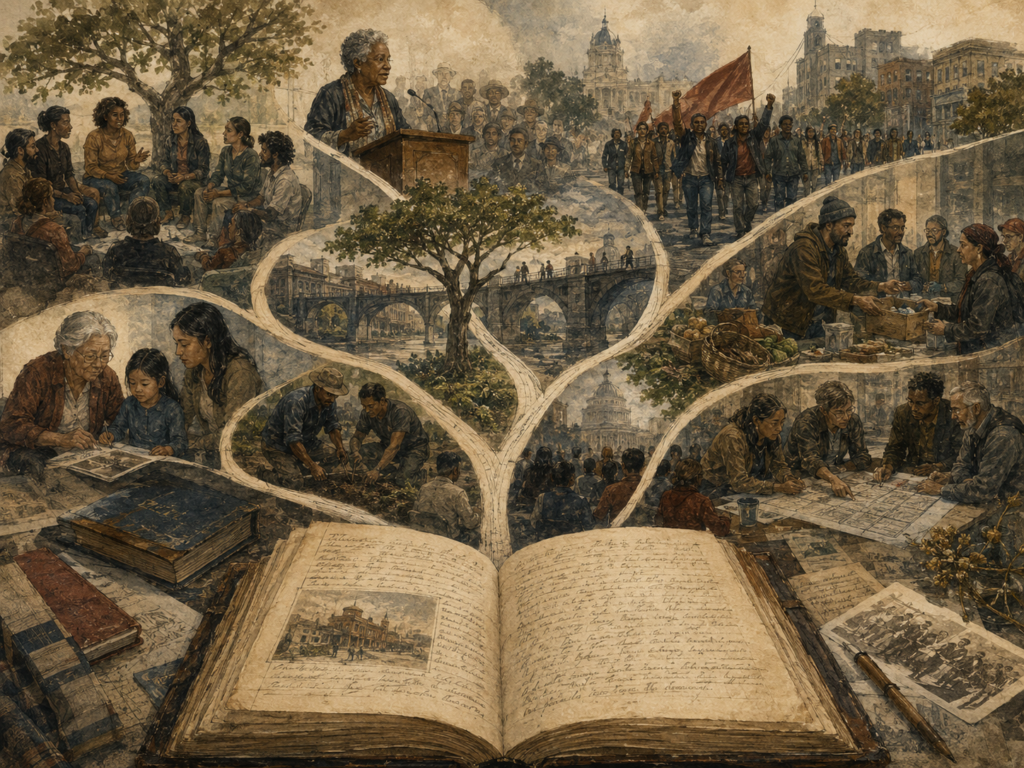
Editorial illustration of an open manuscript branching into scenes of community organizing, public speech, protest, mutual aid, intergenerational teaching, and civic planning.

Public Narrative and Social Change: How Stories Build Collective Action and Civic Responsibility

Public Narrative and Social Change examines how stories help people connect private experience to shared values, collective identity, moral urgency, and public action. This article explains how public narrative links the story of self, us, and now with collective-action framing, testimony, counternarrative, coalition-building, movement memory, digital circulation, and AI-assisted communication. It shows why public storytelling can be both transformative and ethically unstable: narratives can move people from isolation to agency, but they can also exploit testimony, simplify opponents, manufacture urgency, erase difference, or substitute emotional alignment for organized change. The article explores grievance, hope, witness, public voice, social movements, digital platforms, coalition stories, and narrative accountability. As part of the Storytelling series, it argues that responsible public narratives should remain publicly accountable to evidence, consent, affected communities, strategy, safety, plural memory, real repair, and the consequences of collective action.

Editorial illustration of an open manuscript branching into workplace scenes, strategy discussions, workshops, civic buildings, teams, and pathways of organizational change.

Organizational Storytelling, Purpose, and Change: How Stories Shape Culture, Trust, and Transformation

Organizational Storytelling, Purpose, and Change examines how organizations use stories to define purpose, shape culture, guide strategy, interpret uncertainty, preserve memory, and support or resist transformation over time. This article explains how purpose statements, founder stories, leadership messages, employee experience, customer narratives, change announcements, institutional archives, dashboards, and AI-generated summaries influence trust and action inside organizations. It also shows why organizational storytelling is ethically unstable: stories can align people around meaningful work, but they can also romanticize overwork, hide power, extract employee or stakeholder voice, suppress dissent, rebrand failure, or manufacture false alignment. The article explores sensemaking, culture, change credibility, counterstories, institutional learning, purpose-practice gaps, narrative extraction, and automated storytelling. As part of the Storytelling series, it argues that responsible organizational stories should remain answerable to evidence, lived experience, stakeholder impact, memory, participation, repair, governance, and actual organizational behavior.

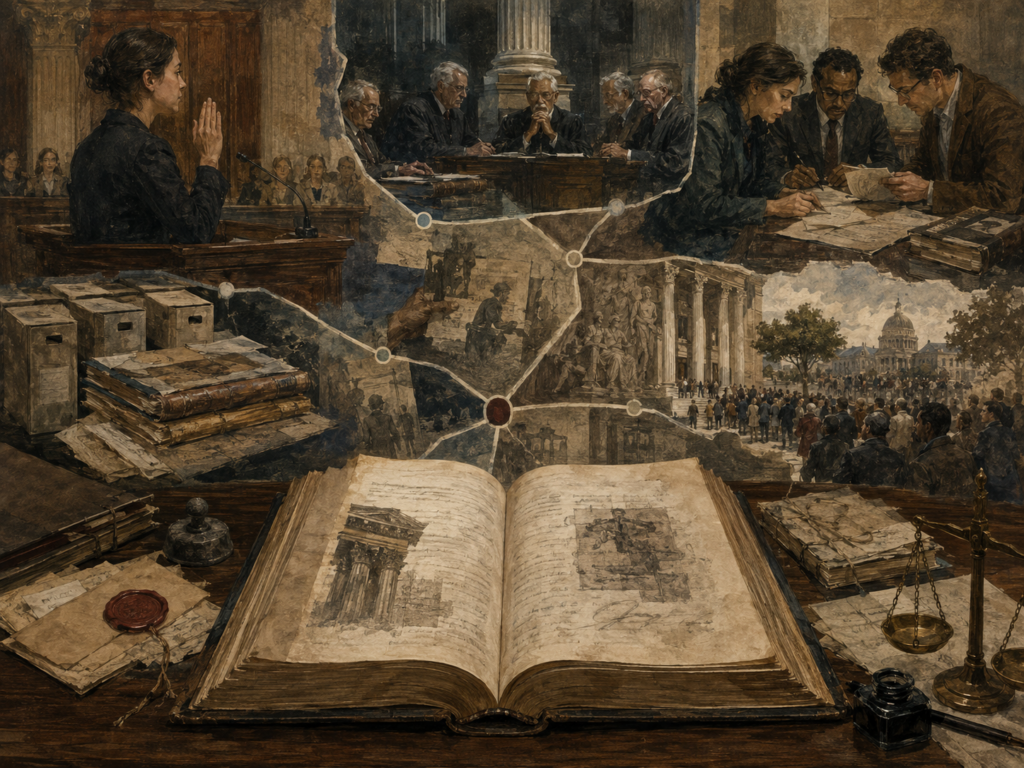
Editorial illustration of an open legal manuscript connected to courtroom testimony, judges, evidence review, archives, public institutions, and civic accountability.

Law, Evidence, and Narrative Responsibility: How Legal Stories Stay Accountable to Proof

Law, Evidence, and Narrative Responsibility examines how legal systems turn facts, testimony, records, rules, and procedure into evidence-bound stories. This article explains why law needs narrative to organize sequence, causation, credibility, responsibility, interpretation, and remedy, while showing why legal storytelling must remain constrained by relevance, authentication, admissibility, burdens of proof, procedural posture, and uncertainty. It explores witnesses, cross-examination, credibility judgments, victim and defendant narratives, institutional records, legal archives, truth commissions, public inquiries, AI-generated case summaries, and the ethical limits of persuasion. The article also warns against overcoherence, stereotype reliance, evidentiary drift, procedural erasure, causation flattening, settlement closure, and hallucinated legal authority. As part of the Storytelling series, it argues that responsible legal narratives should persuade only by staying answerable to evidence, procedure, human dignity, uncertainty, jurisdiction, record integrity, and the difference between argument and proof in every legal forum.

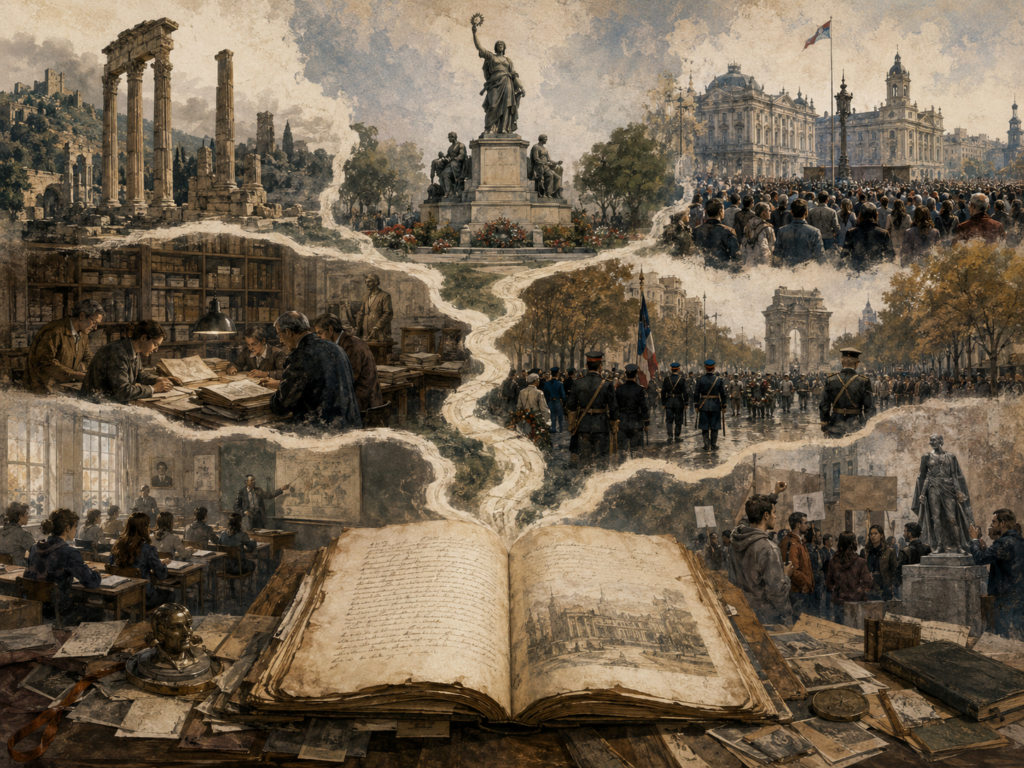
Editorial illustration of an open manuscript connecting scenes of monuments, archives, classrooms, public ceremonies, civic crowds, ruins, and contested historical memory.

National Narratives and the Politics of Memory: How Nations Remember, Forget, and Contest the Past

National Narratives and the Politics of Memory examines how nations remember, forget, commemorate, teach, archive, and contest the past. This article explains how collective memory shapes national identity through founding stories, monuments, museums, textbooks, holidays, maps, archives, public mourning, countermemory, digital platforms, and AI-generated summaries. It shows why national storytelling is ethically powerful and politically unstable: shared memory can build civic responsibility, but it can also protect national innocence, erase violence, marginalize minority memory, sanctify state power, or turn history into myth. The article explores imagined communities, sites of memory, heroic sacrifice, trauma, selective forgetting, memory laws, public education, contested monuments, and digital circulation. As part of the Storytelling series, it argues that responsible national narratives should remain answerable to evidence, testimony, plural histories, public dignity, repair, and ongoing revision rather than loyalty, nostalgia, exclusion, erasure, or symbolic closure.

Editorial illustration of an open archival manuscript branching into scenes of founding councils, institutional buildings, ceremonies, archives, public processions, and historical memory.

Origin Stories, Legitimacy, and Institutional Memory: How Institutions Use Founding Narratives to Build Trust

Origin Stories, Legitimacy, and Institutional Memory examines how institutions use founding narratives to explain purpose, justify authority, preserve continuity, and claim public trust. This article shows how schools, courts, governments, churches, companies, nonprofits, archives, and civic bodies turn beginnings into legitimacy stories through founders, charters, missions, crisis memories, reform narratives, anniversaries, and public records. It also explains why institutional memory is ethically unstable: origin stories can clarify responsibility, but they can also heroize founders, erase exclusions, hide harm, control archives, turn apology into closure, or protect reputation from evidence. The article explores legitimacy alignment, organizational memory, records management, collective memory, archival accountability, selective forgetting, re-founding, and AI-mediated institutional history. As part of the Storytelling series, it argues that legitimate institutions must keep their origin stories answerable to records, testimony, affected communities, repair, revision, and ongoing public accountability over time.

Editorial illustration of an open manuscript connecting scenes of religious teaching, civic speech, public ritual, political gathering, and communal debate.

Storytelling in Religion, Politics, and Public Life: Sacred Narrative, Public Memory, and Civic Power

Storytelling in Religion, Politics, and Public Life examines how sacred narratives, public rituals, civil religion, political identity, testimony, media platforms, and institutional memory shape shared meaning and public action over time. This article explains how religious and political stories create belonging, organize moral responsibility, preserve memory, justify authority, frame crisis, and imagine renewal. It also shows why public storytelling is ethically unstable: the same narrative power that builds solidarity can simplify enemies, sanctify institutions, exploit testimony, intensify outrage, or turn public life into mythic conflict. The article explores public narrative, civil-religious language, origin and renewal stories, boundary-making, propaganda, scapegoating, platform circulation, and AI-generated public rhetoric. As part of the Storytelling series, it argues that responsible public stories should enlarge judgment, preserve human dignity, remain accountable to evidence, and connect hope to repair rather than manipulation, exclusion, or symbolic closure.

Scroll to Top