Biology

Biology examines life in all its forms, from cells and organisms to populations, ecosystems, and evolutionary processes. It seeks to explain how living systems are organized, how they function, how they reproduce and adapt, and how life changes across time in relation to heredity, environment, and ecological conditions.

This field brings together the study of structure, metabolism, development, genetics, evolution, behavior, and the interdependence of living systems across levels of organization. It includes molecular and cellular processes, organismal life, species diversity, ecological relationships, and the broader conditions through which life persists, transforms, and interacts with the natural world.

Biology plays a foundational role in understanding not only organisms themselves but also adaptation, vulnerability, resilience, and the continuity of life. By clarifying the processes that sustain living systems and the relationships that bind them to one another and to their environments, it shapes human understanding of health, nature, survival, and the conditions of flourishing on Earth.

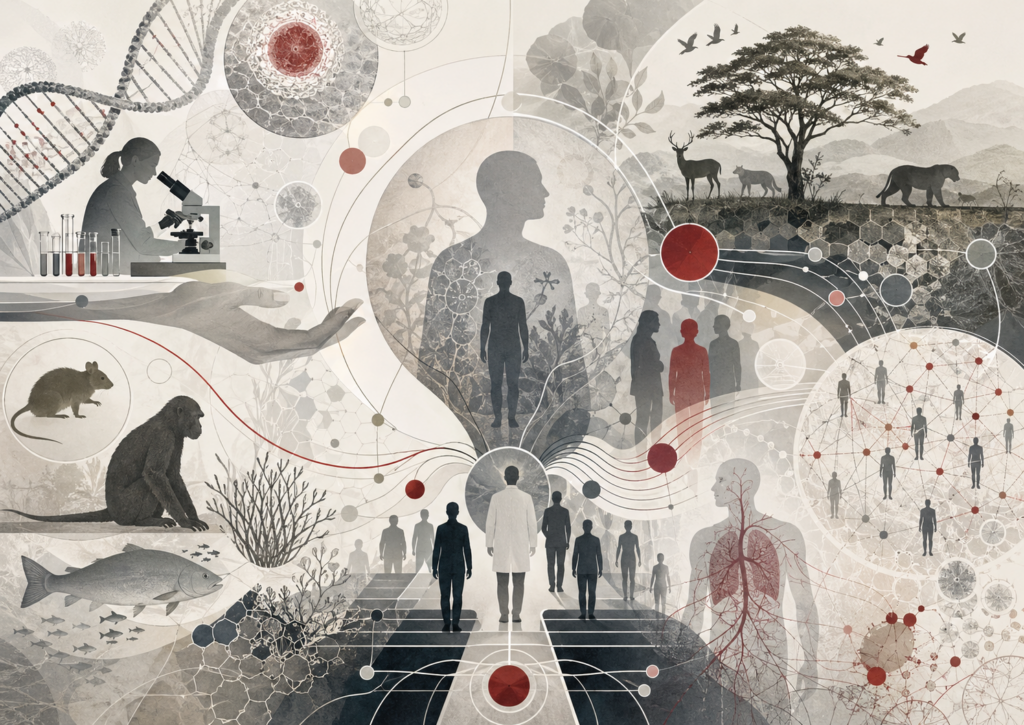
Abstract scientific illustration of biology and ethics showing human research, DNA, cells, tissues, animal welfare, biodiversity, ecological systems, biological data, public health networks, consent, governance, justice, and institutional accountability without text or labels.

Biology, Ethics, and the Human Understanding of Life

Biology is not only the scientific study of life. It is also one of the major ways human beings decide what life means, which lives receive protection, how living systems may be studied, when intervention is justified, and what responsibilities follow from biological knowledge. This article examines biology, ethics, and the human understanding of life across human-subjects research, animal welfare, genetics, biotechnology, ecology, biodiversity, biological data, AI, public health, One Health, justice, and the history of biological science. It argues that biology deepens human understanding of life, but cannot by itself determine how life should be valued. That requires ethical reasoning, public accountability, ecological humility, and institutional restraint.
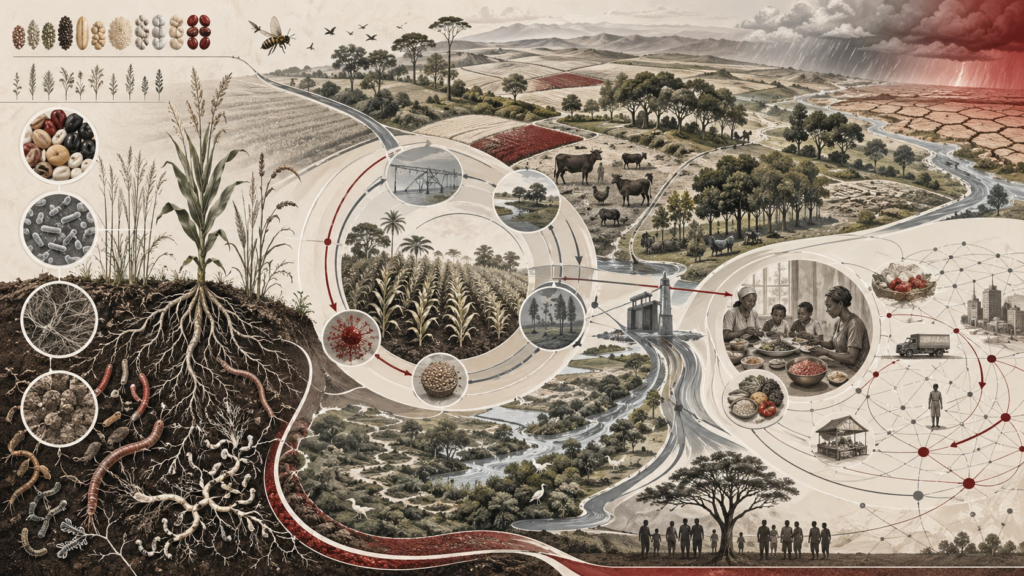
Abstract scientific illustration of agriculture and food systems showing crop fields, soil roots, microbes, fungi, earthworms, livestock, pollinators, water flows, biodiversity corridors, food distribution networks, household nutrition, climate stress, and community governance without text or labels.

Agriculture, Food Systems, and the Management of Life

Agriculture is one of humanity’s most consequential forms of biological management: the deliberate shaping of plants, animals, soils, microbes, water, landscapes, labor, markets, diets, and ecosystems to sustain human life. This article examines agriculture and food systems as living systems, connecting crop science, livestock systems, soil biology, agroecology, biodiversity, pollination, nutrient cycles, water use, climate adaptation, nutrition, public health, food access, and governance. It argues that agriculture cannot be understood only through yield or efficiency, but must also be evaluated through biological stewardship, ecological resilience, genetic diversity, soil fertility, human nourishment, labor justice, food sovereignty, and the long-term conditions that make food production possible.

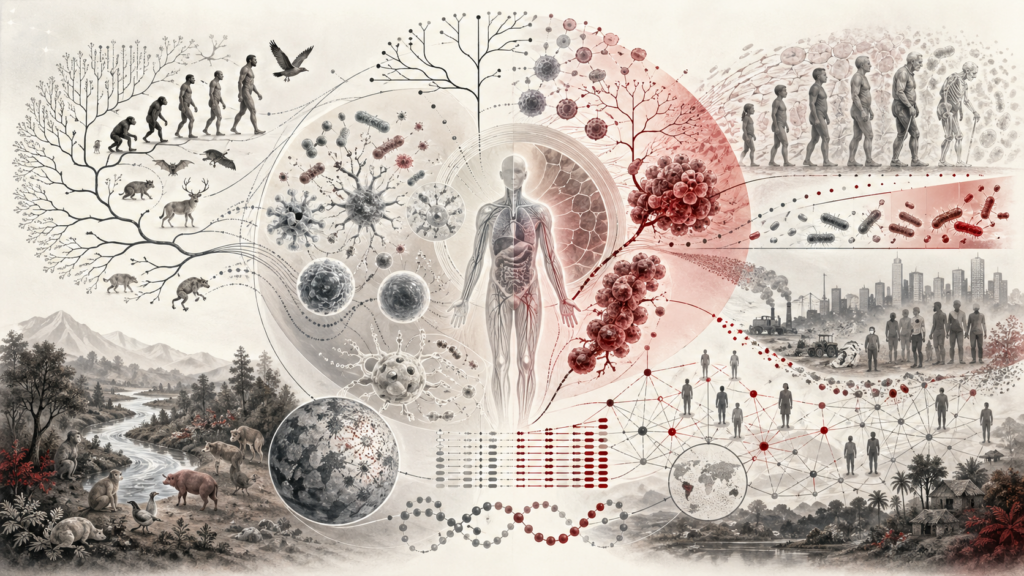
Abstract scientific illustration of evolutionary medicine showing human biology, pathogen evolution, immune defense, antimicrobial resistance, cancer evolution, aging, environmental mismatch, public health networks, and ecological context without text or labels.

Evolutionary Medicine and the Biological Understanding of Disease

Evolutionary medicine deepens the biological understanding of disease by asking why bodies, pathogens, cells, immune systems, reproductive strategies, aging processes, and ecological relationships evolved in ways that create vulnerability to illness. This article explains disease through both proximate mechanisms and evolutionary causes, including natural selection, trade-offs, mismatch, coevolution, antimicrobial resistance, somatic evolution in cancer, immune defense, inflammation, autoimmunity, life-history allocation, senescence, and environmental change. It argues that disease is not simply malfunction, but often the result of evolved defenses, biological constraints, pathogen adaptation, modern environments, and systems shaped for reproductive fitness rather than perfect health.

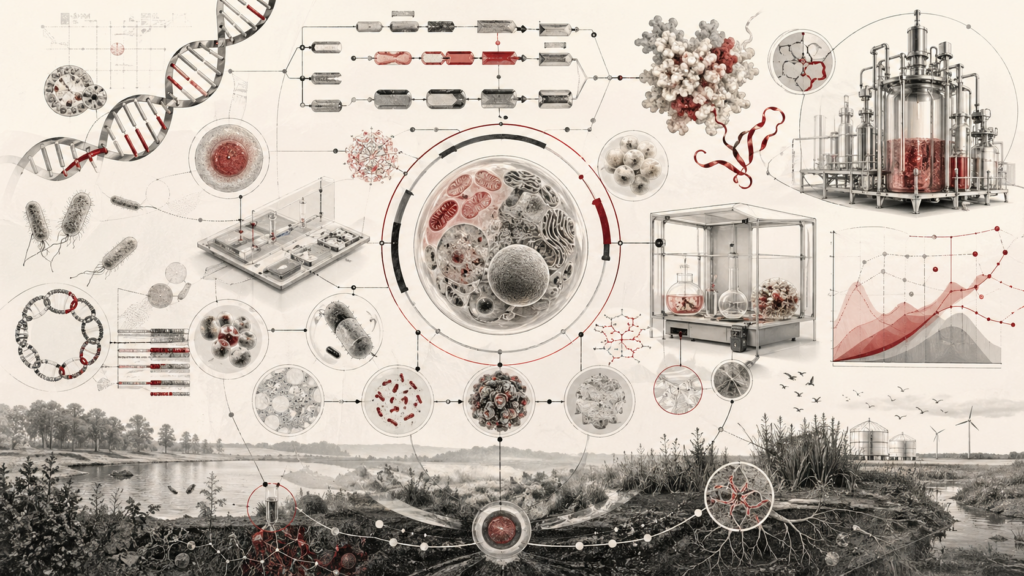
Abstract scientific illustration of synthetic biology showing DNA-like structures, engineered cells, modular genetic circuits, biological parts, chassis organisms, metabolic pathway flows, biosensors, biomanufacturing systems, containment structures, and ecological context without text or labels.

Synthetic Biology and the Engineering of Biological Systems

Synthetic biology extends biotechnology from modifying living systems toward deliberately engineering biological functions, circuits, pathways, organisms, and platforms. This article examines synthetic biology through the design-build-test-learn cycle, explaining biological parts, genetic circuits, chassis organisms, metabolic engineering, cell-free systems, biosensors, synthetic genomes, biomanufacturing, measurement standards, reproducibility, biosafety, biosecurity, and dual-use governance. It argues that synthetic biology is most credible when engineering ambition is paired with biological humility: living systems grow, mutate, regulate, adapt, evolve, and interact with environments. The article frames synthetic biology as a powerful but context-dependent field where design must be evaluated through measurement, stability, burden, ecological risk, public accountability, and responsible governance.

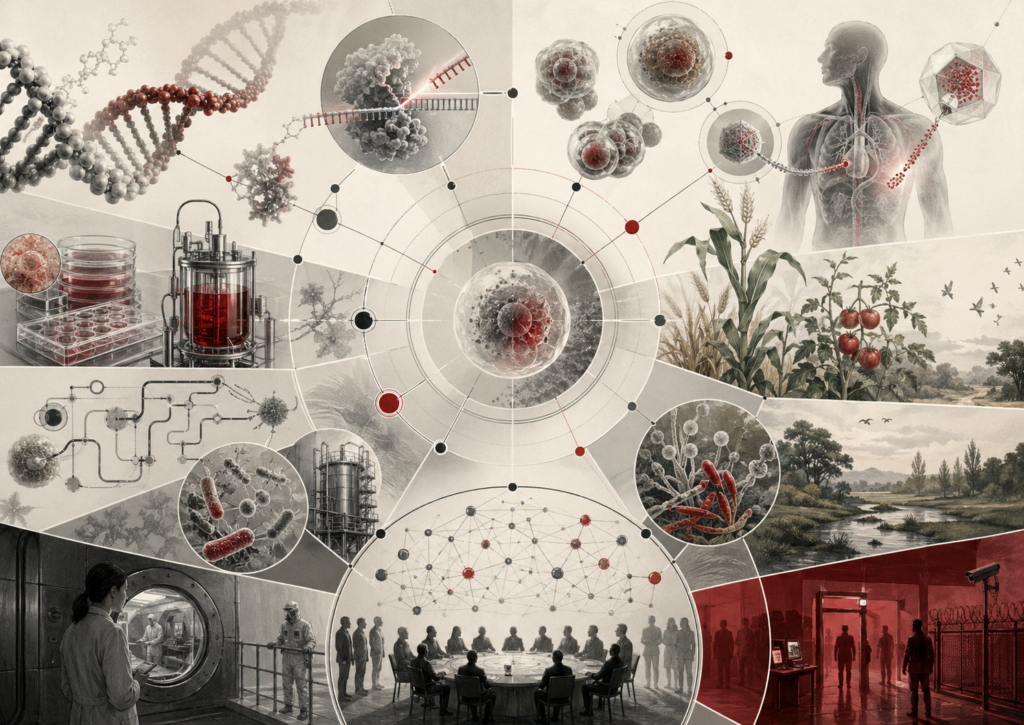
Abstract scientific illustration of biotechnology intervention showing DNA editing, engineered cells, bioreactors, gene-therapy delivery, agricultural biotechnology, microbial systems, ecological release pathways, biosafety barriers, biosecurity structures, and governance networks without text or labels.

Biotechnology, Intervention, and the Power to Alter Life

Biotechnology gives humans unprecedented power to intervene in living systems: editing genomes, engineering cells, redesigning microbes, modifying crops, developing gene and cell therapies, and reshaping ecological possibilities. This article examines biotechnology not only as technical capability, but as a system of responsibility. It explores recombinant DNA, CRISPR, base editing, prime editing, synthetic biology, gene therapy, cell therapy, agricultural biotechnology, environmental biotechnology, gene drives, biosafety, biosecurity, dual use, governance, justice, and public accountability. The article argues that the power to alter life must be guided by biological precision, ecological humility, ethical restraint, transparent oversight, and serious attention to who benefits, who decides, and who bears the risks.

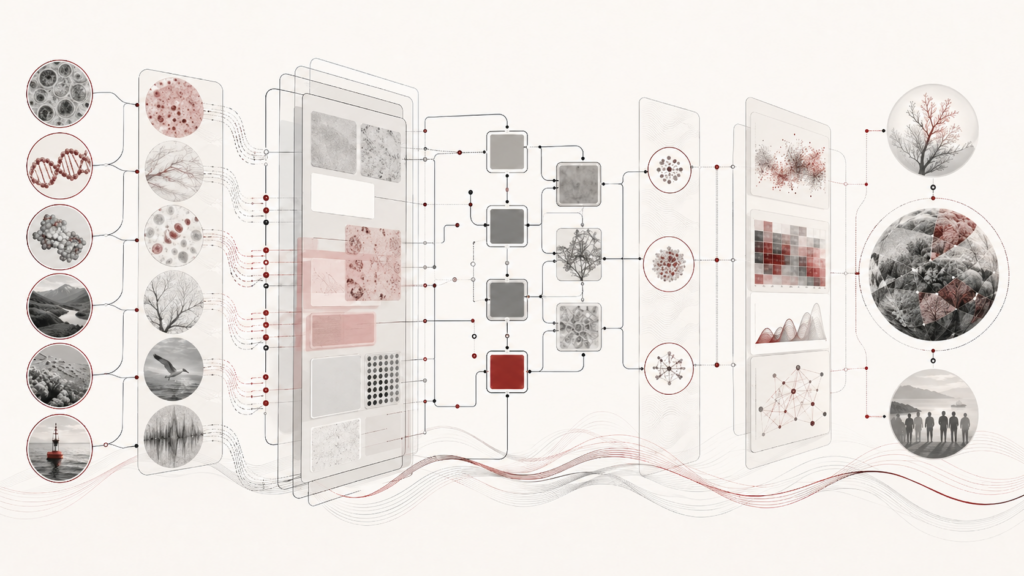
Abstract scientific illustration of computational notebooks and reproducible biological research showing biological samples, notebook-like workflow layers, provenance trails, validation pathways, metadata structures, ecological data streams, and reproducible research outputs without text or labels.

Computational Notebooks and Reproducible Biological Research

Computational notebooks have become essential tools for reproducible biological research because they connect data, code, explanation, visualization, and interpretation in a single auditable workflow. This article examines notebooks as scientific infrastructure for genomics, microscopy, ecology, epidemiology, environmental monitoring, machine learning, and biological data science. It explains why notebooks are useful, where they fail, and how they can be made more reliable through provenance, metadata, relative paths, environment documentation, execution-order discipline, validation checks, version control, FAIR data practice, and responsible interpretation. The article argues that notebooks should not be treated as informal scratchpads alone, but as structured research records that strengthen transparency, review, reuse, and computational rigor in the life sciences.

Abstract scientific illustration of machine learning in the life sciences showing molecular data, cell clusters, biological networks, model-validation pathways, ecological signals, clinical measurements, and reproducible computational workflows without text or labels.

Machine Learning in the Life Sciences

Machine learning in the life sciences is transforming how researchers analyze biological complexity across genomics, proteomics, microscopy, clinical data, ecology, epidemiology, biodiversity science, and systems biology. This article explains machine learning not as a replacement for biological expertise, but as a disciplined framework for learning from high-dimensional biological data. It examines supervised, unsupervised, self-supervised, and multimodal learning; the distinction between prediction, explanation, and mechanism; model validation; data leakage; interpretability; foundation models; generative biology; FAIR data; provenance; and reproducible computational workflows. The article emphasizes that machine learning becomes scientifically useful only when models are tied to biological context, external validation, transparent assumptions, uncertainty reporting, and responsible interpretation.

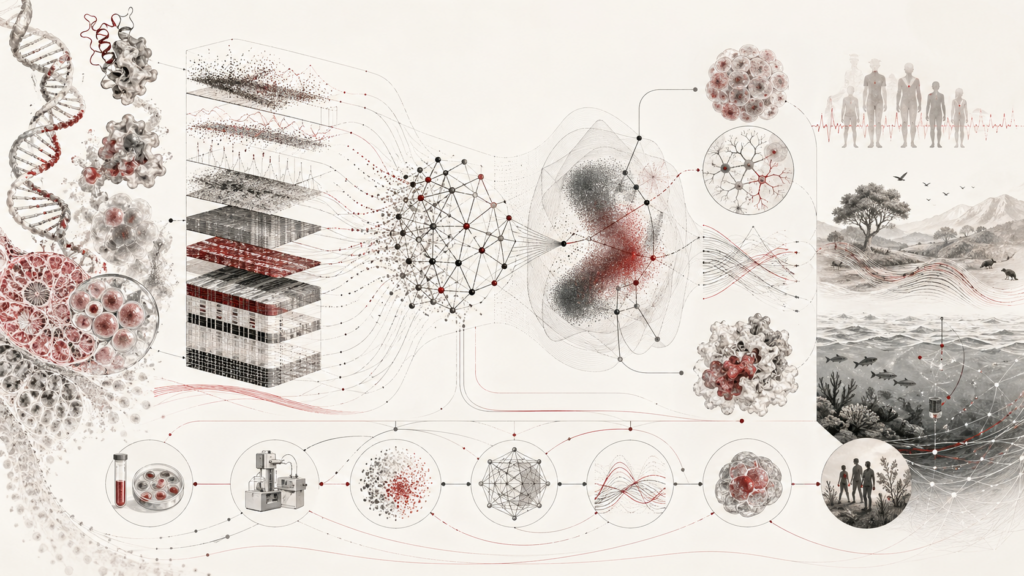
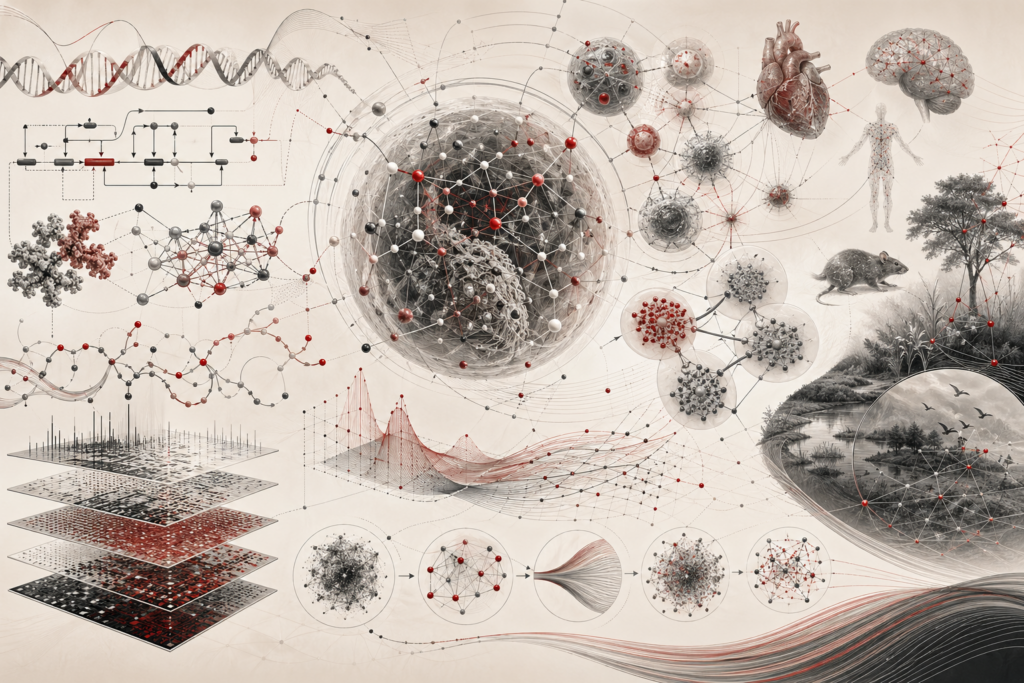
Abstract scientific illustration of systems biology and complexity in living networks showing DNA-like structures, molecular interaction networks, cellular signaling hubs, gene-regulatory circuits, omics data layers, feedback loops, physiological systems, organismal forms, ecological networks, dynamic trajectories, and reproducible workflow pathways without text or labels.

Systems Biology and Complexity in Living Networks

Systems Biology and Complexity in Living Networks examines how living systems can be understood as dynamic networks of genes, proteins, metabolites, cells, pathways, tissues, organisms, environments, and regulatory processes. The article explains how systems biology connects network topology, feedback, nonlinearity, omics integration, pathway structure, metabolic constraints, signaling dynamics, robustness, adaptation, emergence, model standards, and reproducible computational workflows. Written for biologists, systems biologists, molecular biologists, computational biologists, bioinformaticians, biomedical researchers, ecologists, network scientists, biotechnology teams, data engineers, scientific software developers, and engineers, the article emphasizes biological mechanism, pathway evidence, model assumptions, uncertainty, provenance, validation, and responsible interpretation. It shows how systems biology can make living complexity more visible, testable, auditable, and scientifically useful.

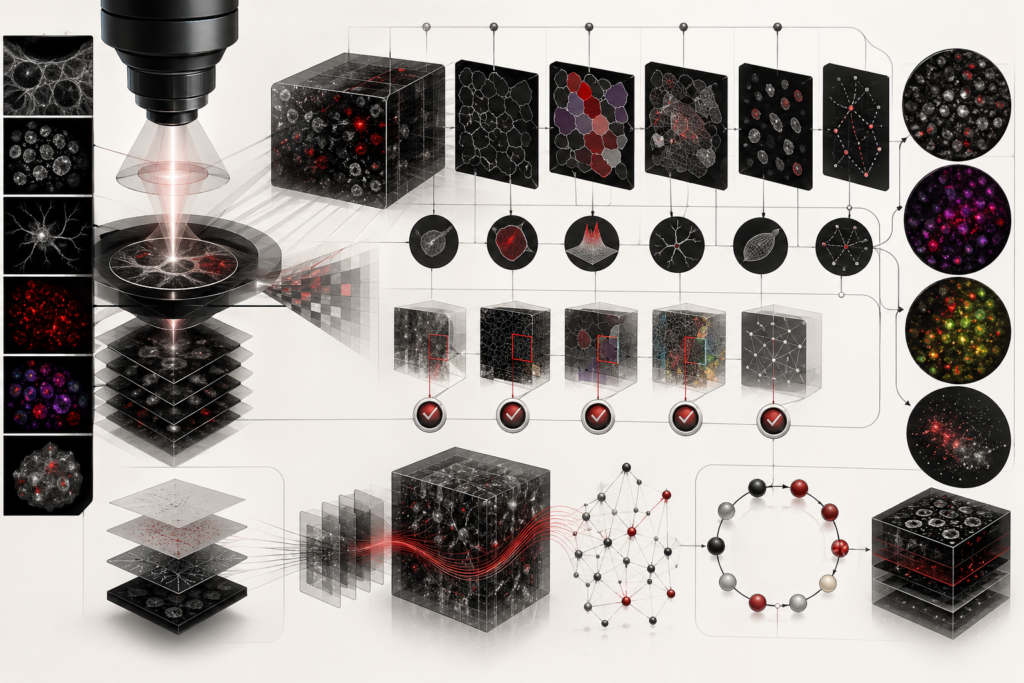
Abstract scientific illustration of image analysis, microscopy, and computational biology showing microscope-inspired optics, cellular image fields, pixel grids, voxel layers, segmentation masks, fluorescence-channel overlays, object measurements, tracking paths, colocalization patterns, metadata layers, workflow nodes, and reproducible analysis panels without text or labels.

Image Analysis, Microscopy, and Computational Biology

Image Analysis, Microscopy, and Computational Biology examines how biological images become measurable scientific evidence through microscopy, pixels, voxels, channels, metadata, segmentation, feature extraction, tracking, colocalization, validation, and reproducible computational workflows. The article explains why microscopy images are not merely pictures, but measurements shaped by optics, illumination, sample preparation, detectors, staining, resolution, noise, algorithms, and biological assumptions. Written for biologists, cell biologists, developmental biologists, neuroscientists, microbiologists, biomedical researchers, computational biologists, bioimage analysts, imaging-core teams, data engineers, scientific software developers, and engineers, the article connects image formation, segmentation masks, object features, quality control, high-content screening, deep learning, provenance, and image data standards into a rigorous framework for responsible computational microscopy.

Scroll to Top