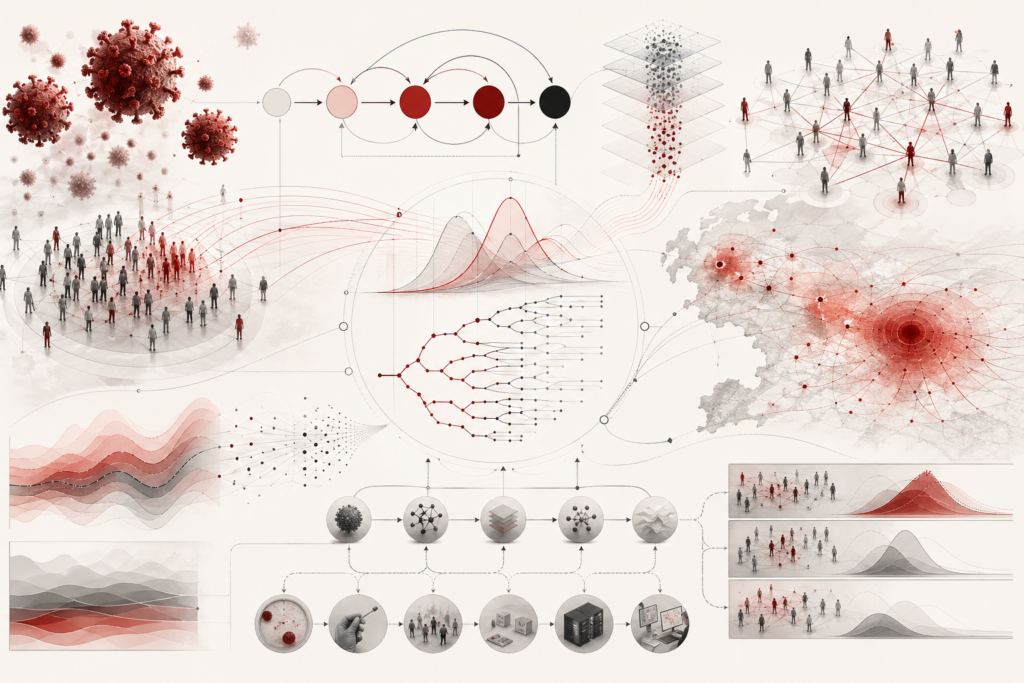
Modeling Disease, Epidemiology, and Biological Spread
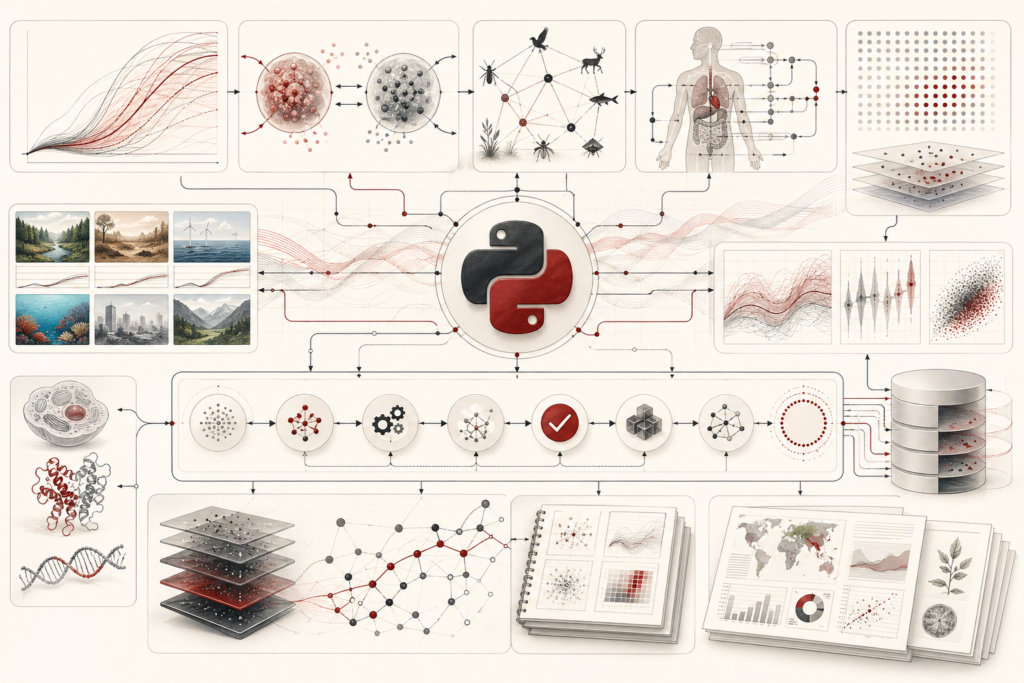
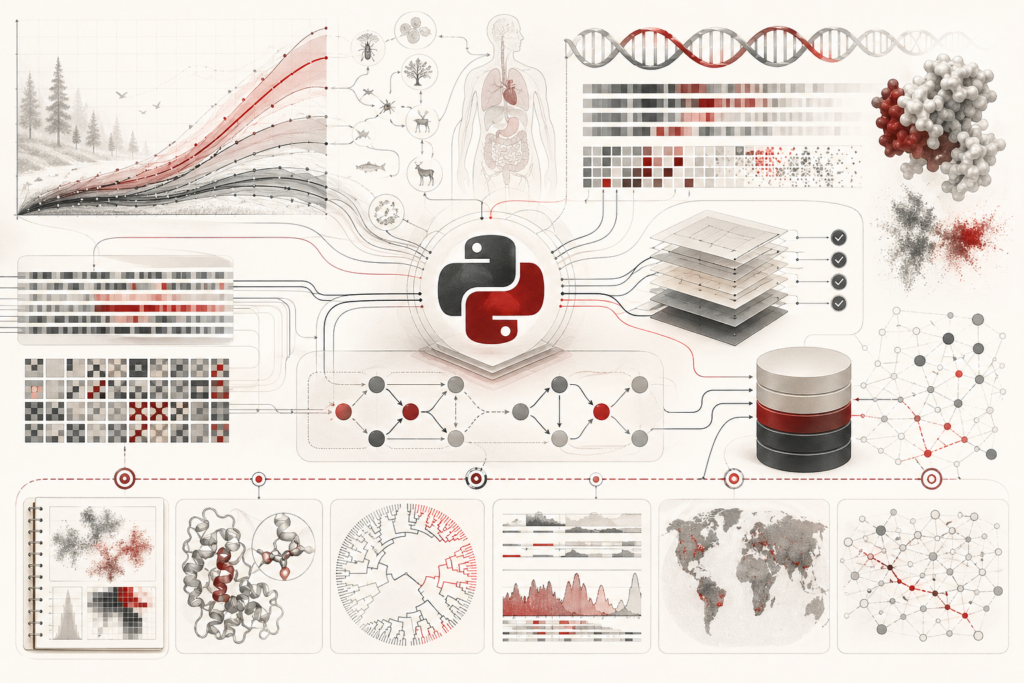
Modeling Disease, Epidemiology, and Biological Spread examines how pathogens, hosts, populations, contact networks, surveillance systems, immunity, reporting delays, interventions, and uncertainty can be studied through reproducible epidemiological models. The article explains how SIR and SEIR models, reproduction numbers, branching processes, network spread, nowcasting, forecasting, scenario analysis, reporting-delay adjustment, and validation metrics help researchers reason about biological spread without treating models as certainty. Written for biologists, epidemiologists, ecologists, biomedical researchers, public-health analysts, computational biologists, data scientists, systems biologists, environmental health researchers, biotechnology teams, scientific software developers, and engineers, the article emphasizes biological mechanism, surveillance quality, model assumptions, uncertainty communication, ethical limits, reproducibility, and responsible interpretation. It shows how epidemiological modeling can make disease dynamics more visible, testable, auditable, and useful for public-health reasoning.