
Last Updated May 28, 2026
Synthetic biology extends biotechnology from the modification of existing biological systems toward the deliberate engineering of biological functions, circuits, pathways, organisms, and platforms. It asks whether living systems can be designed with some of the discipline associated with engineering: modularity, abstraction, measurement, iteration, standards, failure analysis, reproducibility, and responsible deployment. Yet biology resists simple engineering metaphors. Cells are not passive machines. They grow, mutate, regulate, adapt, communicate, evolve, and interact with environments.
This article introduces synthetic biology as the engineering of biological systems. It explains how biological parts, genetic circuits, chassis organisms, metabolic pathways, cell-free platforms, biosensors, engineered microbes, synthetic genomes, biomanufacturing systems, and ecological applications fit into a larger design-build-test-learn framework. It also examines why synthetic biology requires biosafety, biosecurity, standards, measurement discipline, computational modeling, ecological humility, and public accountability.
Main Library
Publications
Article Map
Biology
Related Topic
Chemistry
Related Topic
Environmental Science
Related Topic
Earth Science
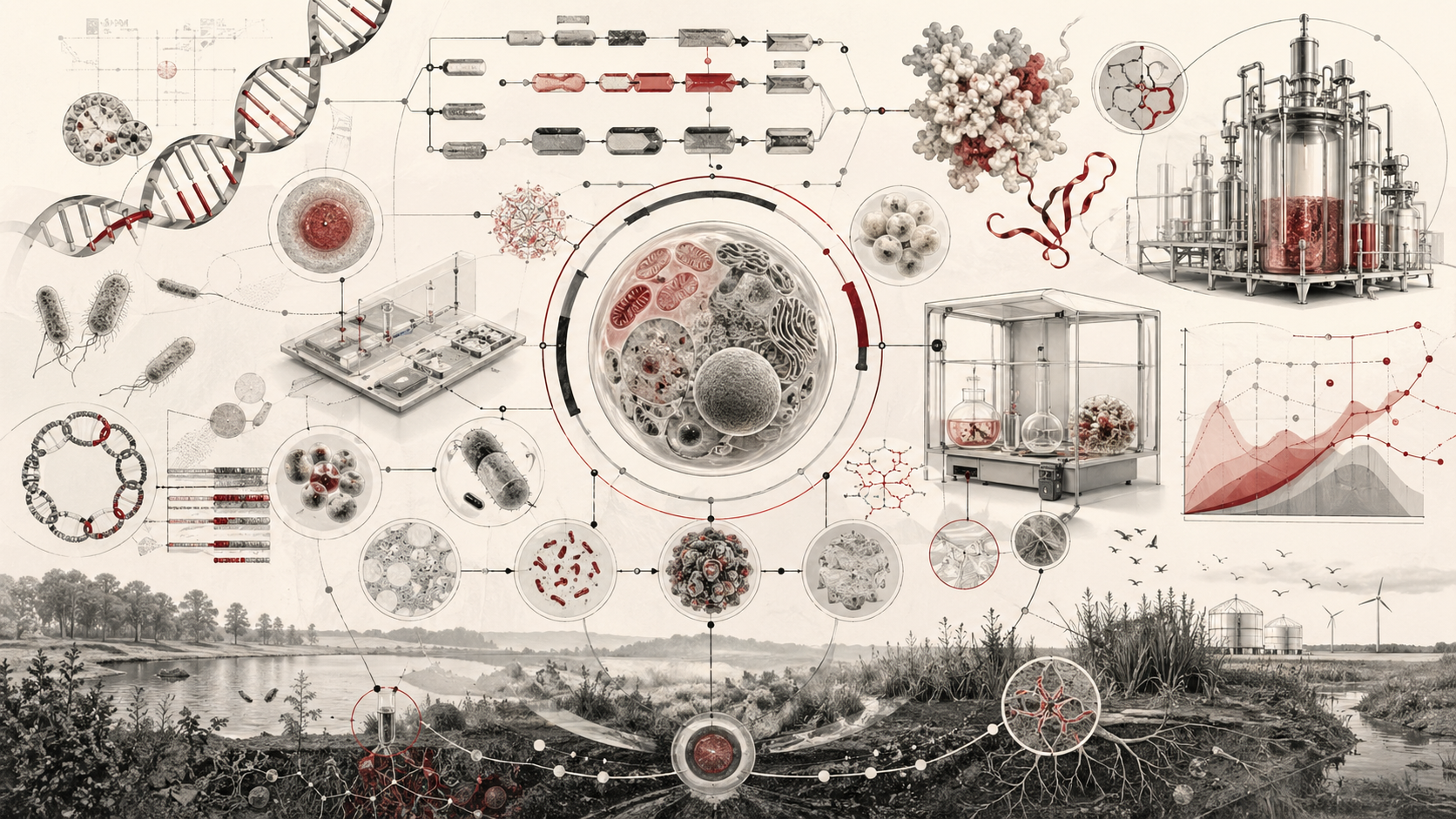
The central argument is that synthetic biology is most scientifically credible when it treats engineering as a disciplined conversation with living complexity rather than a fantasy of total control. Biological design succeeds when it respects context: host physiology, gene regulation, metabolic burden, mutation, containment, measurement uncertainty, evolutionary dynamics, ecological interaction, and social consequence.
This article is written for biologists, molecular biologists, bioengineers, computational biologists, systems biologists, environmental-health researchers, ecologists, biodiversity scientists, biomanufacturing teams, scientific software developers, and readers interested in how biology becomes designable without becoming fully predictable.
Why synthetic biology matters
Synthetic biology matters because it changes the relationship between biological knowledge and biological construction. Classical molecular biology asks how genes, proteins, cells, and pathways work. Synthetic biology asks how they can be redesigned, recombined, regulated, and built into systems that perform new functions.
This shift matters across medicine, agriculture, environmental monitoring, sustainable materials, industrial chemistry, diagnostics, conservation, climate adaptation, and biomanufacturing. Engineered microbes can produce chemicals, enzymes, medicines, flavors, materials, and fuels. Genetic circuits can sense environmental signals and trigger responses. Cell-free systems can perform diagnostics outside living cells. Engineered immune cells can target cancer. Synthetic pathways can convert feedstocks into useful products. Biosensors can detect contaminants or pathogens. Designed organisms may one day support restoration, carbon management, or waste transformation.
The promise is substantial, but so is the responsibility. Synthetic biology works with systems that replicate, mutate, exchange information, respond to context, and interact with other organisms. A synthetic construct may behave differently across strains, media, temperatures, growth phases, genetic backgrounds, ecological settings, or manufacturing scales. A design that works in a controlled laboratory flask may fail in a bioreactor, field site, patient, or ecosystem.
Synthetic biology therefore requires both engineering ambition and biological humility.
Engineering biology without oversimplifying life
Engineering language is useful in synthetic biology because it encourages design, iteration, abstraction, standardization, and measurement. It helps researchers think in terms of inputs, outputs, parts, systems, modules, constraints, failure modes, and performance specifications.
But biology is not conventional engineering. A bridge does not reproduce. A circuit board does not evolve. A software module does not regulate its own metabolism, mutate under selection, compete for ribosomes, or alter its expression because the cell enters stationary phase. A biological design is embedded in a living host that has its own priorities: growth, survival, resource allocation, stress response, repair, and adaptation.
This creates a central tension. Synthetic biology needs engineering methods, but it cannot ignore biological complexity. It must design with living systems rather than merely impose design upon them.
A genetic circuit may fail because promoters are context-dependent. A metabolic pathway may fail because intermediates are toxic. A biosensor may drift because cells evolve away from costly expression. A chassis organism may behave differently when scaled from bench culture to industrial fermentation. A construct may burden host physiology. A pathway may compete with native metabolism. A design may become unstable under selection.
The strongest synthetic biology therefore treats failure as information. It uses measurement, modeling, iteration, and biological interpretation to understand why designs work, fail, or change.
Design-build-test-learn
The design-build-test-learn cycle is one of the central organizing frameworks in synthetic biology and engineering biology. It converts biological engineering into an iterative process.
- Design: specify the desired biological function, choose parts or pathways, model behavior, and define success criteria.
- Build: assemble DNA, edit genomes, transform cells, construct pathways, or prepare cell-free systems.
- Test: measure function, expression, growth, burden, output, stability, and performance under relevant conditions.
- Learn: analyze results, update models, identify failure modes, and improve the next design.
This cycle is powerful because biological design rarely succeeds perfectly on the first attempt. Synthetic biology often depends on iteration: promoter tuning, ribosome-binding-site adjustment, codon optimization, enzyme selection, pathway balancing, copy-number control, host engineering, compartmentalization, dynamic regulation, and improved measurement.
The learning phase is especially important. Data from testing should not merely classify designs as successes or failures. It should improve understanding of why performance changed. Multi-omics data, growth measurements, flux analysis, sequence verification, microscopy, single-cell analysis, and computational modeling can reveal whether failure arose from toxicity, instability, burden, resource limitation, pathway imbalance, regulation, or measurement error.
The design-build-test-learn cycle turns synthetic biology into a scientific learning system.
Biological parts, circuits, and chassis
Synthetic biology often describes biological systems in terms of parts, devices, circuits, and chassis organisms. A biological part may be a promoter, ribosome-binding site, coding sequence, terminator, guide RNA, regulatory element, enzyme, transport protein, receptor, degradation tag, or origin of replication. A device combines parts to perform a function. A circuit coordinates regulation and response. A chassis is the host organism or platform in which the design operates.
The part-device-system hierarchy is useful, but imperfect. Unlike electronic parts, biological parts are context-sensitive. A promoter may behave differently depending on neighboring sequences, plasmid copy number, host strain, growth medium, temperature, metabolic state, and regulatory environment. A coding sequence may affect mRNA structure, translation, protein folding, toxicity, or burden. A circuit may compete with native cellular resources.
A chassis organism is not an empty frame. It is an active biological system. Common chassis organisms include Escherichia coli, Saccharomyces cerevisiae, Bacillus subtilis, cyanobacteria, mammalian cells, plant cells, and cell-free extracts. Each chassis has advantages and constraints: genetic tractability, growth rate, secretion capacity, post-translational modification, metabolic capability, safety profile, environmental tolerance, and industrial scalability.
Choosing a chassis is therefore a scientific and engineering decision. The same design may be feasible in one host and unstable in another.
Genetic circuits and biological computation
Genetic circuits use biological components to process information. They can sense inputs, regulate gene expression, produce outputs, store memory, implement logic, generate oscillations, or respond to environmental conditions. Examples include toggle switches, repressilators, logic gates, feedback controllers, biosensors, kill switches, quorum-sensing circuits, and inducible expression systems.
These circuits show that cells can be programmed in limited but powerful ways. A cell can be designed to fluoresce when it detects a molecule, produce a therapeutic protein under specific conditions, activate a pathway only above a threshold, or self-limit growth under certain environmental constraints.
However, biological computation differs from digital computation. Biological signals are noisy, continuous, context-dependent, and resource-limited. Gene expression varies among cells. Protein degradation affects timing. Cellular growth dilutes molecules. Mutations can disable burdensome constructs. Host physiology may alter circuit behavior. Feedback can stabilize or destabilize output depending on parameters.
Synthetic biology therefore uses circuit design, but also needs dynamical systems thinking. A genetic circuit is not merely a diagram. It is a time-dependent molecular system embedded in a living cell.
Metabolic engineering and biomanufacturing
Metabolic engineering modifies cellular pathways to produce desired compounds. A cell can be engineered to convert sugars, gases, waste streams, or other feedstocks into fuels, pharmaceuticals, enzymes, polymers, food ingredients, pigments, fragrances, fertilizers, or specialty chemicals. This makes synthetic biology central to biomanufacturing and the bioeconomy.
A metabolic pathway is constrained by mass balance, enzyme kinetics, thermodynamics, redox state, cofactor availability, transport, toxicity, regulation, and competition with native metabolism. Increasing production is rarely as simple as adding a gene. Researchers may need to increase precursor supply, remove competing pathways, balance enzyme expression, improve cofactor regeneration, export the product, reduce toxicity, and maintain host growth.
Biomanufacturing adds another layer. A pathway that works in a small culture may not scale cleanly. Industrial fermentation requires attention to oxygen transfer, mixing, pH, temperature, feed strategy, contamination risk, product recovery, strain stability, process economics, and regulatory requirements.
Synthetic biology can support more sustainable manufacturing, but sustainability is not automatic. Feedstocks, energy use, land use, water demand, waste streams, containment, supply chains, and product lifecycle must be evaluated. A biological production route should be assessed as a full system, not simply as a technical achievement.
Cell-free systems and programmable biochemistry
Cell-free systems use biological machinery outside living cells. Instead of engineering a whole organism, researchers use extracts or purified components that can transcribe, translate, sense, catalyze, or assemble molecules in controlled environments. Cell-free synthetic biology can support rapid prototyping, biosensing, diagnostics, education, metabolic pathway testing, and distributed biomanufacturing.
Cell-free systems have several advantages. They avoid some constraints of cellular viability. They allow direct access to reaction conditions. They can be freeze-dried for field use. They can reduce risks associated with living organism release. They can accelerate design-build-test cycles by allowing researchers to test constructs quickly.
But cell-free systems also have limits. They may be expensive, unstable, sensitive to preparation methods, difficult to standardize, and less capable of long-term self-maintenance than living cells. Protein expression, resource depletion, reaction kinetics, extract variability, and measurement reproducibility can affect results.
Cell-free biology shows an important direction for synthetic biology: not all biological engineering must occur inside living organisms. Some of the most responsible applications may use biological machinery while avoiding replication and environmental persistence.
Synthetic genomes and minimal cells
Synthetic genome research explores whether genomes can be designed, assembled, minimized, or rewritten. Minimal-cell research asks what genetic functions are necessary for cellular life under specific conditions. Genome synthesis and minimization can reveal principles of cellular organization, gene essentiality, genome architecture, and biological constraint.
These efforts are scientifically important because they expose the limits of understanding. Even when researchers can synthesize or reduce genomes, many genes may remain poorly characterized. A minimal cell is not a universal definition of life. It is a context-dependent organism that survives under particular laboratory conditions.
Synthetic genomes also raise governance questions. Genome synthesis reduces the distance between digital sequence information and biological material. This makes sequence screening, responsible supply chains, biosecurity, and access governance increasingly important. The same infrastructure that enables beneficial research can create risks if misused.
The engineering of genomes therefore requires both technical competence and institutional safeguards.
Biosensors, environmental applications, and ecological risk
Synthetic biology can create biosensors that detect molecules, pathogens, pollutants, environmental stressors, or cellular states. Biosensors may use living cells, cell-free systems, nucleic acid circuits, engineered proteins, or microbial reporters. They can support water-quality monitoring, infectious disease diagnostics, soil analysis, industrial process control, food safety, and environmental health.
Environmental synthetic biology is also being explored for bioremediation, carbon conversion, nitrogen management, waste processing, soil restoration, and pollution detection. These applications connect synthetic biology to sustainability, ecosystem resilience, freshwater biology, marine systems, soil biology, agroecology, and biogeochemical cycles.
But environmental applications require special caution. A biosensor used in a contained assay is different from an engineered organism released into soil, water, crops, or wild populations. Open environments are heterogeneous, poorly controlled, and ecologically interconnected. Engineered organisms may die, persist, mutate, exchange genetic material, or affect microbial communities and food webs.
Ecological risk assessment should ask:
- Can the engineered system survive outside intended conditions?
- Can engineered traits spread through horizontal gene transfer or reproduction?
- What organisms, functions, or ecosystem processes may be affected?
- Can the intervention be monitored after deployment?
- Can it be recalled, reversed, or contained?
- Who participates in decisions about environmental use?
Synthetic biology’s environmental promise is real, but so is the need for ecological humility.
Standards, measurement, and reproducibility
Synthetic biology depends on measurement. Without reliable measurement, biological design becomes trial and error. Researchers need to compare promoter strength, expression levels, growth rates, pathway fluxes, product titers, sensor response, burden, stability, toxicity, and performance across laboratories, instruments, strains, and conditions.
Standards matter because biological systems are difficult to compare. A fluorescence measurement may vary by instrument, calibration, cell size, growth phase, media, plasmid copy number, gating strategy, and normalization method. A genetic part may behave differently in different hosts. A pathway may perform differently across culture conditions. A model may depend on assumptions that are not visible unless documented.
Reproducibility requires:
- clear construct maps and sequence verification;
- documented host strains and growth conditions;
- calibrated measurements where possible;
- metadata for instruments, reagents, protocols, and software;
- explicit units and normalization methods;
- replicate design and uncertainty reporting;
- versioned code, data, and models;
- provenance for DNA parts, plasmids, strains, and outputs.
Synthetic biology becomes more engineering-like when its measurements become more comparable, auditable, and reusable.
Biosafety, biosecurity, and dual use
Synthetic biology raises biosafety and biosecurity questions because it increases the capacity to construct biological functions. Biosafety focuses on preventing accidental exposure, release, contamination, or harm. Biosecurity focuses on preventing misuse, theft, diversion, or malicious application. Dual-use concern arises when the same knowledge or tool can support beneficial and harmful outcomes.
Responsible synthetic biology includes institutional biosafety review, containment practices, training, waste decontamination, incident reporting, sequence screening, access controls, risk assessment, and responsible communication. It also requires a culture in which researchers recognize that capability is not permission.
The governance challenge grows as tools become cheaper, more automated, and more widely distributed. DNA synthesis, genome editing, cloud laboratories, AI-assisted design, and automated experimentation can accelerate useful research. They can also complicate oversight if governance does not evolve.
Biosecurity should not be used to stigmatize open science or block responsible research. But open scientific culture must be paired with safeguards appropriate to biological risk. The goal is not secrecy. The goal is trustworthy science.
Mathematical lens: synthetic biology
Several mathematical ideas help clarify synthetic biology design and evaluation. These expressions do not make biological systems fully predictable. They help researchers specify assumptions, compare designs, evaluate performance, and make biological engineering more transparent.
Design-build-test-learn iteration
D_{t+1}=L(T(B(D_t)))
\]
Interpretation: The design at the next iteration \(D_{t+1}\) is updated through learning \(L\) from testing \(T\) a built system \(B(D_t)\). This expresses synthetic biology as an iterative learning process rather than a one-step design event.
Promoter response
y = y_{\min} + \frac{y_{\max}-y_{\min}}{1+\left(\frac{K}{x}\right)^n}
\]
Interpretation: A promoter response curve relates input concentration \(x\) to output \(y\). The parameter \(K\) represents half-maximal response, while \(n\) controls response steepness.
Genetic circuit dynamics
\frac{dx}{dt}=\alpha f(u)-\delta x
\]
Interpretation: Gene product concentration \(x\) changes over time according to input-regulated production \(\alpha f(u)\) and degradation or dilution \(\delta x\). This simplified form helps represent time-dependent circuit behavior.
Metabolic flux constraint
S v = 0
\]
Interpretation: The stoichiometric matrix \(S\) and flux vector \(v\) describe mass-balance constraints in a metabolic network. This is foundational for flux-balance reasoning in metabolic engineering.
Product yield
Y_{P/S}=\frac{\Delta P}{\Delta S}
\]
Interpretation: Product yield compares product formed \(\Delta P\) with substrate consumed \(\Delta S\). It helps evaluate whether an engineered pathway efficiently converts input material into the desired output.
Burden score
B = 1-\frac{\mu_{\text{engineered}}}{\mu_{\text{control}}}
\]
Interpretation: Burden compares engineered growth rate with a control growth rate. A higher burden score suggests that the engineered system reduces host fitness, which may affect stability and performance.
Sensor signal-to-noise ratio
SNR=\frac{\mu_{\text{signal}}-\mu_{\text{background}}}{\sigma_{\text{background}}}
\]
Interpretation: Signal-to-noise ratio compares the separation between signal and background with background variability. A useful biosensor should distinguish signal from background under relevant conditions.
Stability under selection
p_{t+1}=p_t(1-s)
\]
Interpretation: The frequency of a costly engineered construct \(p_t\) may decline under selection coefficient \(s\). This simplified relation illustrates why burdensome designs can be lost over evolutionary time.
Python and R workflows
The following compact examples illustrate how synthetic biology design data can be represented computationally. The full GitHub repository expands these examples into a broader reproducible workflow with Python, R, Julia, Fortran, Rust, Go, C, C++, SQL, notebooks, synthetic data, construct metadata, design-build-test-learn records, burden scoring, biosensor performance, metabolic-yield scaffolds, provenance documentation, and reproducibility notes.
Python example: design-build-test-learn scoring
"""
Synthetic biology design-build-test-learn scaffold.

This example ranks synthetic biology designs using performance,
burden, stability, and measurement uncertainty.
The data are synthetic and educational.
"""

import pandas as pd

designs = pd.DataFrame(
    {
        "design_id": ["D001", "D002", "D003", "D004"],
        "construct_type": ["biosensor", "biosensor", "metabolic_pathway", "metabolic_pathway"],
        "output_signal": [0.82, 0.68, 0.74, 0.61],
        "host_burden": [0.18, 0.10, 0.35, 0.22],
        "genetic_stability": [0.72, 0.84, 0.55, 0.70],
        "measurement_uncertainty": [0.12, 0.10, 0.18, 0.14],
    }
)

designs["engineering_score"] = (
    designs["output_signal"] * 0.40
    + designs["genetic_stability"] * 0.30
    - designs["host_burden"] * 0.20
    - designs["measurement_uncertainty"] * 0.10
)

ranked = designs.sort_values("engineering_score", ascending=False)

print(ranked.round(3).to_string(index=False))
Python example: biosensor signal-to-noise calculation
"""
Calculate a simple signal-to-noise ratio for synthetic biosensor designs.

The example is synthetic and does not represent validated biosensor performance.
"""

import pandas as pd

measurements = pd.DataFrame(
    {
        "design_id": ["D001", "D002", "D003"],
        "mean_signal": [1250.0, 980.0, 1430.0],
        "mean_background": [220.0, 210.0, 410.0],
        "background_sd": [65.0, 80.0, 120.0],
    }
)

measurements["signal_to_noise"] = (
    (measurements["mean_signal"] - measurements["mean_background"])
    / measurements["background_sd"]
)

print(measurements.round(3).to_string(index=False))
R example: host burden summary
# Compact R example for host-burden scoring.
# Synthetic values are used for demonstration only.

constructs <- data.frame(
  design_id = c("D001", "D002", "D003", "D004"),
  host = c("E_coli", "E_coli", "yeast", "yeast"),
  growth_rate_engineered = c(0.82, 0.91, 0.63, 0.77),
  growth_rate_control = c(1.00, 1.00, 0.95, 0.95)
)

constructs$burden_score <- with(
  constructs,
  1 - growth_rate_engineered / growth_rate_control
)

constructs <- constructs[order(constructs$burden_score), ]

print(round(constructs, 3))
R example: metabolic yield table
# Compact R example for metabolic product yield.
# Synthetic values are used for demonstration only.

runs <- data.frame(
  run_id = c("R001", "R002", "R003", "R004"),
  substrate_consumed_g_l = c(10.0, 10.0, 12.0, 12.0),
  product_formed_g_l = c(2.4, 3.1, 3.0, 3.8)
)

runs$product_yield <- with(
  runs,
  product_formed_g_l / substrate_consumed_g_l
)

print(round(runs, 3))GitHub repository
The companion repository provides a reproducible technical scaffold for the article’s computational examples, including construct metadata, design-build-test-learn records, burden scoring, biosensor performance, metabolic-yield examples, provenance documentation, and responsible-use notes.
Limits, ethics, and responsible interpretation
Synthetic biology should be neither romanticized nor dismissed. It is one of the most powerful approaches in modern biology, but its power depends on systems that remain difficult to predict completely.
Several limits matter.
First, engineered biological systems are context-dependent. A design’s behavior may change across hosts, growth conditions, scales, environments, and evolutionary time.
Second, modularity is partial. Biological parts are not always plug-and-play. Context can change function.
Third, measurement is difficult. Biological output depends on instruments, calibration, normalization, protocols, and metadata.
Fourth, stability is not guaranteed. Evolution may remove costly constructs, alter regulation, or select for nonfunctional variants.
Fifth, governance is part of the technology. A synthetic biology application cannot be evaluated only by its intended function. It must also be evaluated by containment, monitoring, access, reversibility, dual-use risk, ecological interaction, justice, and public accountability.
Responsible synthetic biology requires a culture of restraint as well as innovation.
Why this matters now
Synthetic biology is accelerating because DNA synthesis, genome editing, automation, machine learning, high-throughput screening, cloud laboratories, computational protein design, cell-free systems, and biomanufacturing are converging. This convergence makes biological design faster and more scalable.
The implications are broad. Synthetic biology may help produce medicines, detect pathogens, manufacture sustainable materials, reduce chemical waste, support climate adaptation, improve agricultural resilience, and build new research tools. It may also introduce risks if the ability to design biological systems outruns the institutions needed to govern them.
The future of synthetic biology will depend not only on what researchers can build, but on whether design practices become more reliable, reproducible, ethical, and accountable.
Conclusion
Synthetic biology is the engineering of biological systems, but it is also a lesson in the limits of engineering metaphors. Living systems can be redesigned, but they cannot be treated as inert machines. They regulate, evolve, interact, and surprise.
The field’s strongest future lies in combining biological knowledge with engineering discipline: design-build-test-learn cycles, standardized measurement, computational modeling, reproducible workflows, biosafety, biosecurity, and responsible governance. The aim should not be control for its own sake. The aim should be useful, transparent, safe, and accountable biological design.
Synthetic biology matters because it gives society new ways to work with life. That makes it scientifically exciting, ethically serious, and institutionally consequential.
Related articles
- Biology
- Biotechnology, Intervention, and the Power to Alter Life
- Machine Learning in the Life Sciences
- Computational Notebooks and Reproducible Biological Research
- Systems Biology and Complexity in Living Networks
- Genomics, Sequence Analysis, and Biological Data
- Data, Measurement, and Reproducibility in the Life Sciences
- Nonlinearity, Feedback, and Biological Regulation
- Restoration Ecology and the Repair of Living Systems
Further reading
- Engineering Biology Research Consortium (2019) Engineering Biology: A Research Roadmap for the Next-Generation Bioeconomy. Available at: https://roadmap.ebrc.org/
- National Academies of Sciences, Engineering, and Medicine (2018) Biodefense in the Age of Synthetic Biology. Washington, DC: National Academies Press. Available at: https://nap.nationalacademies.org/catalog/24890/biodefense-in-the-age-of-synthetic-biology
- NIH Office of Science Policy (2024) NIH Guidelines for Research Involving Recombinant or Synthetic Nucleic Acid Molecules. Available at: https://osp.od.nih.gov/policies/biosafety-and-biosecurity-policy#tab2/
- NIST (n.d.) Engineering Biology and Synthetic Biology Measurement Science. Available at: https://www.nist.gov/
- Convention on Biological Diversity (n.d.) Synthetic Biology. Available at: https://www.cbd.int/synbio/
References
- Andrianantoandro, E., Basu, S., Karig, D.K. and Weiss, R. (2006) ‘Synthetic biology: new engineering rules for an emerging discipline’, Molecular Systems Biology, 2, 2006.0028. Available at: https://www.embopress.org/doi/full/10.1038/msb4100073
- Beal, J., Haddock-Angelli, T., Gershater, M., de Mora, K., Lizarazo, M., Hollenhorst, J., Rettberg, R., Savenkov, O., Efromson, J.P., Guiziou, S., Moritz, R.L., van Dolleweerd, C., Appleton, E., et al. (2020) ‘The long journey towards standards for engineering biosystems’, EMBO Reports, 21(5), e50521. Available at: https://pmc.ncbi.nlm.nih.gov/articles/PMC7202200/
- Convention on Biological Diversity (n.d.) Synthetic Biology. Available at: https://www.cbd.int/synbio/
- Elowitz, M.B. and Leibler, S. (2000) ‘A synthetic oscillatory network of transcriptional regulators’, Nature, 403, pp. 335–338. Available at: https://www.nature.com/articles/35002125
- Engineering Biology Research Consortium (2019) Engineering Biology: A Research Roadmap for the Next-Generation Bioeconomy. Available at: https://roadmap.ebrc.org/
- Gardner, T.S., Cantor, C.R. and Collins, J.J. (2000) ‘Construction of a genetic toggle switch in Escherichia coli’, Nature, 403, pp. 339–342. Available at: https://www.nature.com/articles/35002131
- Gibson, D.G., Glass, J.I., Lartigue, C., Noskov, V.N., Chuang, R.Y., Algire, M.A., Benders, G.A., Montague, M.G., Ma, L., Moodie, M.M., Merryman, C., Vashee, S., Krishnakumar, R., et al. (2010) ‘Creation of a bacterial cell controlled by a chemically synthesized genome’, Science, 329(5987), pp. 52–56. Available at: https://www.science.org/doi/10.1126/science.1190719
- Lu, T.K., Khalil, A.S. and Collins, J.J. (2009) ‘Next-generation synthetic gene networks’, Nature Biotechnology, 27, pp. 1139–1150. Available at: https://www.nature.com/articles/nbt.1591
- National Academies of Sciences, Engineering, and Medicine (2018) Biodefense in the Age of Synthetic Biology. Washington, DC: National Academies Press. Available at: https://nap.nationalacademies.org/catalog/24890/biodefense-in-the-age-of-synthetic-biology
- NIST (2016) DNA-Encoded Circuits Made Easier, Faster, and More Measurable. National Institute of Standards and Technology. Available at: https://www.nist.gov/news-events/news/2016/04/dna-encoded-circuits-made-easier-faster-and-more-measurable
- NIST (2020) CELL-FREE: Comparable Engineered Living Lysates for Research Education and Entrepreneurship. National Institute of Standards and Technology. Available at: https://nvlpubs.nist.gov/nistpubs/SpecialPublications/NIST.SP.1500-13.pdf
- NIH Office of Science Policy (2024) NIH Guidelines for Research Involving Recombinant or Synthetic Nucleic Acid Molecules. Available at: https://osp.od.nih.gov/policies/biosafety-and-biosecurity-policy#tab2/
- Purnick, P.E.M. and Weiss, R. (2009) ‘The second wave of synthetic biology: from modules to systems’, Nature Reviews Molecular Cell Biology, 10, pp. 410–422. Available at: https://www.nature.com/articles/nrm2698
- Romantseva, E.F., Takahashi, M.K., Lucks, J.B., DeLisa, M.P. and Jewett, M.C. (2020) CELL-FREE: Comparable Engineered Living Lysates for Research Education and Entrepreneurship. NIST Special Publication 1500-13. Available at: https://nvlpubs.nist.gov/nistpubs/SpecialPublications/NIST.SP.1500-13.pdf
- Smanski, M.J., Zhou, H., Claesen, J., Shen, B., Fischbach, M.A. and Voigt, C.A. (2016) ‘Synthetic biology to access and expand nature’s chemical diversity’, Nature Reviews Microbiology, 14, pp. 135–149. Available at: https://www.nature.com/articles/nrmicro.2015.24
- Voigt, C.A. (2020) ‘Synthetic biology 2020–2030: six commercially-available products that are changing our world’, Nature Communications, 11, 6379. Available at: https://www.nature.com/articles/s41467-020-20122-2