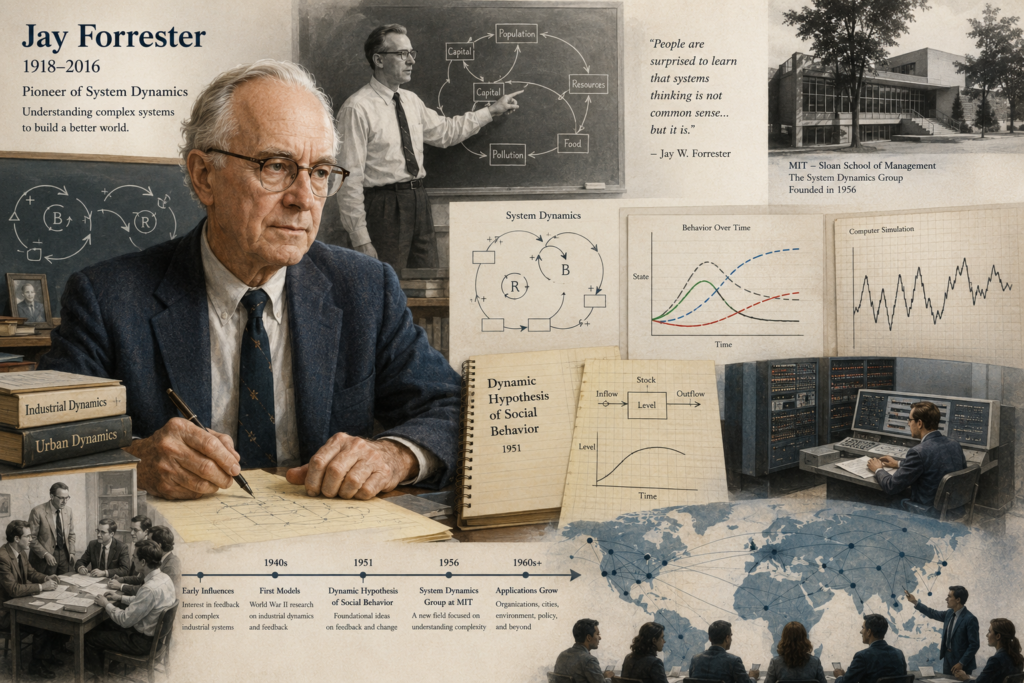
Jay Forrester and the Origins of System Dynamics
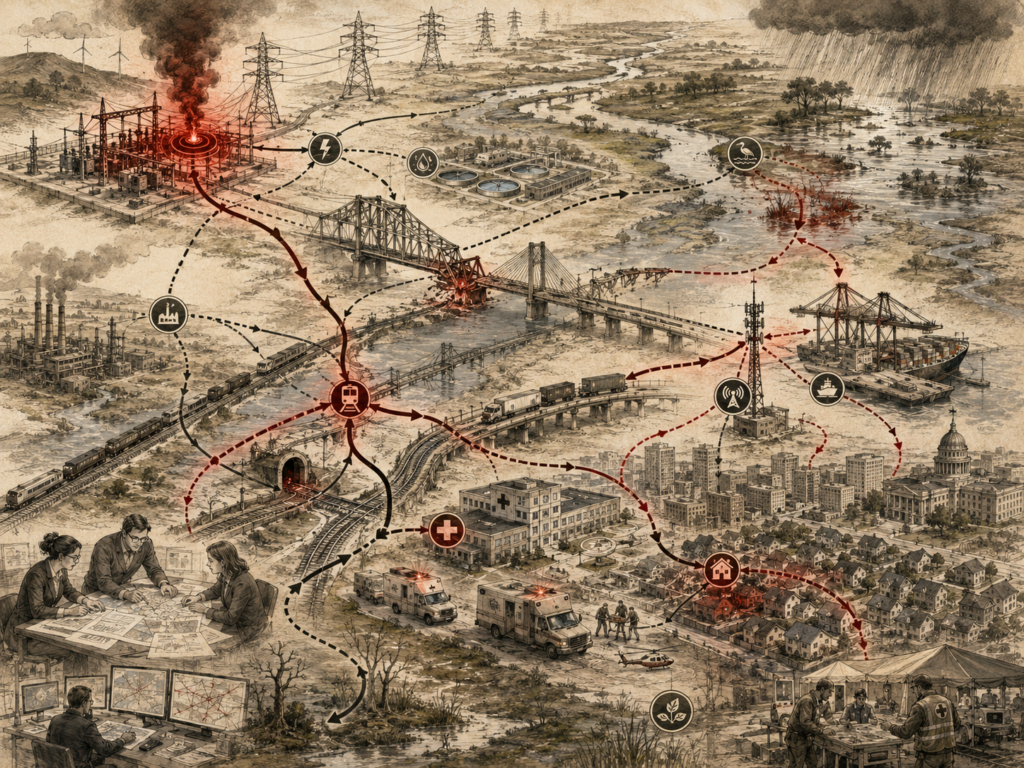
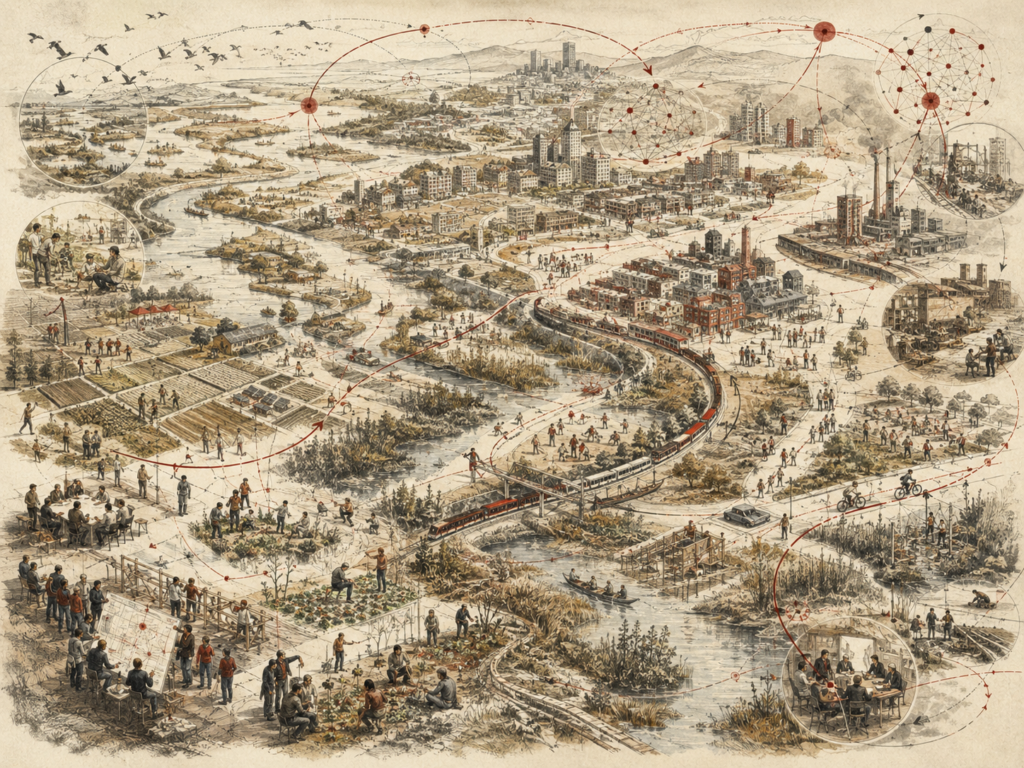
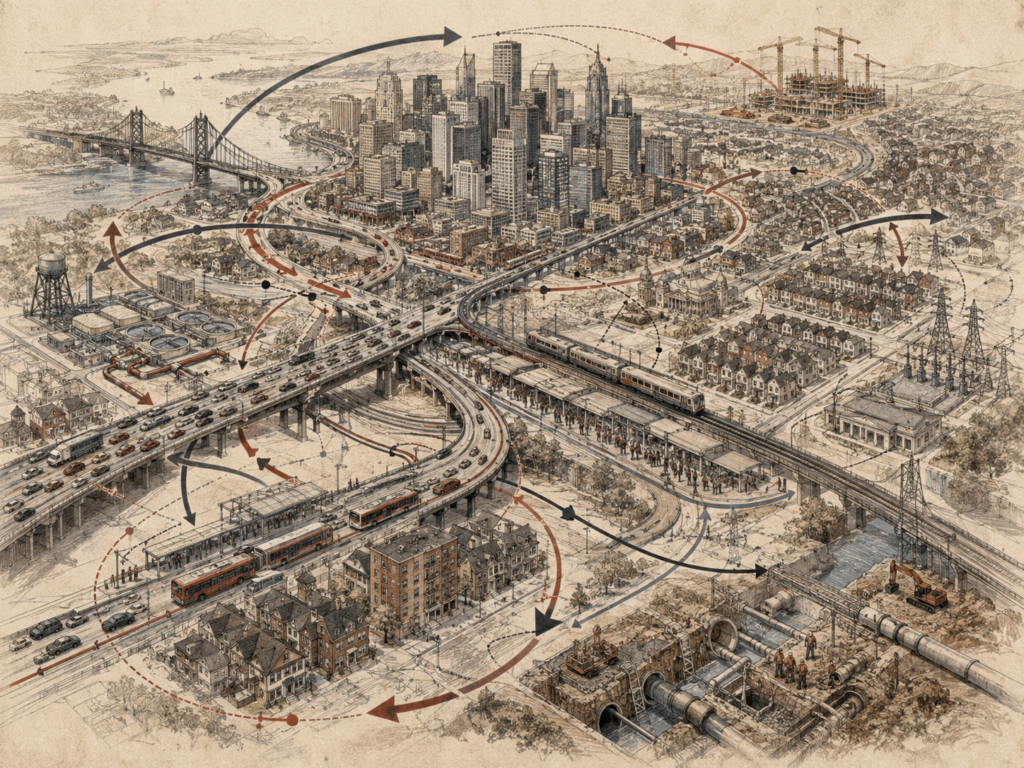
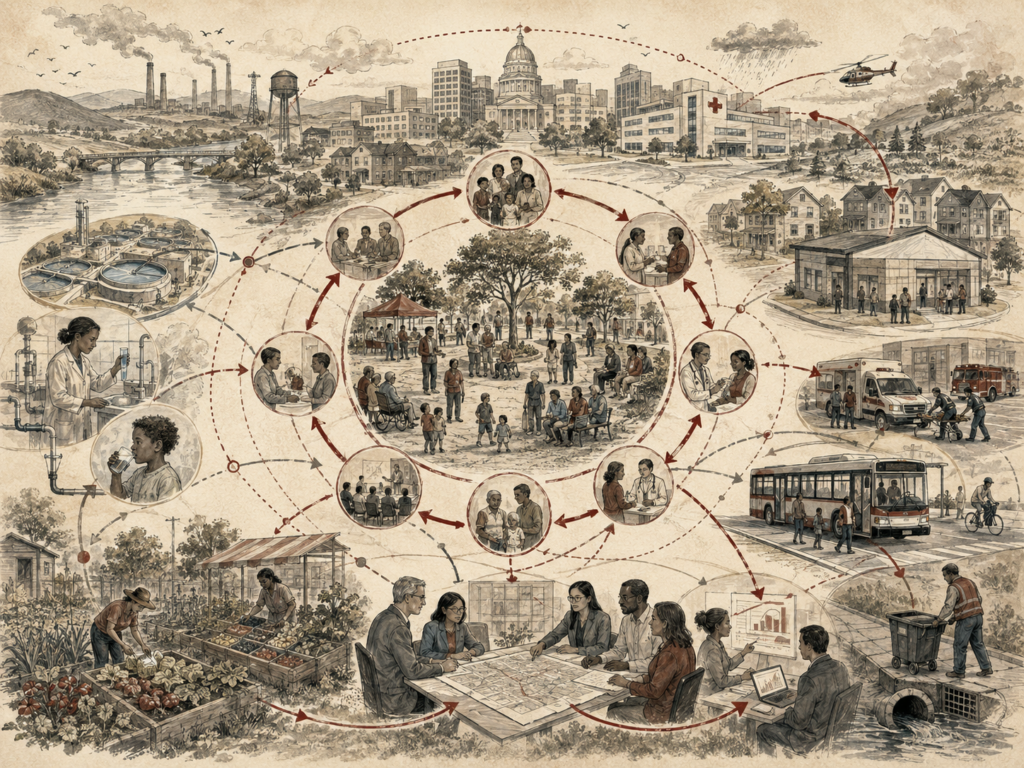
Jay Forrester and the Origins of System Dynamics explains how Forrester’s work in engineering control systems, early computing, industrial management, urban modeling, and global simulation helped create system dynamics as a method for understanding behavior over time. The article traces the movement from servomechanisms, feedback control, Whirlwind computing, and magnetic-core memory into industrial dynamics, urban dynamics, world dynamics, stock-flow modeling, delayed feedback, policy resistance, and simulation-based learning. It shows why persistent social, organizational, ecological, and institutional problems often arise from feedback structure rather than isolated events. Readers learn how stocks, flows, delays, decision rules, compensating feedback, and structural leverage explain supply-chain instability, infrastructure backlog, public trust, climate overshoot, platform behavior, and policy failure. The article also addresses technocratic limits, public accountability, participatory modeling, ethical boundary critique, and the need to use models as learning tools rather than unquestionable authorities.