
Last Updated June 1, 2026
Digital platforms are not neutral containers for content, commerce, work, communication, or social life. They are feedback systems. They shape what people see, what creators produce, what advertisers buy, what institutions monitor, what users imitate, what communities reward, and what behavior becomes profitable. A platform does not merely reflect social behavior. It participates in producing it.
Platforms, Feedback Loops, and Digital Systems examines platforms as complex sociotechnical systems shaped by recommendation algorithms, attention markets, network effects, user behavior, creator incentives, moderation systems, data extraction, advertising models, institutional governance, and public consequences. It asks why platforms tend to amplify certain patterns, why engagement can become a powerful but dangerous metric, why network effects can create dependency and lock-in, why misinformation and harassment can scale, and why responsible platform governance requires systems thinking rather than content-by-content reaction.
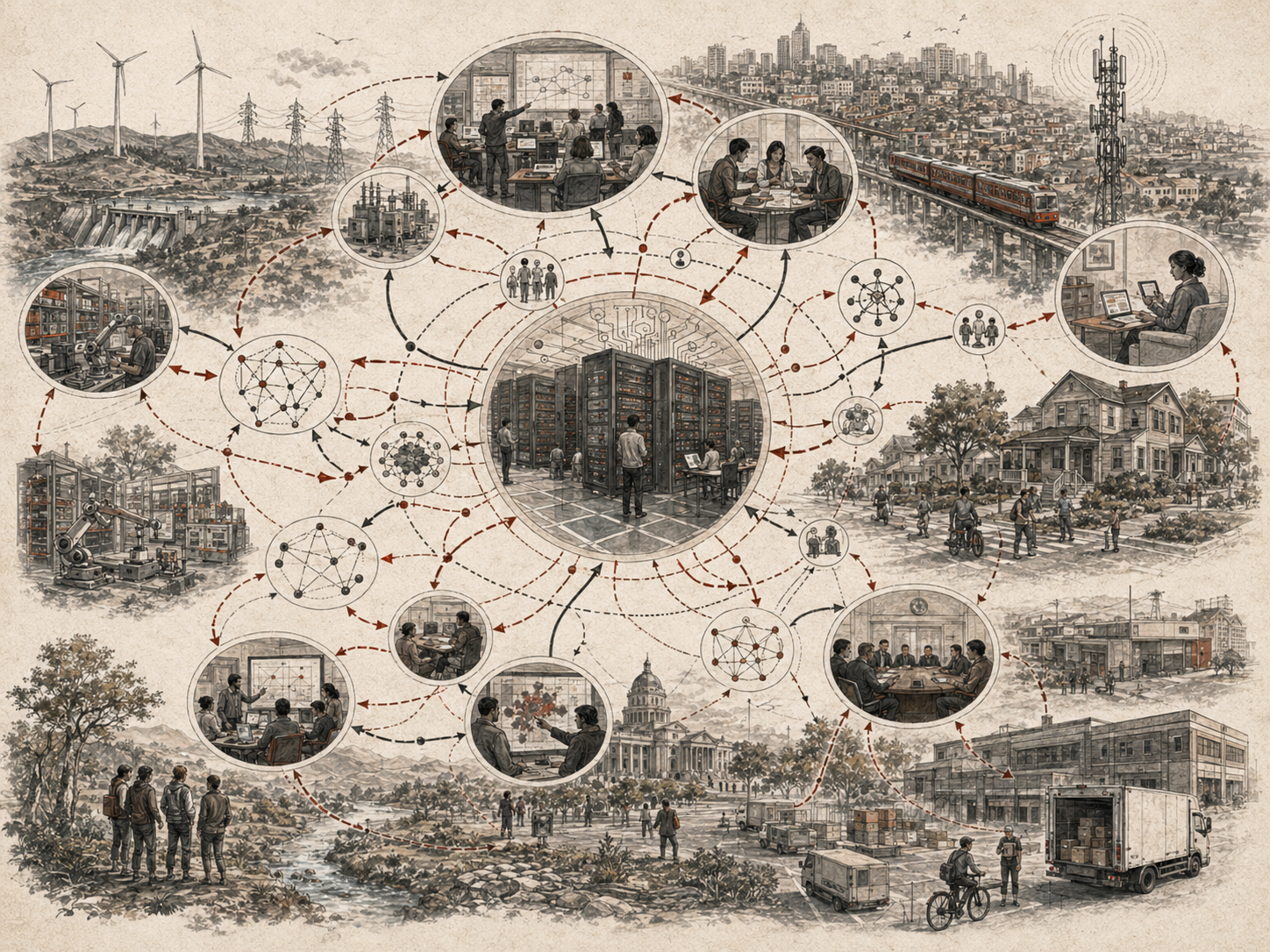
This article explains digital platforms through systems thinking. It examines platform architecture, feedback loops, recommender systems, attention markets, network effects, creator adaptation, algorithmic amplification, content moderation, platform labor, data extraction, infrastructure dependency, misinformation, trust, public governance, and emergent harm. The central argument is simple: platforms should be evaluated not only by growth, engagement, speed, or personalization, but by the patterns they create across society.
Why Platform Systems Thinking Matters
Platform systems thinking matters because digital platforms increasingly shape communication, commerce, work, politics, entertainment, education, identity, public knowledge, and institutional access. Search engines influence what people can find. Social platforms influence what people notice and share. Marketplaces influence who can sell and under what terms. App stores influence which software reaches users. Labor platforms influence work allocation, pricing, surveillance, and bargaining power. Generative AI interfaces influence how people write, code, search, learn, and reason.
A platform is not only a website or app. It is an environment of rules, interfaces, metrics, incentives, algorithms, moderation practices, data flows, business models, and user communities. Users adapt to it. Creators adapt to it. Advertisers adapt to it. Bad actors adapt to it. Regulators respond to it. Institutions depend on it. The platform becomes a system that changes the behavior it measures.
The systems problem is that platforms often optimize local metrics while producing wider consequences. Engagement can rise while public trust declines. Personalization can improve short-term relevance while narrowing exposure. Creator monetization can expand opportunity while creating metric pressure and dependency. Automation can scale moderation while missing context and appeal. Platform growth can create convenience while concentrating power. The platform may appear successful by internal metrics while producing external social costs.
| Platform metric | What it measures | What it may miss |
|---|---|---|
| Engagement | Clicks, likes, shares, comments, views, watch time, dwell time. | Quality, harm, compulsion, misinformation, polarization, wellbeing, public value. |
| Growth | Users, creators, transactions, sessions, revenue, retention. | Dependency, lock-in, market power, labor conditions, governance capacity. |
| Relevance | Predicted user interest or likelihood of interaction. | Long-term learning, diversity, civic exposure, manipulation, filter effects. |
| Moderation volume | Number of removals, flags, appeals, or enforcement actions. | Context, fairness, chilling effects, labor burden, systematic amplification. |
| Conversion | Purchases, signups, subscriptions, ad response, or behavioral completion. | Coercive design, unequal vulnerability, privacy, autonomy, informed consent. |
| Efficiency | Speed, automation, cost reduction, scale. | Contestability, human judgment, worker wellbeing, resilience, accountability. |
Systems thinking changes the platform question. It asks what feedback loops the platform creates, what behavior it rewards, what dependencies it produces, what forms of harm it amplifies, what labor it hides, what choices it removes, and what forms of public accountability are needed. It also asks whether a platform improves human and institutional capacity or merely extracts attention, data, labor, and value from the systems around it.
The strongest critique of platforms is not that they connect people. Connection can be valuable. The deeper issue is that platform connection is structured by incentives, algorithms, ownership, governance, and power. Systems thinking makes that structure visible.
Platforms as Sociotechnical Systems
A platform is a sociotechnical system because it combines technical infrastructure with social behavior, institutional rules, market incentives, and governance choices. The technical layer includes servers, databases, recommendation systems, ranking models, search functions, interfaces, APIs, payment systems, identity systems, security tools, moderation pipelines, and analytics. The social layer includes users, creators, workers, advertisers, institutions, communities, norms, laws, values, and power relations.
Platforms coordinate interactions among multiple groups. A social platform coordinates users, creators, advertisers, moderators, data systems, and public institutions. A marketplace coordinates buyers, sellers, logistics providers, payment systems, rating systems, and dispute-resolution mechanisms. A labor platform coordinates customers, workers, pricing systems, scheduling algorithms, surveillance tools, and regulatory categories. A knowledge platform coordinates authors, readers, taxonomies, search systems, editorial rules, credibility signals, and citation practices.
\text{Platform System} = \text{Infrastructure} + \text{Rules} + \text{Users} + \text{Algorithms} + \text{Incentives} + \text{Governance}
\]
Interpretation: A platform is not just code. It is a system of infrastructure, rules, users, algorithms, incentives, and governance practices.
Sociotechnical thinking matters because platform outcomes cannot be explained by technical design alone. A ranking algorithm behaves differently depending on the business model. A moderation policy behaves differently depending on enforcement capacity and appeal rights. A creator tool behaves differently depending on monetization rules. A search system behaves differently depending on advertising incentives. A marketplace behaves differently depending on pricing, ratings, dispute resolution, and seller dependency.
Platforms also create institutional power. They can determine visibility, access, monetization, distribution, identity, reputation, and exclusion. They may function as private infrastructure for public life. A creator who loses platform access may lose income. A small business that loses ranking may lose customers. A news organization may depend on platform distribution. A community may depend on a private platform for public communication. This public significance means platform governance cannot be treated as an internal technical matter alone.
A systems view asks not only what a platform allows, but what it structurally encourages. What becomes easier? What becomes profitable? What becomes visible? What becomes invisible? What becomes dependent? What becomes hard to leave? What becomes hard to contest?
Feedback Loops in Digital Platforms
Digital platforms are built around feedback loops. Users act. The platform records behavior. Algorithms interpret behavior as signal. Rankings, recommendations, notifications, and interface changes shape what users see next. Users respond to the newly shaped environment. The platform learns again. This loop can improve relevance and usability. It can also produce amplification, compulsion, homogenization, misinformation, polarization, manipulation, or dependency.
A simple platform feedback loop looks like this: a user clicks a video, the platform recommends similar videos, the user watches more, creators notice what performs, creators produce more of that content, the platform has more of it to recommend, and the pattern reinforces itself. The system appears to be responding to user preference, but it is also shaping preference, exposure, production, and attention.
\text{User Behavior}_t \rightarrow \text{Data}_t \rightarrow \text{Ranking}_{t+1} \rightarrow \text{Exposure}_{t+1} \rightarrow \text{User Behavior}_{t+1}
\]
Interpretation: Platform feedback loops arise when user behavior becomes data, data shapes ranking, ranking shapes exposure, and exposure changes future behavior.
Feedback loops can be reinforcing or balancing. Reinforcing loops amplify a pattern: more visibility creates more engagement, which creates more visibility. Balancing loops limit a pattern: friction, moderation, rate limits, quality signals, diversity constraints, human review, or user controls can reduce runaway amplification. The health of a platform depends partly on whether harmful reinforcing loops are balanced by governance systems strong enough to detect and interrupt them.
| Platform feedback loop | Reinforcing mechanism | Possible balancing mechanism |
|---|---|---|
| Engagement amplification | Content that receives interaction gets more distribution. | Quality signals, downranking, diversity exposure, friction for virality. |
| Creator adaptation | Creators imitate formats that perform well. | Creator education, monetization diversity, editorial context, slower ranking changes. |
| Misinformation spread | Emotional or identity-reinforcing claims spread quickly. | Provenance signals, fact-check context, reduced amplification, trusted sources. |
| Harassment cascade | Visibility invites coordinated attention and further targeting. | Abuse detection, rate limits, user controls, rapid response, appeals. |
| Platform dependency | Users, creators, and businesses become more reliant as the network grows. | Interoperability, portability, open standards, fair governance, alternative channels. |
Feedback loops make platforms dynamic. A platform cannot be evaluated only at launch because user behavior, adversarial behavior, creator strategy, advertiser incentives, and social norms adapt over time. Platform governance must therefore be continuous. It must monitor patterns, detect harmful loops, and redesign incentives when the system produces harm.
A platform that cannot see its own feedback loops cannot govern its own consequences.
Attention as a System Resource
Attention is a scarce system resource. Platforms compete to capture, hold, direct, and monetize attention. This competition shapes interface design, notification systems, recommendation algorithms, content formats, creator incentives, advertising models, and user habits. Attention is not merely individual preference. It is structured by system design.
When attention becomes the main economic resource, platforms have incentives to increase time, frequency, reaction, and retention. This can support entertainment, education, discovery, and community. But it can also reward content that is sensational, inflammatory, compulsive, emotionally manipulative, or socially divisive. The problem is not that attention is bad. The problem is that attention alone is an incomplete measure of value.
Attention systems also shape public knowledge. What becomes visible becomes more likely to be discussed. What becomes repeated becomes more familiar. What becomes familiar can seem credible. What becomes algorithmically amplified can appear socially important. Platforms therefore shape not only what individuals consume, but what societies perceive as salient.
\text{Attention Flow} = f(\text{Ranking}, \text{Interface}, \text{Emotion}, \text{Network Position}, \text{Incentives})
\]
Interpretation: Attention flows through platform systems according to ranking, interface design, emotional salience, network position, and incentive structures.
Attention extraction can create hidden costs. Users may experience distraction, compulsion, anxiety, comparison, outrage, or information overload. Creators may experience burnout, instability, and pressure to produce content that performs rather than content that matters. Public discourse may become reactive. Institutions may struggle to communicate slowly, carefully, or with nuance. Children, vulnerable users, and marginalized groups may be exposed to disproportionate harm.
A systems view asks whether platform design treats attention as something to be harvested or something to be stewarded. Attention stewardship would prioritize user agency, public knowledge, wellbeing, context, diversity, and meaningful control. It would recognize that attention is part of democratic, educational, psychological, and cultural infrastructure.
Recommendation Algorithms and Amplification
Recommendation algorithms organize attention. They rank posts, videos, products, accounts, search results, jobs, songs, news, ads, and suggestions. They help users navigate abundance, but they also decide which content receives visibility. In platform systems, visibility is power.
Recommendation systems often learn from behavioral signals: clicks, likes, shares, comments, watch time, dwell time, purchases, follows, skips, pauses, searches, and subscriptions. These signals are useful, but they are not neutral. A click can mean interest, outrage, confusion, attraction, fear, obligation, or accidental interaction. Watch time can mean value, compulsion, boredom, or social pressure. Shares can mean endorsement, criticism, irony, or warning. The platform must interpret ambiguous behavior as measurable signal.
Amplification occurs when a system increases the distribution of content, accounts, products, or ideas. Amplification is not the same as publication. A platform can allow content to exist without actively promoting it. The governance question is often not only whether content is permitted, but whether the platform should amplify it, monetize it, recommend it, notify people about it, or place it in vulnerable contexts.
\text{Amplification Score} = w_1E + w_2R + w_3N + w_4P – w_5H
\]
Interpretation: A simplified amplification score might combine engagement, relevance, network spread, predicted retention, and harm risk. The weights reflect platform values.
Recommendation systems shape creator behavior. If a platform rewards frequency, creators post more often. If it rewards outrage, creators become more provocative. If it rewards short retention loops, content becomes more compressed. If it rewards controversy, conflict becomes strategy. If it rewards imitation, formats converge. Creators may not know the full algorithm, but they adapt to perceived signals.
Responsible recommendation design requires more than removing individual harmful items. It requires examining ranking objectives, feedback loops, exposure diversity, creator incentives, vulnerable users, misinformation pathways, and appeal systems. It also requires transparency about what the system is optimizing and what harms it is designed to reduce.
Network Effects, Lock-In, and Dependency
Network effects occur when a platform becomes more valuable as more people use it. A social network becomes useful because friends, communities, institutions, and audiences are there. A marketplace becomes valuable because buyers and sellers are there. A developer platform becomes valuable because tools, libraries, users, and integrations are there. A payment network becomes valuable because merchants and customers accept it. Network effects can create convenience, interoperability, and opportunity. They can also create lock-in.
Lock-in occurs when leaving a platform becomes costly. Users may lose contacts, identity, history, reputation, files, purchases, audiences, income, workflows, or social belonging. Creators may lose distribution and monetization. Businesses may lose customers. Public agencies may lose communication channels. Workers may lose access to gigs. The stronger the dependency, the more platform governance matters.
\text{Platform Dependency} = f(\text{Network Effects}, \text{Switching Costs}, \text{Data Portability}, \text{Interoperability}, \text{Market Power})
\]
Interpretation: Platform dependency grows when network effects and switching costs are high, while data portability and interoperability are weak.
Network effects also affect competition and governance. A dominant platform may set rules for entire markets or communities. It can change fees, ranking, visibility, moderation rules, API access, data policies, or monetization terms. Users may dislike changes but lack viable alternatives. This makes platform governance partly a question of public power, even when platforms are privately owned.
Dependency is not always visible until rules change. A creator may seem independent until a ranking change reduces reach. A business may seem successful until fees rise. A public institution may seem connected until platform policy changes. A worker may seem flexible until the algorithm changes pay or access. Systems thinking asks who depends on the platform, what choices they actually have, and what rights or protections are needed when dependence becomes structural.
Interoperability, portability, open standards, fair competition, transparent rules, and meaningful appeal can reduce harmful lock-in. They do not eliminate platform power, but they can make dependency less absolute.
Creator Adaptation and Metric Pressure
Creators adapt to platform metrics. They watch views, likes, subscribers, impressions, comments, shares, retention graphs, monetization rates, search terms, and recommendation signals. These metrics can help creators learn. They can also pressure creators to produce for the algorithm rather than for truth, craft, depth, community, public value, or personal sustainability.
Metric pressure changes content. Headlines become more provocative. Thumbnails become more dramatic. Posts become more frequent. Topics shift toward what performs. Nuance may decline when short, reactive formats are rewarded. Creators may avoid important but lower-performing subjects. They may imitate successful styles. They may burn out trying to maintain visibility. Platform metrics become a behavioral environment.
Creator adaptation can create system-wide convergence. If many creators chase the same signals, content becomes homogenized. The platform may appear to reveal what people want, but it is partly producing a field of choices shaped by its own reward system. Users then choose from content already filtered by creator adaptation.
\text{Creator Strategy}_{t+1} = f(\text{Metrics}_t, \text{Revenue}_t, \text{Visibility}_t, \text{Platform Rules}_t)
\]
Interpretation: Creator strategy adapts over time to platform metrics, revenue, visibility, and rules.
Metric pressure is not limited to entertainment. Academics, journalists, educators, activists, nonprofits, businesses, and public institutions all adapt to digital visibility systems. Serious work may be compressed into formats that travel well. Public communication may be shaped by outrage cycles. Educational content may compete with entertainment systems. Political communication may adapt to platform dynamics rather than civic deliberation.
Systems thinking asks whether platform incentives support a healthy creator ecosystem. Can creators produce slow, careful, public-interest work? Can small creators survive rule changes? Are revenue systems transparent? Are moderation decisions contestable? Are high-quality communities protected from harassment? Does the platform reward durable value or short-term reaction?
Creator ecosystems are part of platform infrastructure. If the incentive system degrades creator wellbeing and content quality, the platform is consuming its own foundations.
Misinformation, Harassment, and Harmful Cascades
Harmful cascades occur when platform dynamics amplify damage faster than governance systems can respond. Misinformation can spread through emotional salience, identity reinforcement, influencer networks, algorithmic recommendation, and repetition. Harassment can scale through visibility, coordination, dogpiling, quote sharing, targeted search, and weak enforcement. Financial scams can spread through trust signals, social proof, and urgency. Public-health rumors can spread through fear and distrust. Platform systems can accelerate all of these dynamics.
Misinformation is not only a content problem. It is a network and incentive problem. False or misleading content may travel because it is emotionally gripping, fits group identity, appears from trusted nodes, is boosted by recommendation systems, or benefits from the speed of sharing. Correction often arrives later, travels through different networks, and lacks the same emotional force. The systems question is not only whether a claim is true, but what distribution machinery carried it.
Harassment is also systemic. A platform may treat abuse as individual bad behavior, but harm often emerges from coordinated attention, weak friction, quote amplification, search visibility, lack of rapid response, and insufficient user control. The target experiences the cascade as a system, not as isolated messages.
\text{Harmful Cascade Risk} = f(\text{Amplification}, \text{Network Reach}, \text{Emotional Salience}, \text{Friction}^{-1}, \text{Governance Delay})
\]
Interpretation: Harmful cascades grow when amplification, reach, emotional salience, low friction, and slow governance response combine.
Platform responses should distinguish between removal, reduction, context, friction, user control, enforcement, appeal, transparency, and structural redesign. Not every problem is solved by takedown. Some harms require reducing amplification, improving provenance, slowing virality, protecting targets, limiting repeated abuse, strengthening community moderation, or redesigning incentives that reward harmful behavior.
Systems thinking also asks who is most exposed. Journalists, women, racialized communities, religious minorities, LGBTQ+ people, disabled people, public-health workers, election workers, activists, and vulnerable users may experience disproportionate harm. Platform safety cannot be evaluated by average user experience alone.
A platform that amplifies harm and then treats harm as an external moderation burden is failing to account for its own feedback system.
Moderation, Governance, and Contestability
Content moderation is governance. It determines what is allowed, removed, downranked, demonetized, labeled, appealed, escalated, or ignored. Moderation is not only a technical process. It involves language, culture, law, politics, safety, labor, context, rights, and public trust. Automated systems can help at scale, but they often struggle with irony, local context, reclaimed language, satire, coordinated harassment, political conflict, and unequal reporting.
Platform governance includes rules, enforcement, transparency, appeal, audits, policy development, human review, automation, user controls, community standards, safety design, data access, and public accountability. Governance becomes especially important when platforms function as infrastructure for communication, work, education, commerce, or public life.
Contestability matters because platform decisions can affect speech, income, reputation, access, safety, and community. Users and creators need meaningful ways to understand and challenge decisions. A moderation system without appeal can silence legitimate expression. A ranking system without transparency can destroy livelihoods. A demonetization system without explanation can create arbitrary dependency. A platform ban without recourse can erase years of labor and social connection.
\text{Legitimate Platform Governance} = \text{Rules} + \text{Transparency} + \text{Enforcement} + \text{Appeal} + \text{Accountability}
\]
Interpretation: Legitimate platform governance requires clear rules, transparent enforcement, meaningful appeal, and accountability for system-level consequences.
| Governance function | Platform role | Failure mode if weak |
|---|---|---|
| Clear rules | Defines what is allowed, restricted, amplified, or removed. | Users cannot understand boundaries or rights. |
| Enforcement consistency | Applies rules fairly across contexts and groups. | Powerful actors evade consequences; marginalized groups are over-enforced. |
| Appeal and remedy | Allows correction of error and restoration after harm. | Automated or opaque error becomes final. |
| Transparency reporting | Shows patterns of enforcement, amplification, and harm. | System effects remain hidden. |
| Independent audit | Tests claims about safety, fairness, and systemic impact. | Platforms mark their own homework. |
| User controls | Gives people agency over exposure, privacy, and interaction. | Users are trapped inside defaults designed for platform goals. |
Moderation systems should not be evaluated only by volume or speed. They should be evaluated by legitimacy, fairness, labor conditions, user safety, appeal quality, consistency, cultural competence, and whether harmful amplification is reduced. A platform that removes many items after harm has spread may still be structurally unsafe.
Governance should address the system that produces harmful patterns, not only the visible content that surfaces from those patterns.
Data Extraction, Surveillance, and Platform Power
Platforms collect data because data powers personalization, advertising, ranking, fraud detection, recommendation, analytics, product design, pricing, moderation, and AI training. Data collection can support useful services, but it also creates surveillance power. Users often do not understand what is collected, inferred, shared, sold, retained, modeled, or used to shape future behavior.
Data extraction changes the relationship between users and platforms. A user may think they are consuming content, messaging friends, searching for information, or purchasing goods. The platform may also be building behavioral profiles, predicting preferences, testing interface changes, optimizing engagement, targeting ads, training models, and selling access to attention. The user becomes both participant and data source.
Surveillance can be direct or inferential. Direct data includes clicks, location, messages, purchases, searches, uploads, and device information. Inferential data includes predicted interests, political tendencies, health concerns, emotional states, income categories, social relationships, risk scores, and susceptibility to advertising. Inference can reveal sensitive patterns even when users did not explicitly provide them.
\text{Platform Power} = f(\text{Data Access}, \text{Behavioral Prediction}, \text{Market Position}, \text{Governance Control})
\]
Interpretation: Platform power grows through data access, predictive capacity, market position, and control over governance rules.
Data extraction also shapes competition. Platforms with large data advantages can improve targeting, prediction, personalization, and monetization, reinforcing market position. This can deepen dependency and reduce meaningful user choice. Data portability and interoperability can reduce lock-in, but they must be designed carefully to protect privacy and prevent abuse.
Systems thinking asks what data is necessary, what data is excessive, what is inferred, who benefits, who is exposed, what rights users have, how long data persists, how it trains future systems, and whether consent is meaningful under dependency. Privacy is not only an individual preference. It is a structural condition for autonomy, dignity, democracy, and freedom from manipulation.
Platform Labor and Invisible Work
Platforms depend on labor that is often invisible. Content moderation workers review disturbing material. Data labelers annotate training datasets. Creators produce the content that keeps users engaged. Drivers, delivery workers, freelancers, sellers, warehouse workers, customer-service agents, trust-and-safety workers, engineers, infrastructure technicians, and users all perform labor that keeps platforms functioning.
Platform labor can be flexible and enabling, but it can also be precarious, surveilled, underpaid, or algorithmically managed. Workers may depend on opaque rankings, ratings, access rules, task allocation, pricing, and deactivation decisions. They may be classified in ways that reduce benefits or bargaining power. They may be subject to constant performance measurement. The platform may describe itself as an intermediary while exercising significant control over labor conditions.
Creators also perform platform labor. Their posts, videos, reviews, tutorials, comments, streams, and communities generate attention and data. Many creators are unpaid or unstable despite producing value for the platform. Those who monetize often depend on changing rules, demonetization decisions, ranking shifts, sponsorship markets, and audience volatility. Creator economies can offer opportunity while producing insecurity.
Users perform unpaid labor too. They tag, rate, report, review, correct, share, train recommendation systems, generate data, and teach platforms what to show next. Participation becomes input for the platform’s business model. The boundary between user activity and labor becomes blurred.
Systems thinking asks whose labor is visible, whose labor is hidden, who captures value, who bears risk, and who has voice in governance. A platform cannot be responsibly evaluated without examining the people who maintain, moderate, create, deliver, label, repair, and endure the system.
Resilience, Interoperability, and Public Value
Resilient digital systems are not merely secure or scalable. They preserve human agency, public accountability, continuity, contestability, and alternatives. A platform ecosystem becomes fragile when too much communication, commerce, work, identity, data, or institutional access depends on a few private systems with opaque rules. When a dominant platform changes policy, suffers an outage, removes access, or alters ranking, many people and institutions can be affected at once.
Interoperability can reduce dependency by allowing systems to communicate across platforms. Data portability can allow users to move information, contacts, or creative work. Open standards can reduce lock-in. Public-interest infrastructure can provide alternatives for essential communication, knowledge, identity, and services. These approaches do not solve every platform problem, but they reduce the power of exit barriers.
Public value should be part of platform evaluation. A platform can create public value by supporting learning, community, civic information, accessibility, creative expression, emergency communication, mutual aid, small-business access, research, cultural memory, and public deliberation. It can destroy public value by amplifying harm, degrading trust, exploiting labor, manipulating users, undermining journalism, increasing surveillance, or concentrating power.
\text{Platform Public Value} = \text{Access} + \text{Trust} + \text{Safety} + \text{Accountability} + \text{Knowledge} – \text{Harm}
\]
Interpretation: Platform public value depends on access, trust, safety, accountability, knowledge quality, and reduced harm.
Resilient platform governance should include transparency, independent research access, appeal rights, safety-by-design, privacy protection, interoperability, incident reporting, labor standards, child protection, accessibility, and mechanisms for public-interest review. These are not obstacles to technology. They are infrastructure for trustworthy digital systems.
A platform that becomes essential to public life should be judged partly by public standards.
Ethics: Attention, Dignity, Dependency, and Public Consequence
Platform ethics begins with attention, dignity, dependency, and public consequence. Attention matters because platforms shape what people see, feel, believe, desire, fear, buy, and share. Dignity matters because users should not be treated only as data sources, targets, metrics, labor inputs, or behavioral predictions. Dependency matters because users, creators, workers, businesses, and institutions may rely on platforms they cannot meaningfully govern. Public consequence matters because platform effects spill beyond individual choice into culture, politics, education, health, labor, and trust.
Ethical platform systems thinking asks whether a platform respects human agency. Are users given meaningful controls? Are defaults designed for user wellbeing or maximum extraction? Is consent meaningful, or is participation effectively required? Are vulnerable users protected? Can people understand why they see what they see? Can creators challenge decisions that affect income? Can workers contest algorithmic management? Can researchers examine public harms?
Platform ethics also asks who benefits from the system’s design. A platform may optimize profit while externalizing harm to moderators, creators, children, users, communities, public-health systems, journalists, election workers, or democratic institutions. Harm can appear as anxiety, addiction, harassment, misinformation, labor exploitation, privacy loss, discrimination, radicalization, public distrust, or institutional overload.
Ethical platform questions include:
- What behavior does the platform reward?
- What forms of attention does it capture, redirect, or monetize?
- Who has visibility, and who is made invisible?
- Who depends on the platform for income, communication, identity, or public access?
- Who can appeal moderation, ranking, monetization, or account decisions?
- What harms are amplified by recommendation systems?
- What labor is hidden or underprotected?
- What data is extracted, inferred, retained, and reused?
- What public systems absorb platform-generated harm?
- What governance mechanisms can change the system when harm becomes visible?
Ethical platform governance should not treat harm as occasional misuse by bad actors alone. Bad actors matter, but platforms also create conditions in which some behavior is rewarded, amplified, and monetized. Responsibility lies partly in the architecture of incentives.
A platform is ethical not because it publishes a safety policy, but because its operating system of rules, incentives, data, labor, and governance protects dignity and public value in practice.
Examples Across Platform Systems
Platform feedback loops appear across social media, search, marketplaces, labor platforms, streaming systems, app ecosystems, education technology, and generative AI interfaces. The examples below show how platform design shapes system behavior.
Social media feeds
Feed-ranking systems shape what users see, which posts gain attention, how creators adapt, and whether engagement loops amplify information quality or reactive conflict.
Video recommendations
Watch-time optimization can help users discover relevant content, but it can also reward sensational formats, repetition, parasocial intensity, or compulsive viewing loops.
Search platforms
Search rankings influence public knowledge, business visibility, reputation, and information access. Ranking changes can redistribute economic and cultural power.
Online marketplaces
Marketplace platforms coordinate buyers and sellers, but ranking, fees, reviews, logistics, and dispute systems can create dependency and unequal bargaining power.
Labor platforms
Gig-work platforms allocate tasks, set prices, monitor performance, and shape worker income through algorithmic management and opaque rule systems.
App stores
App ecosystems create distribution infrastructure, but platform owners can control fees, ranking, review, payment rules, and access to users.
Education platforms
Learning platforms can expand access, but they also shape assessment, attention, data collection, teacher labor, student privacy, and institutional dependency.
Generative AI interfaces
AI platforms mediate writing, coding, search, image generation, research, and decision support, creating new feedback loops between user behavior, model outputs, data, and institutional practice.
Across these examples, the central question is not whether the platform is useful. Many platforms are useful. The deeper question is what feedback system the platform creates and whether that system serves human and public flourishing.
Mathematics, Computation, and Modeling
Platform systems can be modeled through feedback loops, network analysis, recommender-system diagnostics, engagement dynamics, creator adaptation models, moderation queues, virality models, trust trajectories, attention allocation, fairness metrics, and governance indicators. Models cannot capture all social meaning, but they can help make platform structure visible.
A simple engagement feedback loop can be represented as:
E_{t+1} = E_t + \alpha A_t – \beta F_t
\]
Interpretation: Engagement \(E\) may increase through algorithmic amplification \(A_t\) and decline through friction, fatigue, or governance constraints \(F_t\).
A recommendation score can be represented conceptually as:
R_{u,c} = w_1P(\text{click}) + w_2P(\text{watch}) + w_3P(\text{share}) – w_4H_c
\]
Interpretation: A platform may score content \(c\) for user \(u\) using predicted engagement signals and a harm-risk penalty \(H_c\). The weights reflect platform priorities.
A network effect can be represented as:
V(n) = k n^\gamma
\]
Interpretation: Platform value \(V\) can grow with the number of users \(n\), depending on the strength of network effects \(\gamma\).
A platform dependency index can be represented as:
D_p = w_nN + w_sS + w_mM – w_iI – w_pP
\]
Interpretation: Platform dependency can grow through network effects \(N\), switching costs \(S\), and monetization reliance \(M\), while interoperability \(I\) and portability \(P\) reduce dependency.
A moderation stress index can be represented as:
MS_t = \frac{\text{Flagged Content}_t + \text{Appeals}_t + \text{Context Load}_t}{\text{Review Capacity}_t}
\]
Interpretation: Moderation stress rises when flagged content, appeals, and context complexity exceed review capacity.
| Modeling task | Platform systems question | Example output |
|---|---|---|
| Feedback simulation | How do ranking, user behavior, and creator adaptation reinforce one another? | Engagement, trust, amplification, and harm trajectories. |
| Network analysis | Which nodes, accounts, communities, or bridges shape spread? | Centrality, bridge nodes, cascade pathways, community structure. |
| Moderation queue modeling | When does governance capacity fall behind platform activity? | Backlog, response delay, appeal burden, labor stress. |
| Creator adaptation modeling | How do metrics change production behavior? | Format convergence, posting frequency, topic shifts, burnout risk. |
| Dependency analysis | Who relies on the platform, and what alternatives exist? | Switching costs, portability gaps, lock-in risk, market-power indicators. |
| Governance readiness scoring | Can the platform detect, contest, and repair harm? | Transparency, appeal, audit, user-control, safety, and remedy indicators. |
Platform models should not treat users as simple engagement maximizers. People have values, contexts, vulnerabilities, relationships, and rights. A useful platform model should include harm, trust, dependency, labor, contestability, public value, and governance capacity, not only growth and interaction volume.
Python Workflow: Platform Feedback, Amplification, Trust, and Governance Scenarios
The Python workflow for this article models digital platform systems through engagement feedback, amplification, harmful cascade risk, creator adaptation, moderation capacity, user trust, dependency, and governance controls. It uses only the Python standard library so it can run without external dependencies. The workflow compares four scenarios: engagement-maximizing platform, overloaded moderation, balanced governance, and public-value platform design.
# platform_feedback_digital_systems_model.py
# Dependency-light professional workflow for platform systems analysis.
# Purpose: model engagement, amplification, creator adaptation, moderation stress, trust, dependency, and governance.
# Uses only Python standard library.

from dataclasses import dataclass
import csv
import os
from statistics import mean

OUTPUT_TABLES = "outputs/tables"

@dataclass
class PlatformScenario:
    name: str
    periods: int
    initial_engagement: float
    amplification_strength: float
    harm_sensitivity: float
    moderation_capacity: float
    appeal_quality: float
    creator_adaptation_rate: float
    friction_strength: float
    transparency_strength: float
    portability_strength: float
    public_value_weight: float
    dependency_pressure: float

def ensure_outputs() -> None:
    os.makedirs(OUTPUT_TABLES, exist_ok=True)

def clamp(value: float, low: float = 0.0, high: float = 100.0) -> float:
    return max(low, min(high, value))

def run_scenario(scenario: PlatformScenario) -> list[dict]:
    engagement = scenario.initial_engagement
    creator_metric_pressure = 35.0
    harmful_cascade_risk = 22.0
    moderation_backlog = 18.0
    user_trust = 72.0
    platform_dependency = 45.0
    public_value = 50.0
    rows = []

    for period in range(scenario.periods + 1):
        # Engagement grows through amplification and creator adaptation, but friction and fatigue limit growth.
        engagement = clamp(
            engagement
            + scenario.amplification_strength * 4.8
            + creator_metric_pressure * 0.05
            - scenario.friction_strength * 2.6
            - harmful_cascade_risk * 0.025
        )

        creator_metric_pressure = clamp(
            creator_metric_pressure
            + scenario.creator_adaptation_rate * engagement * 0.06
            - scenario.public_value_weight * 1.4
            - scenario.transparency_strength * 0.8
        )

        harmful_cascade_risk = clamp(
            harmful_cascade_risk
            + scenario.amplification_strength * engagement * 0.045
            + creator_metric_pressure * 0.045
            - scenario.harm_sensitivity * 2.8
            - scenario.friction_strength * 2.2
            - scenario.public_value_weight * 1.1
        )

        flagged_content = harmful_cascade_risk * 0.70 + engagement * 0.18
        governance_capacity = scenario.moderation_capacity * 60.0 + scenario.appeal_quality * 20.0
        moderation_backlog = clamp(
            moderation_backlog
            + flagged_content * 0.10
            - governance_capacity * 0.06
        )

        platform_dependency = clamp(
            platform_dependency
            + scenario.dependency_pressure * 3.2
            + engagement * 0.025
            - scenario.portability_strength * 2.6
            - scenario.transparency_strength * 0.7
        )

        governance_readiness = clamp(
            scenario.moderation_capacity * 24.0
            + scenario.appeal_quality * 20.0
            + scenario.transparency_strength * 22.0
            + scenario.friction_strength * 14.0
            + scenario.portability_strength * 10.0
        )

        user_trust = clamp(
            user_trust
            - harmful_cascade_risk * 0.08
            - moderation_backlog * 0.06
            - platform_dependency * 0.025
            + governance_readiness * 0.09
            + scenario.public_value_weight * 1.2
        )

        public_value = clamp(
            35.0
            + user_trust * 0.22
            + governance_readiness * 0.18
            + scenario.public_value_weight * 14.0
            - harmful_cascade_risk * 0.16
            - creator_metric_pressure * 0.08
            - platform_dependency * 0.05
        )

        platform_risk = clamp(
            harmful_cascade_risk * 0.30
            + moderation_backlog * 0.22
            + creator_metric_pressure * 0.14
            + platform_dependency * 0.12
            - governance_readiness * 0.18
            - public_value * 0.08
        )

        rows.append({
            "period": period,
            "scenario": scenario.name,
            "engagement_index": round(engagement, 3),
            "creator_metric_pressure": round(creator_metric_pressure, 3),
            "harmful_cascade_risk": round(harmful_cascade_risk, 3),
            "moderation_backlog": round(moderation_backlog, 3),
            "platform_dependency": round(platform_dependency, 3),
            "governance_readiness": round(governance_readiness, 3),
            "user_trust": round(user_trust, 3),
            "public_value_index": round(public_value, 3),
            "platform_risk_index": round(platform_risk, 3)
        })

    return rows

def write_csv(path: str, rows: list[dict]) -> None:
    if not rows:
        return
    with open(path, "w", newline="", encoding="utf-8") as handle:
        writer = csv.DictWriter(handle, fieldnames=list(rows[0].keys()))
        writer.writeheader()
        writer.writerows(rows)

def summarize(rows: list[dict]) -> list[dict]:
    scenarios = sorted(set(row["scenario"] for row in rows))
    summary = []

    for scenario_name in scenarios:
        subset = [row for row in rows if row["scenario"] == scenario_name]
        final = subset[-1]
        avg_risk = mean(row["platform_risk_index"] for row in subset)
        max_cascade = max(row["harmful_cascade_risk"] for row in subset)
        max_backlog = max(row["moderation_backlog"] for row in subset)
        min_trust = min(row["user_trust"] for row in subset)
        avg_public_value = mean(row["public_value_index"] for row in subset)

        summary.append({
            "scenario": scenario_name,
            "final_platform_risk_index": final["platform_risk_index"],
            "average_platform_risk_index": round(avg_risk, 3),
            "maximum_harmful_cascade_risk": round(max_cascade, 3),
            "maximum_moderation_backlog": round(max_backlog, 3),
            "minimum_user_trust": round(min_trust, 3),
            "average_public_value_index": round(avg_public_value, 3),
            "final_platform_dependency": final["platform_dependency"],
            "diagnostic": (
                "high-risk extractive platform pathway" if avg_risk >= 40 or max_cascade >= 65 else
                "moderate risk requiring governance redesign" if avg_risk >= 26 or max_backlog >= 45 else
                "comparatively accountable platform pathway"
            )
        })

    return summary

def validate(rows: list[dict]) -> list[str]:
    errors = []
    bounded_fields = [
        "engagement_index",
        "creator_metric_pressure",
        "harmful_cascade_risk",
        "moderation_backlog",
        "platform_dependency",
        "governance_readiness",
        "user_trust",
        "public_value_index",
        "platform_risk_index"
    ]

    for row in rows:
        for field in bounded_fields:
            if row[field] < -0.001 or row[field] > 100.001:
                errors.append(f"{field} outside 0-100 range in {row['scenario']} period {row['period']}.")

    return errors

def main() -> None:
    ensure_outputs()

    scenarios = [
        PlatformScenario(
            name="Engagement-maximizing platform",
            periods=36,
            initial_engagement=62.0,
            amplification_strength=0.88,
            harm_sensitivity=0.12,
            moderation_capacity=0.22,
            appeal_quality=0.14,
            creator_adaptation_rate=0.82,
            friction_strength=0.08,
            transparency_strength=0.10,
            portability_strength=0.08,
            public_value_weight=0.10,
            dependency_pressure=0.72
        ),
        PlatformScenario(
            name="Overloaded moderation",
            periods=36,
            initial_engagement=58.0,
            amplification_strength=0.70,
            harm_sensitivity=0.24,
            moderation_capacity=0.18,
            appeal_quality=0.24,
            creator_adaptation_rate=0.62,
            friction_strength=0.18,
            transparency_strength=0.18,
            portability_strength=0.14,
            public_value_weight=0.22,
            dependency_pressure=0.62
        ),
        PlatformScenario(
            name="Balanced governance",
            periods=36,
            initial_engagement=52.0,
            amplification_strength=0.48,
            harm_sensitivity=0.68,
            moderation_capacity=0.66,
            appeal_quality=0.58,
            creator_adaptation_rate=0.40,
            friction_strength=0.54,
            transparency_strength=0.62,
            portability_strength=0.48,
            public_value_weight=0.58,
            dependency_pressure=0.36
        ),
        PlatformScenario(
            name="Public-value platform design",
            periods=36,
            initial_engagement=48.0,
            amplification_strength=0.34,
            harm_sensitivity=0.82,
            moderation_capacity=0.76,
            appeal_quality=0.74,
            creator_adaptation_rate=0.28,
            friction_strength=0.70,
            transparency_strength=0.78,
            portability_strength=0.70,
            public_value_weight=0.82,
            dependency_pressure=0.24
        )
    ]

    all_rows = []
    for scenario in scenarios:
        all_rows.extend(run_scenario(scenario))

    validation_errors = validate(all_rows)
    if validation_errors:
        raise ValueError("Validation failed:\n" + "\n".join(validation_errors))

    summary_rows = summarize(all_rows)

    write_csv(os.path.join(OUTPUT_TABLES, "platform_feedback_timeseries.csv"), all_rows)
    write_csv(os.path.join(OUTPUT_TABLES, "platform_feedback_summary.csv"), summary_rows)

    with open(os.path.join(OUTPUT_TABLES, "validation_report.txt"), "w", encoding="utf-8") as handle:
        handle.write("Validation passed.\n")
        handle.write("Bounded indicators, platform feedback metrics, trust, governance, and risk outputs completed.\n")

    print("\nPlatform feedback scenario summary:")
    for row in summary_rows:
        print(
            f"{row['scenario']}: avg risk={row['average_platform_risk_index']}, "
            f"max cascade={row['maximum_harmful_cascade_risk']}, "
            f"diagnostic={row['diagnostic']}"
        )

if __name__ == "__main__":
    main()
This workflow shows how platform risk can rise when engagement amplification, creator metric pressure, weak moderation capacity, dependency pressure, and low friction reinforce one another. It also shows how transparency, appeal quality, portability, friction, harm sensitivity, and public-value design can reduce harmful cascades and preserve trust. The model is synthetic, but it provides a professional structure for platform systems analysis.
A fuller repository version can add optional pandas and matplotlib workflows for dashboards, Excel workbooks, sensitivity analysis, platform dependency scoring, creator-burnout diagnostics, moderation queue modeling, and public-value scenario comparisons while preserving this standard-library script as the default smoke-tested workflow.
R Workflow: Platform Indicators, Risk Tables, and Feedback Visualization
The R workflow for this article uses base R so it can run without additional package dependencies. It reads the Python-generated platform outputs, creates diagnostic summaries, exports scenario tables, and produces plots for engagement, harmful cascade risk, moderation backlog, platform dependency, governance readiness, user trust, public value, and platform risk.
# platform_feedback_digital_systems_diagnostics.R
# Base R platform systems workflow.
# Purpose: summarize platform feedback, amplification, trust, dependency, governance, and risk scenarios.

tables_dir <- "outputs/tables"
figures_dir <- "outputs/figures"

if (!dir.exists(figures_dir)) {
  dir.create(figures_dir, recursive = TRUE)
}

timeseries_path <- file.path(tables_dir, "platform_feedback_timeseries.csv")
summary_path <- file.path(tables_dir, "platform_feedback_summary.csv")

if (!file.exists(timeseries_path)) {
  stop("Missing platform_feedback_timeseries.csv. Run the Python workflow first.")
}

platform <- read.csv(timeseries_path, stringsAsFactors = FALSE)

last_by_scenario <- do.call(
  rbind,
  lapply(split(platform, platform$scenario), function(df) df[nrow(df), ])
)

avg_risk <- aggregate(platform_risk_index ~ scenario, data = platform, FUN = mean)
max_cascade <- aggregate(harmful_cascade_risk ~ scenario, data = platform, FUN = max)
max_backlog <- aggregate(moderation_backlog ~ scenario, data = platform, FUN = max)
min_trust <- aggregate(user_trust ~ scenario, data = platform, FUN = min)
avg_public_value <- aggregate(public_value_index ~ scenario, data = platform, FUN = mean)

names(avg_risk)[2] <- "average_platform_risk_index"
names(max_cascade)[2] <- "maximum_harmful_cascade_risk"
names(max_backlog)[2] <- "maximum_moderation_backlog"
names(min_trust)[2] <- "minimum_user_trust"
names(avg_public_value)[2] <- "average_public_value_index"

diagnostics <- Reduce(
  function(x, y) merge(x, y, by = "scenario"),
  list(avg_risk, max_cascade, max_backlog, min_trust, avg_public_value)
)

diagnostics$diagnostic <- ifelse(
  diagnostics$average_platform_risk_index >= 40 |
    diagnostics$maximum_harmful_cascade_risk >= 65,
  "high-risk extractive platform pathway",
  ifelse(
    diagnostics$average_platform_risk_index >= 26 |
      diagnostics$maximum_moderation_backlog >= 45,
    "moderate risk requiring governance redesign",
    "comparatively accountable platform pathway"
  )
)

write.csv(diagnostics, summary_path, row.names = FALSE)
print(diagnostics)

plot_metric <- function(metric, y_label, title, output_name) {
  png(file.path(figures_dir, output_name), width = 1200, height = 700)
  scenarios <- unique(platform$scenario)
  plot(
    NA,
    xlim = range(platform$period),
    ylim = range(platform[[metric]], na.rm = TRUE),
    xlab = "Period",
    ylab = y_label,
    main = title
  )
  for (scenario_name in scenarios) {
    subset_data <- platform[platform$scenario == scenario_name, ]
    lines(subset_data$period, subset_data[[metric]], lwd = 2)
  }
  legend("topleft", legend = scenarios, lwd = 2, cex = 0.8, bty = "n")
  grid()
  dev.off()
}

plot_metric(
  metric = "engagement_index",
  y_label = "Engagement index",
  title = "Engagement by Platform Scenario",
  output_name = "platform_engagement_trajectories.png"
)

plot_metric(
  metric = "harmful_cascade_risk",
  y_label = "Harmful cascade risk",
  title = "Harmful Cascade Risk by Platform Scenario",
  output_name = "platform_harmful_cascade_risk_trajectories.png"
)

plot_metric(
  metric = "moderation_backlog",
  y_label = "Moderation backlog",
  title = "Moderation Backlog by Platform Scenario",
  output_name = "platform_moderation_backlog_trajectories.png"
)

plot_metric(
  metric = "platform_dependency",
  y_label = "Platform dependency",
  title = "Platform Dependency by Scenario",
  output_name = "platform_dependency_trajectories.png"
)

plot_metric(
  metric = "governance_readiness",
  y_label = "Governance readiness",
  title = "Governance Readiness by Platform Scenario",
  output_name = "platform_governance_readiness_trajectories.png"
)

plot_metric(
  metric = "user_trust",
  y_label = "User trust",
  title = "User Trust by Platform Scenario",
  output_name = "platform_user_trust_trajectories.png"
)

plot_metric(
  metric = "public_value_index",
  y_label = "Public value index",
  title = "Public Value by Platform Scenario",
  output_name = "platform_public_value_trajectories.png"
)

plot_metric(
  metric = "platform_risk_index",
  y_label = "Platform risk index",
  title = "Platform Risk by Scenario",
  output_name = "platform_risk_trajectories.png"
)

final_table <- last_by_scenario[, c(
  "scenario",
  "engagement_index",
  "creator_metric_pressure",
  "harmful_cascade_risk",
  "moderation_backlog",
  "platform_dependency",
  "governance_readiness",
  "user_trust",
  "public_value_index",
  "platform_risk_index"
)]

write.csv(
  final_table,
  file.path(tables_dir, "platform_final_diagnostics.csv"),
  row.names = FALSE
)

print(final_table)
This R workflow helps interpret platform behavior as trajectories rather than snapshots. It shows whether engagement grows alongside risk, whether moderation capacity keeps pace with harmful cascades, whether dependency rises, and whether governance strengthens trust and public value. The default version remains portable and dependency-light.
A fuller version can add package-based dashboards, scenario comparison charts, creator pressure diagnostics, moderation queue analysis, dependency heatmaps, and public-value scorecards through an optional advanced analysis environment. The base R workflow remains the stable reproducible layer.
GitHub Repository
The companion repository for this article should help readers model digital platforms through feedback loops, engagement amplification, creator adaptation, moderation capacity, harmful cascade risk, platform dependency, public value, user trust, and governance readiness using synthetic datasets and reproducible workflows.
Complete Code RepositoryCompanion repository for the article, including platform feedback simulations, amplification and cascade-risk models, creator adaptation diagnostics, moderation-capacity scenarios, dependency and lock-in indicators, Python and R workflow scripts, synthetic datasets, documentation assets, and multi-language scaffolds for systems analysis.
articles/platforms-feedback-loops-and-digital-systems/
├── python/
│   ├── platform_feedback_digital_systems_model.py
│   ├── engagement_amplification_scenarios.py
│   ├── moderation_capacity_model.py
│   ├── creator_adaptation_diagnostics.py
│   ├── platform_dependency_index.py
│   ├── public_value_governance_score.py
│   └── export_platform_outputs.py
├── r/
│   ├── platform_feedback_digital_systems_diagnostics.R
│   ├── platform_feedback_visualization.R
│   ├── moderation_backlog_tables.R
│   ├── dependency_lock_in_plots.R
│   ├── public_value_summary.R
│   └── export_platform_tables.R
├── julia/
│   ├── nonlinear_platform_feedback_dynamics.jl
│   ├── attention_cascade_sensitivity.jl
│   └── governance_threshold_model.jl
├── sql/
│   ├── schema_platform_events.sql
│   ├── schema_user_behavior.sql
│   ├── schema_recommendation_exposures.sql
│   ├── schema_moderation_actions.sql
│   ├── schema_creator_metrics.sql
│   ├── schema_dependency_indicators.sql
│   ├── schema_governance_controls.sql
│   ├── schema_model_runs.sql
│   └── schema_outputs.sql
├── rust/
│   └── platform_scenario_validator.rs
├── go/
│   └── platform_feedback_runner.go
├── cpp/
│   ├── efficient_attention_cascade_scan.cpp
│   └── moderation_queue_solver.cpp
├── fortran/
│   └── recurrence_platform_feedback_model.f90
├── c/
│   └── low_level_platform_feedback_kernel.c
├── docs/
│   ├── modeling_principles.md
│   ├── article_notes.md
│   ├── platform_systems_framework.md
│   ├── feedback_and_amplification_guide.md
│   ├── moderation_governance_notes.md
│   ├── python_workflow.md
│   ├── r_workflow.md
│   ├── diagnostic_questions.md
│   ├── ethics_and_platform_responsibility.md
│   ├── assumptions_and_limitations.md
│   └── responsible_use.md
├── data/
│   ├── synthetic_platform_events.csv
│   ├── synthetic_user_behavior.csv
│   ├── synthetic_recommendation_exposures.csv
│   ├── synthetic_moderation_actions.csv
│   ├── synthetic_creator_metrics.csv
│   ├── synthetic_dependency_indicators.csv
│   ├── synthetic_governance_controls.csv
│   ├── synthetic_model_runs.csv
│   └── synthetic_outputs.csv
├── outputs/
│   ├── README.md
│   ├── figures/
│   └── tables/
└── notebooks/
    ├── python_platform_feedback_walkthrough.ipynb
    └── r_platform_diagnostics_visualization_placeholder.ipynb
This repository structure supports the article’s central argument: platforms should be analyzed dynamically, with attention to feedback loops, ranking incentives, user behavior, creator adaptation, moderation capacity, dependency, data extraction, labor, public value, and governance. The python/ folder supports dependency-light simulation and diagnostics. The r/ folder supports visualization and interpretive summaries. The julia folder supports nonlinear platform feedback dynamics. The sql folder defines schemas for platform systems data. The lower-level language folders provide scaffolds for attention-cascade scanning, moderation-queue solving, recurrence modeling, and low-level feedback simulation.
A Practical Method for Platform Systems Diagnosis
Platform systems diagnosis requires moving from individual content, users, or incidents to the feedback structure that produces recurring patterns. The method below can support platform governance, digital policy, trust-and-safety analysis, creator ecosystem review, public-interest technology design, and institutional risk assessment.
1. Define the platform boundary
Clarify whether the analysis includes users, creators, advertisers, workers, moderators, algorithms, data systems, vendors, institutions, or public consequences.
2. Identify the platform’s core exchange
Ask what the platform coordinates: attention, content, labor, goods, services, identity, data, payments, knowledge, social connection, or institutional access.
3. Map ranking and recommendation logic
Identify what signals shape visibility, what behaviors are rewarded, what content is amplified, and what forms of harm may be underweighted.
4. Trace feedback loops
Map how user behavior becomes data, how data shapes ranking, how ranking shapes exposure, and how exposure changes future behavior.
5. Analyze creator and user adaptation
Ask how creators, users, advertisers, bad actors, institutions, and workers adapt to platform metrics and rules.
6. Evaluate dependency and lock-in
Assess switching costs, network effects, data portability, audience dependency, monetization dependency, and interoperability gaps.
7. Assess moderation and governance capacity
Review enforcement, appeal, transparency, human review, automation, moderation labor, audit, and incident response.
8. Measure distributional harm
Ask which users, workers, creators, communities, children, vulnerable groups, or public institutions bear disproportionate risk.
9. Compare governance scenarios
Model engagement maximization, friction, public-value ranking, stronger appeals, transparency, portability, moderation capacity, and harm reduction.
10. Redesign incentives and accountability
Change the feedback structure through ranking rules, user controls, interoperability, transparency, labor protections, independent audit, and public accountability.
Common Pitfalls
Platform analysis can fail when digital systems are treated as neutral tools rather than adaptive feedback environments. Several patterns are especially common.
- Engagement treated as value: clicks, views, shares, and watch time do not necessarily measure learning, trust, wellbeing, quality, or public benefit.
- Content moderation treated as the whole solution: harmful patterns often require changes to ranking, incentives, friction, user controls, and platform governance.
- Ignoring creator adaptation: creators change behavior in response to platform metrics, monetization, visibility, and perceived algorithmic signals.
- Confusing user choice with platform neutrality: user choices occur inside environments structured by defaults, recommendations, notifications, and incentives.
- Missing dependency and lock-in: users, creators, workers, businesses, and institutions may rely on platforms they cannot meaningfully govern or leave.
- Separating data from power: data extraction supports prediction, targeting, ranking, monetization, and platform control.
- Underestimating moderation labor: platform safety depends on human workers who often face invisible, stressful, and poorly protected work.
- Optimizing the platform while externalizing harm: platform metrics may improve while public trust, creator wellbeing, user autonomy, or democratic life declines.
The deeper mistake is treating platforms as passive intermediaries rather than active systems that structure attention, behavior, dependency, labor, governance, and public consequence.
Why Digital Platforms Require Systems Thinking
Digital platforms require systems thinking because their consequences emerge from feedback. User behavior becomes data. Data shapes recommendations. Recommendations shape exposure. Exposure changes behavior. Creators adapt to metrics. Advertisers follow attention. Moderation systems respond after harm appears. Governance rules shape what is visible, profitable, contestable, and removable. The platform becomes an environment, not merely a tool.
Platforms can create real value. They can support learning, creativity, small businesses, social connection, research, mutual aid, accessibility, public communication, and cultural exchange. But the same systems can amplify misinformation, harassment, addiction, surveillance, dependency, labor exploitation, market concentration, and public distrust. The difference lies not only in user behavior, but in architecture, incentives, ownership, governance, and accountability.
Systems thinking changes the platform question. It asks what behavior is rewarded, what feedback loops are active, what harms are amplified, what dependencies are created, what labor is hidden, what data is extracted, what alternatives exist, and what public responsibilities follow from platform power. It also asks whether a platform can learn from harm and redesign itself before damage scales.
A mature digital society should not treat platforms as inevitable environments governed only by growth metrics. It should ask platforms to serve public value, protect dignity, preserve autonomy, support fair labor, reduce harmful cascades, and remain accountable to the societies they shape. Platforms are feedback systems. Their governance must be feedback-aware too.
Related Articles
- What Is Systems Thinking?
- Systems Thinking in AI and Technology
- Networks, Dependencies, and Cascade Risk
- Emergence, Adaptation, and Complexity
- Feedback Loops in Systems Thinking
- Systems Thinking in Governance and Public Institutions
- Intelligent Infrastructure as a System
- Complex Adaptive Systems and Social Change
Further Reading
- Gillespie, Tarleton. Custodians of the Internet: Platforms, Content Moderation, and the Hidden Decisions That Shape Social Media. Yale University Press.
- Zuboff, Shoshana. The Age of Surveillance Capitalism. PublicAffairs.
- Srnicek, Nick. Platform Capitalism. Polity.
- van Dijck, José, Poell, Thomas and de Waal, Martijn. The Platform Society: Public Values in a Connective World. Oxford University Press.
- Noble, Safiya Umoja. Algorithms of Oppression: How Search Engines Reinforce Racism. NYU Press.
- Pasquale, Frank. The Black Box Society: The Secret Algorithms That Control Money and Information. Harvard University Press.
- O’Neil, Cathy. Weapons of Math Destruction. Crown.
- Wu, Tim. The Attention Merchants: The Epic Scramble to Get Inside Our Heads. Knopf.
- Meadows, Donella H. Thinking in Systems: A Primer. Chelsea Green Publishing.
- Sterman, John D. Business Dynamics: Systems Thinking and Modeling for a Complex World. Irwin/McGraw-Hill.
References
- Gillespie, T. (2018) Custodians of the Internet: Platforms, Content Moderation, and the Hidden Decisions That Shape Social Media. New Haven: Yale University Press. Available at: https://yalebooks.yale.edu/book/9780300261431/custodians-of-the-internet/
- Meadows, D.H. (2008) Thinking in Systems: A Primer. White River Junction, VT: Chelsea Green Publishing. Available at: https://www.chelseagreen.com/product/thinking-in-systems/
- Noble, S.U. (2018) Algorithms of Oppression: How Search Engines Reinforce Racism. New York: NYU Press.
- O’Neil, C. (2016) Weapons of Math Destruction: How Big Data Increases Inequality and Threatens Democracy. New York: Crown.
- Pasquale, F. (2015) The Black Box Society: The Secret Algorithms That Control Money and Information. Cambridge, MA: Harvard University Press.
- Srnicek, N. (2017) Platform Capitalism. Cambridge: Polity.
- Sterman, J.D. (2000) Business Dynamics: Systems Thinking and Modeling for a Complex World. Boston: Irwin/McGraw-Hill.
- van Dijck, J., Poell, T. and de Waal, M. (2018) The Platform Society: Public Values in a Connective World. Oxford: Oxford University Press. Available at: https://global.oup.com/academic/product/the-platform-society-9780190889777
- Wu, T. (2016) The Attention Merchants: The Epic Scramble to Get Inside Our Heads. New York: Knopf.
- Zuboff, S. (2019) The Age of Surveillance Capitalism: The Fight for a Human Future at the New Frontier of Power. New York: PublicAffairs.