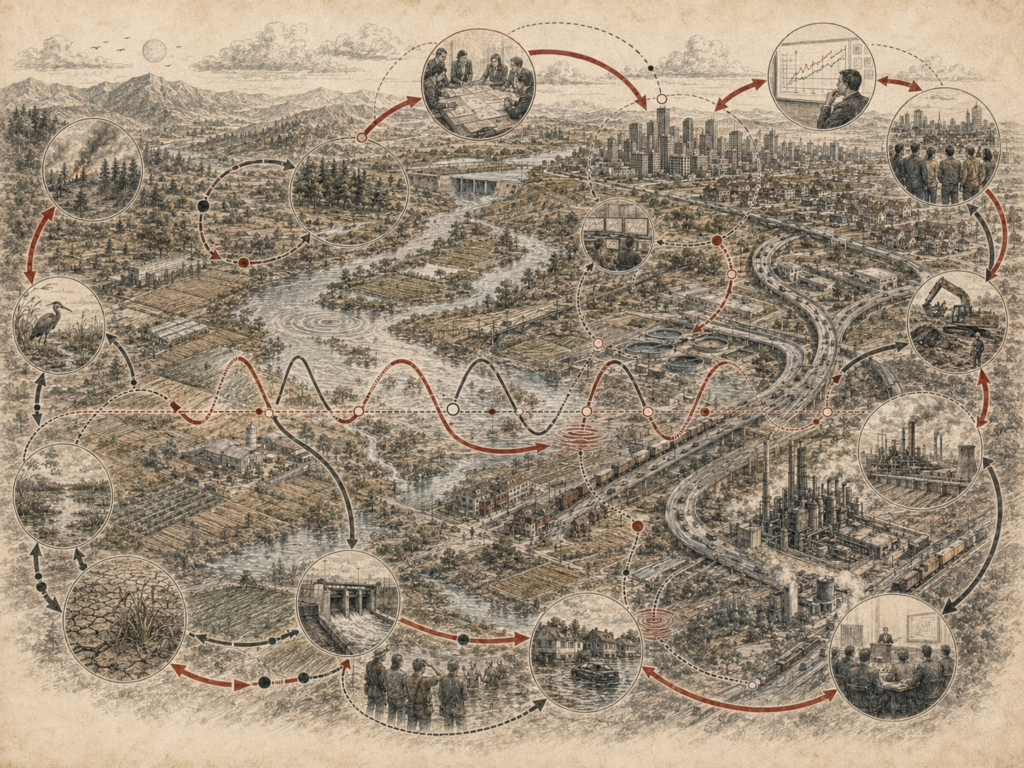
Delays, Oscillation, and Misperception
Delays, Oscillation, and Misperception explains why complex systems often behave in ways that surprise decision-makers. The article examines how delays separate action from consequence, signal from response, intervention from visible result, and harm from recognition. It shows how delayed feedback can produce overcorrection, oscillation, overshoot, collapse, false confidence, premature judgment, and poor policy timing. Through examples from public health, infrastructure, organizations, education, artificial intelligence, climate systems, ecology, and economics, the article explores hidden accumulation, perception gaps, delayed benefits, and delayed harms. It also examines the ethical stakes of delay: who benefits before consequences appear, who bears costs afterward, and how future generations, workers, communities, and ecosystems often absorb risks created elsewhere. Readers gain a practical method for identifying delays, improving feedback, matching evaluation timing to system behavior, and preventing systems from learning too late.