Work, Livelihoods, and Decent Employment
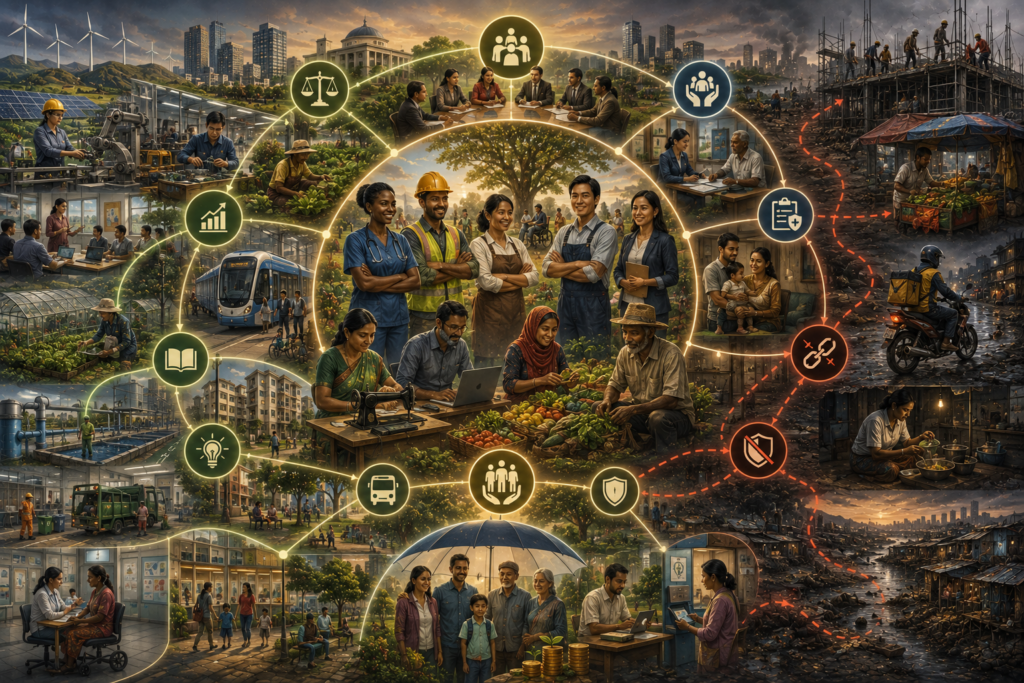
Work, Livelihoods, and Decent Employment examines why work must be understood not only as labor-market participation but as one of the main institutions through which people secure income, dignity, social membership, agency, and protection against vulnerability over time. The article argues that development cannot be judged by employment quantity alone, because livelihoods become developmentally meaningful only when work is reasonably secure, rights-protecting, productive, and compatible with human dignity. It explores livelihoods, social recognition, decent work, informality, precarity, labour rights, social protection, youth exclusion, gender inequality, and technological change, showing how labor systems can either widen or narrow human capability. The core claim is that sustainable development requires not just jobs, but labor systems that create fair, stable, and decent livelihood pathways through which people can live and flourish with dignity