Trade-Offs, Synergies, and Policy Coherence
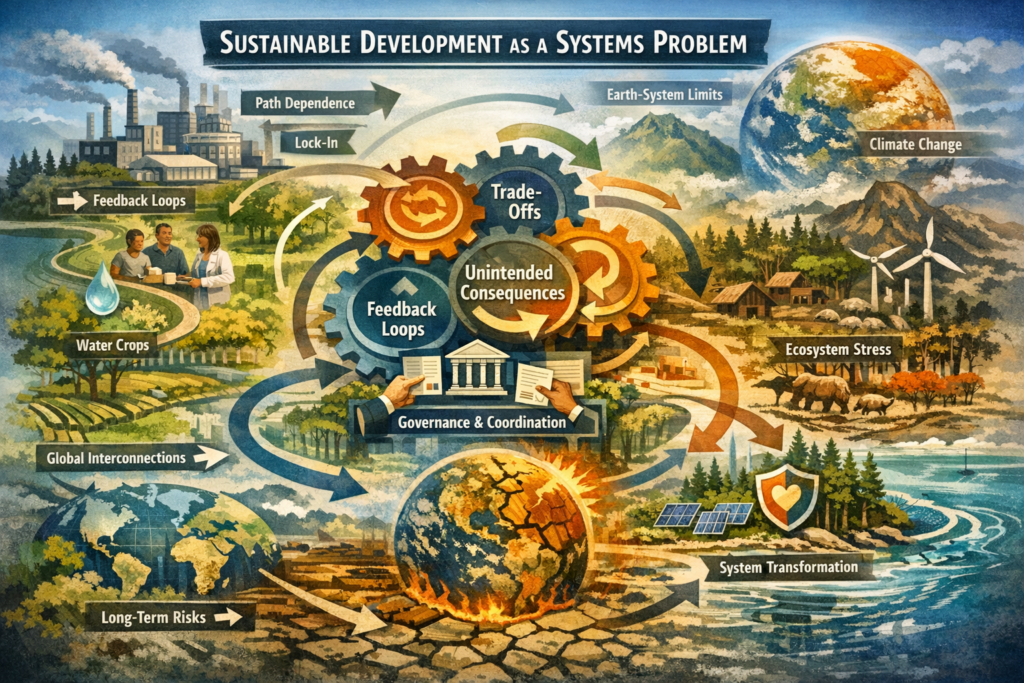
Trade-Offs, Synergies, and Policy Coherence examines why sustainable development cannot be governed as a collection of isolated goals when policy choices generate spillovers across sectors, borders, and time. The article argues that trade-offs are not policy failures in themselves but structural features of governing interdependent systems under constraint, while synergies are real but rarely automatic. It explores policy interaction, spillovers, whole-of-government capacity, indicator systems, political conflict, sequencing, and institutional design, showing how sustainable development succeeds or fails through the management of relationships among goals rather than through goal-setting alone. The core claim is that policy coherence is the institutional capacity to recognize interdependence, govern conflict among objectives, and align decisions across domains so that progress in one area does not quietly undermine long-run viability elsewhere.