Developmental Psychology

Developmental Psychology examines the psychological traditions through which scholars have sought to understand human growth, change, and adaptation across the lifespan. In the history of psychology, the field has linked cognition, attachment, language, emotional regulation, moral development, identity formation, adulthood, aging, and developmental systems in ways that illuminate how human beings become who they are over time.

This category explores the major theories, methods, and debates of developmental psychology, including stage theories, lifespan development, developmental systems, attachment, cognitive and language development, adolescence, adult development, aging, and the interaction of genes, environment, family, culture, and institutions in shaping human growth. It considers how development is studied scientifically, how change unfolds across the life course, and how developmental inquiry contributes to wider reflection on care, plasticity, dependency, identity, and the temporal structure of human life.

Developmental psychology plays an important role in psychological and interdisciplinary inquiry because it provides one of the strongest frameworks for understanding the person as a being formed through time rather than fixed at any single moment. By engaging the field seriously, this category deepens understanding of childhood, adolescence, adulthood, aging, and the complex processes through which human capacities emerge, reorganize, and endure across the course of life.

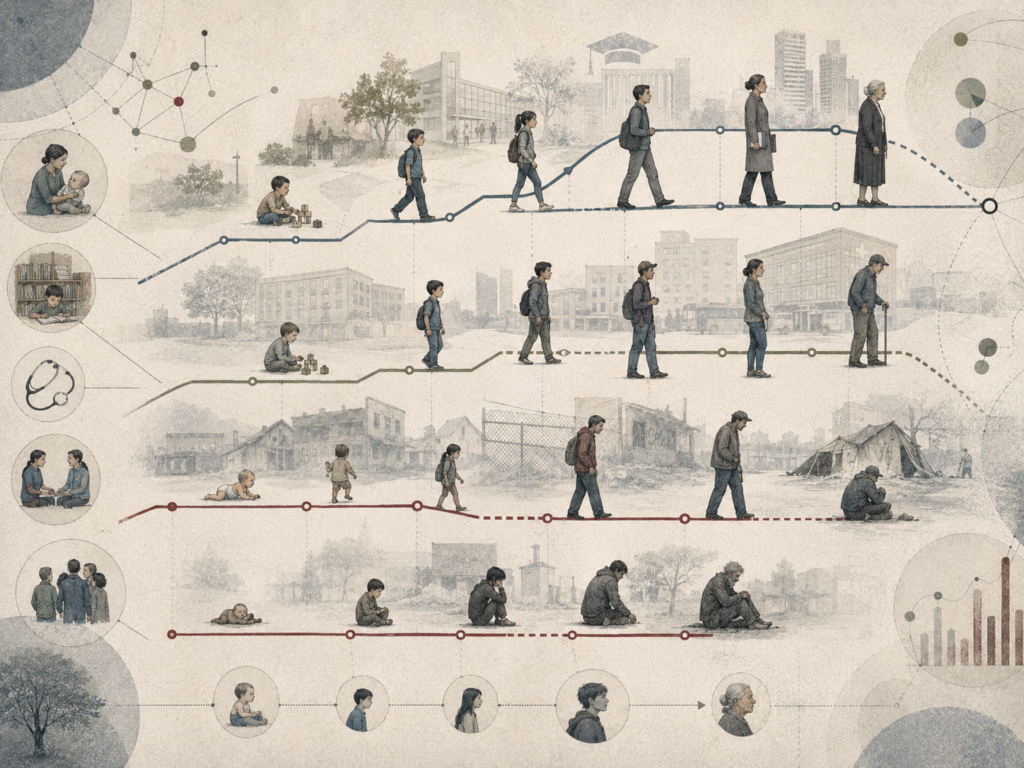
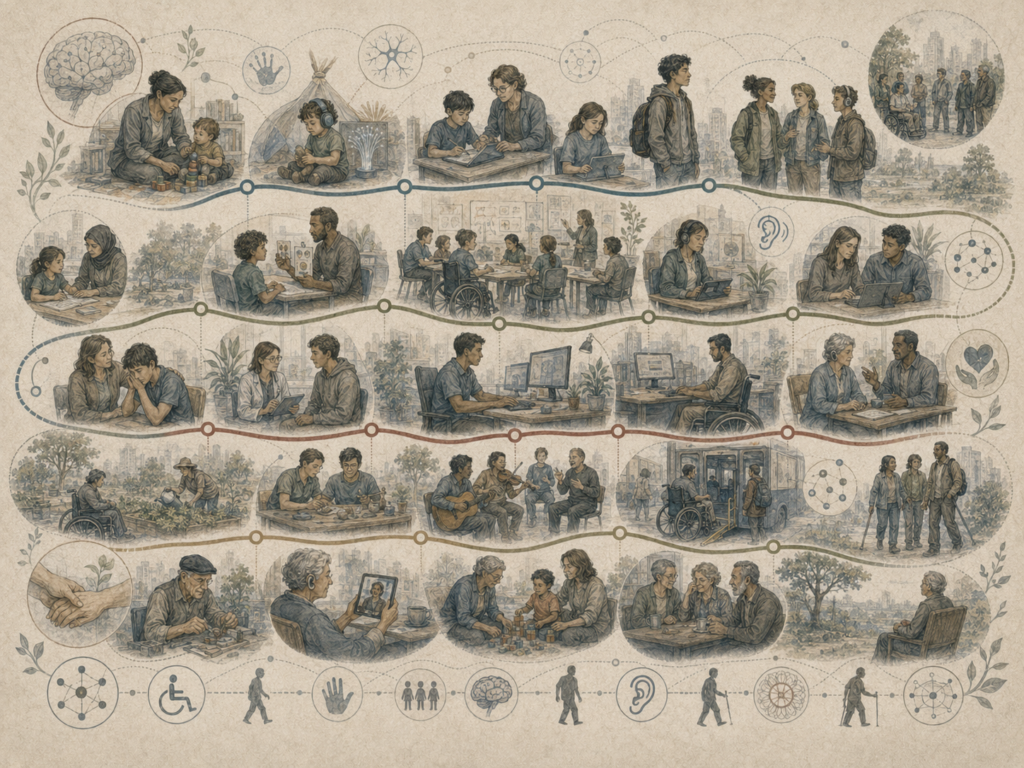
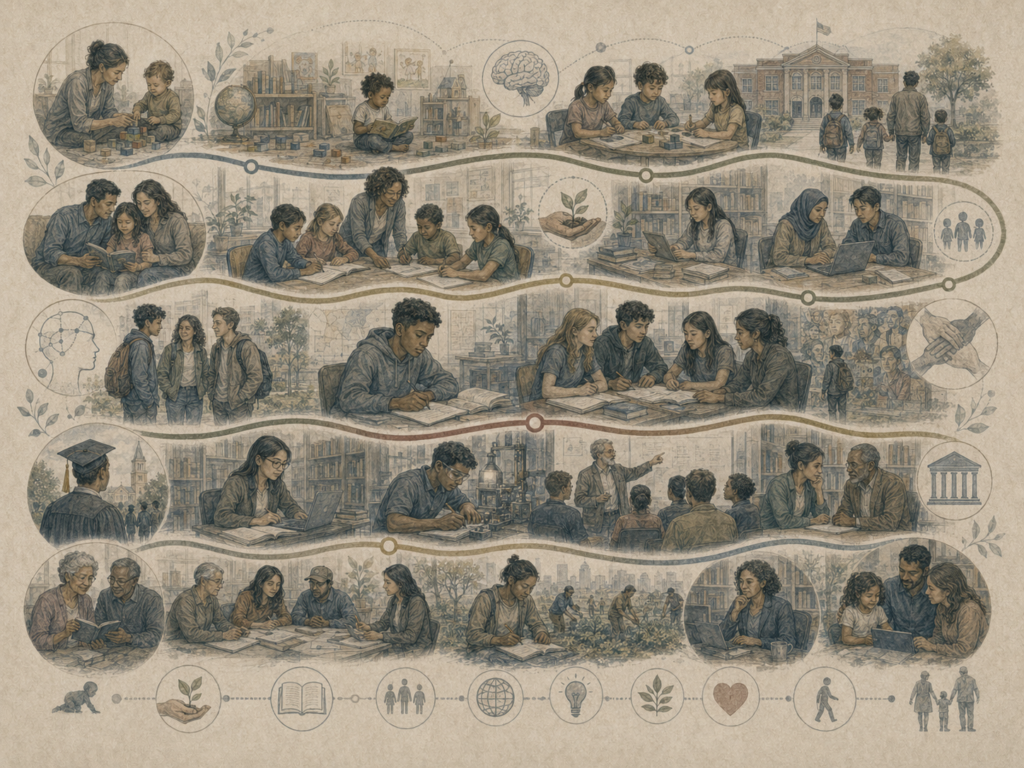
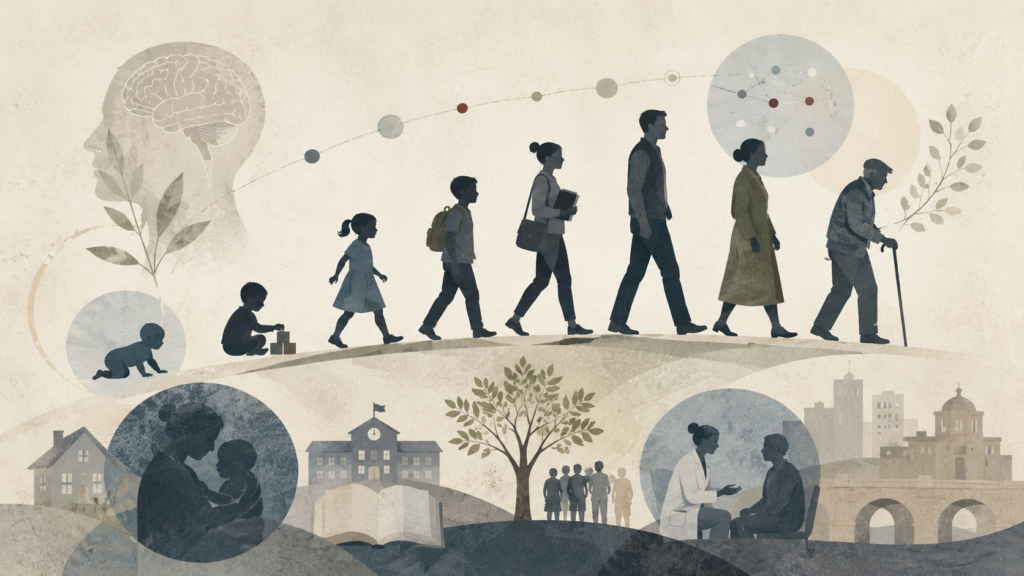
Abstract institutional illustration of human development across the lifespan, with figures moving from infancy to old age through family, school, health, community, and civic settings.

Why Developmental Psychology Matters Today

Developmental psychology matters today because the central questions of the field are no longer confined to childhood theory or academic debate. They sit at the center of public life: mental health, schooling, inequality, caregiving, aging, disability, trauma, identity, and the conditions under which human beings are able to grow, adapt, and flourish across the lifespan. This article argues that developmental psychology is indispensable now because it links early childhood, adolescence, adulthood, and later life within one framework of change over time. In that sense, the field matters today because today’s most urgent human questions are, at their core, developmental questions.
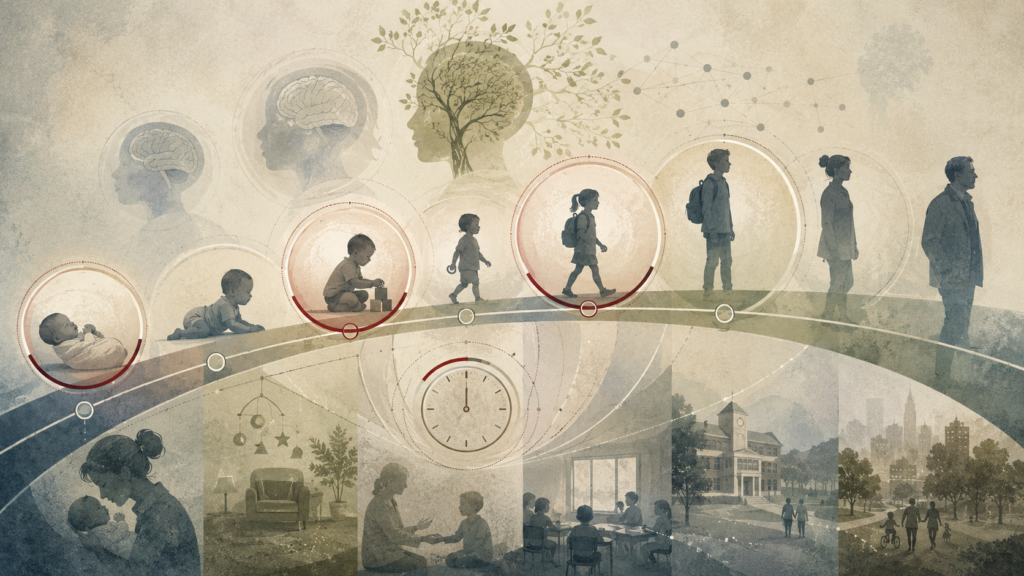
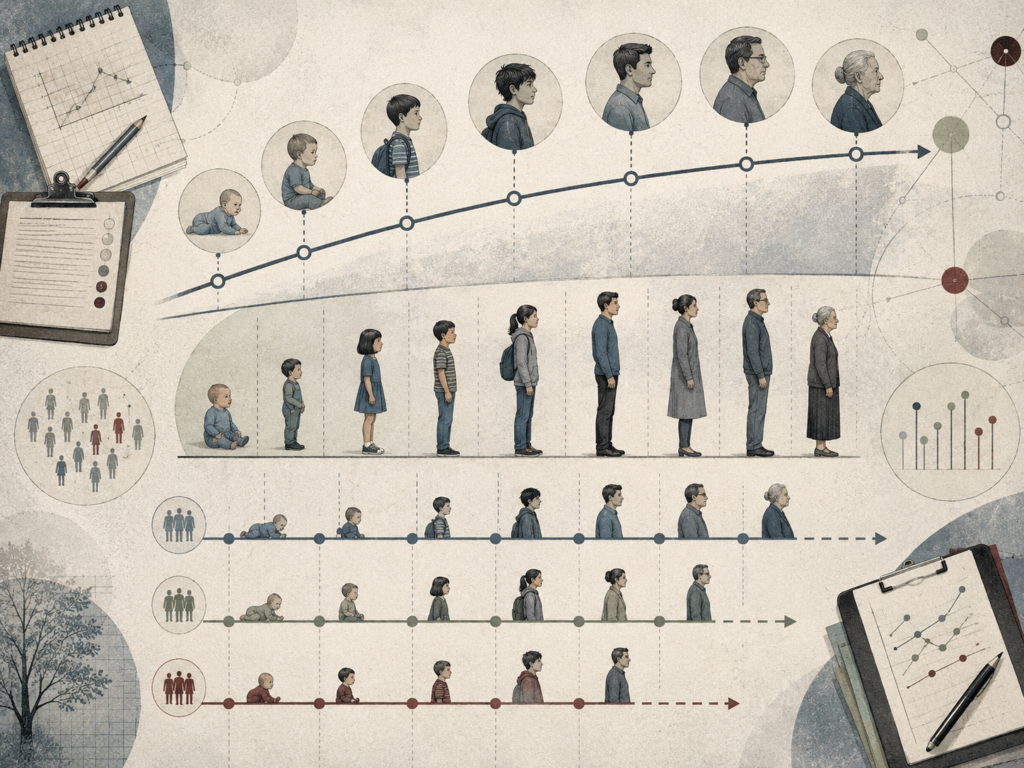
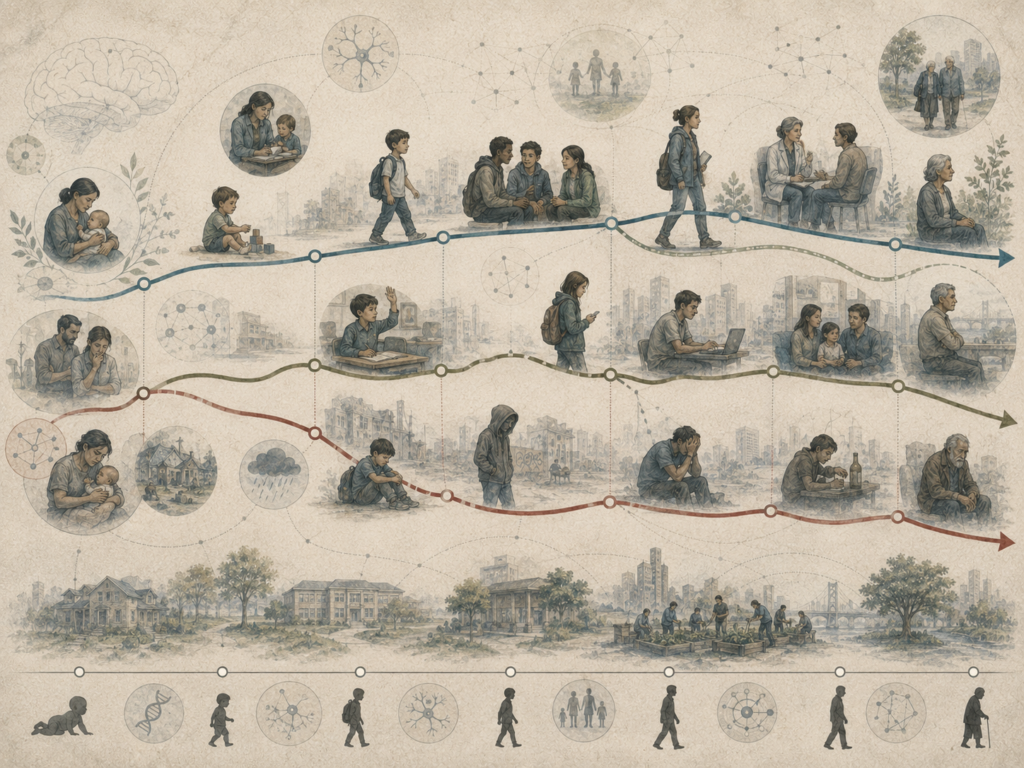
Abstract institutional illustration of human development across the lifespan, with highlighted timing windows, brain-development imagery, and family, school, and community settings.

Critical Periods, Sensitive Periods, and the Timing of Development

Critical periods, sensitive periods, and the timing of development matter because development does not respond to experience with equal openness at all moments. This article examines critical periods, sensitive periods, early childhood, adolescence, brain development, adversity, intervention, and developmental timing as parts of one theoretical framework. It argues that timing should be understood neither as trivial background nor as rigid determinism, but as a structured variation in how open developmental systems are to experience. In that sense, developmental timing reveals why some phases of life are unusually consequential for learning, support, risk, and repair.

Abstract institutional illustration of developmental research methods, showing lifespan timelines, cohort comparisons, repeated observations, charts, and study records.

Research Methods in Developmental Psychology: Longitudinal, Cross-Sectional, and Cohort Designs

Research methods in developmental psychology are not neutral technical choices made after the real thinking is done, but shape what kinds of development can be seen, what kinds of change can be inferred, and what sorts of conclusions can be drawn about age, time, experience, and the life course. This article examines cross-sectional, longitudinal, cohort, and cohort-sequential designs, along with attrition, timing, and age-period-cohort problems, as parts of one methodological framework. It argues that developmental research design should be matched to the temporal structure of the question rather than treated as a prestige marker. In that sense, methods reveal how developmental psychology thinks about change itself.

Abstract institutional illustration of unequal life-course pathways, showing parallel developmental timelines shaped by education, health care, family support, neighborhood conditions, and economic opportunity.

Development, Inequality, and the Life Course

Development, inequality, and the life course belong together because human development does not unfold on a level field, but through unequal access to safety, nutrition, healthcare, schooling, housing, time, stability, power, and institutional recognition. This article examines unequal starting conditions, schooling, health, stress, family strain, adolescence, adulthood, aging, and cumulative advantage as parts of one life-course framework. It argues that inequality should not be treated as a background condition outside development, but as one of the forces through which developmental pathways are widened, narrowed, protected, or burdened across time. In that sense, the life course reveals how human development is shaped not only by what individuals do, but by the unequal social worlds in which they must grow.

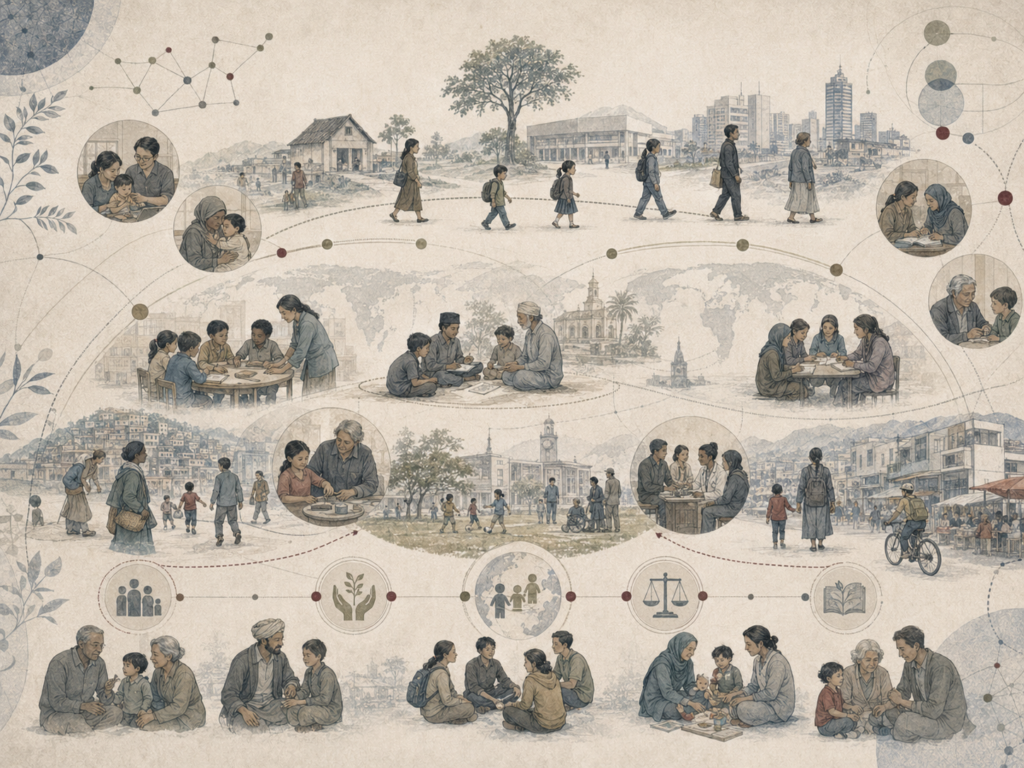
Abstract institutional illustration of human development across societies, showing families, schools, communities, caregiving, learning, and intergenerational life in diverse cultural settings.

Culture and Development Across Societies

Culture is not an external decoration added to development after biology, cognition, and emotion have done their work, but one of the primary social worlds through which human beings learn what development is for, what kinds of selves are valued, how relationships are organized, and how growth is interpreted across societies. This article examines caregiving, language, schooling, autonomy, interdependence, ritual, migration, and inequality as parts of one cross-societal developmental framework. It argues that development should not be understood through one silent cultural norm, but through the diverse goals, meanings, and institutions by which societies organize growth. In that sense, culture reveals that human development is always both shared and socially made.

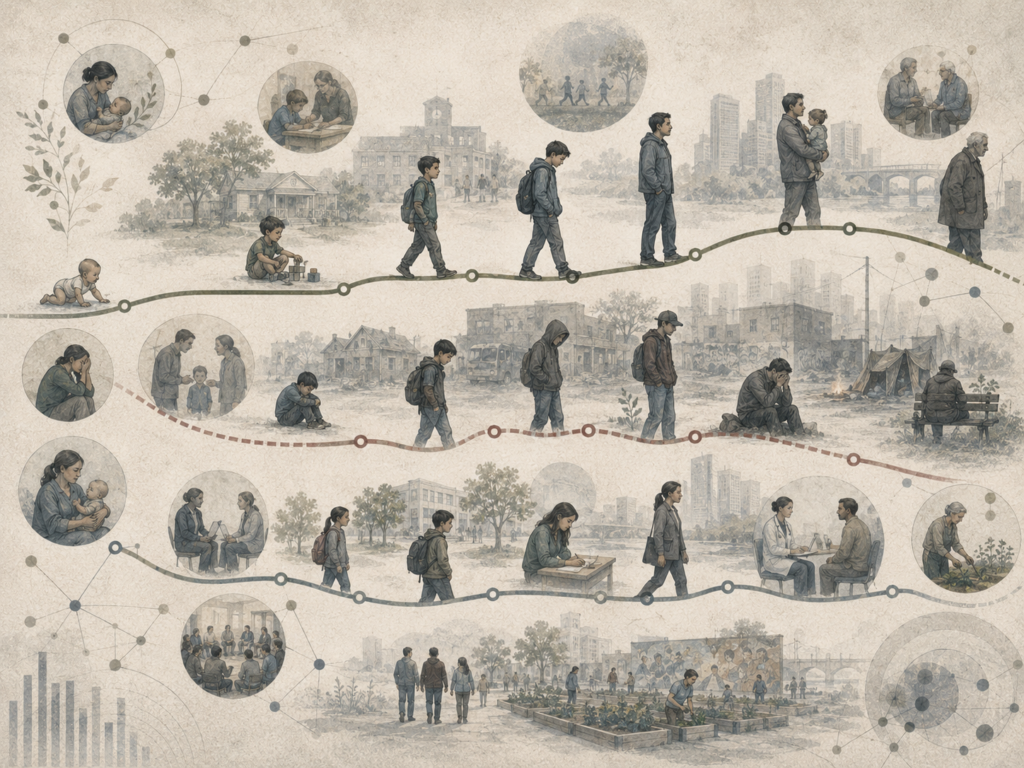
Abstract institutional illustration of life-course pathways shaped by trauma, adversity, care, recovery, education, health support, and community resilience.

Trauma, Adversity, and the Life Course

Trauma and adversity are not single moments sealed off from the rest of development, but part of the life course, shaping physiology, expectation, regulation, relationship, identity, and the ways human beings anticipate danger, trust support, or struggle to adapt across time. This article examines trauma, adversity, developmental timing, accumulation, ACEs, buffering relationships, institutional response, and unequal exposure as parts of one life-course framework. It argues that trauma should be understood not only as an event, but as a developmental process whose effects depend on timing, recurrence, support, and context. In that sense, trauma and adversity reveal how the life course is shaped not only by what happens, but by how a person must keep developing afterward.

Abstract institutional illustration of developmental pathways shaped by risk, resilience, adaptation, family support, mental health care, education, and social context across the lifespan.

Developmental Psychopathology: Risk, Resilience, and Adaptation

Developmental psychopathology is the study of how patterns of adaptation, maladaptation, risk, and resilience unfold across development, revealing that psychological difficulty is not a fixed defect inside the individual but a developmental process shaped by time, context, biology, relationship, and lived experience. This article examines developmental pathways, risk and protective factors, adversity, caregiving, resilience, and unequal developmental burden as parts of one framework. It argues that mental health and disorder should be understood not as static categories but as outcomes of developmental processes that branch, accumulate, and sometimes recover under changing conditions. In that sense, developmental psychopathology provides one of the strongest ways to understand how human beings struggle, adapt, and grow across the life course.

Abstract institutional illustration of disability, neurodivergence, and development across the life course, showing accessible environments, caregiving, education, communication, assistive technology, community participation, and support systems.

Disability, Neurodivergence, and Development

Disability and neurodivergence are not deviations from development in the sense of existing outside it, but part of human development itself, shaping and being shaped by embodiment, cognition, communication, relationship, access, support, stigma, and the unequal social conditions under which growth unfolds. This article examines developmental diversity, context, caregiving, inclusion, sensory and communication difference, identity, and unequal access as parts of one developmental framework. It argues that disability and neurodivergence should be understood not only through impairment or deficit, but through the relational conditions that enable or constrain participation, growth, and dignity over time. In that sense, developmental difference reveals how human development is shaped as much by the world’s response to difference as by difference itself.

Abstract institutional illustration of education and developmental formation across the life course, showing classrooms, families, libraries, mentors, peer learning, civic institutions, and lifelong learning.

Education, Schooling, and Developmental Formation

Education and schooling are not merely channels for delivering information, but developmental institutions through which children and adolescents learn cognition, self-regulation, belonging, authority, aspiration, social comparison, and the lived meaning of participation in a wider social world. This article examines early learning, school connectedness, teacher relationships, peer life, routines, discipline, school climate, and unequal educational opportunity as parts of one developmental process. It argues that schooling should be understood not only as academic instruction, but as a relational and institutional environment that shapes how development is organized across childhood and adolescence. In that sense, education is not only about what students know, but about what kinds of selves, relations, and futures schools help form.

Scroll to Top