Atoms, Elements, and the Periodic Organization of Matter
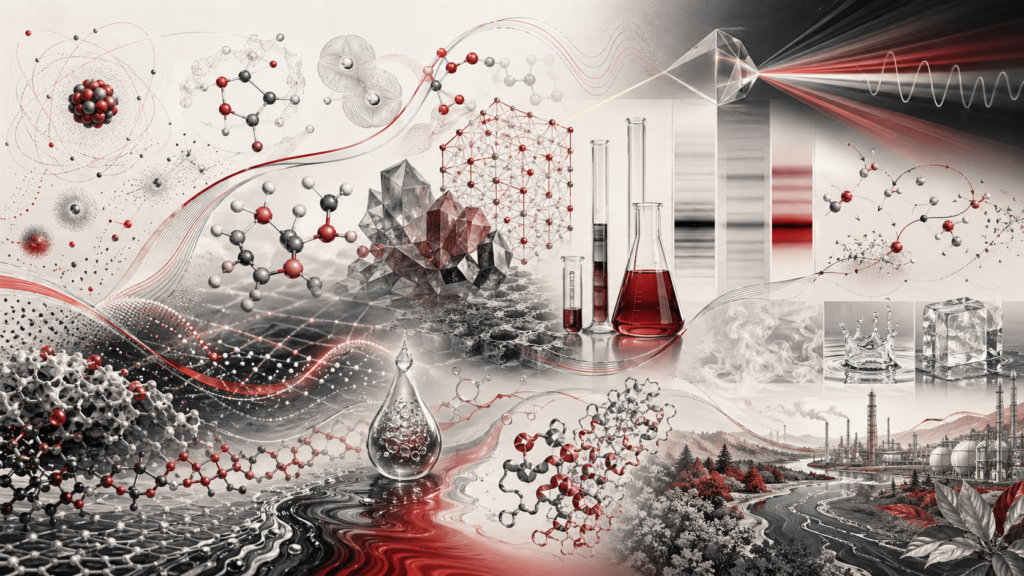
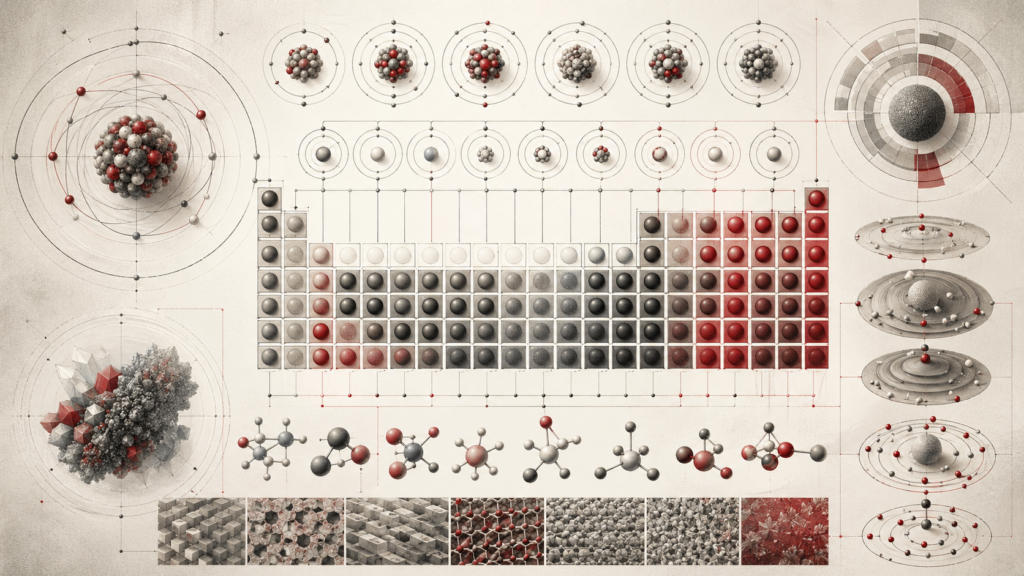
Atoms, elements, and the periodic organization of matter form the structural foundation of chemistry. Every substance is built from atoms, whose protons, neutrons, and electrons determine identity, stability, bonding, and reactivity. Elements organize this diversity into a coherent system, while the periodic table reveals recurring patterns in atomic size, ionization energy, electronegativity, valence, metallic character, and chemical behavior. This organization makes chemistry predictive rather than merely descriptive, allowing scientists to connect atomic structure with molecular formation, material properties, biological function, environmental processes, and technological design. From hydrogen and carbon to transition metals and rare earth elements, the periodic table shows how matter is both varied and ordered. Understanding atoms and elements therefore provides the language for explaining substances, reactions, materials, and the molecular architecture of the natural and engineered world. It remains chemistry’s most powerful map of material possibility.