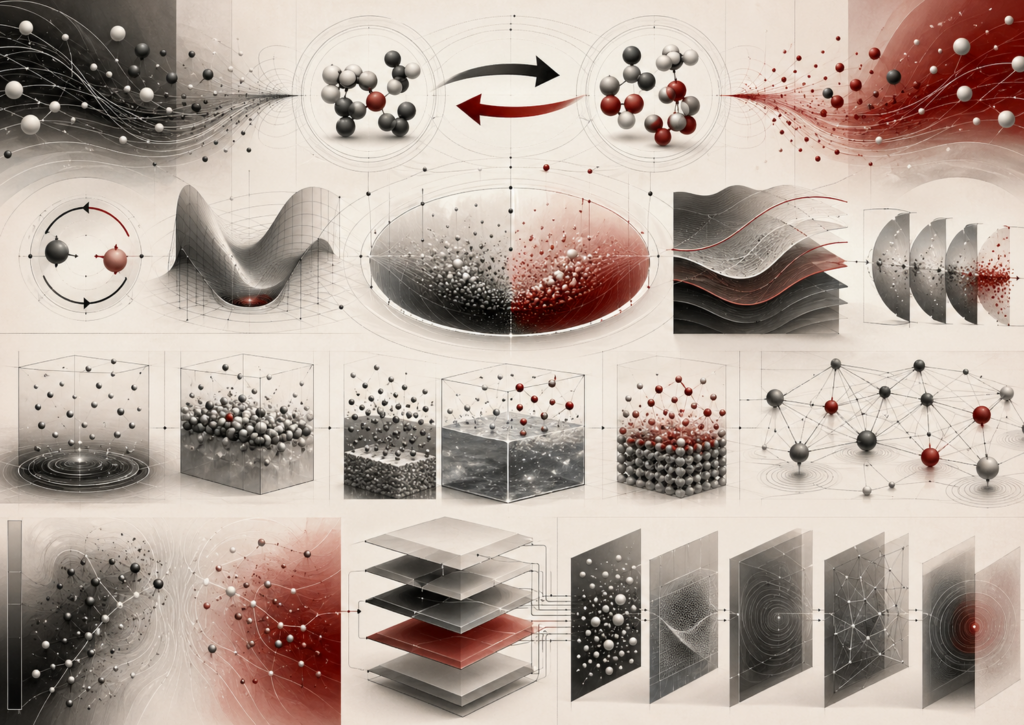
Equilibrium and the Dynamics of Reversible Systems
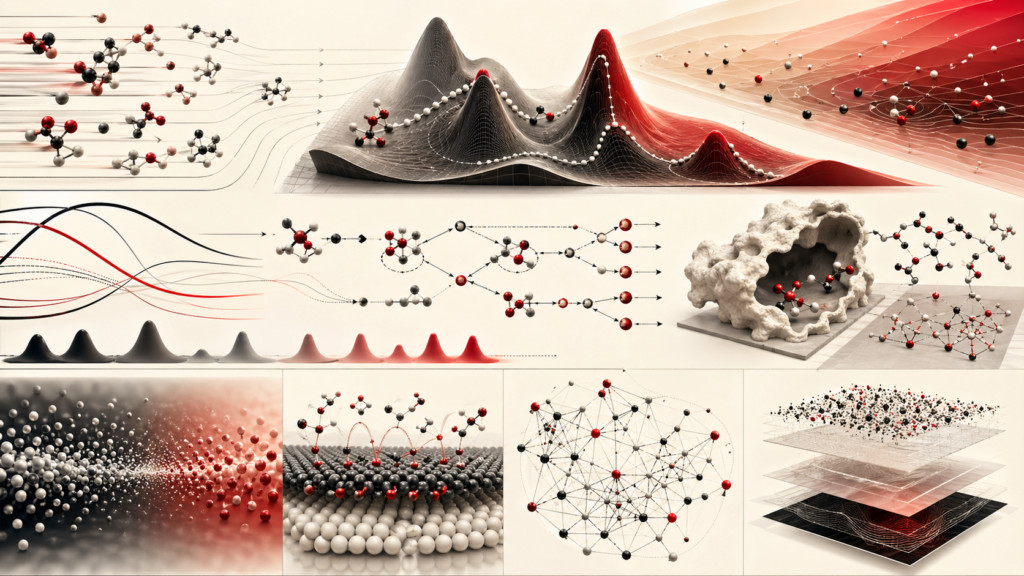
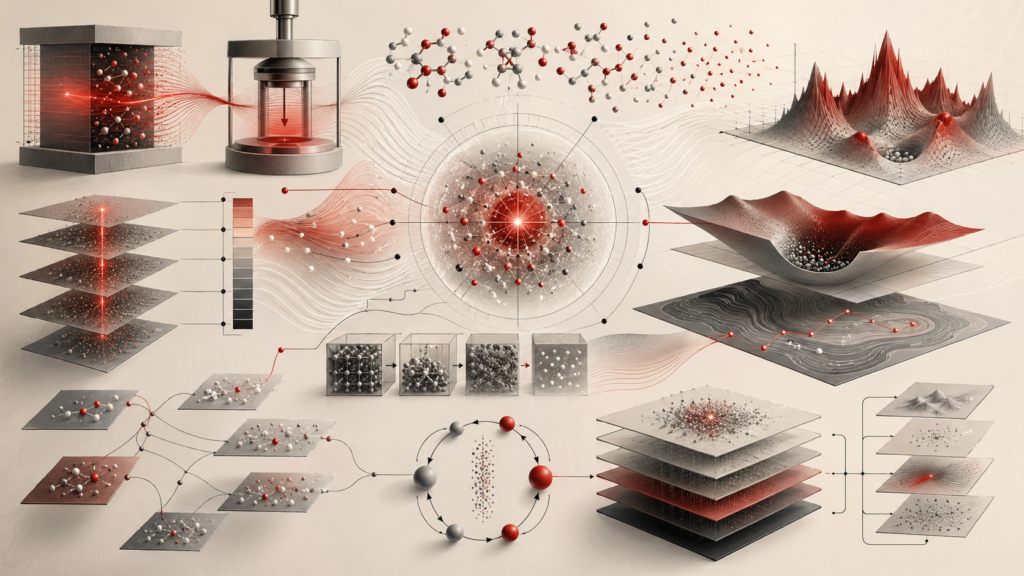
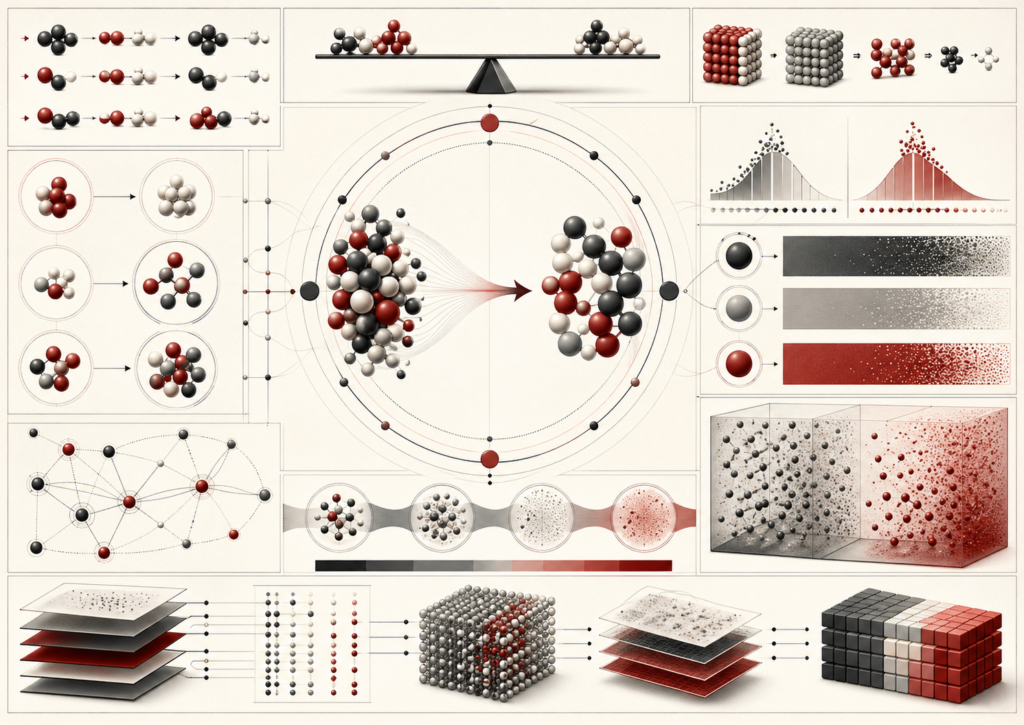
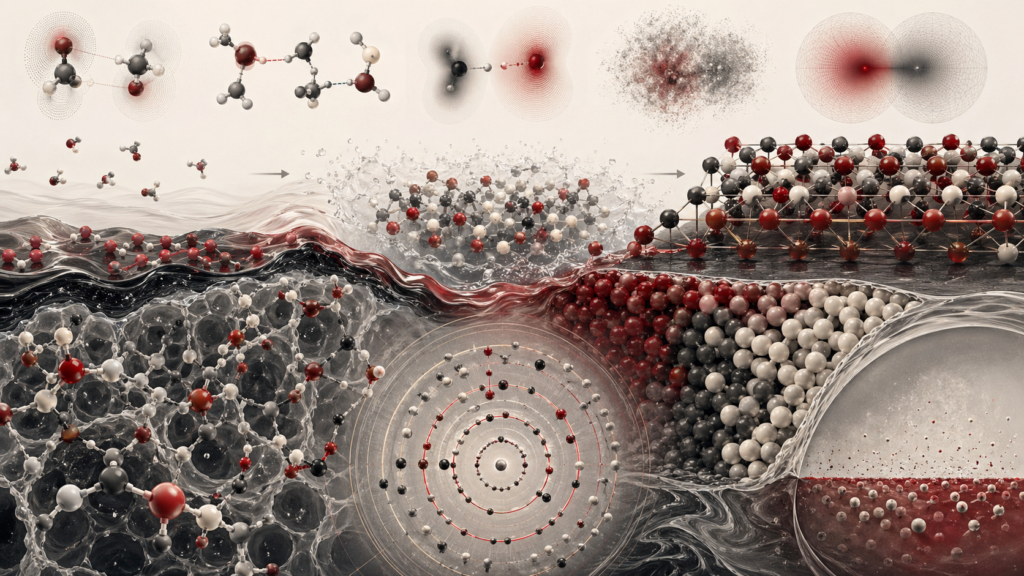
Chemical equilibrium is not stillness. It is dynamic balance. In reversible chemical systems, reactants form products while products simultaneously reform reactants. At equilibrium, forward and reverse processes continue, but their rates balance so that macroscopic composition no longer changes. This article introduces equilibrium through the reaction quotient, equilibrium constant, Gibbs free energy, dynamic equilibrium, forward and reverse rates, Le Châtelier response, temperature dependence, van ’t Hoff analysis, pressure and volume effects, activities, nonideality, heterogeneous equilibria, solubility equilibria, coupled equilibria, equilibrium calculations, numerical solving, and computational workflows. It shows why equilibrium is not merely a final answer in a textbook problem, but a framework for understanding how chemical systems respond to composition, perturbation, phase, pressure, temperature, activity, and thermodynamic constraint.