Biology

Biology examines life in all its forms, from cells and organisms to populations, ecosystems, and evolutionary processes. It seeks to explain how living systems are organized, how they function, how they reproduce and adapt, and how life changes across time in relation to heredity, environment, and ecological conditions.

This field brings together the study of structure, metabolism, development, genetics, evolution, behavior, and the interdependence of living systems across levels of organization. It includes molecular and cellular processes, organismal life, species diversity, ecological relationships, and the broader conditions through which life persists, transforms, and interacts with the natural world.

Biology plays a foundational role in understanding not only organisms themselves but also adaptation, vulnerability, resilience, and the continuity of life. By clarifying the processes that sustain living systems and the relationships that bind them to one another and to their environments, it shapes human understanding of health, nature, survival, and the conditions of flourishing on Earth.

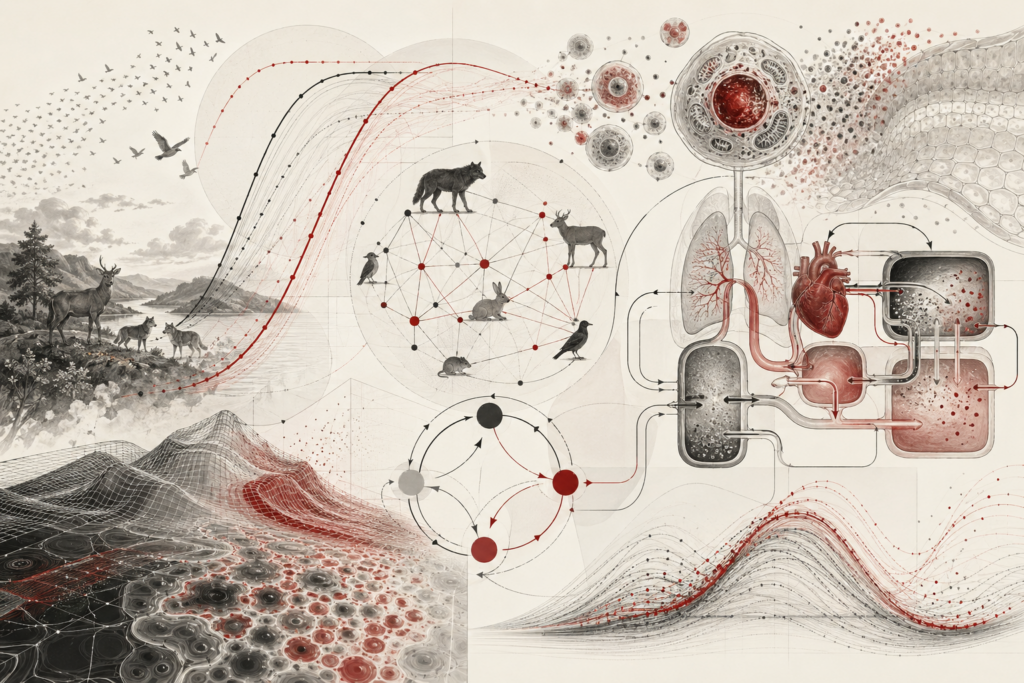
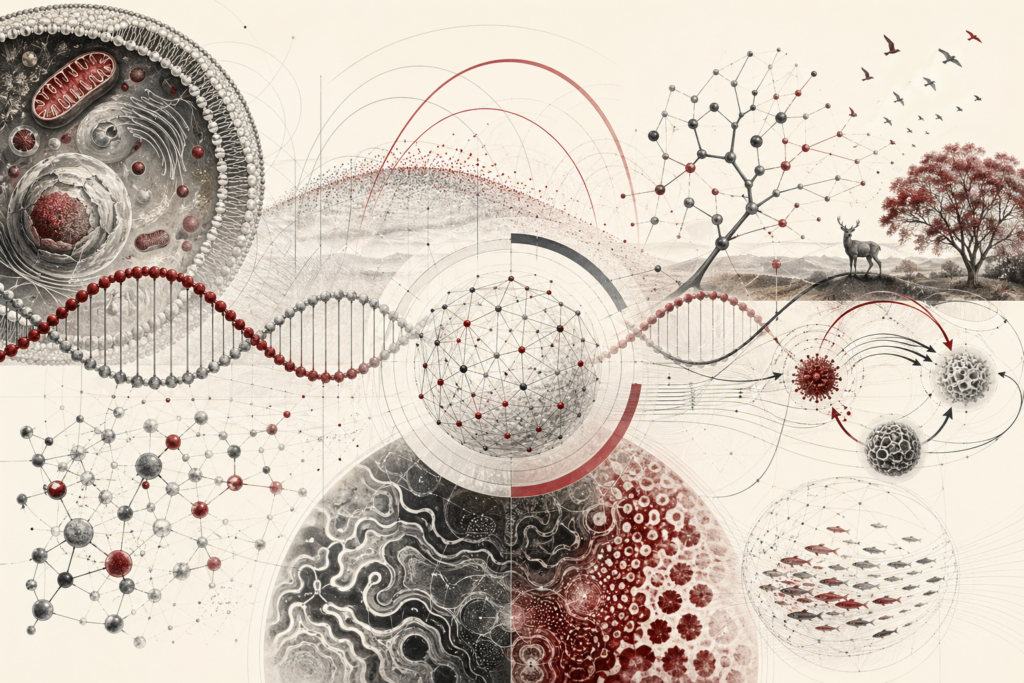
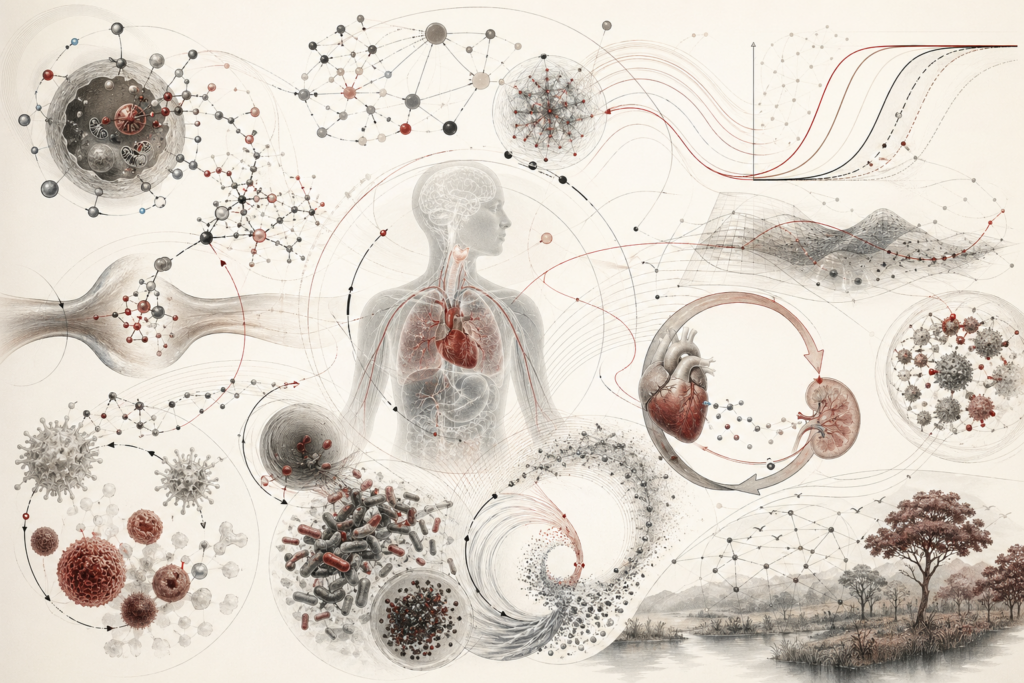
Abstract scientific illustration of differential equations in population and physiological modeling showing population trajectories, ecological networks, cells, physiological compartments, feedback loops, compartmental flows, reaction-diffusion patterns, and computational simulation without text or labels.

Differential Equations in Population and Physiological Modeling

Differential Equations in Population and Physiological Modeling examines how rate-based models help biologists, physiologists, ecologists, engineers, and computational scientists study living systems through time. The article explains why differential equations are essential for modeling population growth, density dependence, predator-prey interaction, disease transmission, physiological homeostasis, pharmacokinetics, chemostat dynamics, reaction-diffusion systems, stability, feedback, and biological resilience. It introduces ordinary, partial, delay, and stochastic differential equations as tools for making biological assumptions explicit and computationally testable. Through mathematical examples and R/Python workflows, the article shows how scientists can simulate mechanisms, estimate dynamic behavior, explore thresholds, test sensitivity, and connect biological theory to reproducible computation. It emphasizes that differential-equation models do not replace empirical evidence; they structure biological reasoning about change, regulation, constraint, and uncertainty across populations, organs, cells, ecosystems, and engineered biological systems.

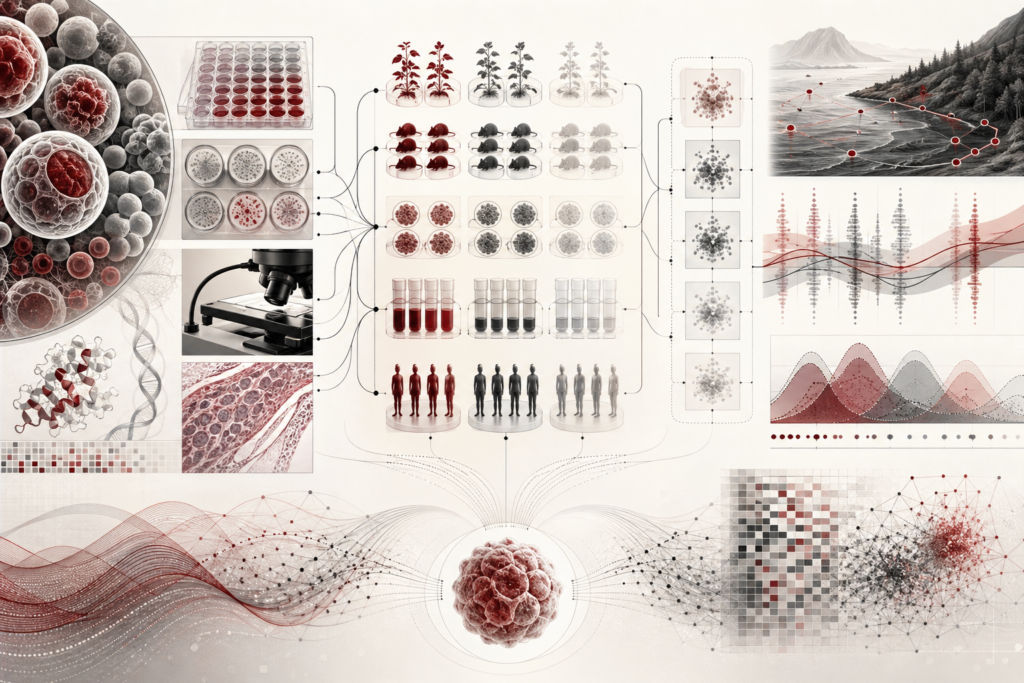
Abstract scientific illustration of biostatistics and experimental design in biology showing grouped cell structures, assay wells, balanced treatment groups, blocked sample clusters, ecological sampling points, uncertainty patterns, and computational data flows without text or labels.

Biostatistics and Experimental Design in Biology

Biostatistics and Experimental Design in Biology examines how biological questions become reliable evidence through planned comparisons, defined experimental units, replication, randomization, blocking, blinding, sample-size reasoning, effect-size estimation, uncertainty quantification, and reproducible analysis. The article explains why statistics should guide study design before data collection begins, not merely analyze results afterward. It distinguishes biological replication from technical replication, clarifies the problem of pseudoreplication, and shows how controls, blocking variables, factorial designs, nested structures, and mixed-effects thinking strengthen inference. Written for biologists, ecologists, biomedical researchers, biotechnology scientists, engineers, and computational scientists, the article connects experimental design to real biological variation across cells, organisms, populations, ecosystems, assays, and high-throughput platforms. Through mathematical examples and R/Python workflows, it shows how strong design turns finite data into responsible biological knowledge.

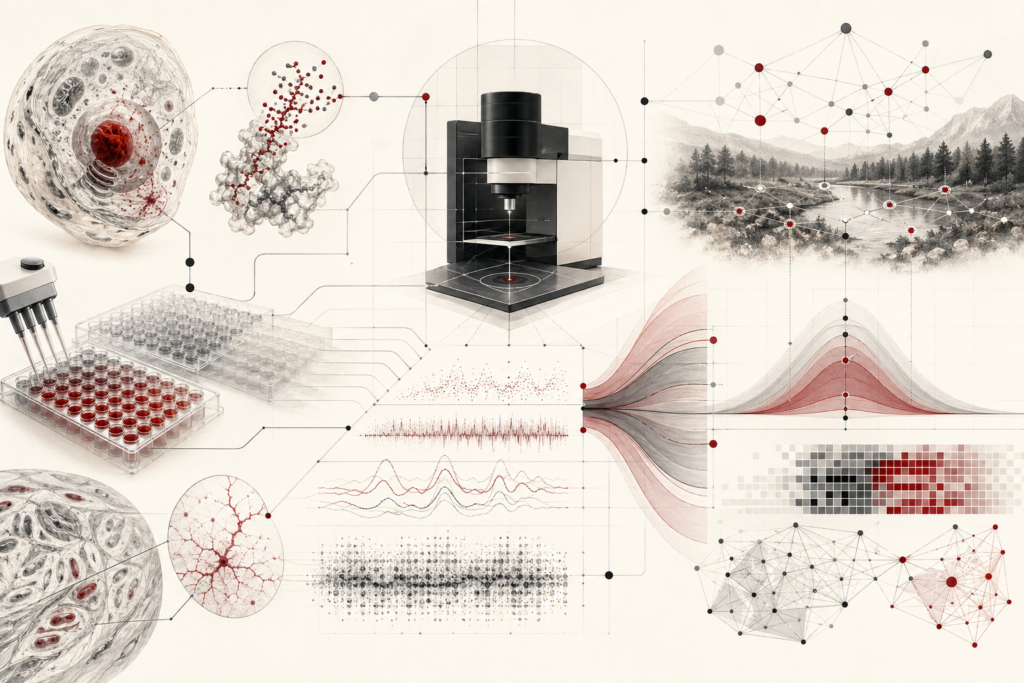
Abstract scientific illustration of statistics, uncertainty, and measurement in biology showing cells, molecular signals, assay wells, calibrated instruments, ecological sampling points, uncertainty bands, distributions, biological networks, and computational data patterns without text or labels.

Statistics, Uncertainty, and Measurement in Biology

Statistics, Uncertainty, and Measurement in Biology examines how living systems become reliable scientific evidence through measurement design, calibrated instruments, replication, uncertainty quantification, statistical modeling, and reproducible analysis. The article explains why biological measurement is never just the recording of numbers: cells, organisms, ecosystems, biomarkers, genomes, images, and environmental signals all vary across time, space, condition, and scale. It introduces core concepts such as accuracy, precision, bias, measurement error, biological variation, technical replication, biological replication, uncertainty budgets, calibration curves, detection limits, error propagation, variance components, and assay quality control. Through mathematical examples and R/Python workflows, the article shows how statistics helps biologists, engineers, biomedical researchers, ecologists, and computational scientists distinguish signal from noise and turn measured variation into disciplined biological inference.

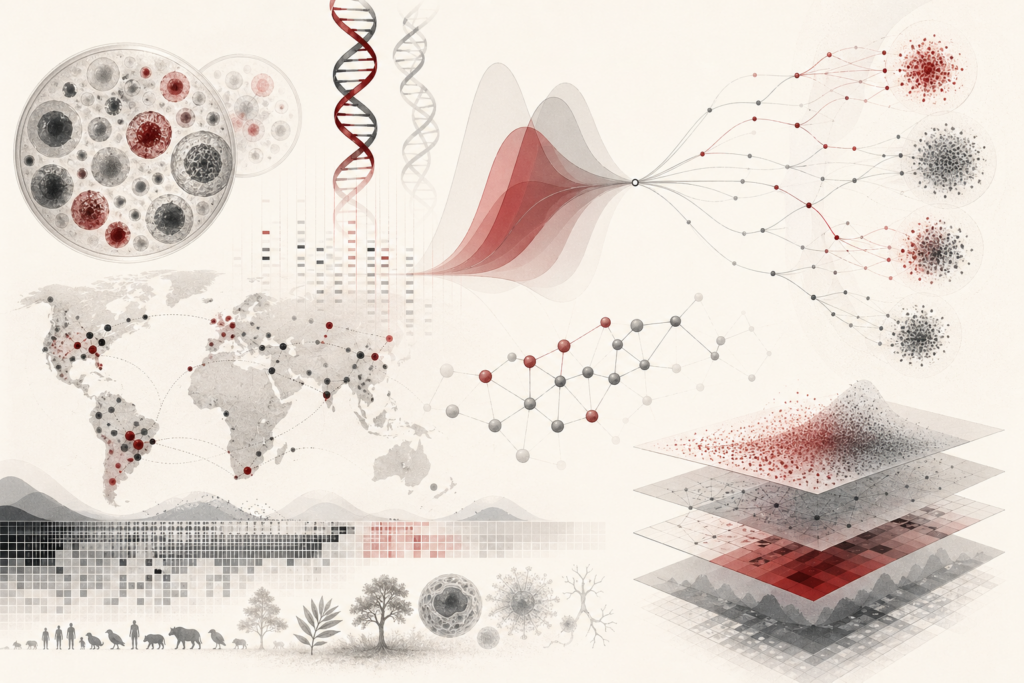
Abstract scientific illustration of probability, variation, and biological inference showing cells, DNA-like strands, ecological sampling points, molecular nodes, uncertainty bands, population distributions, branching inference pathways, and layered data patterns without text or labels.

Probability, Variation, and Biological Inference

Probability, Variation, and Biological Inference examines how biologists reason from incomplete, noisy, and variable evidence. The article explains why probability is central to modern biology: organisms vary, samples are partial, measurements contain error, and biological processes often unfold through stochastic events. It introduces core concepts such as sampling, replication, likelihood, confidence intervals, Bayesian updating, bootstrapping, permutation testing, power analysis, false discovery, and uncertainty quantification. The article connects these methods to genetics, evolution, ecology, marine biology, medicine, biotechnology, genomics, environmental monitoring, and systems biology. It emphasizes that probability does not weaken biological science; it strengthens inference by making uncertainty explicit, assumptions visible, and claims testable. Through mathematical examples and R/Python workflows, the article shows how probabilistic reasoning supports reproducible biological research.

Abstract scientific illustration of mathematical biology showing cells, DNA-like structures, ecological networks, molecular nodes, feedback loops, population dynamics, and computational systems without text or labels.

Mathematical Biology and the Logic of Living Systems

Mathematical biology studies living systems through models of growth, feedback, networks, stochasticity, spatial pattern, disease transmission, ecological interaction, and biological regulation. This article introduces mathematical biology as a bridge between life science, engineering, applied mathematics, and computational modeling. It explains how differential equations, probability, statistics, dynamical systems, control theory, network analysis, and simulation help scientists reason about cells, organisms, populations, ecosystems, epidemics, biochemical pathways, and biotechnology systems. The article emphasizes that mathematical models do not replace biological evidence; they make assumptions explicit, clarify mechanisms, reveal thresholds, compare scenarios, and support reproducible inquiry. Through examples in logistic growth, predator-prey dynamics, SIR models, enzyme kinetics, reaction-diffusion systems, stochastic birth-death processes, and biological networks, the article shows why mathematical reasoning is essential for understanding complex living systems.

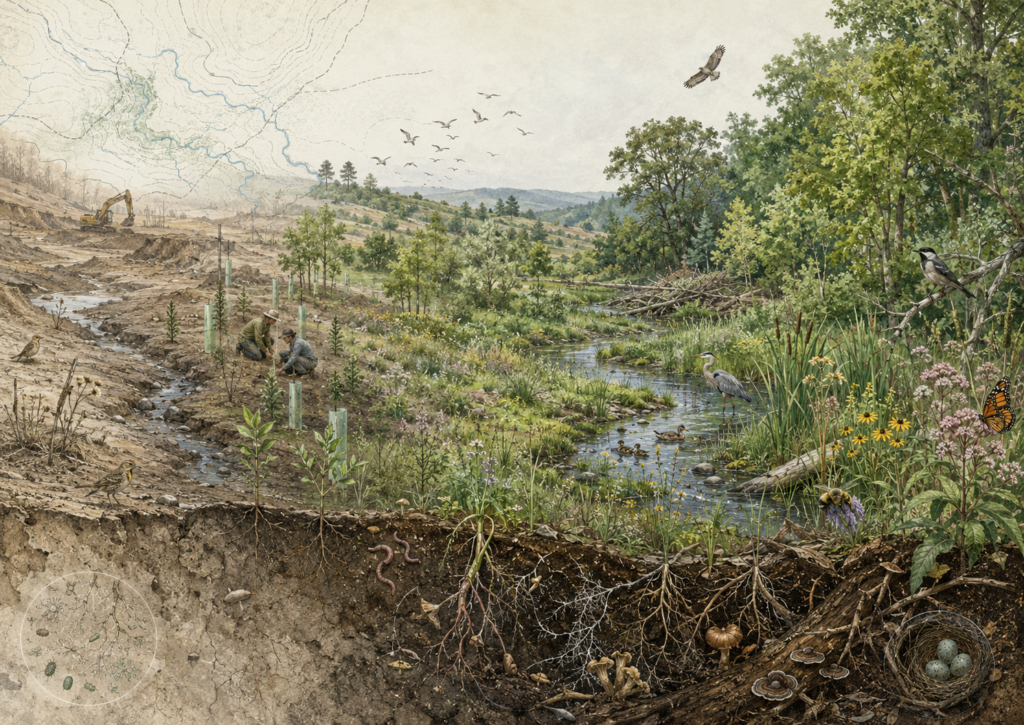
Research-grade ecological restoration illustration showing a degraded landscape transitioning into a restored wetland and forest ecosystem, with native planting, stream recovery, wildlife, soil roots, fungi, and biodiversity returning.

Restoration Ecology and the Repair of Living Systems

Restoration ecology and the repair of living systems examine how damaged ecosystems can recover structure, function, biodiversity, resilience, and ecological process through deliberate intervention, assisted regeneration, disturbance repair, hydrological recovery, soil rebuilding, species reintroduction, and long-term ecological stewardship. Restoration ecology is central to modern biology because the living world is now shaped not only by natural succession and disturbance, but by extraction, fragmentation, pollution, hydrological alteration, invasive species, climate change, biodiversity loss, and systemic ecological simplification. This article explores how degraded systems recover, what can be repaired, how ecological trajectories are redirected, and how ecological integrity can be rebuilt under altered historical and climatic conditions.

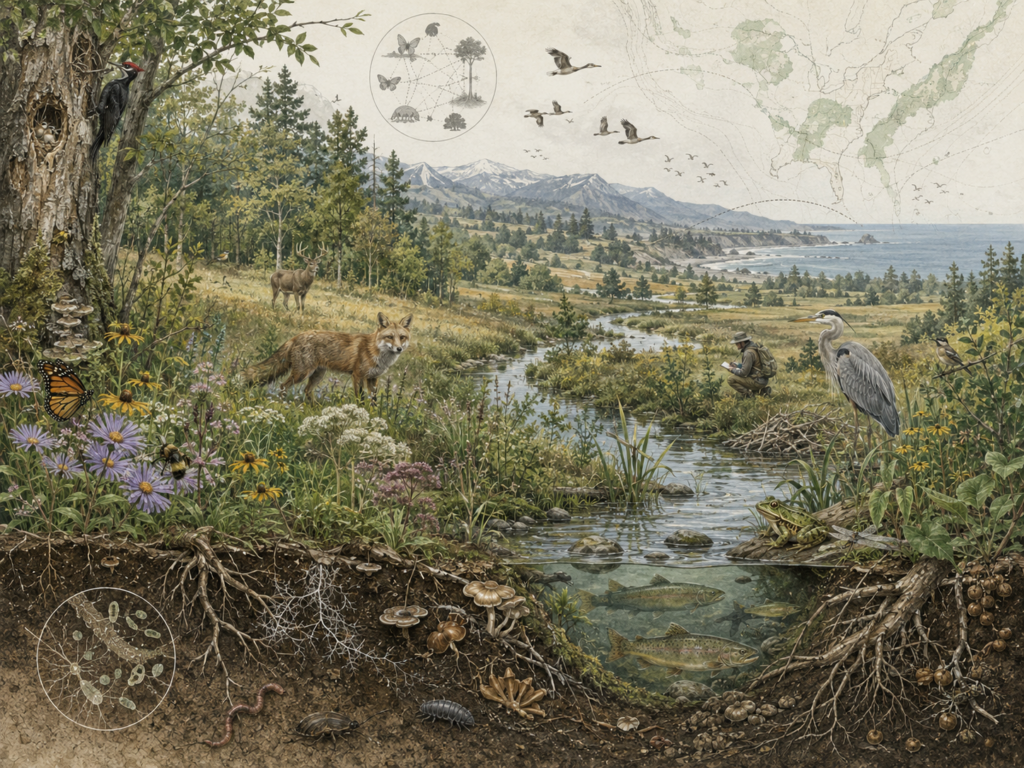
Research-grade conservation biology illustration showing a connected landscape of forest, meadow, wetland, river, and coast with diverse wildlife, native plants, soil roots, fungi, pollinators, fish, birds, and a field biologist observing biodiversity.

Conservation Biology and the Protection of Life

Conservation biology and the protection of life examine how species, populations, ecosystems, and ecological processes can be sustained in the face of extinction risk, habitat loss, fragmentation, overexploitation, invasive species, pollution, and climate-driven environmental change. Conservation biology emerged as a crisis-oriented, interdisciplinary science because the protection of life could no longer be treated as a matter of passive appreciation alone. It required methods for assessing vulnerability, setting priorities, managing uncertainty, restoring damaged systems, and making decisions under conditions in which losses may be irreversible. This article explores extinction risk, population viability, genetic erosion, habitat fragmentation, protected areas, restoration, marine conservation, environmental health relevance, biodiversity governance, and more advanced quantitative approaches in R and Python for conservation decision-making.

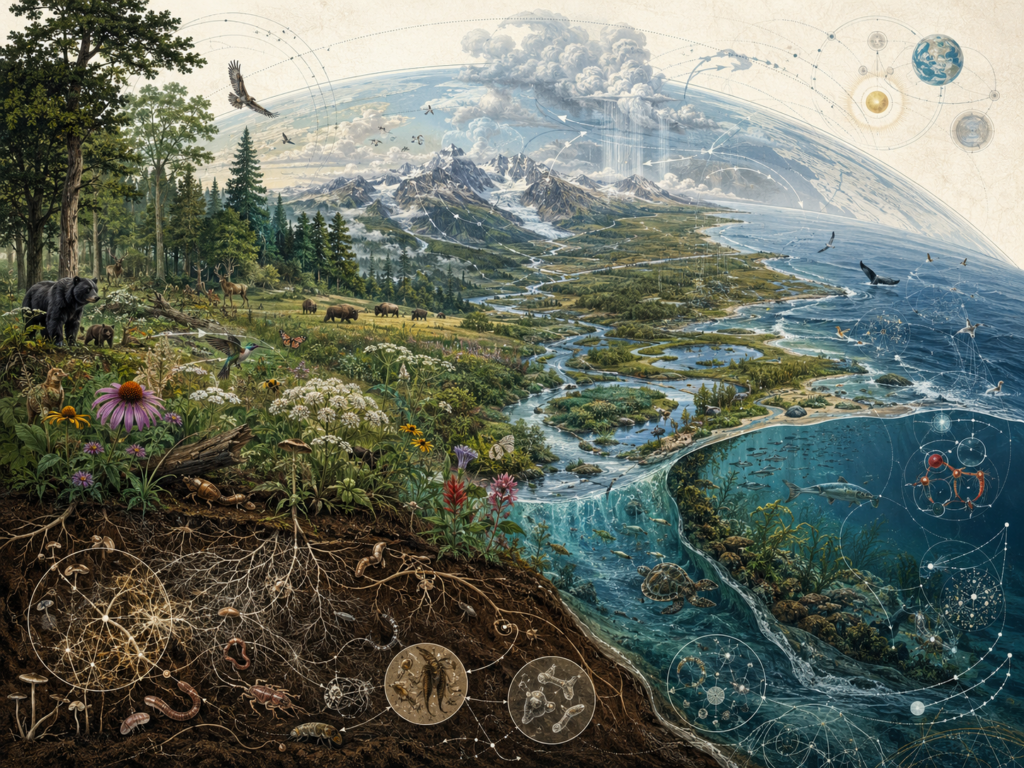
Research-grade Earth systems illustration showing forests, mountains, rivers, wetlands, coastlines, oceans, wildlife, soil roots, fungi, atmosphere, and marine life as interconnected planetary life-support systems.

The Biosphere and Planetary Life Support Systems

The biosphere and planetary life support systems examine how Earth’s living layer interacts with atmosphere, oceans, soils, freshwater, climate, and biogeochemical cycles to sustain the conditions under which complex life can persist. The biosphere is not simply the sum of all organisms. It is the planetary domain in which life reshapes energy flow, nutrient circulation, gas exchange, water movement, food webs, and ecological resilience across scales ranging from microbes and reefs to forests, shelf seas, and continental landscapes. This article explores the biosphere as an Earth-system force, primary production and planetary metabolism, climate regulation, freshwater and hydrological support, biodiversity and resilience, marine and coastal systems, soils and microbes, biosphere integrity, planetary boundaries, and the scientific importance of modeling life-support processes at planetary scale.

Scroll to Top