
Last Updated May 28, 2026
Toxicology is the science of how chemicals interact with living systems and under what conditions those interactions become harmful. It connects chemistry, biology, medicine, environmental health, occupational safety, public health, regulatory science, epidemiology, pharmacology, exposure science, and ethics. Toxicology does not ask whether a chemical is simply “safe” or “dangerous” in isolation. It asks what the substance is, how much exposure occurs, through which route, for how long, at what life stage, in which population, with what biological susceptibility, under what uncertainty, and with what evidence of harm.
The central thesis of toxicology is that chemical risk is not determined by a substance’s name alone. Risk emerges from the relationship among hazard, dose, exposure, timing, route, biological response, vulnerability, and uncertainty. A substance can be harmless at one dose and harmful at another. A substance may be tolerable by one route but dangerous by another. A brief exposure may differ from chronic exposure. A healthy adult may differ from a developing fetus, infant, worker, elderly person, immunocompromised person, or community already burdened by multiple exposures. Toxicology is therefore a science of context.
Toxicology is also a public science. Its conclusions shape drinking-water limits, workplace protections, food safety, pharmaceutical development, chemical substitutions, product stewardship, environmental cleanup, emergency response, and community trust. A toxicological claim is never merely technical. It influences who is protected, who is exposed, who bears uncertainty, and how society decides when evidence is strong enough to prevent harm.
Main Library
Publications
Article Map
Chemistry
Related Topic
Environmental Science
Related Topic
Risk & Resilience
Related Topic
Public Health
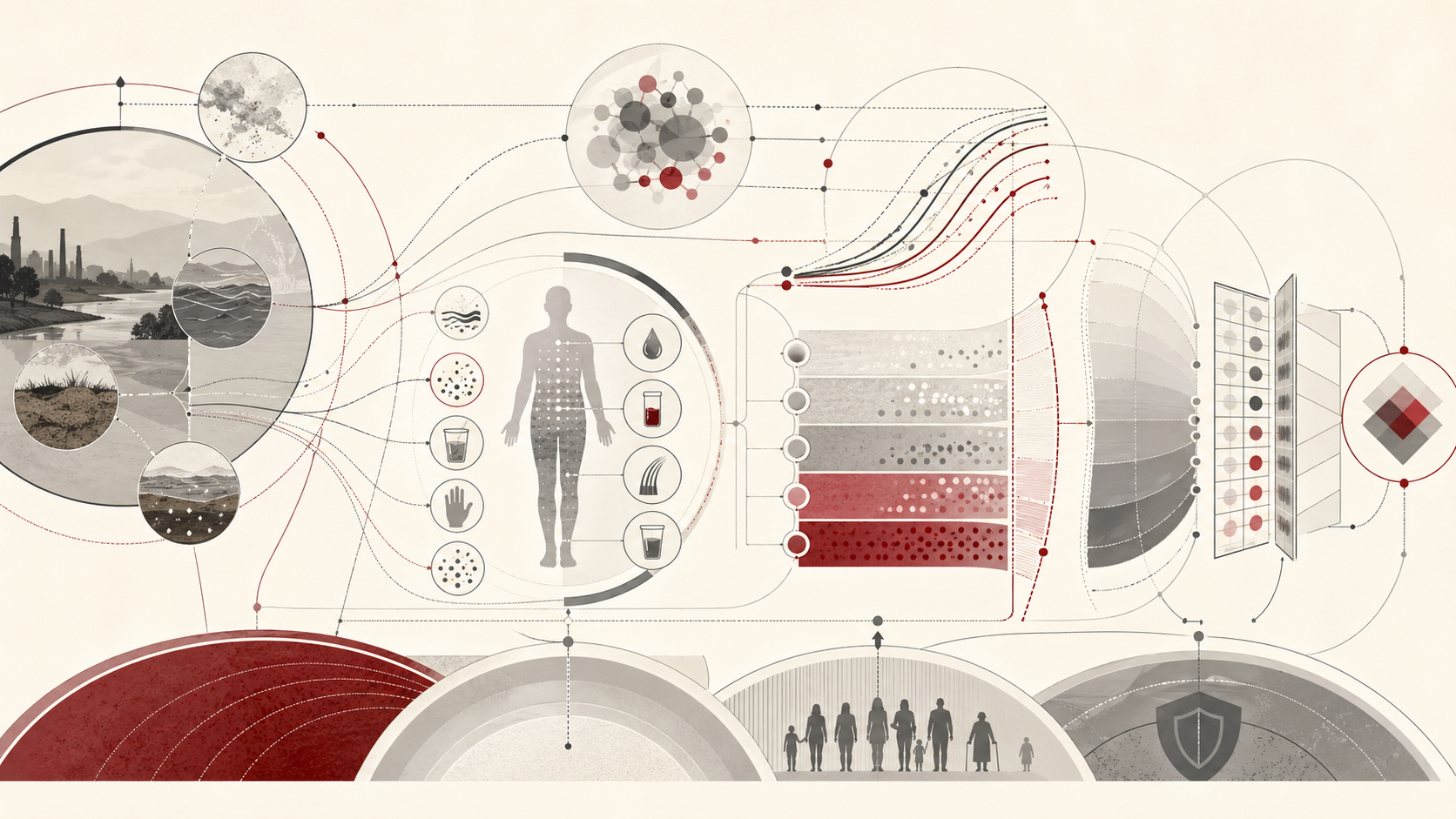
What Toxicology Studies
Toxicology studies adverse biological effects caused by chemical, physical, or biological agents. In chemistry-centered toxicology, the focus is often on substances such as metals, solvents, pesticides, air pollutants, industrial chemicals, pharmaceuticals, food contaminants, water contaminants, combustion products, persistent organic pollutants, endocrine-active compounds, nanoparticles, microplastics-associated chemicals, and naturally occurring toxins. The field asks how these substances interact with cells, tissues, organs, organisms, populations, and ecosystems.
Modern toxicology is not limited to poisoning events. It includes subtle and delayed effects: developmental disruption, neurotoxicity, endocrine signaling changes, immunotoxicity, reproductive effects, liver injury, kidney injury, respiratory injury, cardiovascular stress, carcinogenesis, genotoxicity, epigenetic change, metabolic disruption, and mixture effects. It also includes protective questions: how to set exposure limits, how to prioritize chemicals for testing, how to interpret biomonitoring data, how to protect workers, how to evaluate chemical substitutions, and how to prevent harm before disease appears.
Toxicology uses multiple evidence streams. These include animal studies, human epidemiology, in vitro assays, high-throughput screening, toxicogenomics, computational toxicology, structure-activity relationships, exposure modeling, biomonitoring, occupational studies, environmental monitoring, clinical observations, mechanistic studies, and systematic review. No single evidence stream is perfect. The strength of toxicology comes from integrating evidence while being honest about uncertainty.
For researchers and scientists, toxicology is both mechanistic and interpretive. It asks how a chemical interacts with biological systems, but also how evidence should be weighed when data are incomplete, endpoints differ, populations vary, or exposures occur as mixtures. The discipline is strongest when it links molecular mechanism to real-world exposure and protective decision-making.
Hazard, Dose, Exposure, and Risk
A hazard is the inherent capacity of a substance or condition to cause harm. Exposure is contact with the substance. Dose is the amount that reaches an organism, tissue, or target site. Risk is the probability or likelihood of harm under specific exposure conditions. These concepts are related but not interchangeable.
A substance can be hazardous but pose little risk if exposure is negligible. A substance with moderate hazard can pose serious risk if exposure is high, frequent, or affects vulnerable populations. A chemical detected in an environment is not automatically a health threat, but detection is not automatically reassuring either. The relevant questions are: how much is present, in what form, how bioavailable is it, who is exposed, by which route, for how long, and what biological effect is plausible?
This distinction matters for public communication. Saying “the chemical is present” is not the same as saying “the chemical is causing harm.” Saying “the measured level is below a benchmark” is not the same as saying “there is no concern,” especially when mixtures, vulnerable populations, cumulative exposure, uncertain endpoints, or data gaps exist. Toxicology requires careful language because overstatement and understatement can both damage public trust.
For researchers, the hazard-exposure-risk distinction is also a methodological discipline. Hazard identification without exposure assessment may overstate practical risk. Exposure assessment without toxicological context may understate biological significance. Risk assessment requires the integration of both, plus timing, route, duration, vulnerability, uncertainty, and endpoint relevance.
Dose-Response Relationships
Dose-response assessment examines how the frequency or severity of an effect changes with dose. Some effects may have apparent thresholds: below a certain dose, compensatory biological systems may prevent observable harm. Other effects, especially some cancer-related risk frameworks, may be modeled without a clear threshold. The chosen dose-response model depends on evidence, endpoint, mechanism, uncertainty, and regulatory context.
Important toxicological dose concepts include NOAEL, LOAEL, benchmark dose, reference dose, reference concentration, point of departure, uncertainty factors, slope factors, and margins of exposure. A NOAEL is a no-observed-adverse-effect level in a study, while a LOAEL is a lowest-observed-adverse-effect level. Benchmark-dose modeling uses statistical modeling to estimate a dose associated with a specified response level. Reference values incorporate uncertainty factors to estimate exposure levels expected to be without appreciable risk for specified effects and durations.
Dose-response interpretation must consider study quality, species differences, route of exposure, exposure duration, endpoint sensitivity, toxicokinetics, toxicodynamics, and susceptible populations. A dose-response value is not a magic boundary between safety and danger. It is a structured scientific judgment built from evidence and assumptions.
Researchers should therefore treat dose-response values as evidence-based decision tools, not absolute truths. A reference value may be protective for one route, duration, endpoint, and population but not automatically transferable to another. Dose-response analysis should always preserve information about uncertainty factors, confidence, study basis, endpoint selection, and susceptible groups.
Exposure Pathways and Routes
Exposure can occur through ingestion, inhalation, dermal contact, injection, placental transfer, lactation, occupational contact, consumer-product use, food, water, air, dust, soil, sediment, indoor environments, or medical use. An exposure pathway links a source to an environmental medium, a point of contact, a route of exposure, and a receptor population.
The same chemical can behave differently across pathways. Inhaled particles may affect the respiratory system and then enter systemic circulation. Ingested contaminants may pass through the gastrointestinal tract and liver before reaching systemic circulation. Dermal exposure depends on skin permeability, contact time, chemical form, and absorption fraction. Some chemicals are readily absorbed; others are poorly bioavailable. Some are metabolized into less toxic forms; others become more reactive after metabolism.
Exposure duration matters. Acute exposure occurs over a short period. Subchronic exposure persists for weeks or months. Chronic exposure may last years. Intermittent high exposure may differ from continuous low exposure. Timing also matters: prenatal development, early childhood, puberty, pregnancy, aging, disease, and occupational intensity can alter vulnerability.
For environmental and occupational studies, exposure assessment must also consider microenvironments and behavior. Indoor dust, workplace tasks, drinking-water use, diet, housing conditions, ventilation, protective equipment, consumer-product use, and local contamination can all shape exposure. A population-average estimate may miss high-end exposure groups.
ADME: Absorption, Distribution, Metabolism, and Excretion
ADME describes how a substance enters, moves through, transforms within, and exits the body. Absorption determines how much of an external exposure becomes internal dose. Distribution determines where the substance travels. Metabolism can detoxify, activate, or transform the substance into new metabolites. Excretion removes substances through urine, feces, breath, sweat, bile, or other routes.
ADME is essential because external concentration is not always equal to internal risk. A poorly absorbed substance may have limited systemic effects but still affect the contact site. A readily absorbed substance may distribute to sensitive organs. A lipophilic compound may accumulate in fat. A metal may bind proteins or bone. A solvent may cross membranes easily. A metabolite may be more toxic than the parent compound. Toxicology therefore distinguishes exposure concentration, absorbed dose, internal dose, biologically effective dose, and target-tissue dose.
Biomonitoring can help connect external exposure to internal burden. Blood, urine, hair, nails, breast milk, exhaled breath, and tissue measurements can provide evidence of exposure or dose. However, biomonitoring data require careful interpretation. A biomarker may reflect recent exposure, cumulative exposure, metabolism, storage, or excretion. It may not directly predict harm without dose-response context.
For researchers, ADME also shapes extrapolation. Data from one route, species, age group, or exposure pattern may not translate directly to another. Physiologically based toxicokinetic models can help organize such extrapolations, but they still depend on assumptions, parameters, and validation data.
Target-Organ Toxicity and Mechanisms of Harm
Chemicals may harm specific organs or systems. Neurotoxicants affect the nervous system. Hepatotoxicants affect the liver. Nephrotoxicants affect the kidney. Pulmonary toxicants affect the respiratory system. Cardiotoxicants affect the heart and vascular system. Immunotoxicants affect immune function. Reproductive and developmental toxicants affect fertility, pregnancy, development, and early-life outcomes.
Mechanisms of toxicity include receptor binding, enzyme inhibition, oxidative stress, mitochondrial dysfunction, DNA damage, protein adduct formation, endocrine signaling disruption, membrane damage, inflammation, immune activation, calcium dysregulation, epigenetic change, altered gene expression, transport disruption, and interference with developmental signaling. A mechanistic understanding can strengthen causal interpretation and improve risk assessment.
Mechanism also informs susceptibility. A person with impaired kidney function may be more vulnerable to nephrotoxic substances. A developing nervous system may be more sensitive to neurodevelopmental toxicants. Genetic differences in metabolism can alter internal dose. Co-exposure to other chemicals can increase or decrease toxicity. Toxicology becomes more protective when it accounts for human variability rather than relying only on average adult assumptions.
Mechanistic evidence should not be used narrowly. Sometimes mechanism is clear before population-level evidence is complete. In other cases, epidemiology shows associations before mechanism is fully resolved. Protective toxicology integrates mechanistic plausibility, experimental evidence, human evidence, exposure data, and uncertainty rather than privileging one stream automatically.
Acute, Subchronic, and Chronic Effects
Acute toxicity refers to harmful effects after short-term exposure. Examples include irritation, respiratory distress, poisoning, dizziness, burns, or organ injury after a high exposure. Chronic toxicity refers to effects that develop after long-term or repeated exposure. These may include cancer, neurodevelopmental effects, kidney disease, liver injury, endocrine disruption, reproductive effects, or chronic respiratory disease.
Some chemicals produce both acute and chronic effects, but at different dose ranges and through different mechanisms. A solvent may cause acute neurological symptoms at high exposure and chronic liver or nervous-system concerns at repeated lower exposure. A metal may cause acute gastrointestinal symptoms at high ingestion and developmental or neurological effects at lower long-term exposure. A pesticide may have acute cholinergic effects and longer-term concerns depending on mechanism and exposure.
Risk communication should distinguish these durations. A benchmark for acute inhalation exposure may not apply to chronic drinking-water ingestion. A workplace limit may not protect children in residential settings. A short-term emergency threshold may not be appropriate for lifetime exposure. The route, duration, and population define the interpretation.
For researchers, duration also affects study design. Acute tests, repeated-dose studies, chronic bioassays, developmental studies, occupational cohorts, and environmental epidemiology answer different questions. Evidence synthesis should not collapse these differences into a single generic claim about “toxicity.”
Developmental Toxicity, Endocrine Disruption, and Carcinogenicity
Developmental toxicology studies how exposures affect embryos, fetuses, infants, children, and adolescents. Developmental windows can be uniquely sensitive because organs, brain circuits, endocrine systems, immune systems, and metabolic pathways are forming. A dose that has little effect in an adult may have different consequences during development.
Endocrine disruption involves interference with hormone signaling. Endocrine-active substances may mimic hormones, block receptors, alter hormone synthesis, change metabolism, affect transport proteins, or disrupt feedback systems. Because hormones operate at low concentrations and during sensitive windows, endocrine toxicology often requires careful attention to timing, dose-response shape, tissue specificity, and developmental context.
Carcinogenicity involves processes that increase cancer risk. These may include genotoxic mechanisms, mutagenesis, chromosomal damage, epigenetic alteration, chronic inflammation, endocrine-mediated proliferation, cytotoxicity with regenerative proliferation, immune effects, or other pathways. Cancer risk assessment depends heavily on mode of action, exposure duration, dose-response modeling, and human relevance of the evidence.
These endpoints illustrate why toxicology cannot rely only on average adult exposure and simple threshold assumptions. Sensitive windows, delayed outcomes, multiple mechanisms, and long latency require protective study designs and careful interpretation. Evidence of harm may emerge slowly, while exposure can spread quickly.
Mixtures, Cumulative Risk, and Real-World Exposure
People are rarely exposed to one chemical at a time. Real exposures occur as mixtures: air pollutants, drinking-water contaminants, workplace chemicals, consumer-product ingredients, food residues, indoor dust, combustion products, metals, solvents, pesticides, and naturally occurring substances. Mixture toxicology asks whether combined exposure produces additive, synergistic, antagonistic, or independent effects.
A common screening approach is to group chemicals by target organ, mechanism, or endpoint and calculate a hazard index. This does not solve mixture toxicology, but it helps identify when multiple exposures may contribute to the same biological concern. More advanced approaches use dose addition, response addition, toxic equivalency factors, relative potency factors, cumulative assessment groups, and mechanistic modeling.
Cumulative risk goes beyond chemical mixtures. It considers nonchemical stressors such as poverty, heat, housing quality, nutrition, psychosocial stress, occupational conditions, racism, limited healthcare access, and preexisting disease. These stressors can shape vulnerability and resilience. A chemically “acceptable” exposure in one context may not be equally protective in another when communities face cumulative burdens.
For researchers, mixture assessment requires transparent grouping logic. Chemicals should not be summed simply because they are detected together. Grouping should consider shared endpoints, target organs, mechanisms, toxicological values, exposure duration, and route. At the same time, failure to assess mixtures can underestimate real-world risk.
Vulnerability, Environmental Justice, and Unequal Burdens
Toxicology is not ethically neutral when exposure burdens are unequal. Communities near industrial facilities, highways, contaminated sites, waste operations, mining areas, poorly regulated workplaces, aging housing, unsafe water infrastructure, or disaster zones may experience higher chemical burdens. Workers may face intense exposures not shared by the general population. Children may experience higher intake per body weight and unique developmental sensitivity. Pregnant people may face concern for both maternal and fetal health.
Environmental justice requires toxicology to ask who is exposed, who benefits, who bears uncertainty, and who is protected by default assumptions. A risk assessment that ignores vulnerable populations can create a false sense of precision. A public communication strategy that dismisses community concerns because values fall below a generic benchmark may fail ethically even when technically defensible.
Protective toxicology must therefore include exposure inequality, susceptible life stages, cumulative burden, uncertainty, and community knowledge. It must also be clear about what evidence can and cannot conclude. Communities deserve neither panic nor dismissal. They deserve transparent science, protective assumptions, and accountable decision-making.
For researchers, environmental justice is not only a communication issue. It affects sampling design, exposure models, uncertainty factors, scenario selection, biomonitoring priorities, and interpretation of “acceptable” risk. A risk assessment that is blind to place can be blind to harm.
Risk Assessment and Risk Characterization
Human-health risk assessment commonly includes four linked steps: hazard identification, dose-response assessment, exposure assessment, and risk characterization. Hazard identification asks whether a substance can cause harm. Dose-response assessment asks how effect changes with dose. Exposure assessment asks who is exposed, by what route, how often, and at what magnitude. Risk characterization integrates the evidence, assumptions, variability, uncertainty, and limitations.
Risk characterization is the most interpretive step. It should not simply present a number. It should explain confidence, uncertainty, sensitive assumptions, population relevance, data gaps, route-to-route extrapolation, species extrapolation, mixture concerns, susceptible groups, and the degree to which conclusions are protective. A transparent risk characterization makes it possible to evaluate whether a decision is scientifically credible and ethically defensible.
Risk assessment is not identical to risk management. Risk assessment analyzes evidence. Risk management decides what to do. Management decisions may consider legal requirements, feasibility, cost, equity, community priorities, technological options, substitution, remediation, occupational controls, medical surveillance, and precaution. Toxicology informs these decisions, but it does not replace democratic accountability or ethical judgment.
For researchers and public institutions, the legitimacy of risk assessment depends on clarity. The assessment should show what is known, what is assumed, what is uncertain, what is protective, what is missing, and what decision the evidence can reasonably support. Risk assessment that hides uncertainty is weaker than risk assessment that explains it.
Biomonitoring, Evidence Integration, and Systematic Review
Biomonitoring measures chemicals, metabolites, or effect markers in biological samples. It can help identify internal exposure, track population trends, evaluate occupational burden, support epidemiology, and guide public-health questions. But biomonitoring must be interpreted carefully. Detection does not automatically mean disease, and nondetection does not always mean absence of exposure. Timing, half-life, metabolism, analytical sensitivity, sample type, and population reference values all matter.
Evidence integration is central to modern toxicology. Animal studies may provide controlled evidence and mechanistic insight. Human epidemiology may show population relevance but face confounding and exposure-measurement challenges. In vitro and high-throughput methods can identify pathways and screen many substances but require biological interpretation. Computational toxicology can prioritize concerns but depends on model validity and training data.
Systematic review helps make evidence evaluation more transparent. It defines the question, searches literature systematically, evaluates study quality, extracts evidence, assesses confidence, and explains how conclusions are reached. The National Toxicology Program describes its health-effects assessments as evaluations of published scientific literature, including cancer and noncancer health effects. :contentReference[oaicite:2]{index=2}
For researchers, the goal is not to force all evidence into one hierarchy. It is to ask what each evidence stream can contribute, where it is uncertain, and how convergence or disagreement should influence protective decisions. Strong toxicology is cumulative, transparent, and revisable.
Mathematical Lens: Dose, Hazard Quotient, Margin of Exposure, and Risk
Mathematical models help connect concentration, exposure, dose, and toxicological benchmarks. They should be treated as conceptual and screening tools unless applied by qualified experts with validated data and appropriate context.
A simplified chronic daily intake for ingestion can be represented as:
CDI = \frac{C \times IR \times EF \times ED}{BW \times AT}
\]
Interpretation: \(CDI\) is chronic daily intake, \(C\) is concentration, \(IR\) is intake rate, \(EF\) is exposure frequency, \(ED\) is exposure duration, \(BW\) is body weight, and \(AT\) is averaging time. Units must be handled carefully because water, food, soil, dust, and air require different conversions.
A noncancer hazard quotient can be represented as:
HQ = \frac{CDI}{RfD}
\]
Interpretation: \(HQ\) is the hazard quotient and \(RfD\) is a reference dose or analogous toxicity value. \(HQ\) is a screening comparison, not a direct prediction of disease.
A hazard index sums hazard quotients for chemicals that affect a common endpoint or target system:
HI = \sum_i HQ_i
\]
Interpretation: \(HI\) is the hazard index. It is meaningful only when the chemicals being summed are grouped appropriately by endpoint, target organ, mechanism, route, duration, and evidence quality.
A simplified cancer risk estimate may be represented as:
Risk = CDI \times SF
\]
Interpretation: \(SF\) is a slope factor. This equation is a simplified representation of one screening approach; cancer-risk assessment depends on endpoint, mode of action, exposure duration, dose-response model, and regulatory context.
A margin of exposure can be represented as:
MOE = \frac{POD}{Exposure}
\]
Interpretation: \(MOE\) is margin of exposure and \(POD\) is a point of departure. Interpreting an MOE requires understanding uncertainty factors, endpoint severity, population vulnerability, and evidence quality.
These equations are not substitutes for professional risk assessment. They are conceptual tools for understanding how chemical concentration becomes exposure, how exposure becomes dose, and how dose is compared with toxicological evidence.
Computational Workflows for Toxicology and Exposure Science
Computational toxicology can make toxicological reasoning more transparent. A reproducible workflow can document input concentrations, exposure assumptions, body weights, intake rates, exposure frequencies, toxicity values, uncertainty factors, target-organ groupings, route-specific assumptions, and output metrics. This matters because risk assessment can otherwise become a black box.
Useful workflows include exposure-dose calculation, hazard quotient screening, hazard index aggregation, margin-of-exposure ranking, benchmark comparison, probabilistic uncertainty analysis, biomonitoring interpretation, mixture grouping, target-organ summaries, sensitivity analysis, scenario comparison, and provenance tracking. More advanced workflows may incorporate physiologically based toxicokinetic models, high-throughput assay data, adverse outcome pathways, Bayesian evidence integration, read-across, QSAR, toxicogenomics, and cumulative-risk models.
For researchers, computational toxicology should preserve assumptions. Concentration values, exposure durations, intake rates, averaging times, body weights, toxicity values, uncertainty factors, chemical groupings, and endpoint assumptions should be auditable. Screening tools are useful when they clarify uncertainty. They are dangerous when they create unearned certainty.
The code examples below are synthetic and educational. They are not public-health tools, regulatory calculators, clinical systems, site-assessment tools, product-safety tools, or legal instruments. Their purpose is to demonstrate how toxicological assumptions can be encoded, tested, audited, and communicated responsibly.
Python Example: Exposure Dose and Hazard Screening
The following simplified Python example calculates chronic daily intake, hazard quotient, and margin of exposure for an ingestion pathway. It is educational only. Real risk assessment requires validated data, route-specific assumptions, duration-specific toxicity values, uncertainty analysis, and expert review.
from dataclasses import dataclass
from typing import Dict


@dataclass
class ExposureScenario:
    """Synthetic educational exposure scenario.

    This example does not determine whether a real community is safe,
    whether a worker has been harmed, whether cleanup is required,
    or whether a regulatory standard has been met.
    """

    chemical_name: str
    concentration_mg_l: float
    intake_l_day: float
    exposure_frequency_days_year: float
    exposure_duration_years: float
    body_weight_kg: float
    averaging_time_days: float
    reference_dose_mg_kg_day: float
    point_of_departure_mg_kg_day: float


def chronic_daily_intake(scenario: ExposureScenario) -> float:
    """Simplified ingestion CDI in mg/kg-day."""
    numerator = (
        scenario.concentration_mg_l
        * scenario.intake_l_day
        * scenario.exposure_frequency_days_year
        * scenario.exposure_duration_years
    )
    denominator = scenario.body_weight_kg * scenario.averaging_time_days

    if denominator <= 0:
        return 0.0

    return numerator / denominator


def hazard_quotient(cdi_mg_kg_day: float, reference_dose_mg_kg_day: float) -> float:
    """Noncancer hazard quotient."""
    if reference_dose_mg_kg_day <= 0:
        return float("inf")
    return cdi_mg_kg_day / reference_dose_mg_kg_day


def margin_of_exposure(point_of_departure: float, exposure: float) -> float:
    """Simplified margin of exposure."""
    if exposure <= 0:
        return float("inf")
    return point_of_departure / exposure


scenario = ExposureScenario(
    chemical_name="synthetic_water_contaminant",
    concentration_mg_l=0.010,
    intake_l_day=2.0,
    exposure_frequency_days_year=350,
    exposure_duration_years=30,
    body_weight_kg=70,
    averaging_time_days=30 * 365,
    reference_dose_mg_kg_day=0.0003,
    point_of_departure_mg_kg_day=0.03,
)

cdi = chronic_daily_intake(scenario)
hq = hazard_quotient(cdi, scenario.reference_dose_mg_kg_day)
moe = margin_of_exposure(scenario.point_of_departure_mg_kg_day, cdi)

print({
    "chemical": scenario.chemical_name,
    "CDI_mg_kg_day": round(cdi, 8),
    "hazard_quotient": round(hq, 3),
    "margin_of_exposure": round(moe, 1),
})
The output should be read as a screening demonstration. It does not establish safety, harm, causation, or compliance. Its value is transparency: each assumption is visible and can be reviewed.
R Example: Mixture Hazard Index Summary
The following R example shows the logic of summing hazard quotients by target system. In practice, mixture assessment requires careful grouping by endpoint, mechanism, target organ, route, duration, and evidence quality.
chemical <- c("A", "B", "C", "D", "E")
target_system <- c(
  "neurodevelopment",
  "neurodevelopment",
  "kidney",
  "respiratory",
  "kidney"
)

hazard_quotient <- c(0.45, 0.30, 0.20, 0.55, 0.35)
evidence_quality <- c("moderate", "high", "moderate", "low", "high")

tox <- data.frame(
  chemical,
  target_system,
  hazard_quotient,
  evidence_quality
)

hazard_index <- aggregate(
  hazard_quotient ~ target_system,
  data = tox,
  FUN = sum
)

hazard_index <- hazard_index[order(hazard_index$hazard_quotient, decreasing = TRUE), ]

print(tox)
print(hazard_index)
This kind of summary should be interpreted cautiously. A hazard index can help screen cumulative concern, but it is not a full mixture assessment. The scientific validity depends on grouping logic, toxicity values, exposure assumptions, and endpoint relevance.
SQL Example: Toxicology Evidence Register
Toxicology workflows are more credible when assumptions are traceable. A simple evidence register can preserve exposure scenarios, toxicity values, target systems, confidence levels, and uncertainty notes.
CREATE TABLE exposure_scenario (
    scenario_id INTEGER PRIMARY KEY,
    chemical_name TEXT NOT NULL,
    exposure_medium TEXT,
    exposure_route TEXT,
    concentration_mg_l REAL CHECK (concentration_mg_l >= 0),
    intake_l_day REAL CHECK (intake_l_day >= 0),
    exposure_frequency_days_year REAL CHECK (exposure_frequency_days_year >= 0),
    exposure_duration_years REAL CHECK (exposure_duration_years >= 0),
    body_weight_kg REAL CHECK (body_weight_kg > 0),
    averaging_time_days REAL CHECK (averaging_time_days > 0),
    reference_dose_mg_kg_day REAL CHECK (reference_dose_mg_kg_day >= 0),
    target_system TEXT,
    uncertainty_notes TEXT
);

CREATE TABLE toxicology_evidence (
    evidence_id INTEGER PRIMARY KEY,
    scenario_id INTEGER NOT NULL,
    evidence_type TEXT NOT NULL,
    source_reference TEXT NOT NULL,
    endpoint TEXT,
    confidence_score REAL CHECK (confidence_score BETWEEN 0 AND 1),
    evidence_summary TEXT,
    FOREIGN KEY (scenario_id) REFERENCES exposure_scenario(scenario_id)
);

SELECT
    chemical_name,
    exposure_medium,
    exposure_route,
    target_system,
    ROUND(
        (
            concentration_mg_l
            * intake_l_day
            * exposure_frequency_days_year
            * exposure_duration_years
        ) / (body_weight_kg * averaging_time_days),
        8
    ) AS cdi_mg_kg_day,
    ROUND(
        (
            (
                concentration_mg_l
                * intake_l_day
                * exposure_frequency_days_year
                * exposure_duration_years
            ) / (body_weight_kg * averaging_time_days)
        ) / NULLIF(reference_dose_mg_kg_day, 0),
        3
    ) AS hazard_quotient
FROM exposure_scenario
ORDER BY hazard_quotient DESC;
The purpose of this register is to keep toxicological conclusions attached to evidence. A risk estimate should never be detached from the exposure scenario, toxicity value, target endpoint, uncertainty, and population context that produced it.
GitHub Repository
The companion repository for this article can support reproducible workflows for toxicology exposure modeling, chronic daily intake, hazard quotient, hazard index, margin of exposure, cancer-risk proxy, mixture grouping, uncertainty simulation, scenario outputs, SQL provenance, and responsible-use documentation.
Complete Code Repository
The full code distribution for this article, including toxicology exposure modeling, chronic daily intake, hazard quotient, hazard index, margin of exposure, cancer-risk proxy, mixture grouping, uncertainty simulation, scenario outputs, SQL provenance, and professional responsible-use documentation, is available on GitHub.
Limits, Ethics, and Responsible Use
Toxicology has direct consequences for health, labor, housing, environment, medicine, law, and public trust. This means toxicological claims must be made carefully. A screening calculation is not a diagnosis. A hazard quotient is not a clinical prediction. A biomarker is not always a disease measure. A reference dose is not a bright line between safety and harm. A risk estimate is not meaningful without assumptions, uncertainty, population context, and evidence quality.
The computational examples associated with this article are synthetic and educational. They do not determine whether a real community is safe, whether a real worker has been harmed, whether a real site requires cleanup, whether a chemical caused disease, whether a product is safe, or whether a regulatory standard has been met. They are designed to show how toxicological reasoning can be made transparent and auditable.
Ethical toxicology should protect vulnerable people, not only average people. It should acknowledge uncertainty rather than using uncertainty as a reason for inaction. It should avoid both chemical panic and chemical complacency. It should respect community evidence, worker experience, environmental justice, and the reality that chemical burdens are not distributed equally.
Responsible toxicology should also be humble about uncertainty. Absence of complete evidence is not proof of safety. Evidence of hazard is not always evidence of real-world harm. Screening values are not clinical diagnoses. Detection is not destiny. The discipline’s public value lies in making these distinctions clearly while still supporting protective action when credible evidence warrants concern.
Conclusion
Toxicology, exposure science, and chemical risk assessment turn chemical evidence into protective judgment. They show that harm is not determined by molecular identity alone, but by dose, route, duration, timing, vulnerability, metabolism, mechanism, mixtures, and uncertainty. Toxicology is therefore both a scientific discipline and a public responsibility.
The field’s importance lies in integration. Chemistry identifies substances and transformations. Biology reveals mechanisms and responses. Exposure science connects sources to people. Epidemiology observes patterns in populations. Risk assessment organizes evidence for decision-making. Ethics asks who is protected, who is burdened, and who participates in interpreting uncertainty.
In a world of industrial chemicals, pharmaceuticals, consumer products, environmental contaminants, occupational exposures, climate-driven hazards, and unequal burdens, toxicology is essential to responsible chemistry. It is the science that asks not only what chemicals can do, but how society should use chemical knowledge to prevent harm.
Related articles
- Environmental Chemistry and the Chemical Conditions of Habitability
- Medicinal Chemistry and Drug Discovery
- Water Chemistry and Environmental Monitoring
- Atmospheric Chemistry and Climate Processes
- Soil Chemistry, Nutrient Cycles, and Land Systems
- Analytical Chemistry and the Identification of Matter
- Biochemistry and the Chemistry of Life
- Green Chemistry, Responsibility, and Sustainable Transformation
- Chemistry Ethics, Governance, and Molecular Power
- Circular Chemistry, Waste, and Material Futures
Further reading
- Klaassen, C.D. (ed.) (2019) Casarett and Doull’s Toxicology: The Basic Science of Poisons. 9th edn. New York: McGraw-Hill Education.
- Hayes, A.W. and Kruger, C.L. (eds.) (2014) Hayes’ Principles and Methods of Toxicology. 6th edn. Boca Raton: CRC Press.
- National Research Council (2007) Toxicity Testing in the 21st Century: A Vision and a Strategy. Washington, DC: National Academies Press. Available at: https://nap.nationalacademies.org/catalog/11970/toxicity-testing-in-the-21st-century-a-vision-and-a
- National Research Council (2009) Science and Decisions: Advancing Risk Assessment. Washington, DC: National Academies Press. Available at: https://nap.nationalacademies.org/catalog/12209/science-and-decisions-advancing-risk-assessment
- Faustman, E.M. and Omenn, G.S. (2013) ‘Risk assessment’, in Klaassen, C.D. (ed.) Casarett and Doull’s Toxicology: The Basic Science of Poisons. 8th edn. New York: McGraw-Hill.
- Society of Toxicology (n.d.) Learning Toxicology. Available at: https://www.toxicology.org/education/edu/learning.asp
References
- Agency for Toxic Substances and Disease Registry (2024) Minimal Risk Levels. Available at: https://www.atsdr.cdc.gov/minimal-risk-levels/about/index.html
- Agency for Toxic Substances and Disease Registry (2026) Toxicological Profiles. Available at: https://www.atsdr.cdc.gov/toxicological-profiles/about/index.html
- Agency for Toxic Substances and Disease Registry (n.d.) Minimal Risk Levels for Hazardous Substances. Available at: https://wwwn.cdc.gov/tsp/mrls/mrlslisting.aspx
- International Council for Harmonisation (n.d.) Safety Guidelines. Available at: https://www.ich.org/page/safety-guidelines
- National Library of Medicine (n.d.) PubChem. Available at: https://pubchem.ncbi.nlm.nih.gov/
- National Toxicology Program (2025) Health Effects Assessments. Available at: https://ntp.niehs.nih.gov/research/assessments
- National Toxicology Program (2025) Noncancer Health Effects. Available at: https://ntp.niehs.nih.gov/research/assessments/noncancer
- National Toxicology Program (2026) Cancer Health Effects. Available at: https://ntp.niehs.nih.gov/research/assessments/cancer
- U.S. Environmental Protection Agency (2026) Conducting a Human Health Risk Assessment. Available at: https://www.epa.gov/risk/conducting-human-health-risk-assessment
- U.S. Environmental Protection Agency (2026) Human Health Risk Assessment. Available at: https://www.epa.gov/risk/human-health-risk-assessment
- U.S. Food and Drug Administration (n.d.) ICH S7A Safety Pharmacology Studies for Human Pharmaceuticals. Available at: https://www.fda.gov/media/72033/download
- U.S. Food and Drug Administration (2024) M3(R2) Nonclinical Safety Studies for the Conduct of Human Clinical Trials and Marketing Authorization for Pharmaceuticals. Available at: https://www.fda.gov/media/71542/download