
Last Updated May 28, 2026
Green chemistry reframes chemistry as a design discipline for safer, cleaner, and more responsible transformation. It asks chemists to prevent harm before it occurs, rather than treating pollution, waste, toxicity, exposure, and energy burden as unavoidable consequences of chemical progress. The field is not anti-chemistry. It is chemistry at its most intellectually demanding: chemistry that designs molecules, reactions, materials, solvents, catalysts, processes, products, supply chains, and end-of-life pathways with hazard, exposure, efficiency, circularity, and justice in view from the beginning.
The central thesis of green chemistry is that sustainability begins at the molecular and process-design level. Waste, toxicity, persistence, unsafe solvents, excessive energy use, hazardous reagents, inefficient stoichiometry, nondegradable materials, accidental release, and avoidable exposure are not merely downstream management problems. They are often design problems. Green chemistry asks whether a molecule could be safer, whether a reaction could be more atom-efficient, whether a catalyst could replace a stoichiometric reagent, whether a solvent could be eliminated or made safer, whether a feedstock could be renewable, whether a product could degrade after use, and whether real-time monitoring could prevent harm before it spreads.
Green chemistry is therefore not a decorative sustainability label added after a reaction has already been designed. It is a way of doing chemistry differently from the beginning. It connects molecular imagination to toxicology, thermodynamics, kinetics, catalysis, process engineering, analytical monitoring, material circularity, worker safety, public health, environmental justice, and long-term stewardship.
Main Library
Publications
Article Map
Chemistry
Related Topic
Environmental Science
Related Topic
Risk & Resilience
Related Topic
Infrastructure Systems
What Green Chemistry Studies
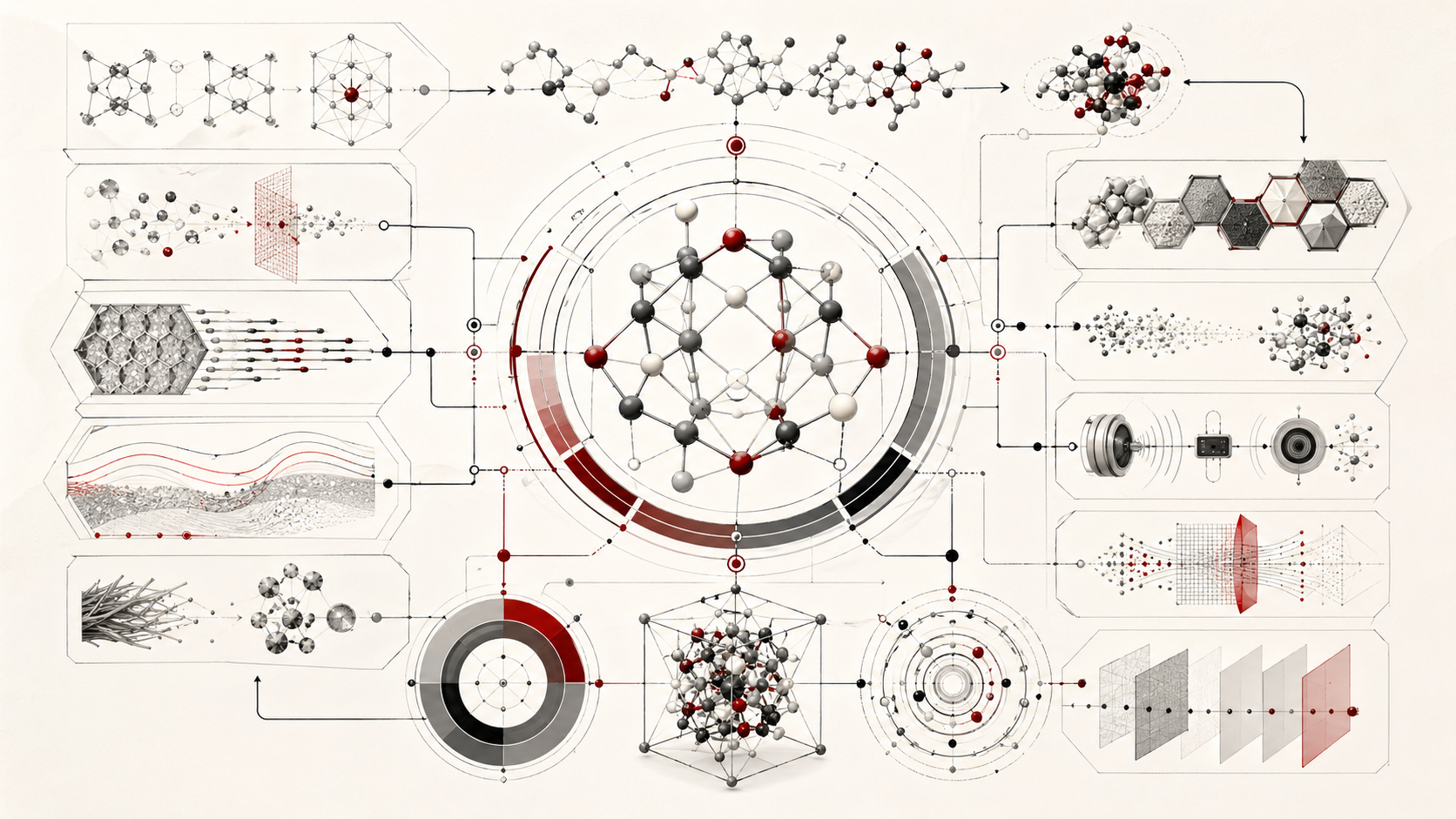
Green chemistry studies how chemical products and processes can be designed to reduce or eliminate hazardous substances, waste, energy burden, unsafe conditions, and long-term environmental harm. It is concerned with molecular structure, synthetic pathways, solvents, catalysts, feedstocks, reaction conditions, separation methods, toxicity, exposure, persistence, degradation, material circularity, process monitoring, occupational safety, industrial scale-up, and life-cycle consequences.
Unlike end-of-pipe pollution control, green chemistry moves responsibility upstream. It asks whether the chemical system itself can be redesigned. A hazardous reagent might be replaced. A solvent might be avoided. A process might be catalyzed rather than driven by stoichiometric reagents. A polymer might be designed for safer degradation. A reaction might operate at lower temperature and pressure. A route might use renewable feedstocks. A monitoring system might detect runaway conditions before a release occurs.
Green chemistry is therefore both technical and ethical. It does not merely optimize yield. It asks what kind of chemical transformation is worth scaling, who benefits, who bears risk, what waste is created, what exposures occur, what materials persist, what can be recovered, and whether a chemical system contributes to durable social and ecological wellbeing.
For researchers and scientists, green chemistry requires a wider definition of performance. A reaction route should be judged not only by conversion, selectivity, cost, novelty, or throughput, but also by hazard, mass intensity, solvent burden, separation difficulty, feedstock origin, catalyst recovery, process safety, degradation profile, and downstream material fate.
The Twelve Principles as Design Logic
The twelve principles of green chemistry are often presented as a list, but their deeper value is architectural. They form a design logic for thinking about the full chemical life cycle: waste prevention, atom economy, less hazardous synthesis, safer products, safer solvents, energy efficiency, renewable feedstocks, fewer derivatives, catalysis, degradation, real-time monitoring, and accident prevention.
These principles are mutually reinforcing. A more atom-economic route may reduce waste. A catalytic process may improve selectivity and lower energy use. A safer solvent may reduce worker exposure. A degradable product may reduce persistence. Real-time analysis may prevent pollution. Renewable feedstocks may reduce dependence on fossil carbon, but only if the broader land, water, biodiversity, energy, and toxicity consequences are also considered.
The principles should not be treated as a checklist that automatically certifies a chemical as “green.” A process can improve one dimension while worsening another. A renewable feedstock can still be toxic, land-intensive, or energy-intensive. A biodegradable material can still create harmful intermediates. A low-waste process can still use hazardous reagents. Green chemistry requires integrated judgment.
The strongest use of the twelve principles is comparative. They help researchers ask whether a route can be redesigned, whether a solvent can be replaced, whether a protecting group is unnecessary, whether a product can be less hazardous, whether a catalyst can improve selectivity, and whether process monitoring can prevent waste before it becomes waste.
Prevention Before Remediation
The first principle of green chemistry is prevention: it is better to prevent waste than to treat or clean it up after it has been created. This principle shifts chemistry from cleanup to foresight. Waste is not only a disposal problem. It is evidence that atoms, energy, solvents, reagents, purification systems, and process design have not been fully aligned.
Prevention changes how chemists evaluate success. A reaction that produces a high yield but requires large solvent volumes, hazardous quenching, multiple protection-deprotection steps, difficult separations, or unstable intermediates may be less responsible than a slightly lower-yielding route that is simpler, safer, and cleaner. The unit of evaluation is not only the isolated product. It is the full transformation.
Prevention also matters socially. Waste sites, emissions, spills, and contaminated water rarely affect all communities equally. Chemical prevention is therefore not only a matter of technical efficiency. It is a way to reduce downstream burdens on workers, fence-line communities, ecosystems, waste handlers, and future generations.
For research practice, prevention means designing experiments and processes with mass balance, waste profile, exposure controls, and end-of-life pathways in mind. It means asking whether a step is necessary, whether a reagent can be avoided, whether a separation can be simplified, and whether a hazardous intermediate can be eliminated entirely.
Atom Economy, Yield, and Waste
Atom economy measures how much of the reactant mass becomes part of the desired product. A reaction can have high yield but poor atom economy if much of the starting material becomes byproduct. Conversely, a highly atom-economic reaction still needs evaluation for solvent use, energy, toxicity, purification burden, and scale-up safety.
The ideal reaction places as many atoms as possible into the final product while minimizing byproducts. Addition reactions, rearrangements, catalytic transformations, and highly selective routes can often be more atom-efficient than routes involving stoichiometric leaving groups or large auxiliary fragments. However, atom economy is only one lens. It must be combined with process mass intensity, E-factor, solvent selection, energy demand, and hazard assessment.
Waste metrics are powerful because they expose hidden inefficiency. A gram of product may require tens or hundreds of grams of input when solvents, reagents, purification media, washing, drying agents, and auxiliary materials are counted. Green chemistry makes these hidden masses visible.
For researchers, the practical lesson is to report more than percent yield. Yield describes how much target product is obtained relative to a theoretical amount. It does not reveal solvent burden, auxiliary mass, unrecovered catalyst, purification waste, or hazardous byproducts. A research-grade route comparison should report yield alongside atom economy, E-factor, process mass intensity, solvent use, and safety-relevant assumptions.
Safer Molecules and Reduced Hazard
Green chemistry asks chemists to design safer chemicals and products. This is not the same as assuming all synthetic chemicals are dangerous or all natural chemicals are safe. Toxicity depends on molecular structure, dose, exposure, persistence, bioaccumulation, reactivity, metabolism, degradation products, and biological targets. Safer design means using chemical knowledge to reduce intrinsic hazard while preserving function.
Safer molecular design may involve reducing reactive structural alerts, avoiding persistent and bioaccumulative motifs, lowering unnecessary volatility, improving degradability, reducing endocrine activity, reducing aquatic toxicity, avoiding sensitization, and designing products that perform without creating unacceptable exposures. It also requires attention to transformation products. A material that degrades into harmful products has not solved the problem.
This principle links green chemistry directly to toxicology. The goal is not merely to reduce emissions of hazardous substances, but to avoid designing hazardous substances when safer functional alternatives are possible. This is especially important for chemicals used at large scale, chemicals in consumer products, chemicals with diffuse environmental release, and chemicals likely to reach vulnerable populations.
For scientists, safer design requires evidence. Structural analogies, high-throughput screening, read-across, predictive toxicology, environmental fate modeling, and bioassays can all support early hazard reduction. But predicted safety should not be treated as proven safety. Green chemistry should reduce plausible hazards while remaining transparent about uncertainty.
Safer Solvents, Auxiliaries, and Reaction Media
Solvents often dominate the material footprint of chemical processes. They dissolve reagents, control heat transfer, influence selectivity, enable separations, and support purification. Yet they can also create exposure risk, flammability, toxicity, environmental release, waste, energy-intensive recovery, and disposal burden.
Green chemistry encourages eliminating solvents where possible, reducing solvent volume, replacing hazardous solvents with safer alternatives, improving solvent recovery, using water or benign media where appropriate, and designing reactions that avoid unnecessary auxiliaries. But solvent substitution must be evidence-based. A solvent that appears safer in one dimension may be problematic in another because of persistence, energy-intensive production, aquatic toxicity, flammability, or poor recovery.
The responsible question is not “Is this solvent labeled green?” but “What are the full hazard, exposure, performance, recovery, energy, and life-cycle implications of this solvent in this process at this scale?” Solvent choice must be evaluated in relation to chemistry, process conditions, separation needs, worker exposure, emissions, fire risk, recycling potential, and product purity.
Researchers should also distinguish solvent replacement from solvent reduction. Sometimes the most meaningful improvement is not replacing one solvent with another, but redesigning the reaction, workup, or purification so that less solvent is needed at all. Solvent-free reactions, aqueous systems, continuous processing, crystallization redesign, chromatography avoidance, and improved isolation can all reduce solvent burden.
Energy Efficiency and Process Conditions
Chemical reactions often require heating, cooling, pressure, vacuum, mixing, drying, distillation, crystallization, extraction, and purification. Energy demand can dominate the environmental profile of a process, especially at industrial scale. Green chemistry therefore favors ambient or lower-energy conditions where possible, while still respecting reaction quality, safety, selectivity, and product integrity.
Energy efficiency is not merely about lowering temperature. Sometimes a higher-temperature process that is faster, more selective, easier to separate, and lower in solvent use may be better overall than a slower low-temperature process. The relevant question is total system performance. Kinetics, thermodynamics, separation energy, solvent recovery, catalyst turnover, process safety, and product quality all matter.
Green chemistry therefore aligns with chemical engineering. Responsible transformation requires not only good molecules and good reactions, but good processes. A laboratory route that appears elegant at milligram scale may become energy-intensive, solvent-intensive, hazardous, or impractical at kilogram or tonne scale.
For researchers, energy reporting should include more than reaction temperature. Drying, solvent removal, distillation, refrigeration, pressure generation, inerting, agitation, and purification may dominate energy demand. Process conditions should be evaluated as a system, not as isolated reaction parameters.
Renewable Feedstocks and Carbon Responsibility
Renewable feedstocks can reduce dependence on fossil carbon and support more circular material systems. Biomass, waste carbon, captured carbon dioxide, fermentation products, lignocellulosic materials, plant oils, algae, and other renewable inputs may offer important opportunities. But renewable does not automatically mean sustainable.
Feedstock choices must be evaluated in terms of land use, water use, biodiversity, fertilizer, energy, food-system competition, transportation, processing intensity, labor conditions, toxicity, and end-of-life fate. A renewable feedstock that drives deforestation, water depletion, or chemical-intensive agriculture may fail a systems-level sustainability test. A fossil-derived feedstock used in a highly durable, recyclable, low-toxicity system may sometimes compare favorably to a poorly governed renewable alternative.
Green chemistry therefore requires carbon responsibility, not carbon symbolism. It asks where carbon comes from, how it is transformed, how long it remains useful, how it circulates, and what harms are created along the way.
Researchers should also distinguish renewable carbon, recycled carbon, captured carbon, and durable carbon. These categories have different implications for land systems, energy systems, emissions accounting, material circularity, and long-term storage. A serious green chemistry assessment should make the carbon pathway explicit.
Catalysis and Selective Transformation
Catalysis is central to green chemistry because catalysts can improve selectivity, reduce waste, lower energy demand, avoid stoichiometric reagents, and enable transformations that would otherwise be impractical. Catalysts can be homogeneous, heterogeneous, enzymatic, photocatalytic, electrocatalytic, organocatalytic, or biocatalytic. Each has different advantages and tradeoffs.
A green catalytic process is not simply a process that uses a catalyst. Catalyst metals may be scarce, toxic, expensive, difficult to recover, or environmentally burdensome to mine. Ligands may be complex. Catalyst separation may be difficult. Enzymes may require controlled conditions. Photocatalysis and electrocatalysis depend on energy sources and equipment. Catalytic improvement must therefore be evaluated against the full system.
Still, catalysis remains one of the most powerful tools for sustainable transformation because it changes the chemistry of possibility. It can make reactions cleaner, more selective, more efficient, and more compatible with safer conditions.
For researchers, catalyst evaluation should include turnover number, turnover frequency, selectivity, deactivation, recovery, leaching, toxicity, metal scarcity, ligand burden, solvent compatibility, purification impact, and recyclability. A catalyst that improves yield but introduces difficult purification, persistent metal contamination, or scarce-material dependence may not be greener overall.
Derivatives, Separations, and Purification Burden
Green chemistry discourages unnecessary derivatization, including avoidable protecting groups, blocking groups, temporary modifications, and auxiliary structures. These steps can increase reagent use, solvent demand, reaction count, purification burden, and waste. Sometimes derivatization is scientifically necessary, but it should not be accepted as default.
Separations are also central to green chemistry. Purification can consume more material and energy than the reaction itself. Chromatography, extraction, washing, drying, recrystallization, distillation, filtration, and solvent exchange can generate large waste streams. A route that looks clean in the reaction flask may be waste-intensive after isolation and purification are counted.
Researchers should therefore evaluate route design and purification design together. A selective reaction that crystallizes directly from a safer solvent may outperform a higher-yielding route that requires multiple chromatographic purifications. Process design should reduce the need to purify away avoidable complexity.
Green chemistry is strongest when it asks not only “Can this product be made?” but “Can this product be made without creating unnecessary chemical detours?” The most sustainable step is often the one that does not need to happen.
Design for Degradation and Circular Materials
Green chemistry asks that products be designed to degrade after use when persistence would create harm. This principle is especially important for pesticides, surfactants, polymers, coatings, additives, pharmaceuticals, consumer chemicals, and materials that enter the environment. Degradation must be chemically meaningful: the products of degradation should be safer, not merely smaller or harder to track.
Design for degradation must be balanced with durability. A medical device, infrastructure material, battery component, aircraft material, or long-life building product may need stability during use. A disposable material, agricultural chemical, or consumer product may need safe transformation after use. Green chemistry asks chemists to design the right persistence for the right purpose.
Circular materials extend this logic. A circular material is not merely recyclable in theory. It must be collected, sorted, processed, economically recovered, chemically safe, and functionally reusable. Toxic additives, mixed materials, poor labeling, contamination, and downcycling can all undermine circularity. Green chemistry supports circularity by designing materials that are safer to recover and reuse.
For researchers, degradation studies should specify environment, time scale, mechanism, transformation products, toxicity of products, and analytical method. “Degradable” is not enough. The scientific question is what the material becomes, under what conditions, and with what ecological or toxicological consequence.
Real-Time Monitoring and Accident Prevention
Real-time monitoring helps prevent pollution by detecting reaction progress, impurities, runaway conditions, emissions, leaks, degradation, and off-spec chemistry before they become larger problems. Analytical chemistry is therefore essential to green chemistry. Sensors, spectroscopy, chromatography, process analytical technology, automated sampling, and digital monitoring can make chemical systems more transparent.
Accident prevention is also a green chemistry principle. Explosive, flammable, highly toxic, volatile, corrosive, pressurized, unstable, or reactive substances create risks for workers, communities, and ecosystems. Safer design reduces the potential for catastrophic release, fire, explosion, or exposure.
Green chemistry is therefore not limited to environmental metrics. It includes occupational safety, process safety, emergency prevention, and responsible scale-up. A process that reduces waste but increases runaway risk has not improved the system in a responsible way.
For researchers, real-time monitoring should be treated as part of design, not merely quality control. Process analytical technology can reduce overreaction, detect impurity formation, prevent unsafe accumulation, support endpoint control, improve reproducibility, and reduce failed batches. Prevention is often an information problem as much as a chemical one.
Life-Cycle Thinking and Systems Responsibility
Green chemistry becomes most powerful when linked to life-cycle thinking. A chemical product has upstream feedstocks, manufacturing impacts, transport, use-phase exposures, performance benefits, waste streams, degradation products, recycling pathways, and disposal consequences. A narrow laboratory metric cannot capture all of this.
Life-cycle thinking does not replace green chemistry principles; it extends them. Atom economy, solvent reduction, catalysis, toxicity reduction, degradability, and energy efficiency all become stronger when evaluated across the full material system. Conversely, life-cycle assessment becomes more actionable when chemists can redesign the molecules and reactions that drive the impacts.
Sustainable transformation requires this integration. It is not enough to make a process marginally cleaner while preserving harmful product systems. It is not enough to design a safer molecule that cannot be manufactured responsibly. Green chemistry must connect molecular design to industrial reality and social consequence.
Researchers should define system boundaries explicitly. A route comparison may change depending on whether it includes solvent production, catalyst mining, feedstock agriculture, purification, waste treatment, transport, use-phase energy savings, product lifetime, or end-of-life recovery. Boundary choices should be visible, justified, and tested for sensitivity.
Chemical Responsibility, Workers, Communities, and Unequal Burdens
Chemical harms are not distributed evenly. Workers may face exposure during manufacturing, transport, maintenance, cleaning, disposal, and emergency response. Communities near industrial facilities, waste sites, transportation corridors, refineries, mines, ports, landfills, and contaminated water systems may carry disproportionate burdens. Consumers may face exposures through products, indoor air, food-contact materials, drinking water, dust, and personal care products. Ecosystems may receive persistent chemicals long after products are sold.
Green chemistry must therefore include environmental justice. Safer chemistry should reduce burdens before they reach the people with the least power to avoid them. A process that is profitable but shifts risk onto workers, waste handlers, low-income communities, Indigenous lands, or future generations has not met the deeper standard of responsible transformation.
This ethical dimension does not weaken chemistry. It strengthens it. It asks chemistry to solve harder and more meaningful problems. A chemical route that reduces emissions but leaves occupational exposure unaddressed is incomplete. A material that is recyclable only through unsafe informal labor is not responsibly circular. A solvent substitution that protects consumers while harming workers is not a full solution.
For researchers, justice requires attention to location, labor, and exposure pathways. Green chemistry should ask not only whether a product is less hazardous in the abstract, but who handles it, who lives near its production, who manages its waste, and who benefits from its use.
Mathematical Lens: Atom Economy, E-Factor, PMI, and Green Scores
Green chemistry metrics help make hidden material and hazard burdens visible. They should not be treated as universal certifications, but they are valuable for comparing routes, documenting assumptions, and identifying where redesign is needed.
Atom economy can be represented as:
AE = \frac{M_{\text{desired product}}}{\sum M_{\text{reactants}}} \times 100
\]
Interpretation: \(AE\) is atom economy, \(M_{\text{desired product}}\) is the molar mass of the target product, and \(\sum M_{\text{reactants}}\) is the sum of molar masses of the reactants used in the stoichiometric equation. Higher atom economy means more reactant atoms are incorporated into the desired product.
The E-factor is a waste-intensity metric:
E = \frac{m_{\text{waste}}}{m_{\text{product}}}
\]
Interpretation: \(E\) is the E-factor, \(m_{\text{waste}}\) is the mass of waste, and \(m_{\text{product}}\) is the mass of desired product. A lower E-factor indicates less waste per unit product.
Process mass intensity can be represented as:
PMI = \frac{m_{\text{all input materials}}}{m_{\text{product}}}
\]
Interpretation: \(PMI\) includes reactants, solvents, reagents, water, catalysts, and other process materials. It is often more revealing than yield alone because it accounts for the total mass required to make the product.
A simplified green chemistry score can combine multiple normalized indicators:
G = w_1AE + w_2(1 – E_n) + w_3(1 – H_n) + w_4R + w_5C
\]
Interpretation: \(G\) is a simplified green chemistry score, \(AE\) is normalized atom economy, \(E_n\) is normalized waste intensity, \(H_n\) is normalized hazard, \(R\) is renewable-feedstock contribution, \(C\) is circularity or degradability contribution, and \(w_i\) are weights. This kind of score is useful only when assumptions are transparent.
These metrics are most useful when interpreted together. A high atom economy can still involve a hazardous solvent. A low E-factor can still conceal toxic waste. A strong renewable-feedstock score can still ignore land burden. Metrics should support judgment, not replace it.
Computational Workflows for Green Chemistry
Computational green chemistry can make responsible design more transparent. A reproducible workflow can track atom economy, yield, solvent mass, water use, energy demand, catalyst loading, hazard scores, renewable feedstock fraction, recovery potential, degradability, reaction temperature, process pressure, accident potential, toxicity flags, and life-cycle assumptions.
Useful workflows include route comparison, solvent substitution screening, process mass intensity calculation, E-factor calculation, atom economy scoring, hazard-weighted mass intensity, catalyst efficiency, energy scenario modeling, renewable feedstock evaluation, degradation scoring, circularity screening, and process safety triage. Advanced workflows may integrate reaction informatics, toxicology prediction, life-cycle assessment, process analytical technology, Bayesian optimization, retrosynthesis, high-throughput experimentation, and environmental fate modeling.
For researchers, the strongest computational workflows are auditable. They preserve input assumptions, unit conversions, mass boundaries, solvent treatment, recovery assumptions, hazard scoring methods, missing-data flags, and uncertainty notes. A model that generates a green score without showing its assumptions can create false confidence.
The code examples below are synthetic and educational. They are not regulatory, industrial, safety, product-claim, or life-cycle assessment tools. Their purpose is to show how green chemistry reasoning can be encoded, tested, audited, and improved.
Python Example: Green Chemistry Screening
This Python example calculates atom economy, E-factor, process mass intensity, and a simplified green chemistry score for a synthetic route. The example is intentionally transparent so that assumptions can be inspected.
from dataclasses import dataclass
from typing import Dict


@dataclass
class GreenChemistryRoute:
    """Synthetic educational record for green chemistry screening.

    This example does not certify chemical products, validate industrial
    processes, determine regulatory compliance, or replace life-cycle
    assessment or process-safety review.
    """

    route_name: str
    product_mw: float
    reactant_mw_sum: float
    waste_mass_kg: float
    product_mass_kg: float
    total_input_mass_kg: float
    hazard_score: float
    renewable_fraction: float
    circularity_score: float
    energy_intensity_score: float


def clamp(value: float) -> float:
    """Constrain a value to the interval [0, 1]."""
    return max(0.0, min(1.0, value))


def atom_economy(product_mw: float, reactant_mw_sum: float) -> float:
    """Return atom economy as a fraction."""
    if reactant_mw_sum <= 0:
        return 0.0
    return product_mw / reactant_mw_sum


def e_factor(waste_mass_kg: float, product_mass_kg: float) -> float:
    """Return E-factor."""
    if product_mass_kg <= 0:
        return 0.0
    return waste_mass_kg / product_mass_kg


def process_mass_intensity(total_input_mass_kg: float, product_mass_kg: float) -> float:
    """Return process mass intensity."""
    if product_mass_kg <= 0:
        return 0.0
    return total_input_mass_kg / product_mass_kg


def green_score(route: GreenChemistryRoute) -> Dict[str, float]:
    """Compute transparent educational green chemistry indicators."""

    ae = clamp(atom_economy(route.product_mw, route.reactant_mw_sum))
    ef = e_factor(route.waste_mass_kg, route.product_mass_kg)
    pmi = process_mass_intensity(route.total_input_mass_kg, route.product_mass_kg)

    waste_score = clamp(1.0 - ef / 25.0)
    pmi_score = clamp(1.0 - pmi / 50.0)
    hazard_component = clamp(1.0 - route.hazard_score)
    energy_component = clamp(1.0 - route.energy_intensity_score)

    score = (
        0.20 * ae
        + 0.20 * waste_score
        + 0.15 * pmi_score
        + 0.20 * hazard_component
        + 0.10 * clamp(route.renewable_fraction)
        + 0.10 * clamp(route.circularity_score)
        + 0.05 * energy_component
    )

    return {
        "atom_economy": round(ae, 4),
        "e_factor": round(ef, 4),
        "process_mass_intensity": round(pmi, 4),
        "green_score": round(score, 4),
    }


route = GreenChemistryRoute(
    route_name="Route B",
    product_mw=180.0,
    reactant_mw_sum=240.0,
    waste_mass_kg=8.0,
    product_mass_kg=2.0,
    total_input_mass_kg=18.0,
    hazard_score=0.35,
    renewable_fraction=0.60,
    circularity_score=0.70,
    energy_intensity_score=0.40,
)

print(route.route_name)
print(green_score(route))
The result should be interpreted as a screening output, not a certification. The model helps compare assumptions, but it does not validate toxicity, process safety, regulatory compliance, or life-cycle performance.
R Example: Process Summary by Chemistry Route
This R example compares synthetic route records across atom economy, E-factor, hazard, renewable-feedstock fraction, circularity, and process mass intensity. It is useful for demonstrating route comparison logic.
route <- c("Route A", "Route B", "Route C", "Route D")
atom_economy <- c(0.62, 0.78, 0.70, 0.66)
e_factor <- c(18, 7, 11, 14)
process_mass_intensity <- c(42, 21, 28, 35)
hazard_score <- c(0.55, 0.30, 0.40, 0.48)
renewable_fraction <- c(0.20, 0.65, 0.45, 0.35)
circularity_score <- c(0.35, 0.72, 0.55, 0.50)
energy_intensity_score <- c(0.70, 0.38, 0.50, 0.62)

data <- data.frame(
  route,
  atom_economy,
  e_factor,
  process_mass_intensity,
  hazard_score,
  renewable_fraction,
  circularity_score,
  energy_intensity_score
)

data$waste_score <- pmax(0, pmin(1, 1 - data$e_factor / 25))
data$pmi_score <- pmax(0, pmin(1, 1 - data$process_mass_intensity / 50))
data$hazard_component <- pmax(0, pmin(1, 1 - data$hazard_score))
data$energy_component <- pmax(0, pmin(1, 1 - data$energy_intensity_score))

data$green_score <- with(
  data,
  0.20 * atom_economy +
    0.20 * waste_score +
    0.15 * pmi_score +
    0.20 * hazard_component +
    0.10 * renewable_fraction +
    0.10 * circularity_score +
    0.05 * energy_component
)

data <- data[order(data$green_score, decreasing = TRUE), ]

print(data)
A route with the highest score should still be reviewed qualitatively. The score depends on weights, normalization, data quality, and system boundaries. Sensitivity analysis should be used before making high-stakes decisions.
SQL Example: Green Chemistry Evidence Register
Green chemistry claims are stronger when they are linked to evidence. A simple evidence register can preserve route assumptions, metric values, evidence sources, and review status.
CREATE TABLE green_chemistry_route (
    route_id INTEGER PRIMARY KEY,
    route_name TEXT NOT NULL,
    product_name TEXT,
    atom_economy REAL CHECK (atom_economy BETWEEN 0 AND 1),
    e_factor REAL CHECK (e_factor >= 0),
    process_mass_intensity REAL CHECK (process_mass_intensity >= 0),
    hazard_score REAL CHECK (hazard_score BETWEEN 0 AND 1),
    renewable_fraction REAL CHECK (renewable_fraction BETWEEN 0 AND 1),
    circularity_score REAL CHECK (circularity_score BETWEEN 0 AND 1),
    energy_intensity_score REAL CHECK (energy_intensity_score BETWEEN 0 AND 1),
    solvent_notes TEXT,
    safety_notes TEXT,
    uncertainty_notes TEXT
);

CREATE TABLE green_chemistry_evidence (
    evidence_id INTEGER PRIMARY KEY,
    route_id INTEGER NOT NULL,
    evidence_type TEXT NOT NULL,
    source_reference TEXT NOT NULL,
    evidence_summary TEXT,
    confidence_score REAL CHECK (confidence_score BETWEEN 0 AND 1),
    FOREIGN KEY (route_id) REFERENCES green_chemistry_route(route_id)
);

SELECT
    route_name,
    product_name,
    ROUND(atom_economy, 3) AS atom_economy,
    ROUND(e_factor, 3) AS e_factor,
    ROUND(process_mass_intensity, 3) AS pmi,
    ROUND(
        0.20 * atom_economy +
        0.20 * MAX(0, MIN(1, 1 - e_factor / 25.0)) +
        0.15 * MAX(0, MIN(1, 1 - process_mass_intensity / 50.0)) +
        0.20 * (1 - hazard_score) +
        0.10 * renewable_fraction +
        0.10 * circularity_score +
        0.05 * (1 - energy_intensity_score),
        3
    ) AS screening_score
FROM green_chemistry_route
ORDER BY screening_score DESC;
The goal of an evidence register is not bureaucracy. It is accountability. If a process is claimed to be greener, the claim should be connected to measurable evidence, assumptions, and uncertainty.
GitHub Repository
The companion repository for this article can support reproducible workflows for atom economy, E-factor, process mass intensity, solvent burden, hazard-weighted mass intensity, renewable feedstock scoring, circularity screening, process-safety triage, SQL provenance, and full-stack computational examples.
Complete Code Repository
The full code distribution for this article, including atom economy, E-factor, process mass intensity, solvent burden, hazard-weighted mass intensity, renewable feedstock scoring, circularity screening, process-safety triage, SQL provenance, and full-stack computational examples, is available on GitHub.
Limits, Ethics, and Responsible Use
Green chemistry metrics are useful, but they can be misused. A high atom economy does not guarantee safety. A low E-factor does not guarantee low toxicity. A renewable feedstock does not guarantee ecological responsibility. A recyclable product does not guarantee actual recovery. A solvent substitution does not guarantee lower total impact. Green chemistry requires transparent assumptions, evidence-based hazard assessment, exposure context, life-cycle thinking, and ethical judgment.
The computational examples associated with this article are synthetic and educational. They do not certify chemical products, validate industrial processes, determine regulatory compliance, replace life-cycle assessment, establish process safety, approve solvents, determine worker safety, evaluate real toxicity, or authorize claims about environmental performance. They are designed to make green chemistry reasoning visible and reproducible.
Responsible green chemistry should avoid greenwashing. Claims should be specific, measurable, evidence-based, and bounded. A chemical system can be improved without being fully sustainable. A greener route can still have unresolved hazards. A safer material can still require better end-of-life infrastructure. Scientific honesty is part of sustainability.
The deeper purpose of green chemistry is not to make chemical systems appear cleaner. It is to redesign them so that fewer people, ecosystems, and future generations are asked to absorb preventable harm.
Conclusion
Green chemistry is not a decorative sustainability label added after chemistry is complete. It is a way of doing chemistry differently from the beginning. It asks chemists to design for prevention, efficiency, safety, degradability, circularity, monitoring, and justice. It turns molecular design into a form of responsibility.
The field’s importance lies in its refusal to separate chemical innovation from consequence. Molecules become products. Products become exposures. Processes become emissions. Materials become waste or circular resources. Solvents become worker hazards or recoverable media. Feedstocks become land, carbon, water, and biodiversity choices. Green chemistry gives chemists tools to intervene before harm is locked in.
Sustainable transformation will require more than chemistry alone. It will require policy, regulation, worker protection, public accountability, industrial redesign, circular infrastructure, and social trust. But without chemistry, the material basis of transformation remains weak. Green chemistry is where responsible molecular imagination begins.
Related articles
- Environmental Chemistry and the Chemical Conditions of Habitability
- Toxicology, Exposure, and Chemical Risk
- Industrial Chemistry and Chemical Production
- Chemical Kinetics and Reaction Mechanisms
- Chemical Thermodynamics and Energy Equilibrium
- Analytical Chemistry and the Identification of Matter
- Food Chemistry and the Molecular Basis of Nutrition
- Medicinal Chemistry and Drug Discovery
- Circular Chemistry, Waste, and Material Futures
- Chemistry Ethics, Governance, and Molecular Power
Further reading
- Anastas, P.T. and Warner, J.C. (1998) Green Chemistry: Theory and Practice. Oxford: Oxford University Press.
- Clark, J.H. and Macquarrie, D.J. (eds.) (2002) Handbook of Green Chemistry and Technology. Oxford: Blackwell Science.
- Constable, D.J.C., Jimenez-Gonzalez, C. and Henderson, R.K. (2007) ‘Perspective on solvent use in the pharmaceutical industry’, Organic Process Research & Development, 11(1), pp. 133–137. Available at: https://doi.org/10.1021/op060170h
- Jessop, P.G. (2011) ‘Searching for green solvents’, Green Chemistry, 13, pp. 1391–1398. Available at: https://doi.org/10.1039/C0GC00797H
- Sheldon, R.A., Arends, I. and Hanefeld, U. (2007) Green Chemistry and Catalysis. Weinheim: Wiley-VCH.
- Trost, B.M. (1991) ‘The atom economy: A search for synthetic efficiency’, Science, 254(5037), pp. 1471–1477. Available at: https://doi.org/10.1126/science.1962206
References
- American Chemical Society Green Chemistry Institute (n.d.) 12 Principles of Green Chemistry. Available at: https://www.acs.org/green-chemistry-sustainability/principles/12-principles-of-green-chemistry.html
- American Chemical Society Green Chemistry Institute (n.d.) Green Chemistry and Sustainability. Available at: https://www.acs.org/green-chemistry-sustainability.html
- Green Chemistry Teaching and Learning Community (n.d.) The 12 Principles of Green Chemistry. Available at: https://gctlc.org/12-principles-green-chemistry
- Organisation for Economic Co-operation and Development (n.d.) Risk Management, Risk Reduction and Sustainable Chemistry. Available at: https://www.oecd.org/en/topics/risk-management-risk-reduction-and-sustainable-chemistry.html
- U.S. Environmental Protection Agency (n.d.) Basics of Green Chemistry. Available at: https://www.epa.gov/greenchemistry/basics-green-chemistry
- U.S. Environmental Protection Agency (2023) 12 Principles of Green Chemistry. Available at: https://www.epa.gov/system/files/documents/2023-07/GreenChemBookmark.pdf
- U.S. Environmental Protection Agency (n.d.) Pollution Prevention and Green Chemistry. Available at: https://www.epa.gov/greenchemistry
- United Nations Environment Programme (n.d.) Chemicals and Pollution Action. Available at: https://www.unep.org/topics/chemicals-and-pollution-action
- United Nations Environment Programme (n.d.) Green and Sustainable Chemistry. Available at: https://www.unep.org/topics/chemicals-and-pollution-action/circularity-sectors/green-and-sustainable-chemistry
- United Nations Environment Programme (2024) Specialized Manual on Green and Sustainable Chemistry Education and Learning. Available at: https://www.unep.org/resources/report/specialized-manual-green-and-sustainable-chemistry-education-and-learning