Thinking

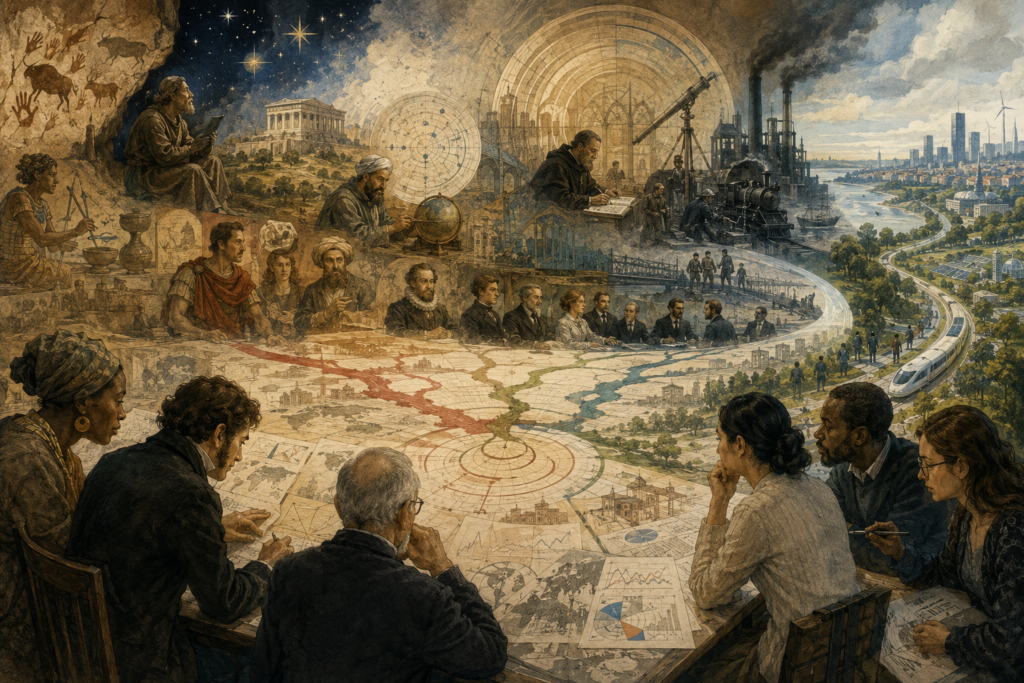
Thinking refers to the frameworks through which complexity is interpreted, uncertainty is framed, and change is understood across time. Contemporary thought increasingly recognizes that many real-world conditions are dynamic, adaptive, and interconnected, requiring approaches that move beyond linear analysis toward more relational and systems-oriented ways of understanding.

Modern approaches to thinking draw from multiple disciplines, including systems theory, design research, ecology, futures studies, and organizational learning. These frameworks help individuals and institutions make sense of patterns, feedback, resilience, emergence, and long-term change, while providing more structured ways to engage with uncertainty.

Effective thinking is central to research, governance, innovation, and strategy. In rapidly changing environments, organizations increasingly rely on interdisciplinary thinking frameworks to strengthen sense-making, support adaptive learning, and improve the quality of judgment in complex settings.

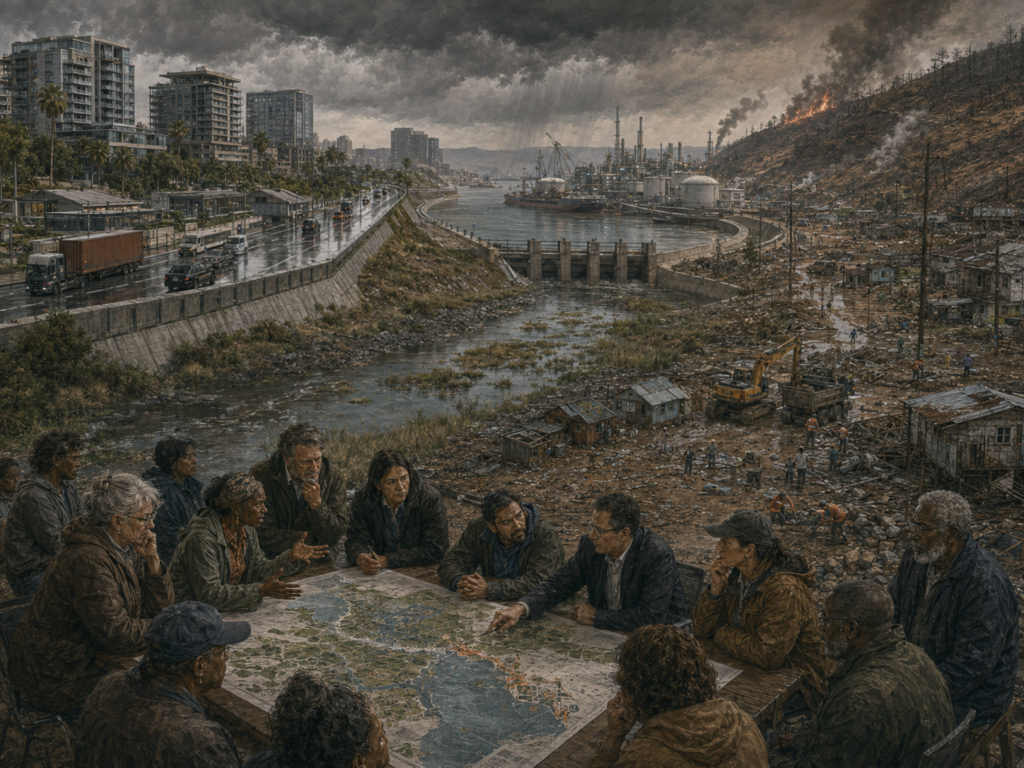
Policy researchers and civic planners examine long-term public policy scenarios across cities, infrastructure, climate risk, governance, and community systems.

Futures Thinking in Public Policy: Anticipation, Governance, and Long-Term Decision-Making

Futures Thinking in Public Policy examines how governments and public institutions can use foresight to govern under long time horizons, systemic uncertainty, and interacting social, economic, environmental, and technological pressures. The article argues that public policy can no longer rely mainly on reactive response or short-term linear analysis, but must build anticipatory capacity to detect change, interpret uncertainty, and design policies that remain viable across multiple futures. It develops this through foresight methods, policy-making under uncertainty, anticipatory governance, complex systems, institutional learning, implementation constraints, and the political economy of public decision-making. The article emphasizes that the value of futures thinking in policy lies not in predicting one future correctly, but in improving the robustness, adaptability, and long-range intelligence of governance.

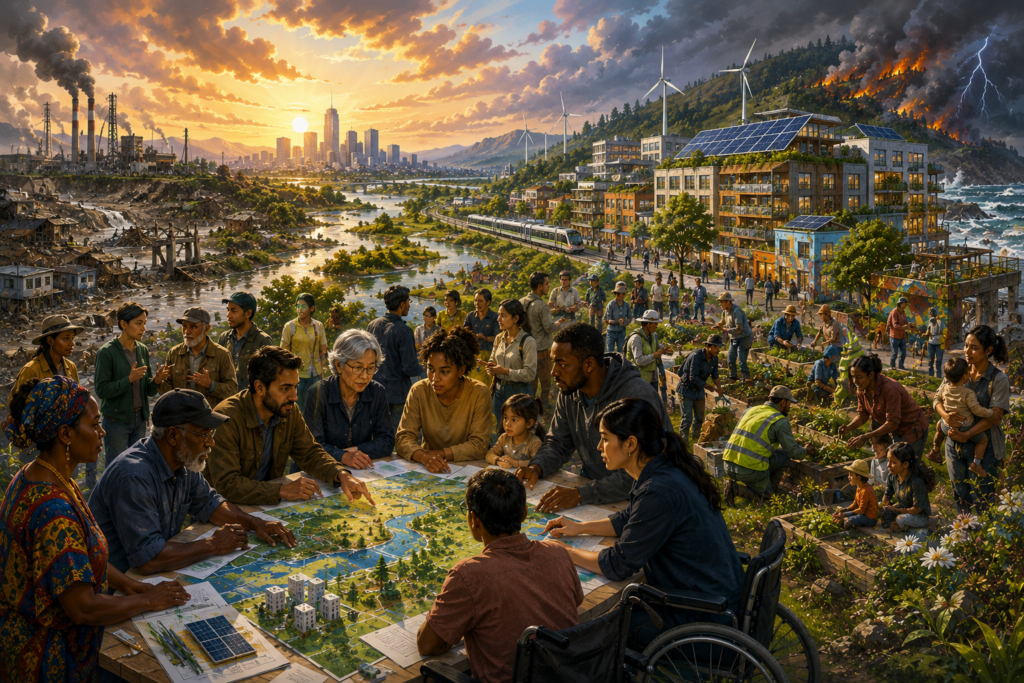
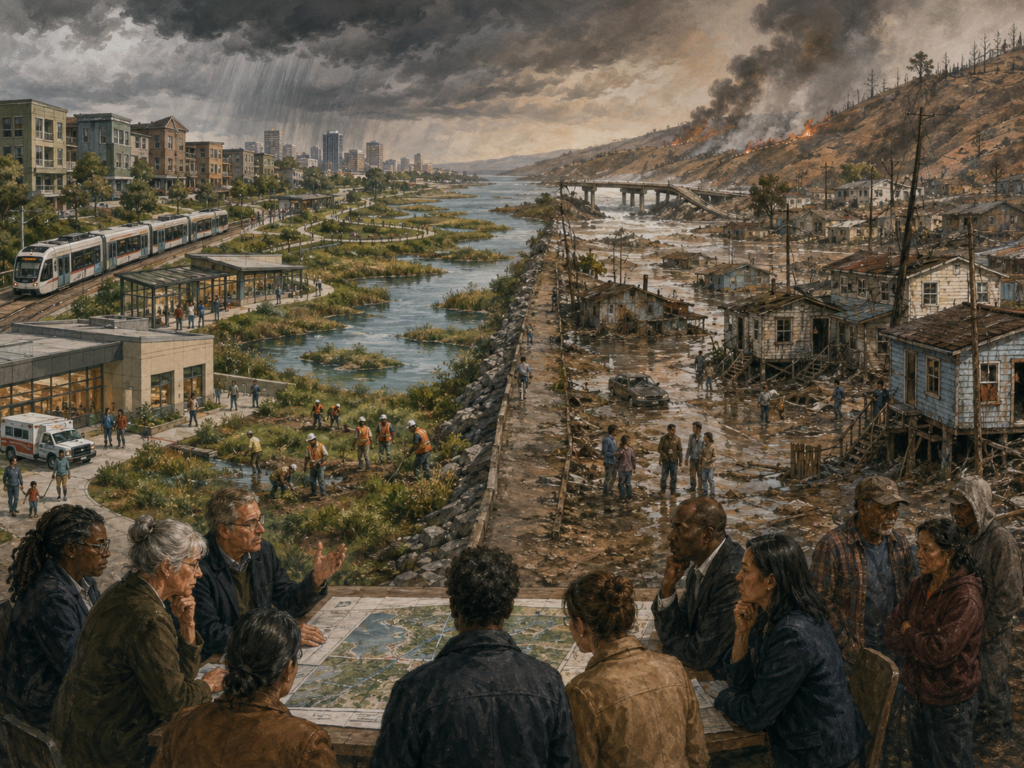
A foresight group studies long-term societal transformation from industrial decline toward resilient communities, renewable systems, public institutions, and ecological restoration.

Societal Transformation and Long-Term Change: Understanding Structural Shifts in Complex Systems

Societal Transformation and Long-Term Change examines how deep structural shifts emerge across technological, economic, ecological, institutional, and social systems over extended periods. The article argues that transformation is not simply rapid change, but system-level reorganization produced by interacting drivers whose effects accumulate, reinforce one another, and sometimes cross thresholds. It develops this through structural drivers, nonlinear transformation patterns, the movement from weak signals to large-scale change, uncertainty, resilience, and the role of power and institutional friction in shaping which futures become possible. The article emphasizes that long-term change is never purely technical: it is also a contested reordering of institutions, incentives, and social power.

A diverse foresight team maps technology signals, infrastructure systems, social impacts, ecological risks, and future governance pathways.

Technology Foresight: Anticipating Innovation, Disruption, and Systemic Change

Technology Foresight examines how emerging technologies can be analyzed not as isolated inventions but as socio-technical forces that reshape economic systems, governance, infrastructure, and long-term development pathways. The article argues that foresight is most valuable when it moves beyond simple prediction and instead explores multiple technological trajectories under conditions of uncertainty, lock-in, institutional constraint, and political contestation. It develops this through system-level analysis, socio-technical transitions, methods such as horizon scanning and scenario planning, nonlinear adoption dynamics, and the political economy that shapes which technologies scale and how. The article emphasizes that technology does not diffuse in a neutral vacuum: it evolves within systems of capital, regulation, legitimacy, and power.

Researchers identify weak signals and early indicators across interconnected climate, technology, infrastructure, governance, and ecological systems.

Weak Signals and Early Indicators: Interpreting Emergent Change in Complex Systems

Weak Signals and Early Indicators examines the earliest observable signs of change before they mature into trends, broader patterns, or structural transformation. The article argues that the central challenge is not merely detection, but interpretation under ambiguity: deciding whether anomalies, fragments, and marginal developments represent noise or the first manifestations of deeper systemic change. It develops this through distinctions between weak signals and early indicators, the problem of signal versus noise, propagation and scaling, movement from signals to structure, institutional blindness, and the strategic value of earlier recognition under uncertainty. The article emphasizes that weak signals matter because they extend the time available for reflection, experimentation, and response before change becomes unavoidable.

Researchers study weak signals, emerging risks, trend patterns, and social-ecological change across a wall of interconnected future indicators.

Horizon Scanning: Early Detection, Strategic Attention, and the Search for Emerging Change

Horizon Scanning explains how institutions can systematically look beyond dominant trends to detect emerging issues, weak signals, and early indicators before they become obvious, measurable, or strategically unavoidable. The article argues that horizon scanning is not just a monitoring exercise but a disciplined practice of attention under uncertainty, designed to widen institutional perception before surprise hardens into crisis. It develops this through early detection in complex systems, types of signals, the problem of signal versus noise, source diversity, scanning process design, integration into the wider foresight pipeline, and the institutional blind spots that often cause organizations to miss what matters. The article emphasizes that the real challenge is not merely collecting information, but interpreting partial visibility with enough rigor to recognize which marginal developments may later reshape the center.

Researchers examine global megatrends across climate, demographics, cities, technology, energy, health, governance, and ecological change.

Trend Analysis and Megatrends: Identifying Patterns of Change in Complex Systems

Trend Analysis and Megatrends explains how futures thinking distinguishes between observable patterns of change and larger structuring forces that reshape multiple systems over time. The article argues that the real challenge is not simply noticing movement, but determining whether a pattern is temporary or durable, local or systemic, reversible or structural. It develops this through the distinction between trends and megatrends, the role of interaction across complex systems, uncertainty, weak signals, second-order effects, institutional framing, and the limits of treating visible momentum as destiny. The article emphasizes that megatrends are not just large trends, but long-wave conditions that alter the environment in which institutions, infrastructures, and markets operate.

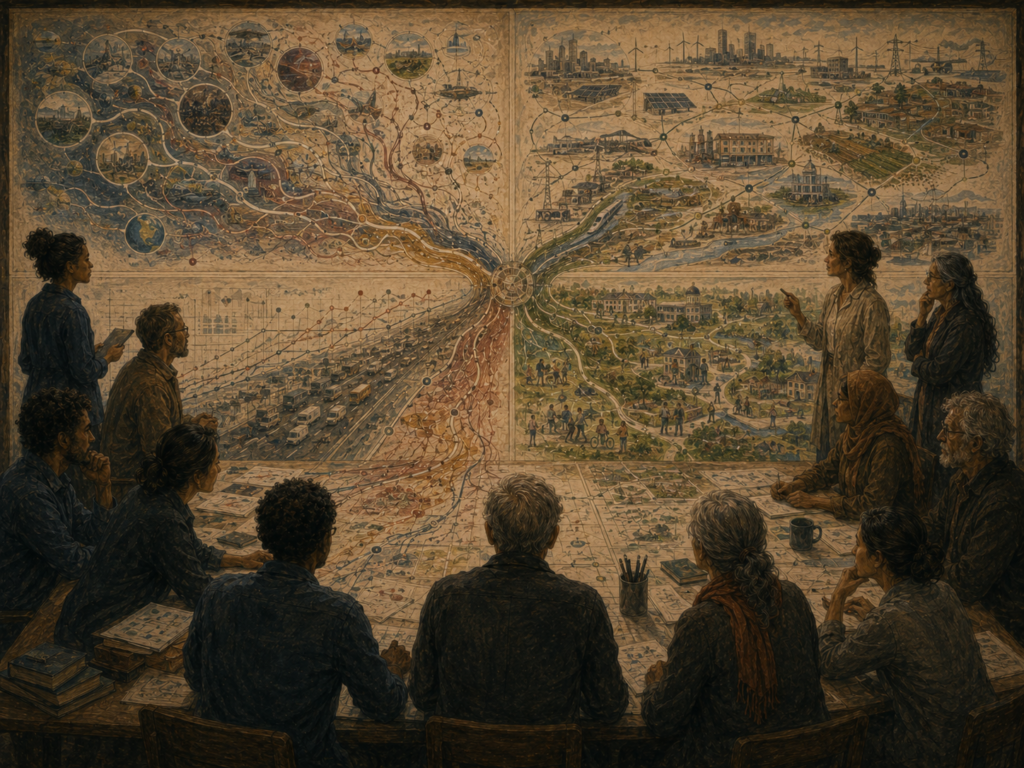
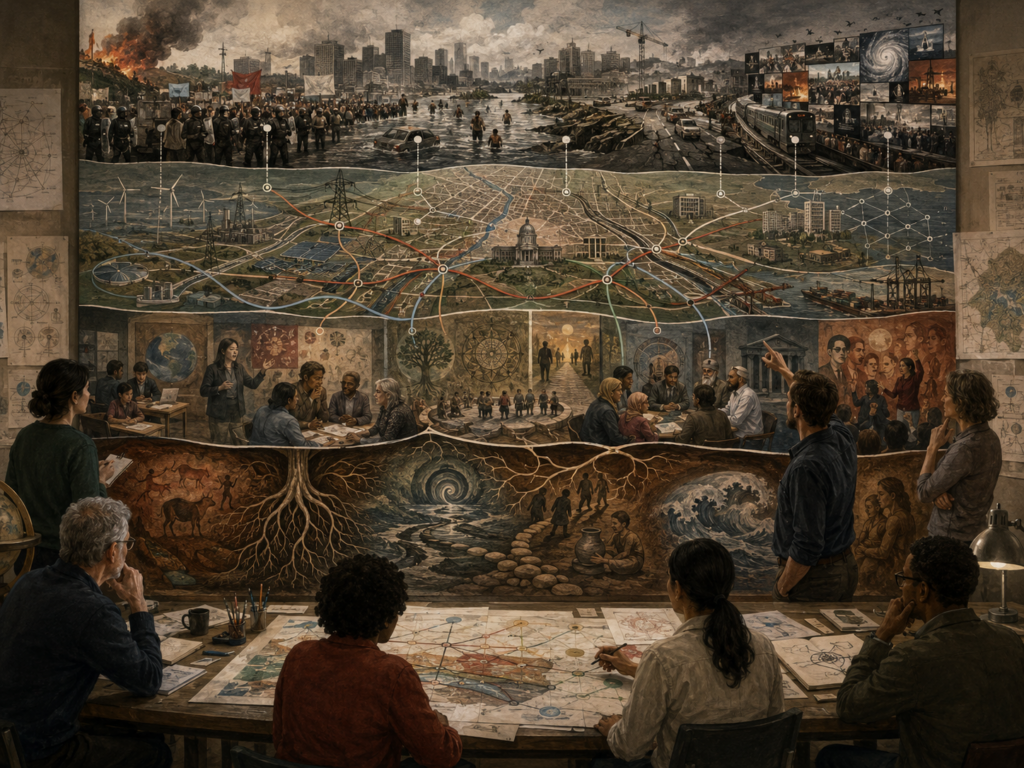
A diverse foresight team uses maps, scenario pathways, systems diagrams, and future signals to compare strategic futures.

Strategic Foresight Methods: A System for Thinking, Interpreting, and Acting Under Uncertainty

Strategic Foresight Methods explains how futures thinking works not as a single technique but as an integrated system for reasoning under uncertainty. The article argues that foresight becomes most effective when methods are treated as a layered pipeline: horizon scanning detects emergence, weak-signal analysis interprets ambiguity, trend analysis identifies directional patterns, scenario planning structures uncertainty, and backcasting links preferred futures to action. It develops this through the logic of method integration, complexity, institutional constraints, failure modes, and the gap between insight and implementation. The article emphasizes that no single foresight tool is sufficient on its own; what matters is how methods combine to improve present judgment in conditions where prediction is limited.

A diverse planning group studies branching scenario pathways across cities, infrastructure, climate risks, public institutions, and ecological systems.

Scenario Planning: Exploring Multiple Futures for Strategic Decision-Making Under Uncertainty

Scenario Planning explains how institutions can reason rigorously under uncertainty by constructing multiple plausible futures rather than relying on a single forecast. The article argues that scenario planning is not merely a planning tool but an epistemological framework that shifts decision-making from prediction toward structured exploration, from assumed continuity toward plurality, and from optimization for one expected future toward robustness across many possible ones. It develops this through drivers of change, critical uncertainties, scenario construction, types of scenarios, complex-systems reasoning, strategic robustness, historical development, and common failure modes. The article emphasizes that the real value of scenarios lies not in forecasting which future will occur, but in testing assumptions and preparing strategies that remain viable when conditions diverge from expectation.

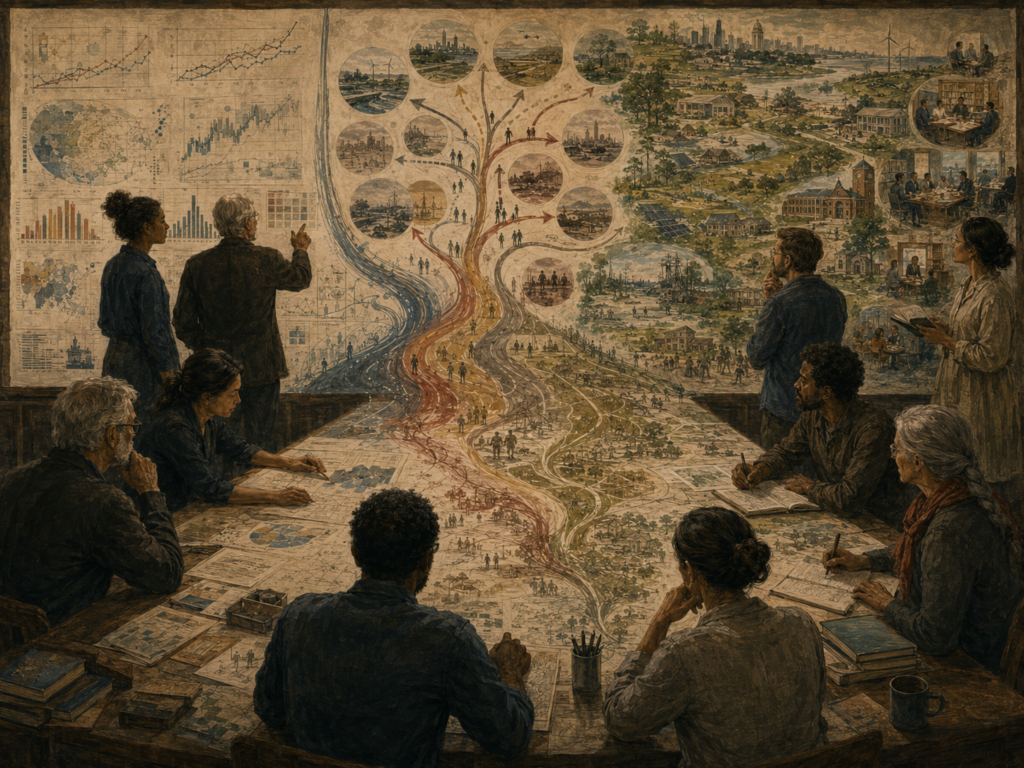
Researchers study branching future scenarios across maps, civic systems, infrastructure, ecology, and social change.

What Is Futures Thinking? Strategic Foresight and Long-Term Change

Futures Thinking is the disciplined practice of exploring multiple possible futures in order to improve present-day judgment, strategy, and decision-making under uncertainty. The article argues that the future is not singular or fully predictable, but open, contingent, and shaped by both structural forces and human choices. It develops this through the practical importance of long-term thinking, the distinction between futures thinking and prediction, the role of assumptions, major foresight methods, its relationship to foresight and forecasting, and its relevance for strategy, policy, complex systems, and sustainability. The article emphasizes that futures thinking is not about being right about the future, but about becoming more anticipatory, resilient, and strategically prepared before change becomes unavoidable.

Scroll to Top