AI Governance and Regulatory Systems
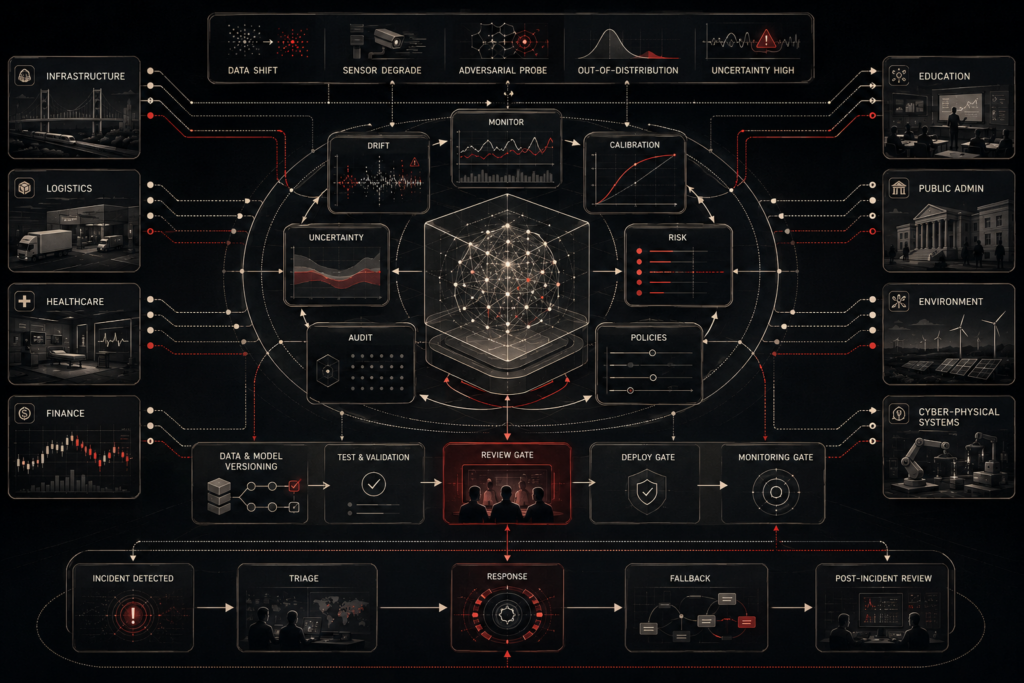
AI governance and regulatory systems define how artificial intelligence is directed, constrained, documented, monitored, contested, and held accountable across its lifecycle. This article explains governance as a systems function that includes regulation, standards, audits, procurement, risk assessment, conformity assessment, human oversight, incident response, assurance evidence, public accountability, and international coordination. It covers risk-based governance, technical and organizational controls, the EU AI Act, NIST AI RMF, OECD AI Principles, UNESCO’s AI ethics recommendation, general-purpose AI obligations, public-sector systems, high-impact private uses, foundation-model governance, due diligence, residual risk, and post-deployment monitoring. It also introduces mathematical lenses for risk scoring, control maturity, residual risk, lifecycle monitoring, and assurance traceability, alongside Python and R workflows for governance inventories, risk registers, control mapping, and maturity diagnostics.