River and Watershed Monitoring Networks: Basin-Scale Monitoring and Hydrological Accountability
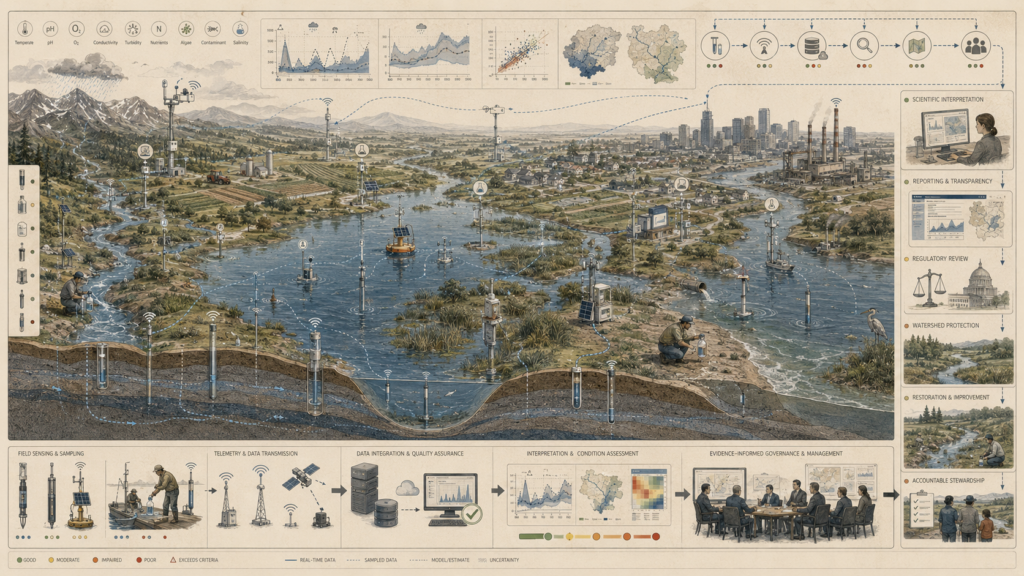
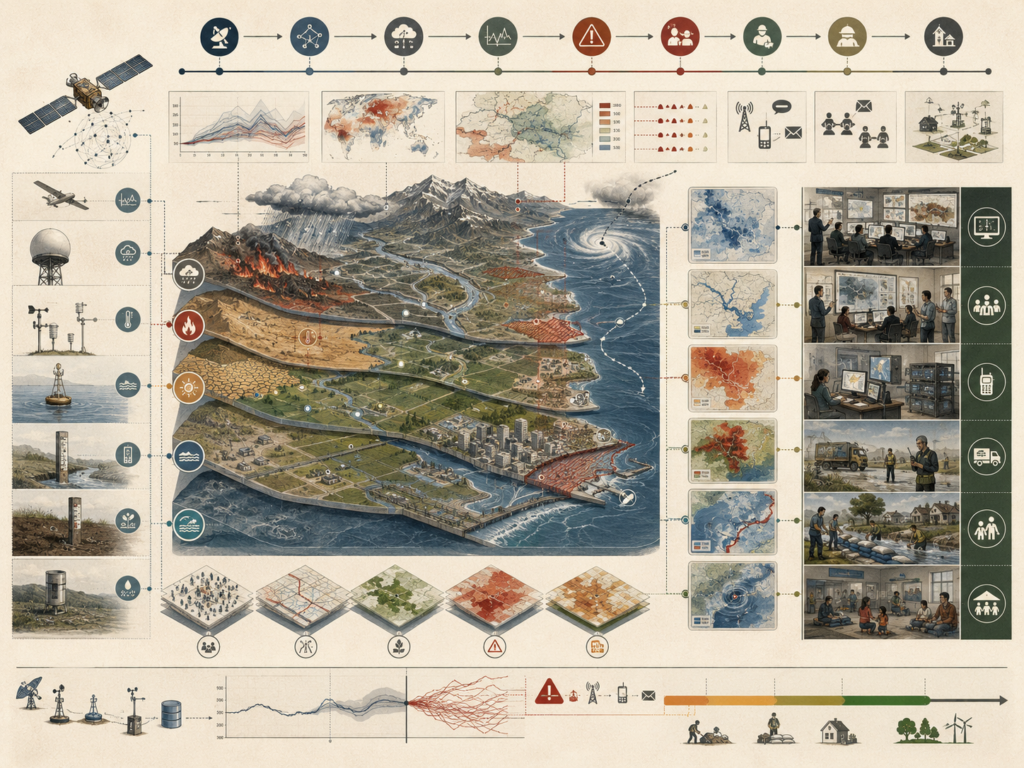
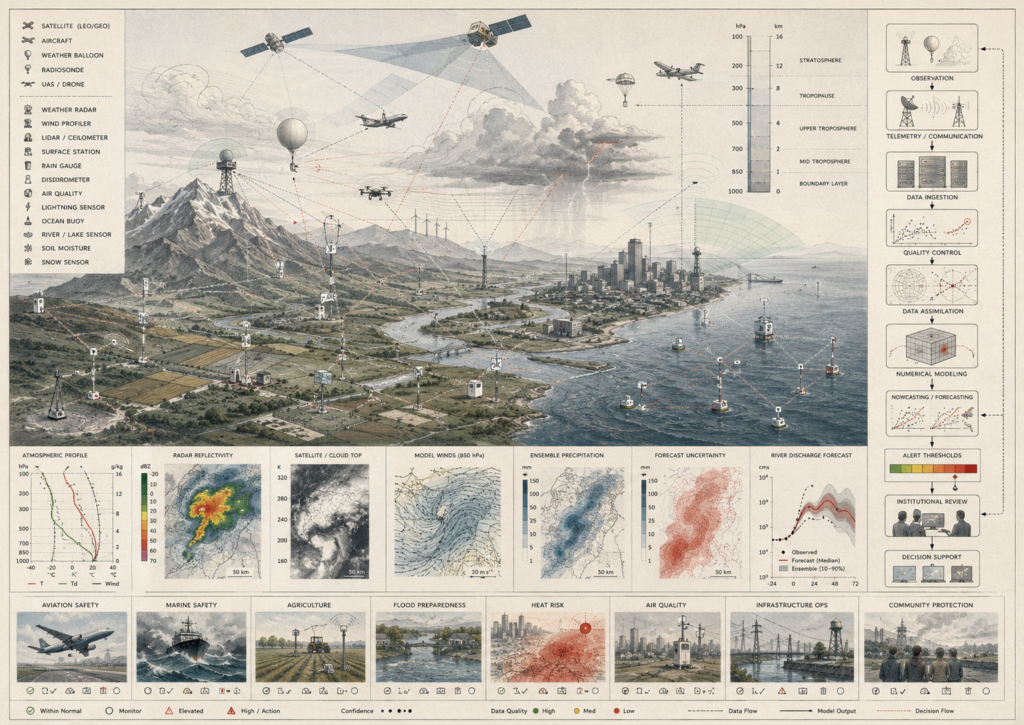
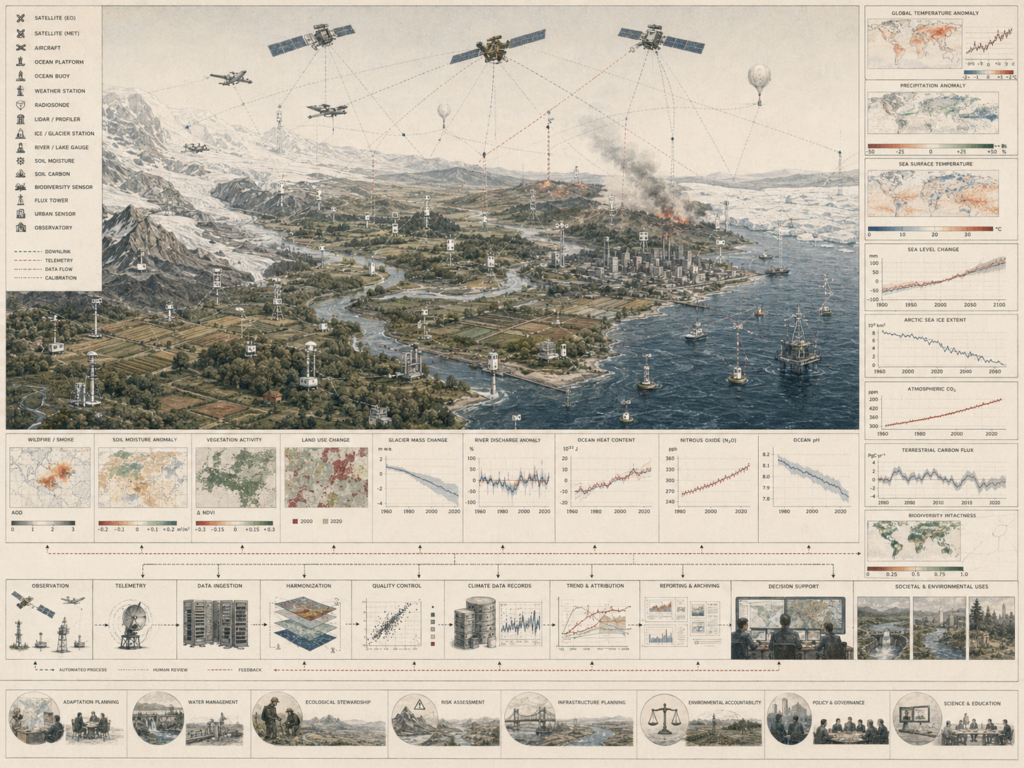
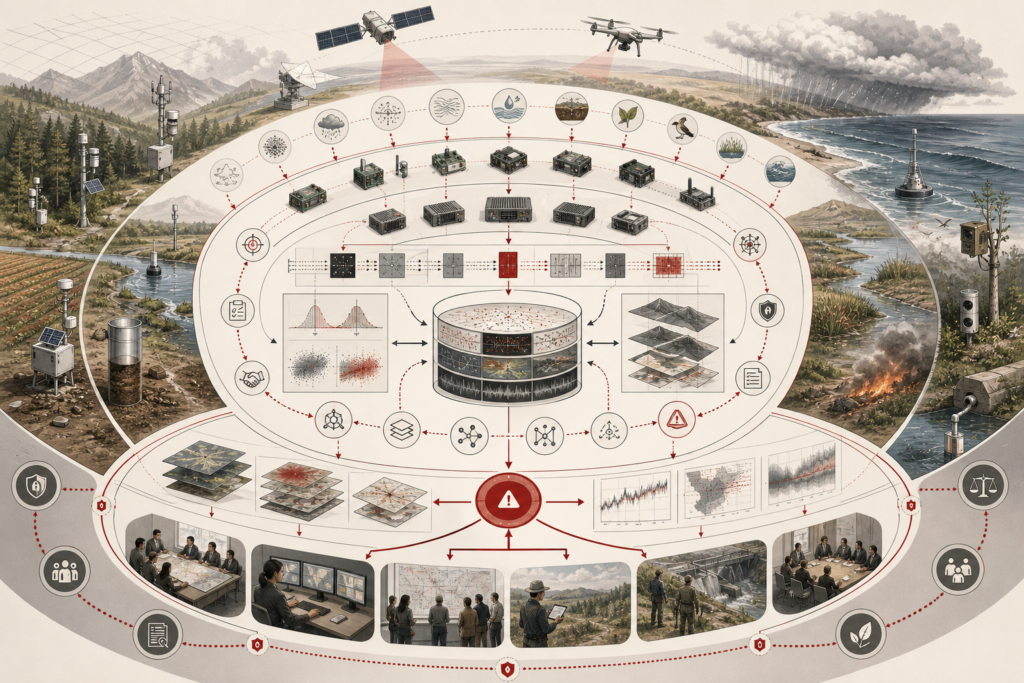
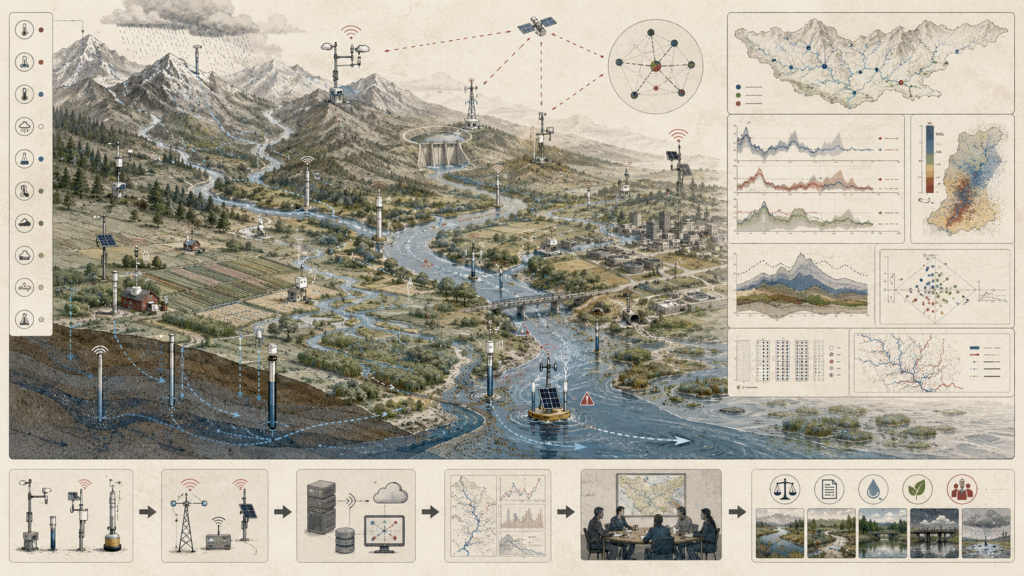
River and watershed monitoring networks make hydrological systems visible across entire basins, from mountain headwaters to downstream floodplains. Stream gauges, rain gauges, weather stations, water-quality probes, groundwater wells, reservoir sensors, buoy platforms, telemetry masts, solar-powered field nodes, and satellite links help track how water moves through rivers, wetlands, farms, towns, infrastructure, and ecosystems. This article examines how basin-scale monitoring connects flow, water quality, groundwater conditions, precipitation, storage, risk signals, and downstream impacts into a shared evidence system. Watershed accountability depends on more than isolated measurements; it requires reliable observation, data integration, uncertainty awareness, institutional review, and stewardship decisions across the whole basin. By linking hydrological evidence to governance, river and watershed monitoring supports water security, ecological protection, flood preparedness, and public responsibility.