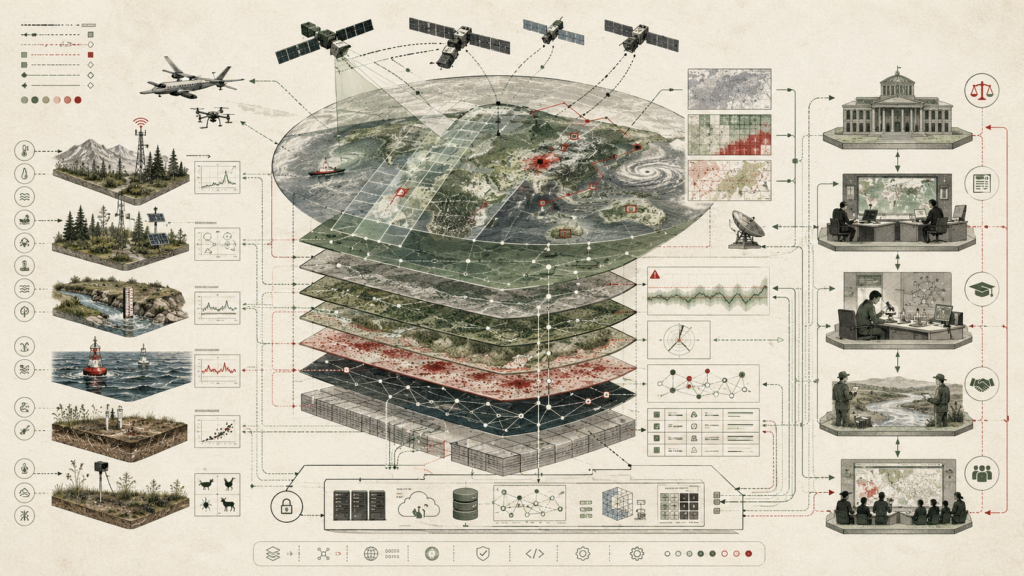
The Future of Environmental Monitoring Systems: AI, Earth Observation, Interoperability, and Environmental Intelligence
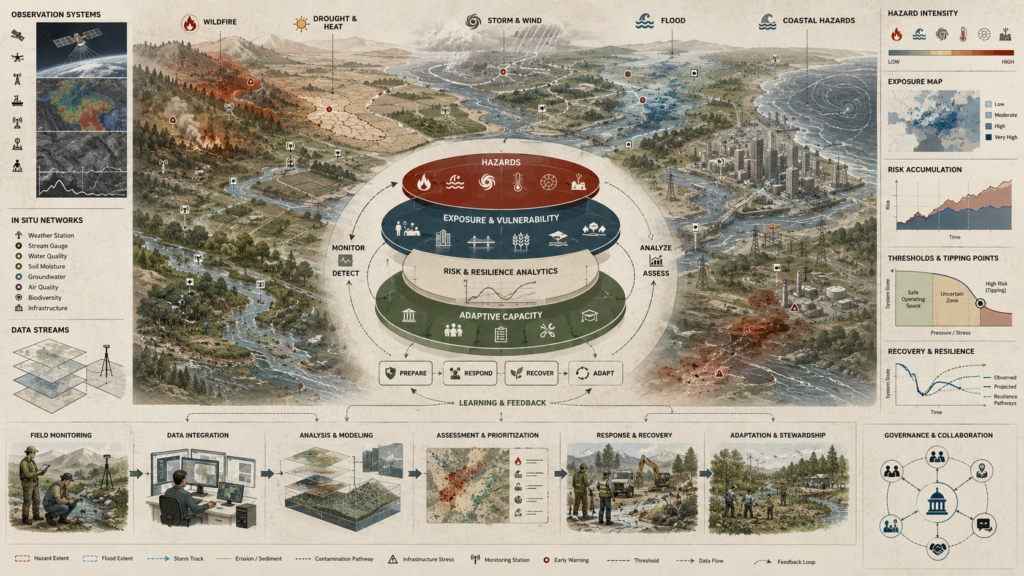
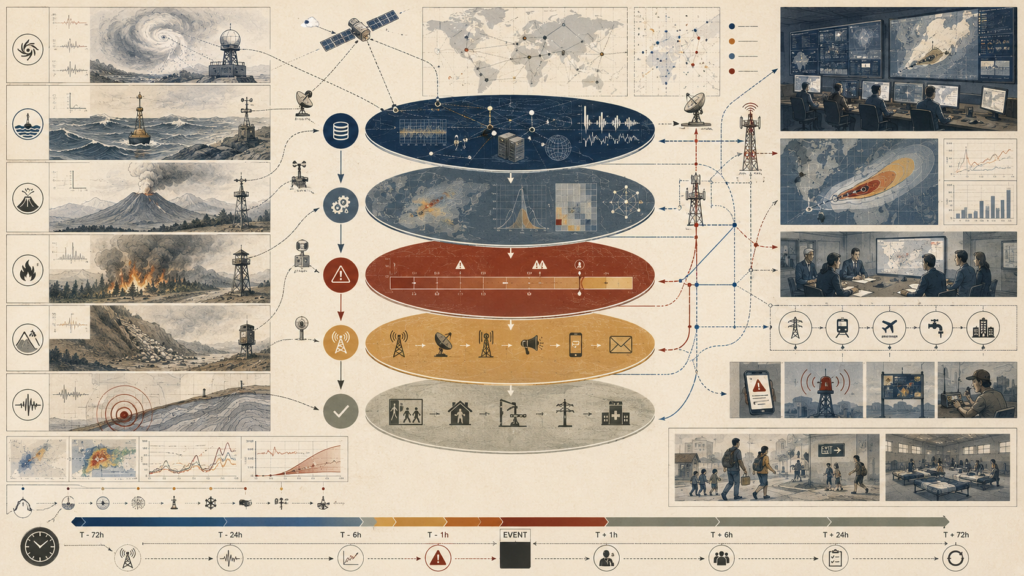
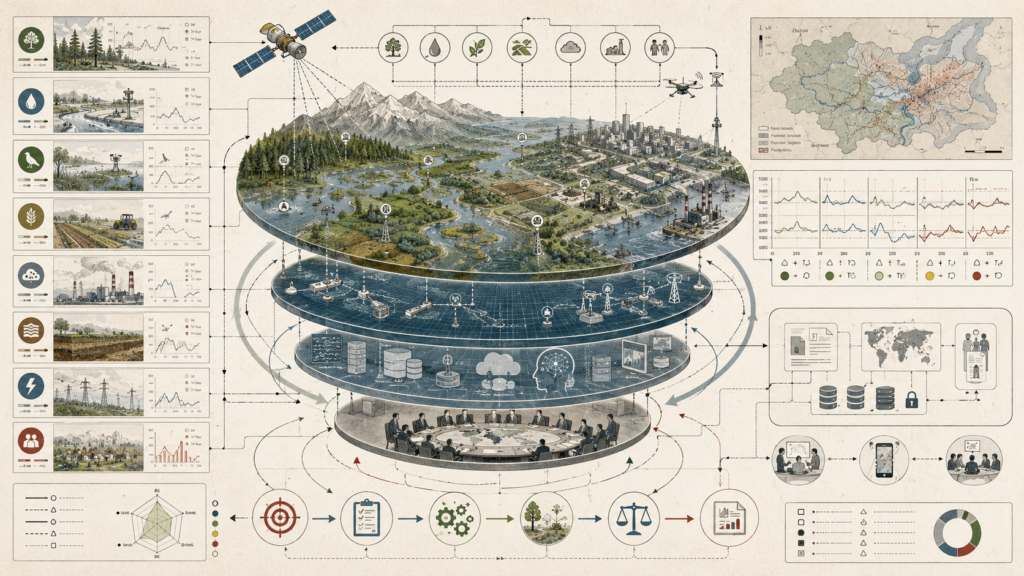
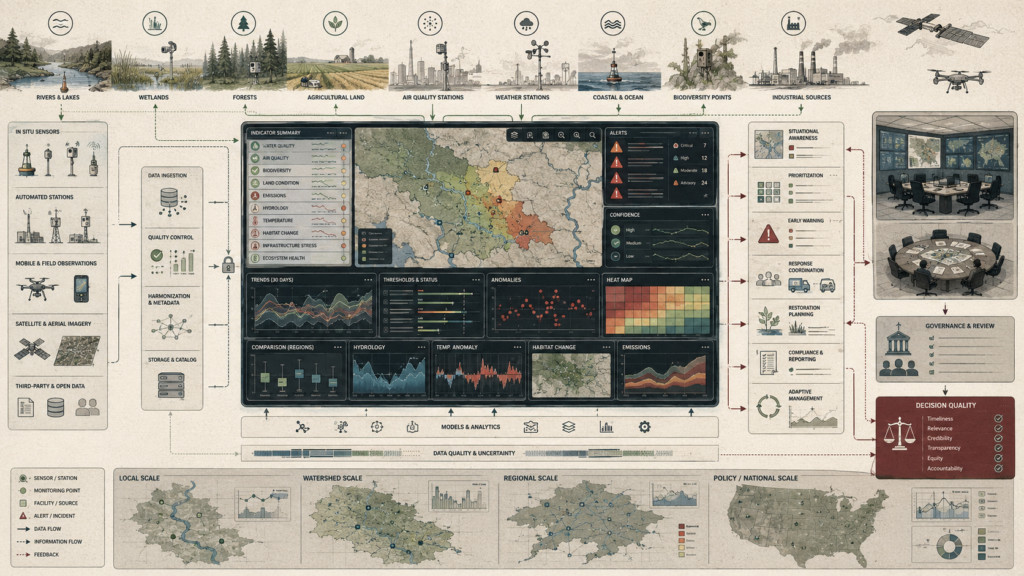
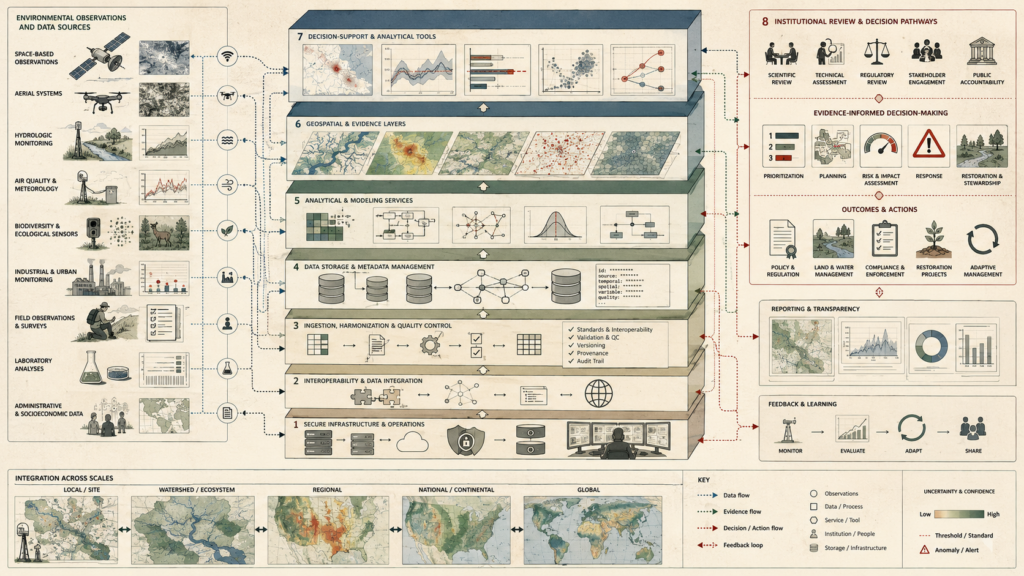
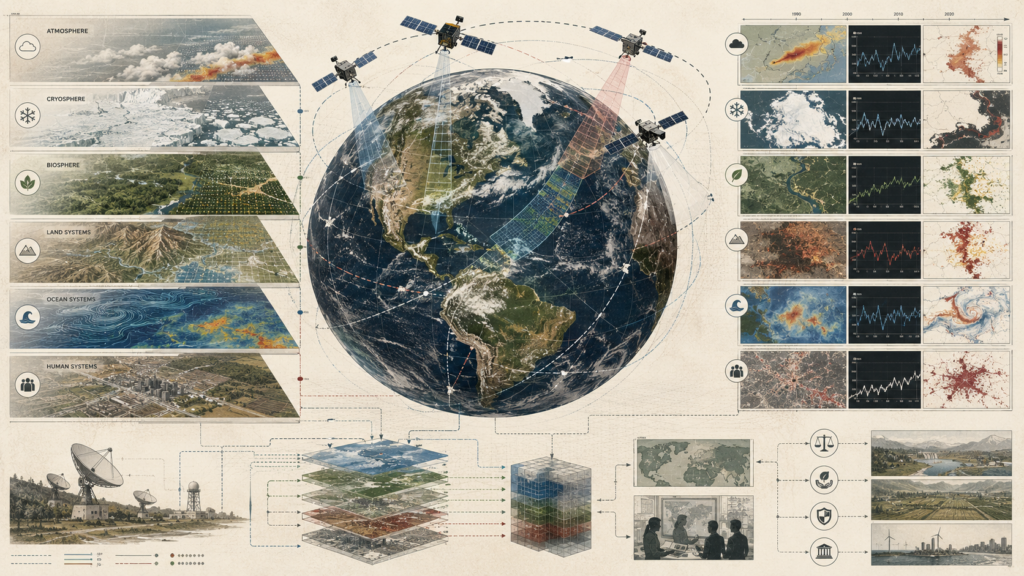
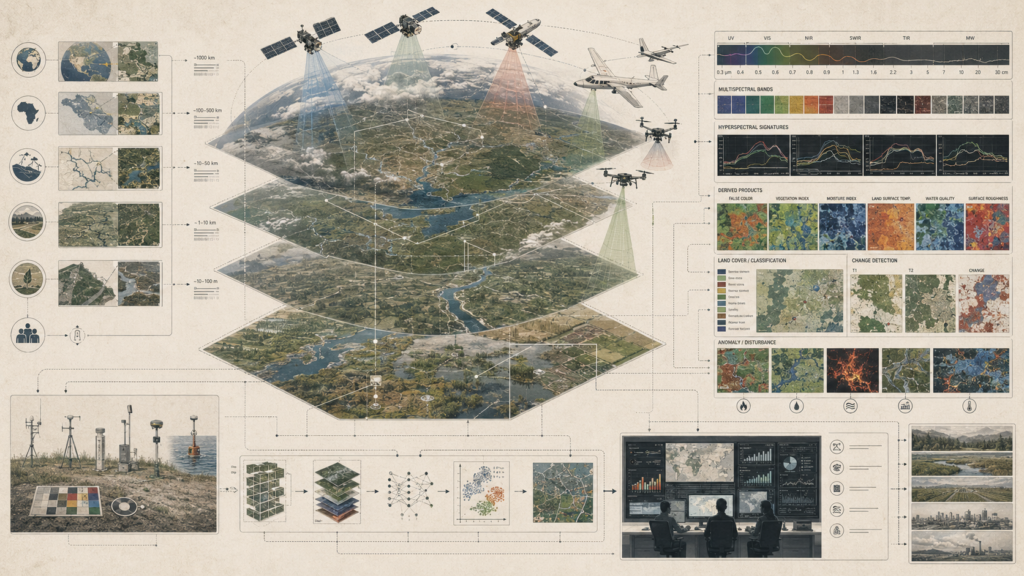
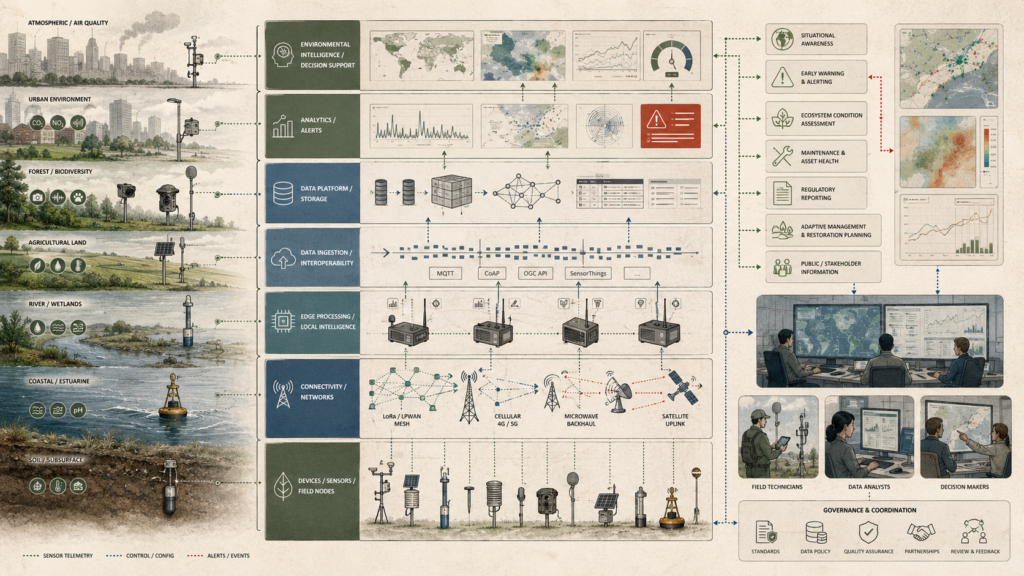
Environmental monitoring systems are becoming integrated intelligence infrastructures that connect Earth observation, field sensing, AI-assisted analysis, interoperable data standards, and public decision-making. The future of monitoring is not only more sensors or higher-resolution imagery; it is the capacity to transform distributed environmental signals into reliable evidence for stewardship, regulation, restoration, disaster preparedness, and long-term ecological governance. Satellites, river gauges, ocean buoys, biodiversity stations, air-quality networks, soil sensors, and edge devices must work within shared metadata, transparent models, reproducible workflows, and accountable institutions. This article examines how environmental intelligence emerges when observation systems, data infrastructure, artificial intelligence, and governance capacity are designed together—turning fragmented measurements into early warnings, ecological baselines, risk thresholds, adaptive management, and public knowledge.