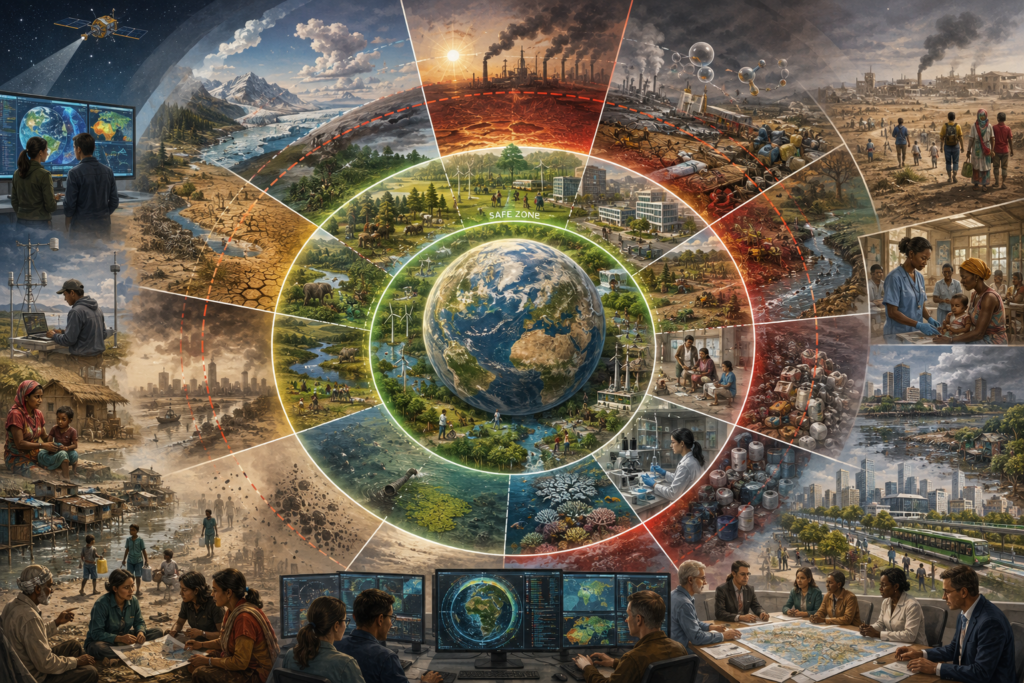
The Holocene: The Stable Climate State That Enabled Human Civilization
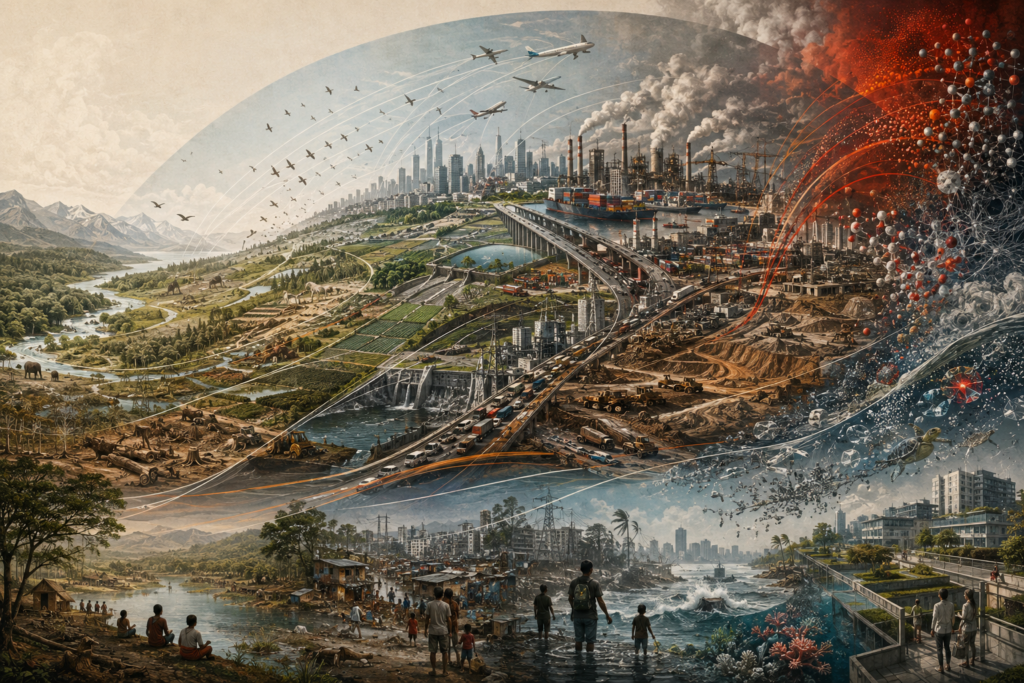
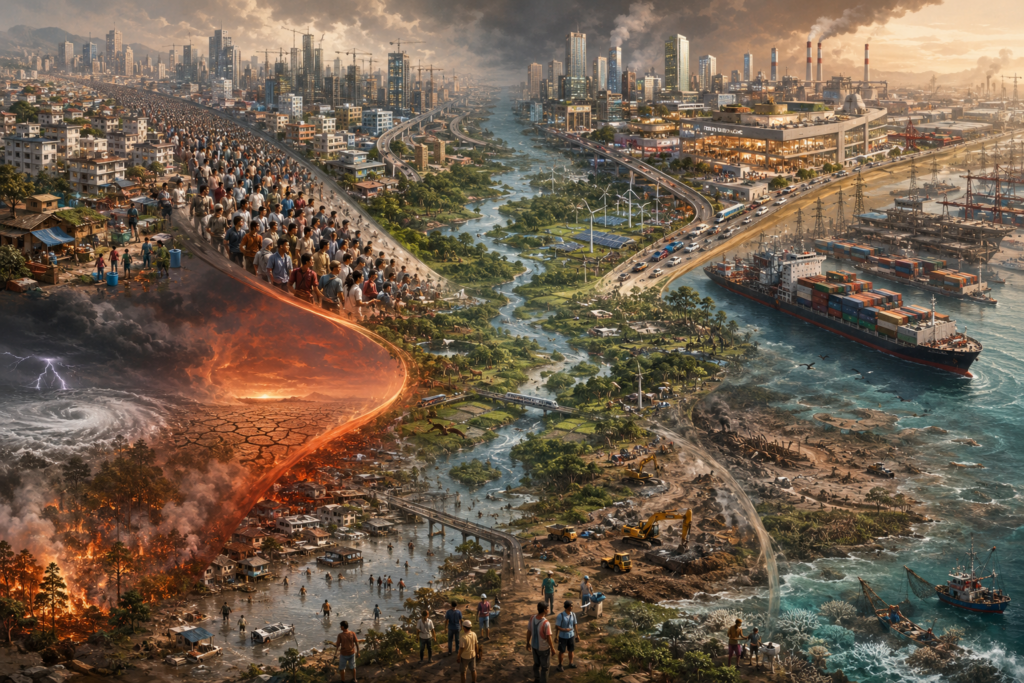
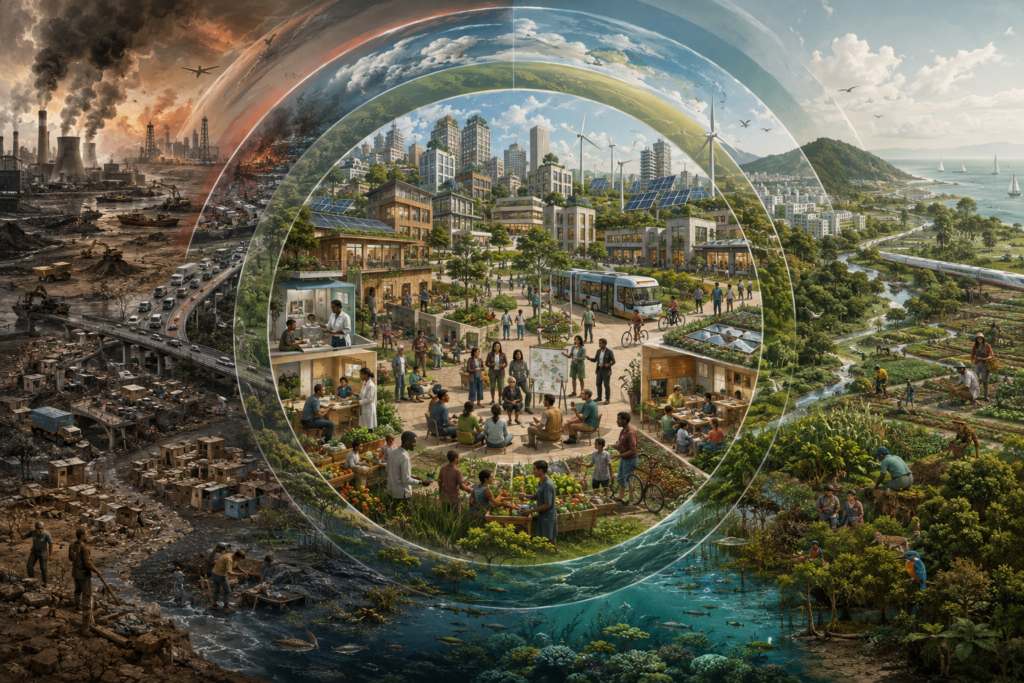
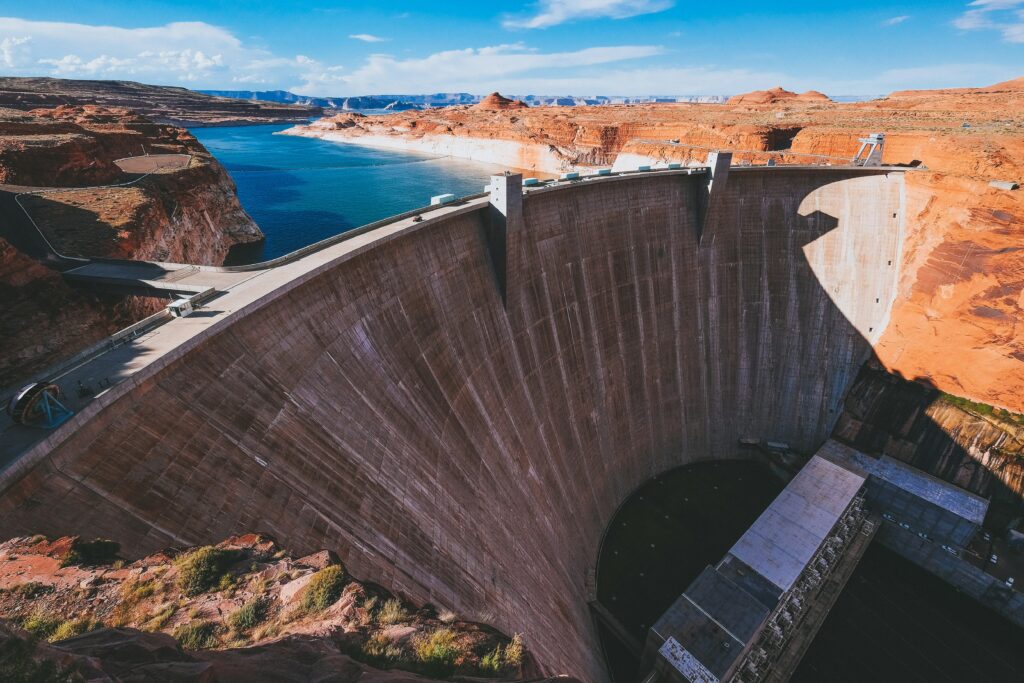
The Holocene: The Stable Climate State That Enabled Human Civilization explains why the relatively stable climate conditions of the past 11,700 years matter for planetary-boundary thinking. The article shows how Holocene stability enabled agriculture, permanent settlement, cities, infrastructure, and complex societies by providing predictable seasonal cycles, rainfall systems, coastlines, soils, and growing conditions. It connects paleoclimate evidence from ice cores and climate archives to glacial-interglacial cycles, agriculture, Earth system processes, safe operating space, resilience, and Anthropocene risk. The article argues that planetary boundaries are not nostalgic for the past, but seek to preserve the stable operating range in which civilization can endure. It also includes mathematical, Python, and R workflows for modeling Holocene baselines, climate anomalies, standardized departure, boundary pressure, cross-system amplification, and governance capacity.