Problem Solving

Problem solving refers to the cognitive and strategic processes used to identify challenges, analyze underlying causes, and develop effective solutions. In complex environments, problem solving requires more than analytical reasoning; it involves integrating creative thinking, structured analysis, and systems-level understanding.

Traditional models of problem solving emphasized linear processes such as defining the problem, generating alternatives, and selecting optimal solutions. Contemporary research recognizes that many real-world problems are complex, dynamic, and interconnected, requiring iterative approaches that incorporate experimentation, feedback, and adaptive learning.

Modern problem-solving frameworks often draw from multiple disciplines, including cognitive psychology, systems thinking, design research, and decision science. These approaches help individuals and organizations understand how problems emerge within broader systems and how interventions may produce both intended and unintended consequences.

Effective problem solving is central to innovation, policy development, and strategic planning. In rapidly changing environments, organizations increasingly rely on interdisciplinary problem-solving methods that combine analytical rigor with creative exploration.

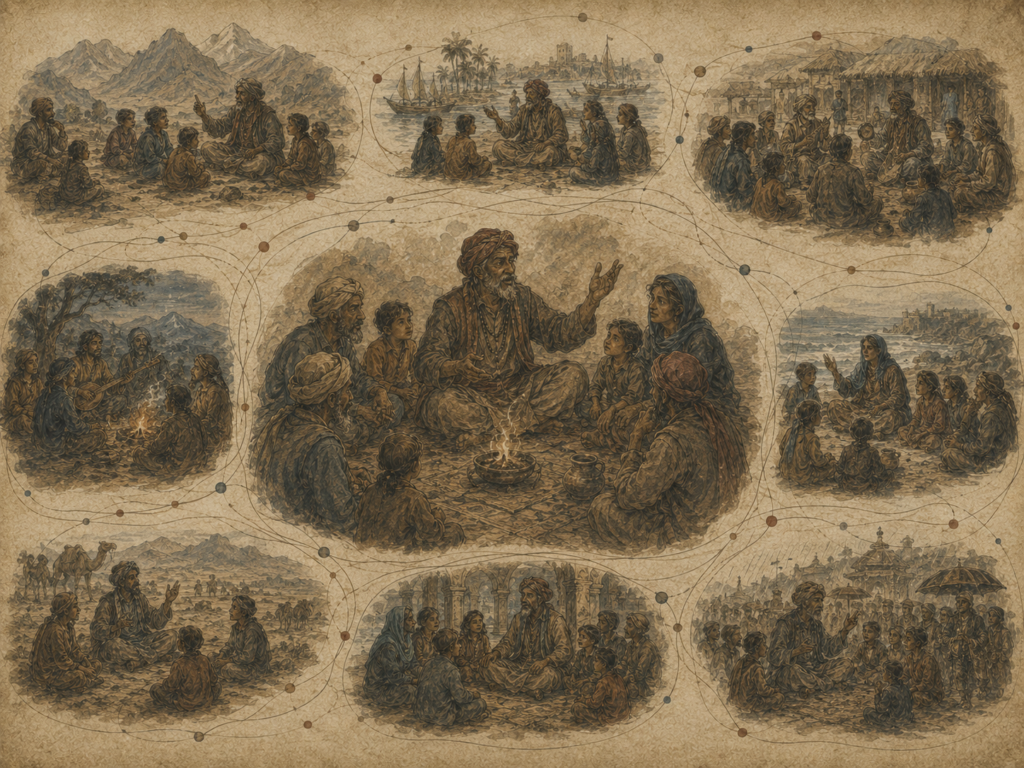
Editorial illustration of a central oral storyteller surrounded by multiple storytelling gatherings across different landscapes, communities, and generations.

Performance, Memory, and Variation in Oral Storytelling: How Living Stories Change

Performance, Memory, and Variation in Oral Storytelling examines oral storytelling as a living performance practice rather than a fixed text. This article explains how stories are remembered, voiced, timed, embodied, repeated, adapted, corrected, and transmitted through tellers, audiences, occasions, places, languages, gestures, formulas, and social relationships. It explores performance as composition, memory as practice, variation as continuity, formula and repetition, audience participation, voice and embodiment, apprenticeship, transmission, stability, change, archive risk, digital circulation, translation, access protocols, and ethical documentation. The article also warns against treating variation as error or treating one transcript, recording, or platform clip as the definitive version of a living tradition. As part of the Storytelling series, it connects oral tradition with cultural memory, performance studies, folklore, narrative ethics, and practical methods for analyzing variation while preserving context, consent, authority, and community responsibility across generations responsibly.
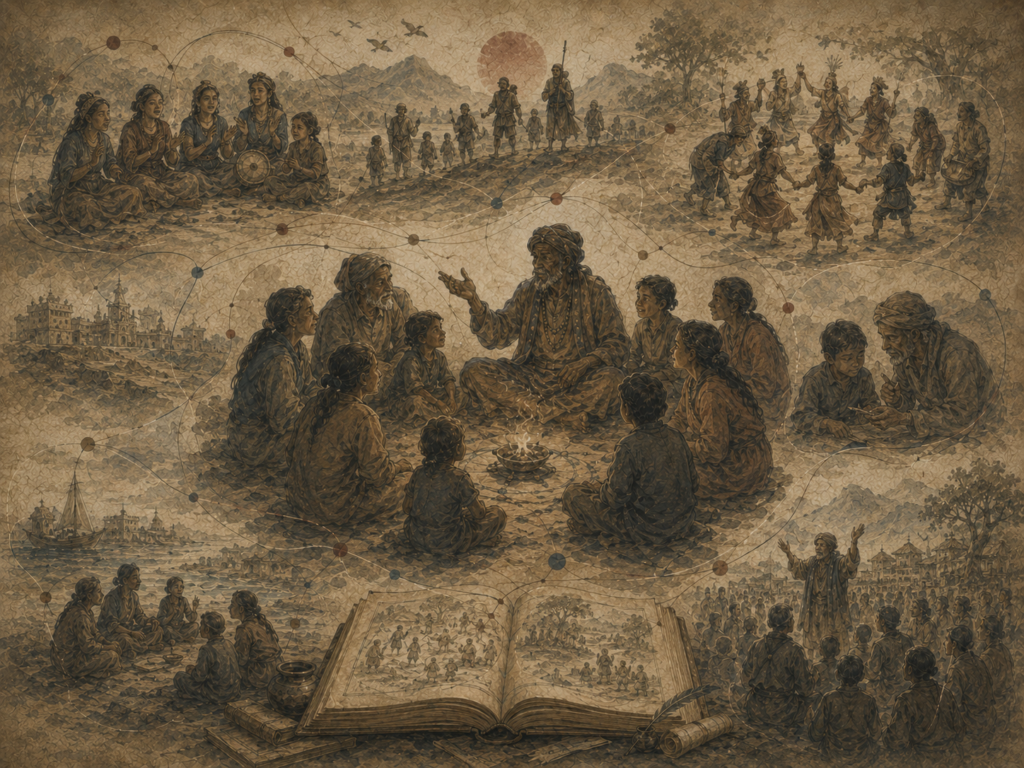

Editorial illustration of an elder storyteller speaking to an intergenerational circle, surrounded by scenes of song, ritual, teaching, travel, and communal memory.

Storytelling as Intangible Cultural Heritage: Safeguarding Living Narrative Traditions

Storytelling as Intangible Cultural Heritage examines storytelling as a living cultural practice rather than a detachable artifact, transcript, recording, or archive item. This article explains why stories are preserved not only by saving words, but by sustaining the people, languages, performances, rituals, places, memories, permissions, and transmission systems that keep them meaningful. It explores oral tradition, language vitality, intergenerational learning, performance context, ritual setting, community recognition, safeguarding, documentation, digital archives, tourism, education, ownership, consent, restricted knowledge, access control, platform risk, and community authority. The article also warns against freezing living traditions into official versions or exposing sensitive material through careless preservation. As part of the Storytelling series, it connects intangible cultural heritage with narrative practice, cultural memory, ethical documentation, digital governance, and practical methods for safeguarding stories while supporting living transmission across generations, languages, communities, and changing media contexts.

Editorial illustration of an open manuscript connecting four storytelling traditions: cosmic myth, heroic legend, village folktale, and epic journey.

Myths, Legends, Folktales, and Epics: How Traditional Stories Shape Culture

Myths, Legends, Folktales, and Epics examines four traditional narrative forms that are often grouped together but do different cultural work. This article explains how myth organizes sacred origin, cosmic order, ritual meaning, and ultimate explanation; how legend connects story to place, memory, belief, and historical possibility; how folktale carries pattern, wonder, trickery, social imagination, and variation; and how epic expands narrative into heroic scale, public conflict, lineage, and collective memory. It compares truth claims, performance contexts, transmission paths, memory functions, narrative structures, hybrid forms, and adaptation risks. The article also warns against flattening traditional narratives into generic content, universal formulas, or simple entertainment. As part of the Storytelling series, it connects folklore, oral tradition, cultural memory, myth studies, epic performance, media adaptation, and practical methods for comparing narrative forms with context, humility, and ethical care across living story traditions.

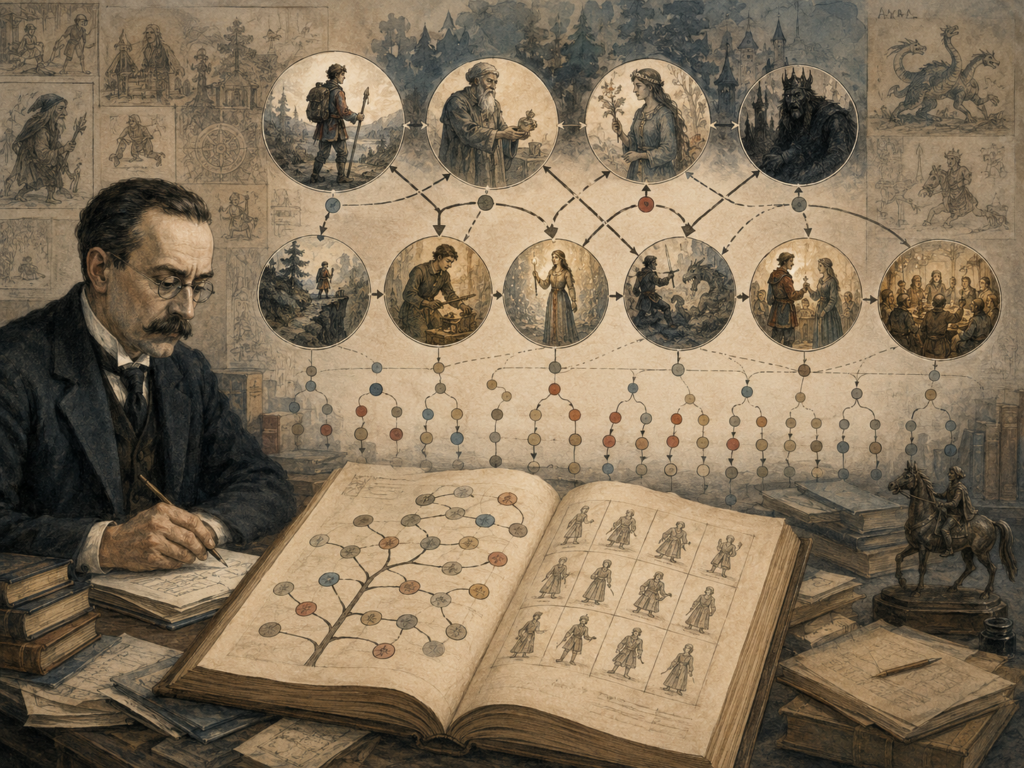
Editorial illustration of a folklorist studying an open manuscript, with connected folktale scenes, roles, arrows, nodes, and structural story diagrams.

Folktale Structure and Vladimir Propp’s Morphology: Functions, Roles, and Story Patterns

Folktale Structure and Vladimir Propp’s Morphology examines how folktales organize action through recurring functions, roles, sequence, variation, and transformation. This article explains Propp’s influential method for analyzing wonder tales by asking what characters do in the plot rather than treating them only as symbolic figures or psychological personalities. It explores Propp’s thirty-one functions, seven spheres of action, function-before-character analysis, tale-type classification, sequence integrity, variant comparison, oral performance, cultural context, and the limits of structural analysis. The article also warns against using Propp as a universal story formula, showing why morphology must be balanced with folklore scholarship, source context, translation awareness, community authority, and ethical interpretation. As part of the Storytelling series, it connects folktale structure with oral tradition, narrative theory, computational modeling, media adaptation, and practical methods for analyzing patterned stories without erasing culture, performance, living tradition, or variation.

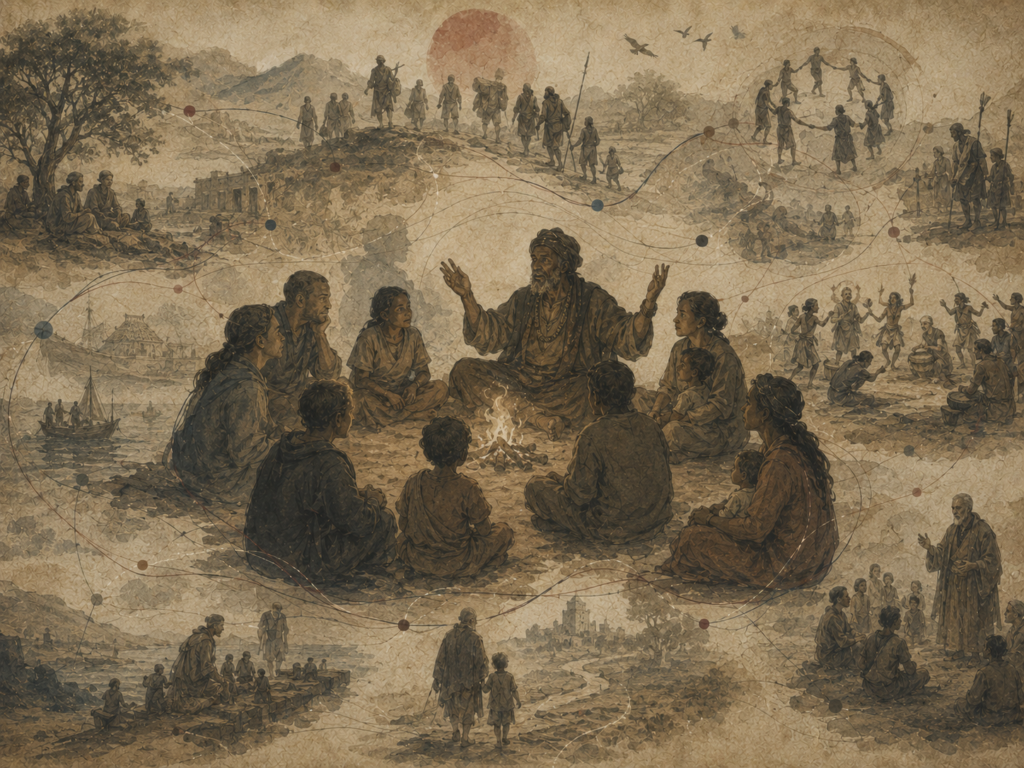
Editorial illustration of a storyteller speaking around a fire to a circle of listeners, surrounded by scenes of ritual, migration, teaching, and communal memory.

Oral Tradition, Performance, and Collective Memory: How Stories Preserve Culture

Oral Tradition, Performance, and Collective Memory examines storytelling as a living practice of voice, body, audience, place, ritual, repetition, variation, and cultural transmission. This article explains why oral tradition is not simply speech before writing, but a structured system for preserving knowledge, values, identity, history, ecological memory, sacred meaning, humor, warning, and communal responsibility across generations. It explores performance as composition, memory as social practice, formula and variation, storytellers and audiences, major oral genres, collective memory, place-based storytelling, ritual embodiment, authority, transmission, documentation, preservation, and archive risk. The article also examines ethical responsibilities involving consent, ownership, restricted knowledge, translation, community governance, extraction, context, and digital reuse. As part of the Storytelling series, it connects oral tradition with narrative structure, cultural memory, media change, intangible heritage, and practical methods for analyzing performance without reducing living stories to text or artifact.

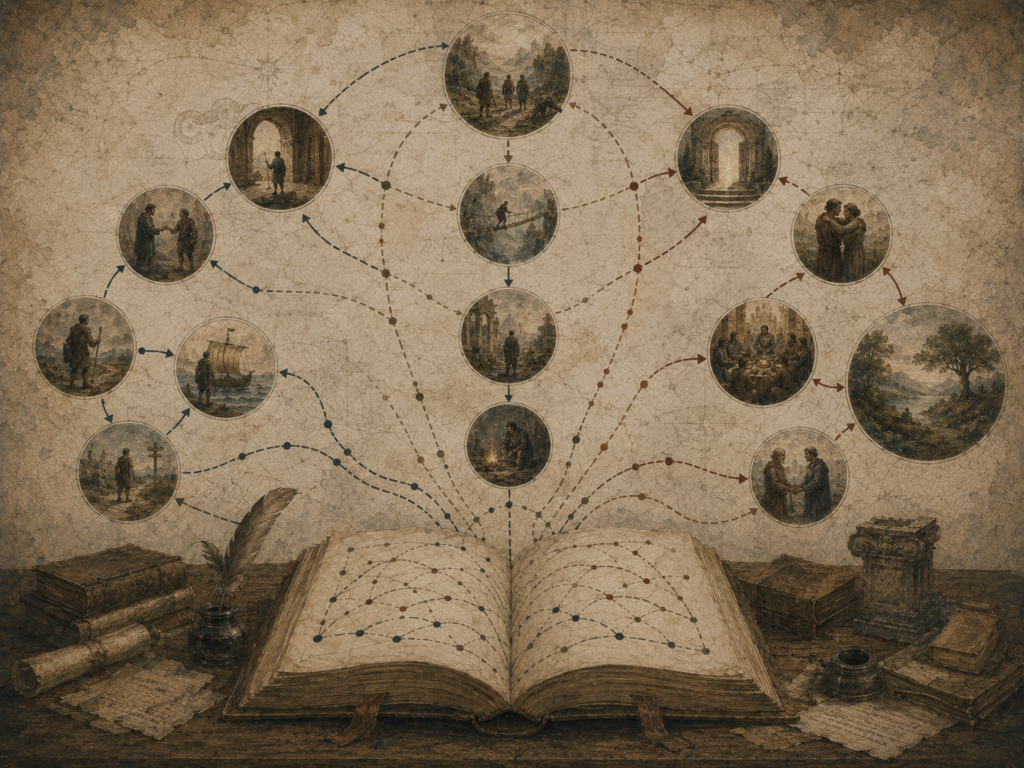
Editorial illustration of an open manuscript branching into connected scenes of departure, journey, return, reconciliation, and closure.

Beginnings, Endings, and Narrative Closure: How Stories Frame Meaning

Beginnings, Endings, and Narrative Closure examines how stories frame entry, develop expectation, and create meaningful completion, suspension, continuation, or unresolved consequence. This article explains why beginnings are more than openings and endings are more than stopping points. A beginning establishes voice, world, pressure, stakes, question, orientation, and narrative promise. An ending reshapes what came before by resolving, transforming, returning, suspending, or ethically refusing closure. The article distinguishes closure from resolution and completion, showing how open endings, circular endings, tragic endings, comic endings, serial continuation, retrospective meaning, and aftermath shape interpretation. It also examines closure risks, including premature repair, false resolution, sentimental comfort, system flattening, unresolved harm, and sequel pressure. As part of the Storytelling series, it connects plot structure with narrative time, memory, ethics, public accountability, and practical methods for auditing beginnings and endings across media responsibly and clearly.

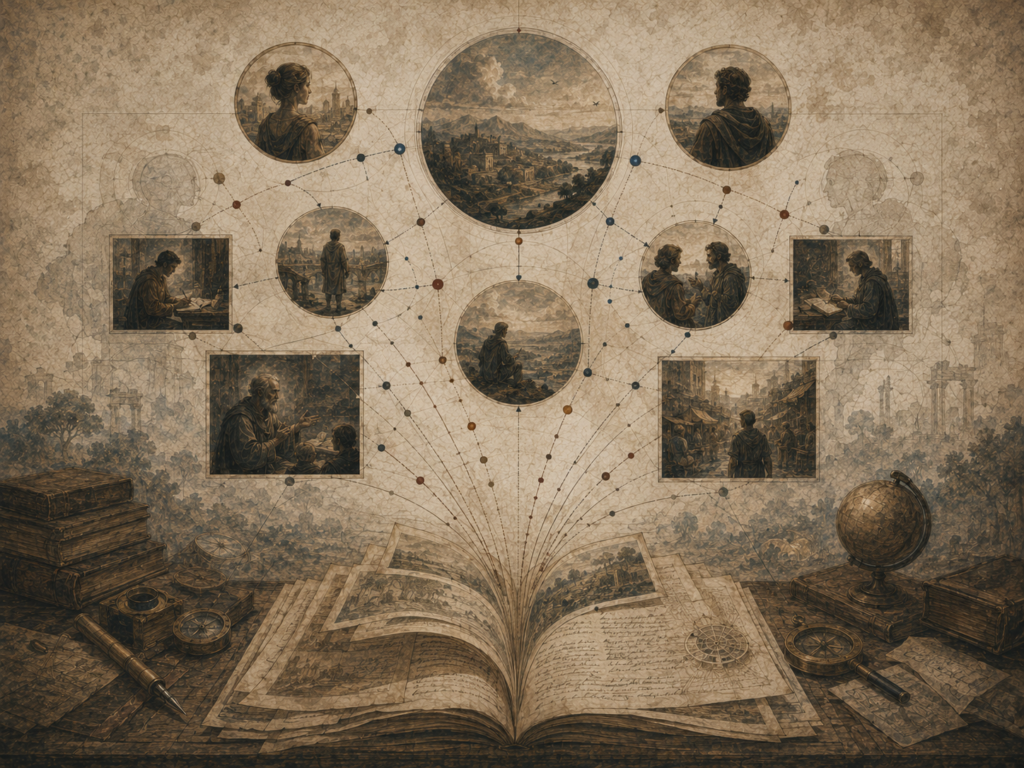
Editorial illustration of an open manuscript branching into multiple framed perspectives, observers, writers, landscapes, and connected viewpoint pathways.

Voice, Perspective, and Point of View: How Stories Control Access and Meaning

Voice, Perspective, and Point of View examines how stories organize access to knowledge, experience, memory, authority, and judgment. This article explains why point of view is more than a technical choice between first person, second person, and third person. It shows how narrative voice shapes tone, trust, distance, intimacy, and authority; how perspective filters events through perception and interpretation; and how focalization governs who sees, knows, remembers, withholds, or misunderstands. The article explores first-person testimony, second-person address, third-person narration, omniscience, limited access, unreliable narration, multiple perspectives, collective voice, institutional voice, and media-specific point of view across literature, film, documentary, games, public communication, and digital platforms. It also examines ethical risks involving representation gaps, institutional evasion, exposure, false balance, forced identification, and manipulative access. As part of the Storytelling series, it connects narrative form with trust, responsibility, and public meaning.

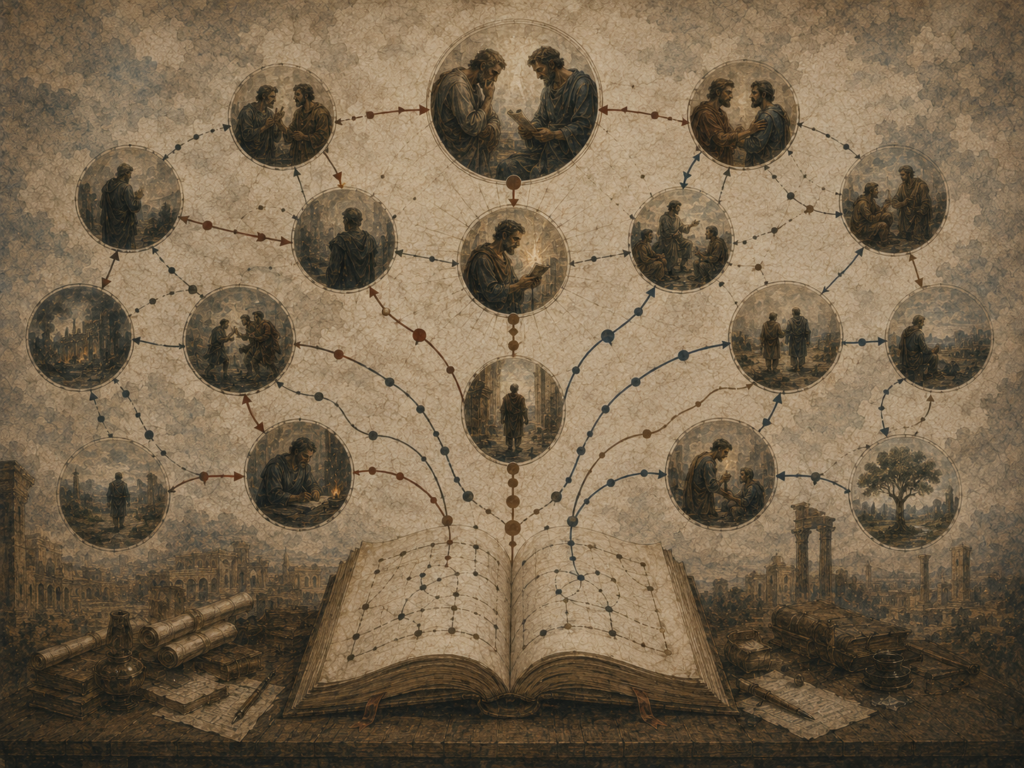
Editorial illustration of an open manuscript branching into connected scenes of conflict, recognition, revelation, reconciliation, and transformation.

Reversal, Recognition, and Transformation: How Stories Change Meaning

Reversal, Recognition, and Transformation examines how stories change direction, meaning, and consequence through decisive turns. This article explains reversal as a shift in narrative condition, recognition as movement from ignorance to knowledge, and transformation as the deeper change that follows when identity, relationship, value, responsibility, or future possibility is altered. It builds from Aristotle’s account of peripeteia and anagnorisis while extending the discussion to narrative theory, memory, public storytelling, institutional accountability, media design, games, and ethical interpretation. The article distinguishes structural reversal from mere twist, earned surprise from arbitrary shock, and recognition from repair. It also examines delayed recognition, false recognition, closure pressure, evidence omission, and the responsibility that follows knowing. As part of the Storytelling series, it connects plot theory with narrative ethics, public meaning, cultural memory, and practical methods for auditing transformation across media and knowledge contexts.

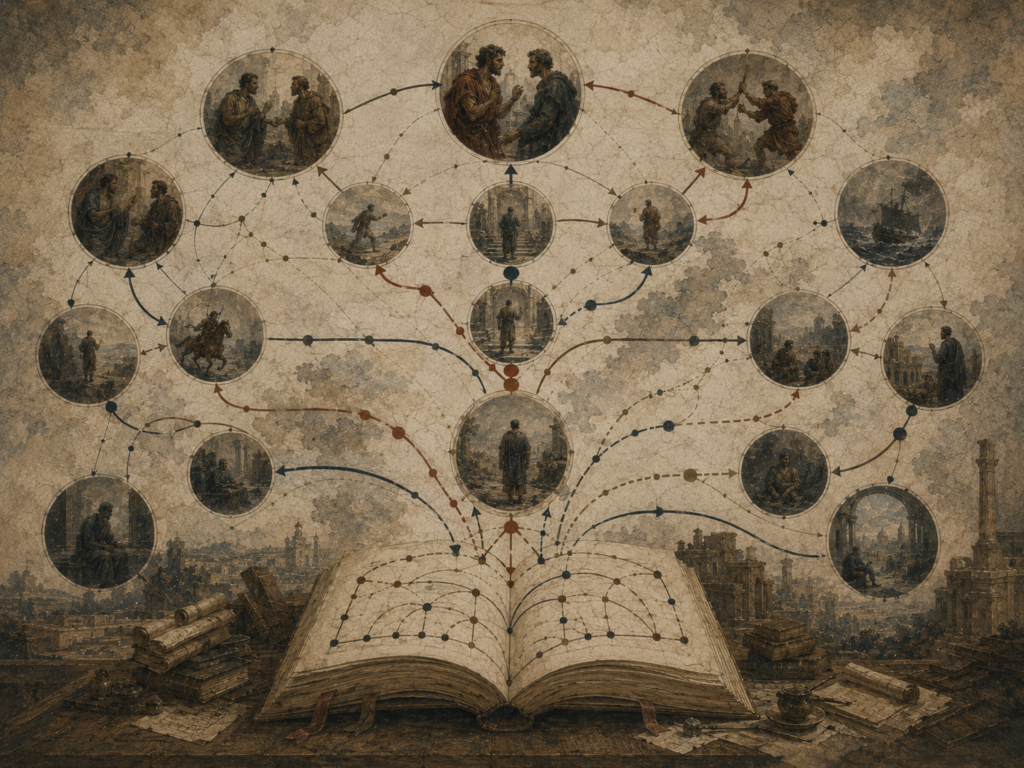
Editorial illustration of an open manuscript sending branching arrows, nodes, and circular scenes of conflict, pursuit, opposition, and turning points through a narrative structure.

Conflict, Tension, and Narrative Movement: How Stories Create Pressure and Change

Conflict, Tension, and the Logic of Narrative Movement examines how stories move through pressure, uncertainty, opposition, delay, escalation, and consequence. This article explains why conflict is not merely argument, violence, or dramatic noise, but a structural relation among desire, obstacle, value, agency, stakes, and change. It distinguishes conflict from tension, activity from movement, and meaningful pressure from empty spectacle. The article explores internal, interpersonal, moral, institutional, systemic, epistemic, and environmental conflict, showing how each form shapes narrative movement differently. It also examines tension over time, escalation, reversal, release, suspension, and the ethical risks of scapegoating, conflict inflation, trauma spectacle, false balance, and premature closure. As part of the Storytelling series, it connects plot structure with narrative ethics, public communication, systems thinking, and practical methods for auditing whether conflict creates meaningful movement across media and knowledge contexts responsibly and clearly.

Scroll to Top