Applied Builds

Applied Builds focus on hands-on engineering work: designing, prototyping, testing, and iterating systems to solve practical problems. It includes embedded systems, sensing, control, automation, and other technical work shaped by constraints, tradeoffs, and real-world performance.

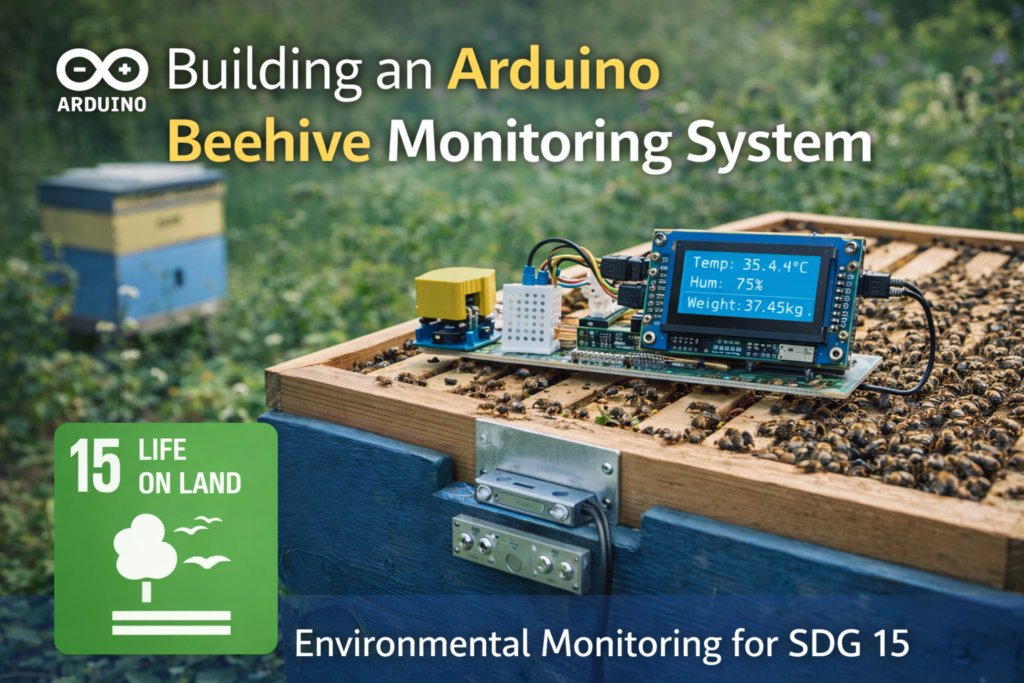
Arduino beehive monitoring system with temperature humidity and hive weight sensors collecting environmental data to support pollinator health and UN Sustainable Development Goal 15 Life on Land.

Building an Arduino Beehive Monitoring System (SDG 15: Life on Land)

An Arduino beehive monitoring system demonstrates how low-cost sensing and microcontroller-based data collection can support pollinator health, biodiversity monitoring, and SDG 15: Life on Land. This project combines an Arduino-compatible board with a DHT22 temperature and humidity sensor, HX711 load-cell amplifier, hive-weight measurement, serial telemetry, and optional SD-card logging or wireless transmission. While the prototype is not a commercial hive scale, scientific field instrument, or substitute for experienced beekeeping judgment, it shows how continuous environmental observation can make colony conditions more visible over time. The article connects the build to environmental monitoring systems, intelligent infrastructure, biosphere integrity, land-system change, climate resilience, planetary boundaries, and sustainable development, showing how practical ecological sensing can support more responsible pollinator stewardship.
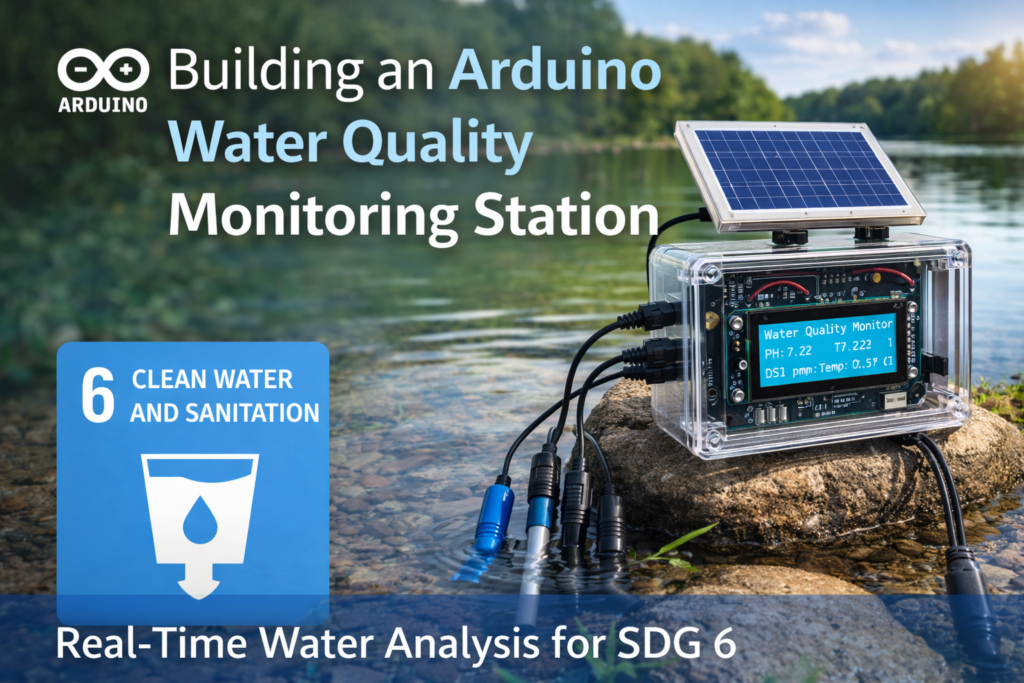
Arduino water quality monitoring station with pH, temperature, and conductivity sensors measuring lake conditions to support UN Sustainable Development Goal 6 Clean Water and Sanitation.

Building an Arduino Water Quality Monitoring Station (SDG 6: Clean Water and Sanitation)

An Arduino water quality monitoring station demonstrates how low-cost embedded systems can support freshwater stewardship, environmental monitoring, and SDG 6: Clean Water and Sanitation. This project combines an Arduino microcontroller with pH, temperature, and total dissolved solids sensors to measure basic water-quality conditions in real time. While the prototype is not a substitute for certified laboratory analysis, it shows how distributed sensing can complement formal monitoring systems, support earlier detection of changing water conditions, and make environmental data more accessible for education, citizen science, and local infrastructure awareness. The article connects the build to freshwater change, environmental monitoring systems, intelligent infrastructure, planetary boundaries, and sustainable development, showing how practical sensor projects can become part of a broader measurement architecture for resilient water governance.

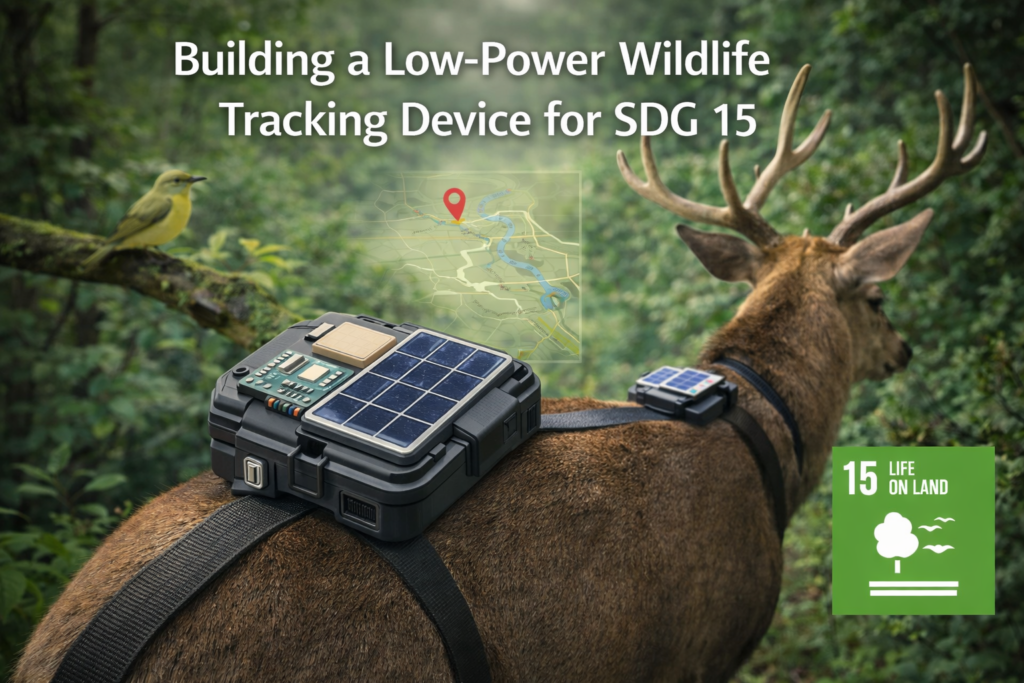
Low-power wildlife tracking device prototype using Arduino GPS and solar power mounted on a deer collar to monitor animal movement supporting UN Sustainable Development Goal 15 Life on Land.

Building a Low-Power Arduino Wildlife Tracking Device (SDG 15: Life on Land)

An Arduino wildlife tracking device demonstrates how low-cost embedded systems can support biodiversity monitoring, habitat protection, and SDG 15: Life on Land. This project combines an Arduino-compatible microcontroller with GPS telemetry, MicroSD logging, battery power, and low-power duty cycling to record animal movement data over time. While the prototype is not a substitute for professional wildlife telemetry collars or certified conservation equipment, it shows how accessible field-monitoring tools can make migration routes, habitat use, movement corridors, and seasonal behavior patterns more visible. The article connects the build to environmental monitoring systems, intelligent infrastructure, biosphere integrity, land-system change, planetary boundaries, and sustainable development, showing how practical sensor projects can contribute to conservation data, ecological stewardship, and more informed land-management decisions.

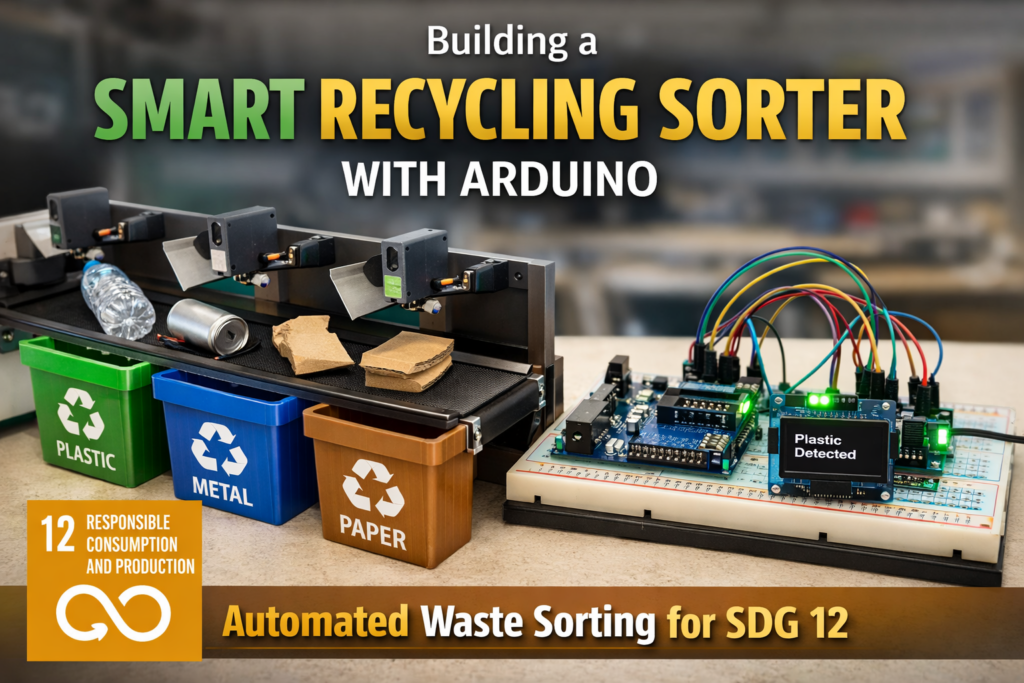
Building a Smart Recycling Sorter with Arduino using sensors and servo mechanisms to automatically separate plastic, metal, and paper waste supporting UN Sustainable Development Goal 12 Responsible Consumption and Production.

Building an Arduino Smart Recycling Sorter (SDG 12: Responsible Consumption and Production)

An Arduino recycling sorter demonstrates how low-cost embedded systems can support smarter waste management, recycling education, and SDG 12: Responsible Consumption and Production. This project combines an Arduino-compatible microcontroller with object detection, inductive metal sensing, and servo-based actuation to classify items and route them into separate bins. While the prototype is not an industrial recycling system, it shows how sensing, classification, and automation can reduce contamination, improve material recovery, and make circular material flows easier to understand. The article connects the build to intelligent infrastructure, planetary boundaries, sustainable development, and the problem of synthetic material overload, showing how practical maker projects can model the larger systems needed for resource efficiency, circular economy design, and more responsible consumption.

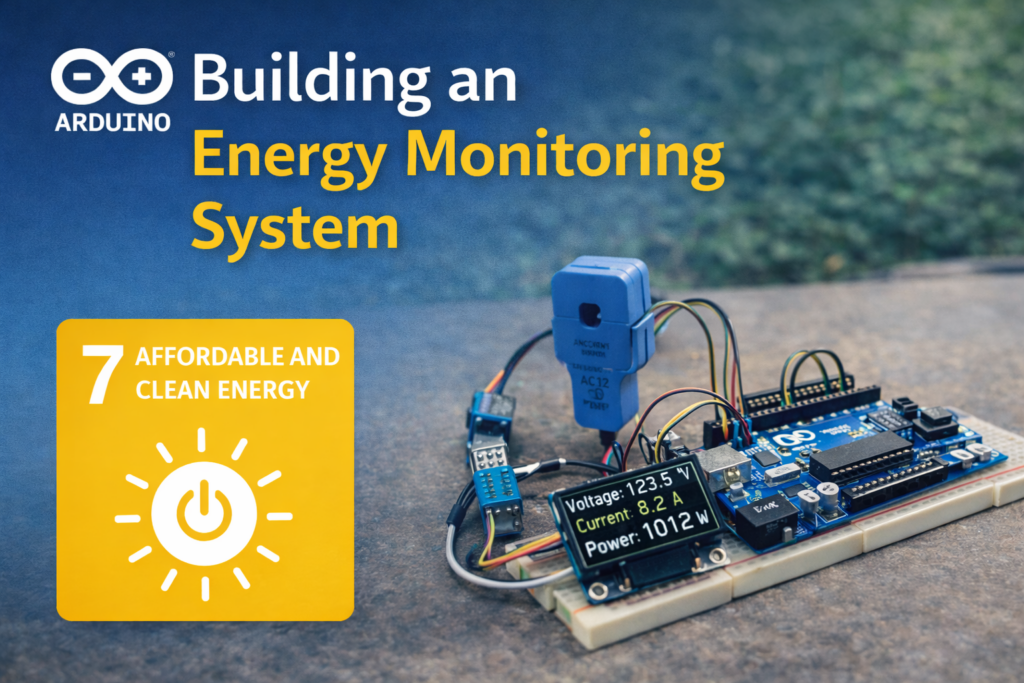
Building an Arduino Energy Monitoring System showing an Arduino board connected to current and voltage sensors to measure electricity usage aligned with UN Sustainable Development Goal 7 Affordable and Clean Energy.

Building an Arduino Home Energy Monitoring System (SDG 7: Affordable and Clean Energy)

An Arduino energy monitoring system demonstrates how low-cost embedded electronics can make electricity use visible, measurable, and easier to optimize. This project combines an Arduino-compatible microcontroller with an INA219 current and voltage sensor to measure voltage, current, instantaneous power, and cumulative energy consumption in low-voltage DC systems. While the prototype is not a certified metering instrument and should not be used for household AC mains, it shows how practical sensing tools can support energy awareness, efficiency testing, and responsible infrastructure design. The article connects the build to intelligent infrastructure, environmental monitoring systems, SDG 7: Affordable and Clean Energy, climate change as a planetary boundary, and sustainable development, showing how measurement becomes the first step toward cleaner and more efficient energy systems.

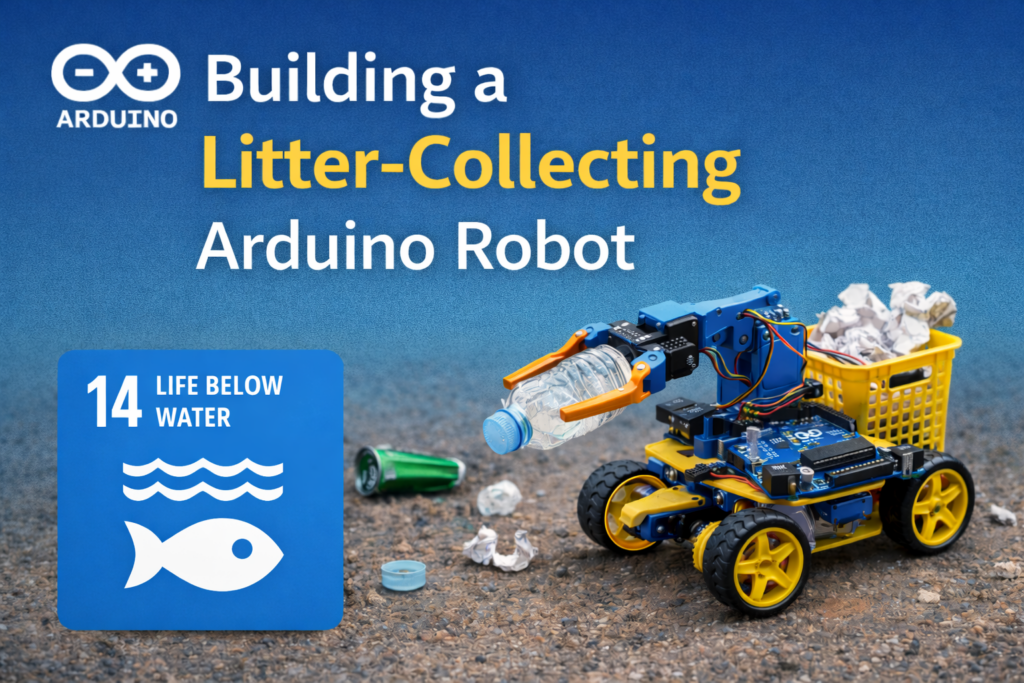
Litter-collecting Arduino robot prototype designed to remove waste and protect marine environments supporting SDG 14 Life Below Water.

Building an Arduino Litter-Collecting Robot (SDG 14: Life Below Water)

An Arduino litter-collecting robot demonstrates how low-cost robotics can support environmental cleanup, pollution prevention, and SDG 14: Life Below Water. This project combines an Arduino-compatible microcontroller with ultrasonic sensing, a differential-drive chassis, motor control, and a servo-actuated gripper to detect nearby objects and attempt lightweight debris collection. While the prototype is not a field-ready autonomous cleanup machine, it shows how sensing, mobility, and actuation can be combined into a practical environmental robotics system. The article connects the build to intelligent infrastructure, environmental monitoring, novel entities and synthetic overload, freshwater risk, ocean protection, planetary boundaries, and sustainable development, showing how maker-scale robotics can model larger systems for reducing land-based waste before it reaches rivers, wetlands, coastlines, and oceans.

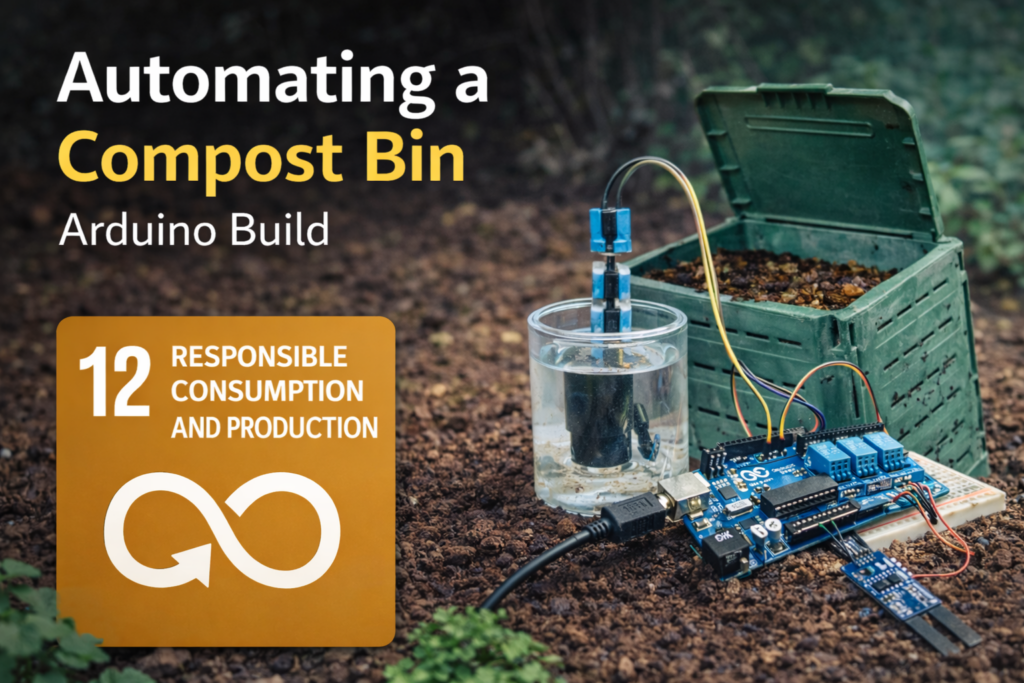
Arduino compost bin automation system with temperature, moisture, and environmental sensors supporting SDG 12 Responsible Consumption and Production.

Building an Arduino Compost Monitoring System (SDG 12: Responsible Consumption and Production)

An Arduino compost monitoring system demonstrates how low-cost embedded sensing can support waste reduction, soil stewardship, and SDG 12: Responsible Consumption and Production. This project combines an Arduino-compatible microcontroller with a waterproof temperature probe, moisture-related sensing, and optional ambient temperature and humidity readings to observe compost conditions in real time. While the prototype is not an industrial compost-management instrument, it shows how temperature, moisture, and environmental context can make biological decomposition easier to understand and manage. The article connects the build to environmental monitoring systems, intelligent infrastructure, biogeochemical flows, land-system change, planetary boundaries, and sustainable development, showing how practical sensor projects can support circular organic waste systems, nutrient recovery, compost quality, and more responsible resource use.

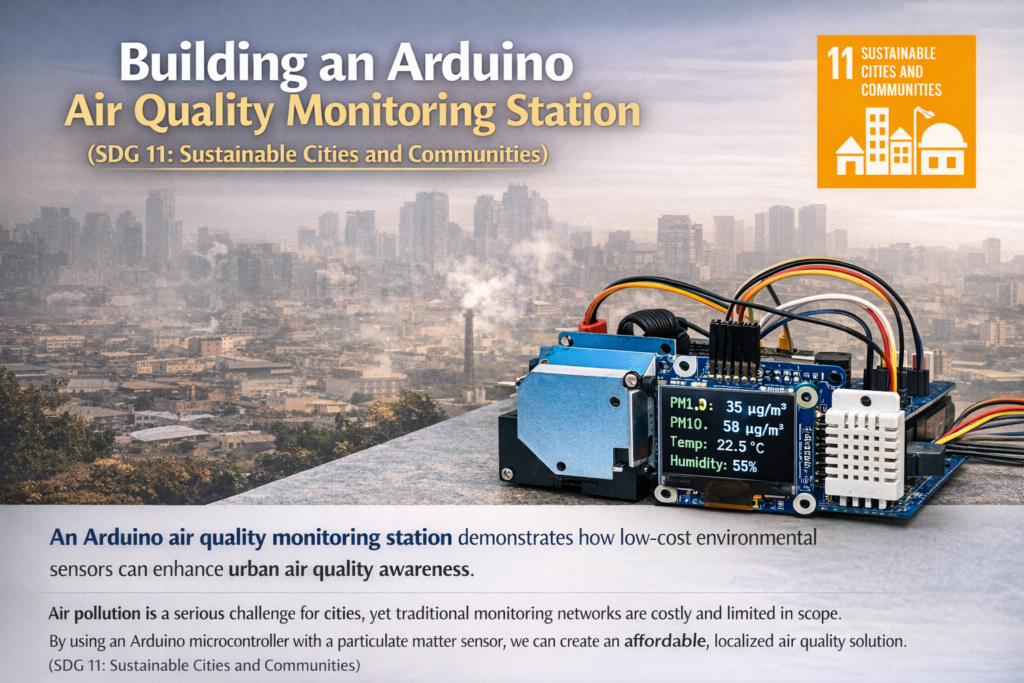
Arduino air quality monitoring station with particulate matter sensor and environmental sensors measuring PM1.0 PM2.5 and PM10 pollution levels to support urban air monitoring and SDG 11 Sustainable Cities and Communities.

Building an Arduino Air Quality Monitoring Station (SDG 11: Sustainable Cities and Communities)

An Arduino air quality monitoring station demonstrates how low-cost embedded sensing can support urban environmental awareness, neighborhood-scale monitoring, and SDG 11: Sustainable Cities and Communities. This project combines an Arduino-compatible microcontroller with a particulate matter sensor and temperature/humidity sensing to measure PM1.0, PM2.5, PM10, and atmospheric conditions in real time. While the prototype is not a certified regulatory instrument, it shows how distributed monitoring can make localized air-quality variation more visible for classrooms, community science, sustainability labs, and urban infrastructure projects. The article connects the build to environmental monitoring systems, intelligent infrastructure, atmospheric aerosol loading, climate change, planetary boundaries, and sustainable development, showing how practical sensor projects can help communities observe environmental risk more clearly and support healthier, more resilient cities.

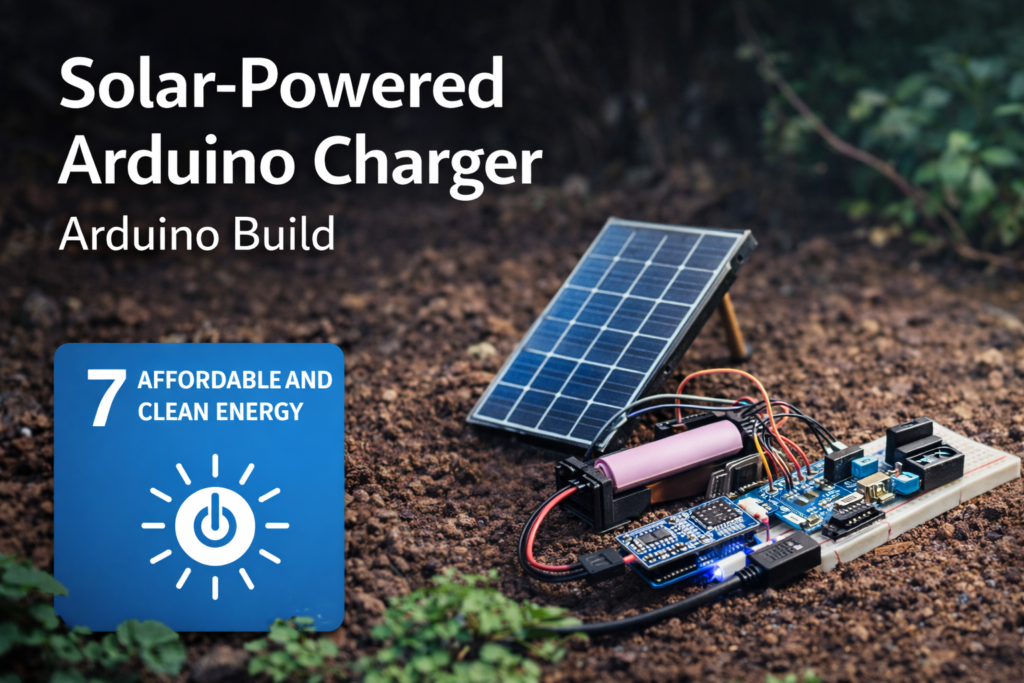
Solar powered Arduino charger prototype with solar panel, lithium battery, and charging module demonstrating a small renewable energy system

Building a Solar-Powered Arduino Charging System (SDG 7: Affordable and Clean Energy)

A solar-powered Arduino charger demonstrates how small renewable energy systems can capture, store, regulate, and distribute electricity at the edge of the grid. This project combines a solar panel, lithium-ion battery, TP4056 charging module, boost converter, and Arduino-based voltage monitoring circuit to create a compact renewable charging prototype. While the build is not a certified consumer charger or replacement for grid infrastructure, it shows how decentralized energy systems can support energy access, field monitoring, emergency resilience, and clean-energy education. The article connects the project to intelligent infrastructure, environmental monitoring systems, SDG 7: Affordable and Clean Energy, climate change as a planetary boundary, and sustainable development, showing how practical maker-scale systems can make renewable energy generation, storage, and monitoring more tangible.

Scroll to Top