
Applied Builds

Applied Builds focus on hands-on engineering work: designing, prototyping, testing, and iterating systems to solve practical problems. It includes embedded systems, sensing, control, automation, and other technical work shaped by constraints, tradeoffs, and real-world performance.

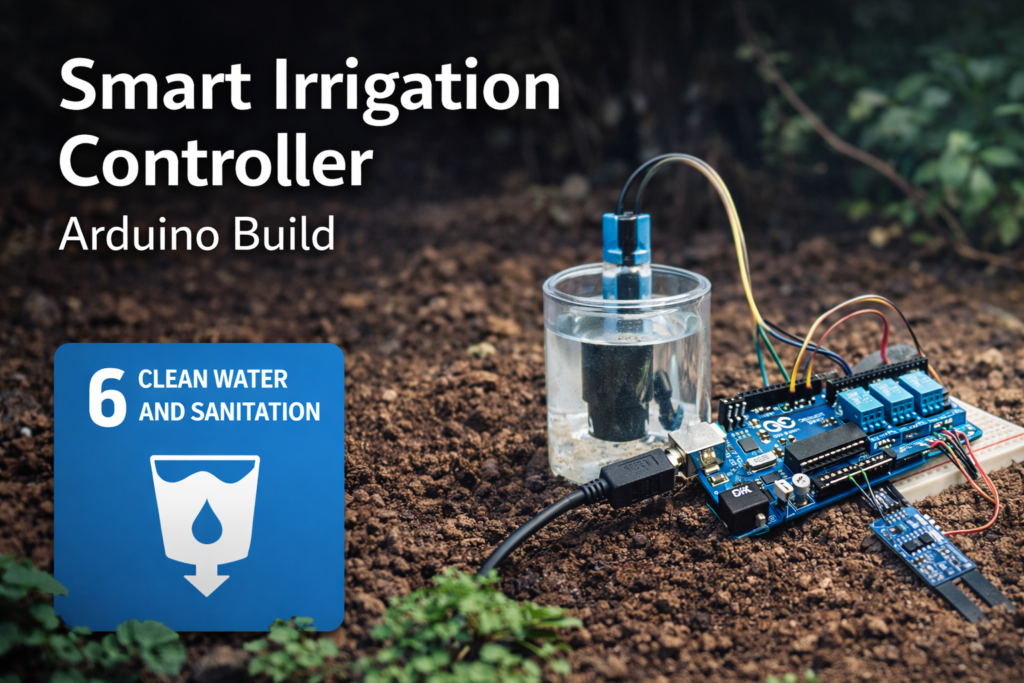
Arduino smart irrigation controller prototype with breadboard and sensor setup for water-efficient monitoring

Building an Arduino Smart Irrigation Controller (SDG 6: Clean Water and Sanitation)

A smart irrigation controller with Arduino demonstrates how low-cost sensing and automation can support more efficient freshwater use, small-scale agriculture, and SDG 6: Clean Water and Sanitation. This project combines an Arduino-compatible microcontroller with a capacitive soil moisture sensor, optional temperature and humidity sensing, relay control, and a small pump to water plants only when measured soil conditions indicate dryness. While the prototype is not a production agricultural controller, it shows how feedback systems can replace fixed irrigation schedules with responsive, data-informed decisions. The article connects the build to environmental monitoring systems, intelligent infrastructure, freshwater change, land-system transformation, planetary boundaries, and sustainable development, showing how practical embedded systems can support water efficiency, resilient growing systems, and more responsible resource management.
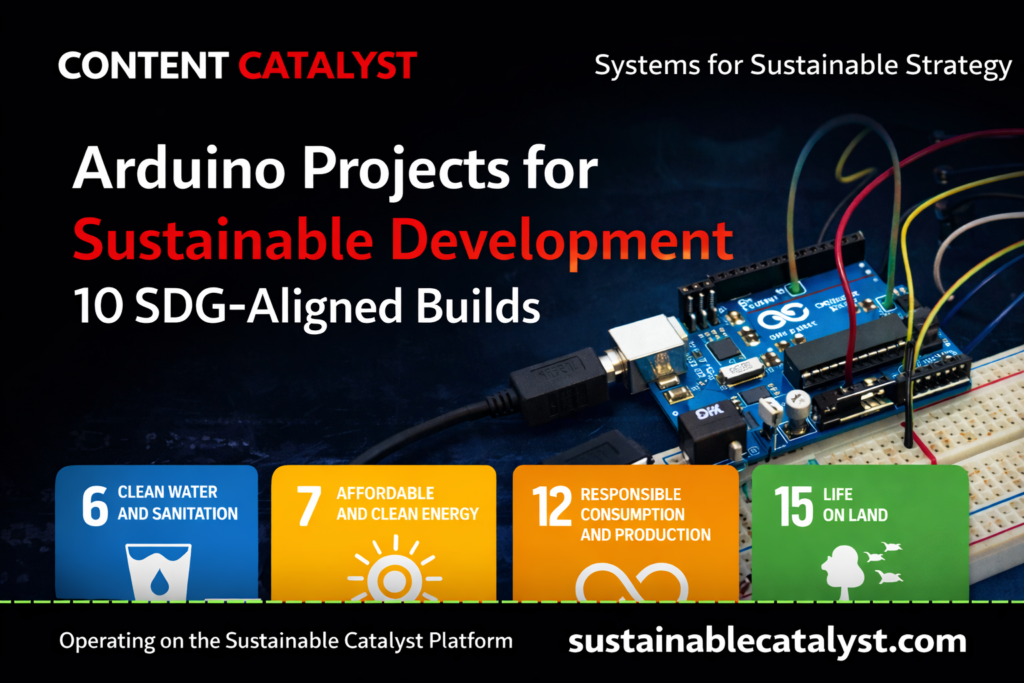
Arduino projects supporting sustainable development and the UN Sustainable Development Goals including water monitoring, renewable energy, and environmental sensing

Arduino Projects for Sustainable Development: 10 SDG-Aligned Builds

Arduino projects for sustainable development show how low-cost embedded systems can support environmental monitoring, renewable energy experimentation, water stewardship, circular resource use, and biodiversity protection aligned with the United Nations Sustainable Development Goals. This pillar serves as the central index for ten hands-on projects, including smart irrigation, solar charging, air quality monitoring, compost sensing, litter-collecting robotics, energy monitoring, recycling sorting, wildlife tracking, water quality sensing, and beehive health monitoring. Each project connects practical Arduino prototyping with broader sustainability themes such as freshwater risk, climate change, intelligent infrastructure, environmental monitoring systems, circular material flows, and biosphere integrity. Together, the series shows how sustainable development depends not only on policy frameworks, but also on measurable systems that observe environmental conditions and support better decisions.

Scroll to Top