Natural Science

Natural Science examines the physical and living world through the systematic study of matter, energy, life, Earth systems, and the broader universe. It seeks to explain the structures, processes, laws, and transformations that govern the natural order, from the smallest physical interactions to the largest planetary and cosmic systems.

This field brings together disciplines that investigate how nature is organized, how change occurs, and how physical and biological systems develop across time and scale. It includes the study of material composition, chemical transformation, living organisms, planetary processes, celestial phenomena, and the environmental conditions that sustain or constrain life.

Natural Science plays a foundational role in human knowledge because it provides disciplined methods for understanding reality beyond opinion, intuition, or custom. By clarifying how the natural world functions, it shapes scientific reasoning, technological development, environmental awareness, and humanity’s broader understanding of life, matter, and the universe.

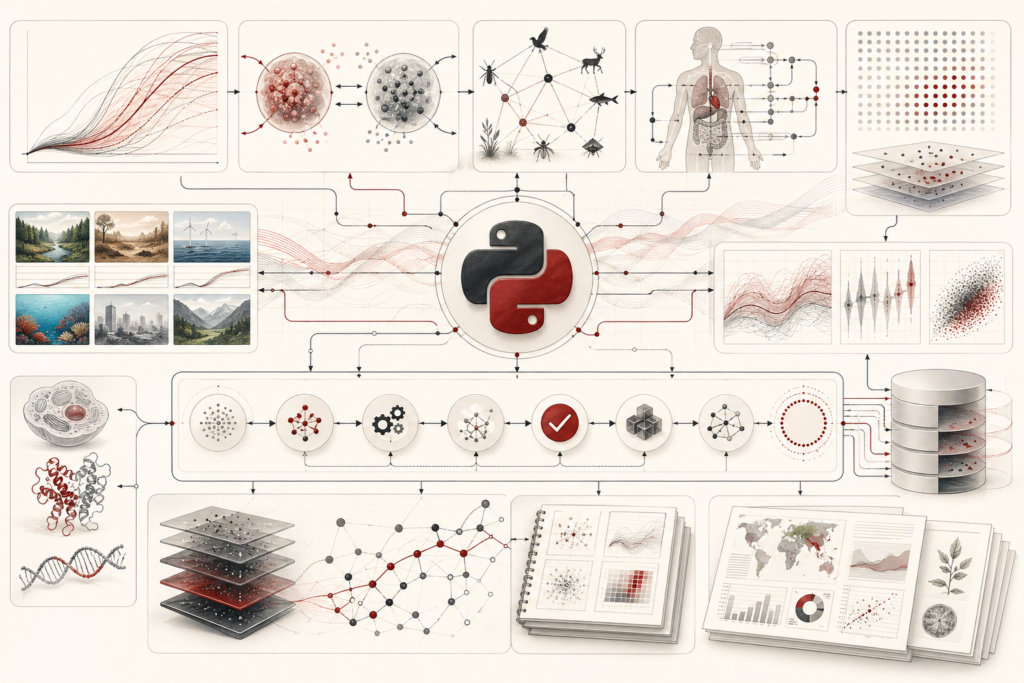
Abstract scientific illustration of Python for biological modeling and automation showing population-model trajectories, compartment exchange pathways, ecological and physiological systems, parameter-grid structures, validation checkpoints, workflow nodes, provenance trails, database layers, notebook panels, and reproducible report outputs.

Python for Biological Modeling and Automation

Python for Biological Modeling and Automation examines how Python helps life scientists turn biological theory, experimental data, simulation logic, validation rules, and repetitive analytical tasks into reproducible computational workflows. The article explains how Python supports population models, compartment models, ecological and physiological scenarios, parameter sweeps, automated data validation, workflow manifests, provenance records, scenario comparison, visualization, and reproducible reporting. Written for biologists, ecologists, biomedical researchers, computational biologists, systems biologists, biotechnology teams, data engineers, scientific software developers, and engineers, the article emphasizes model assumptions, parameters, units, quality control, uncertainty, sensitivity analysis, and responsible interpretation. It shows how Python-based automation can make biological modeling more inspectable, reusable, auditable, and scientifically trustworthy.
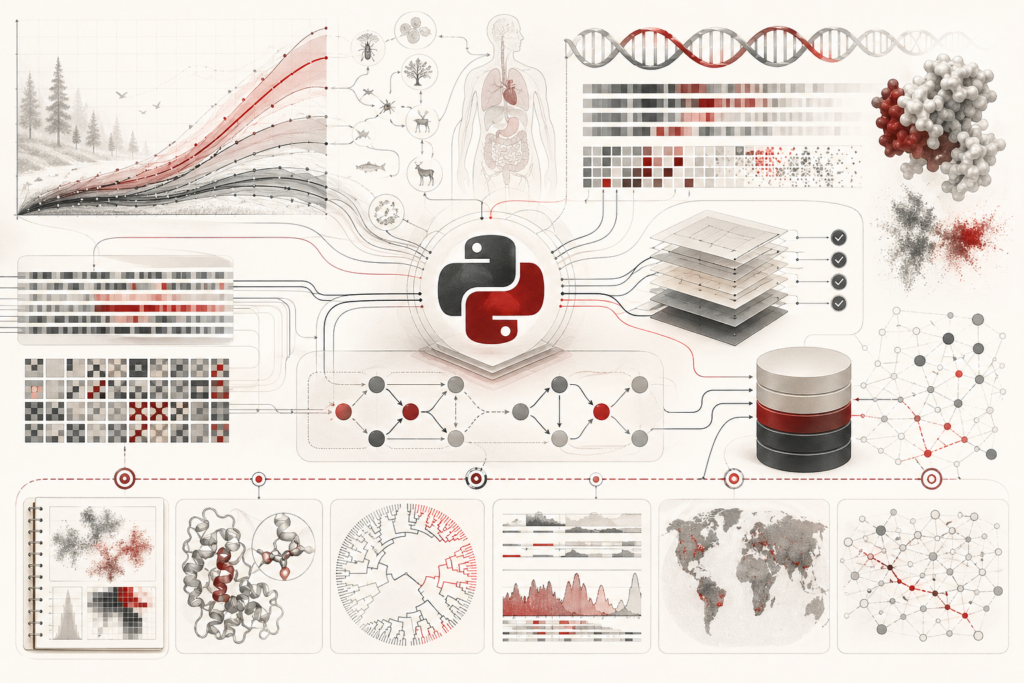
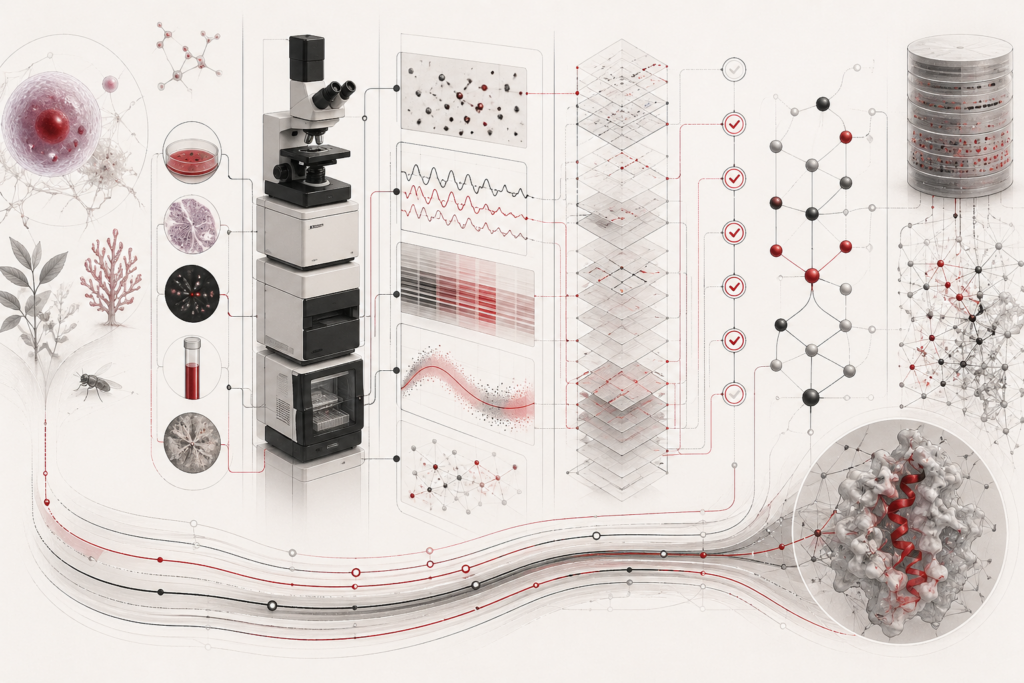
Abstract scientific illustration of Python for simulation, bioinformatics, and scientific workflows showing biological simulation trajectories, DNA-like structures, sequence-analysis motifs, metadata layers, validation checkpoints, workflow nodes, database forms, provenance pathways, and reproducible scientific pipelines without text or labels.

Python for Simulation, Bioinformatics, and Scientific Workflows

Python for Simulation, Bioinformatics, and Scientific Workflows examines how Python helps life scientists model biological systems, analyze sequence data, automate pipelines, validate metadata, visualize outputs, and make computational research reproducible. The article explains why Python is valuable across biology: it combines numerical simulation, bioinformatics file handling, tabular data analysis, workflow automation, provenance tracking, and reproducible notebooks in a flexible scientific ecosystem. Written for biologists, ecologists, biomedical researchers, genomics scientists, bioinformaticians, computational biologists, biotechnology teams, data engineers, and scientific software developers, the article connects logistic-growth simulation, stochastic modeling, FASTA parsing, GC-content analysis, k-mer counting, metadata validation, checksum manifests, SQL provenance, Jupyter notebooks, and workflow design into a transparent evidence chain for modern life science.

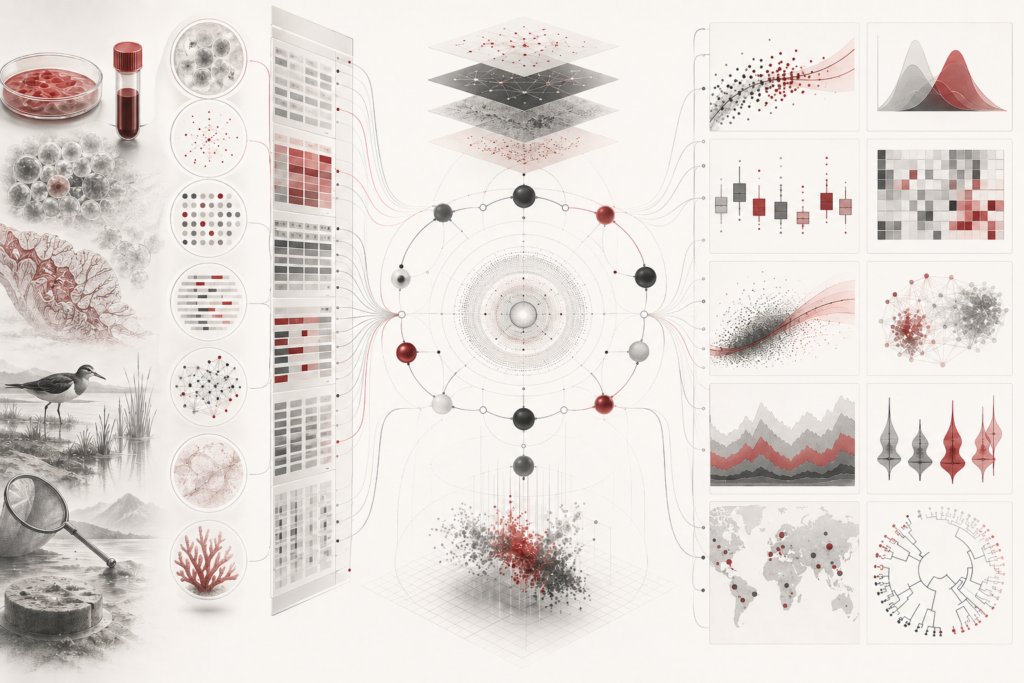
Abstract scientific illustration of R for biostatistics, ecology, and genomics showing experimental assay data, statistical model panels, ecological sampling motifs, ordination-like clusters, genomic count matrices, DNA-like structures, heatmap forms, metadata layers, workflow nodes, and reproducible analysis pathways without text or labels.

R for Biostatistics, Ecology, and Genomics

R for Biostatistics, Ecology, and Genomics examines how R gives life scientists a unified computational environment for statistical inference, ecological community analysis, genomics workflows, visualization, metadata, and reproducible reporting. The article explains how R supports experimental response modeling, linear and generalized models, mixed-effects reasoning, survival analysis, ecological diversity, Bray-Curtis dissimilarity, ordination scaffolds, count normalization, log fold change, and Bioconductor-style thinking. Written for biologists, ecologists, biomedical researchers, genomics scientists, computational biologists, statisticians, and biotechnology teams, the article emphasizes study design, biological replication, batch effects, uncertainty, metadata alignment, model assumptions, and responsible interpretation. It shows how R-based workflows connect biostatistics, ecology, and genomics into a transparent evidence chain from measured data to reproducible biological insight.

Abstract scientific illustration of R for biological data analysis and visualization showing biological samples, ecological field data, cellular structures, data matrices, statistical plots, uncertainty bands, workflow nodes, metadata layers, and reproducible visualization panels without text or labels.

R for Biological Data Analysis and Visualization

R for Biological Data Analysis and Visualization examines how R helps life scientists move from biological observations to reproducible evidence through data import, cleaning, quality control, statistical summaries, visualization, modeling, metadata, and transparent reporting. The article explains why R remains valuable for biologists, ecologists, biomedical researchers, computational biologists, and biotechnology teams: it combines statistical depth, ggplot2 visualization, tidy data workflows, reproducible scripts, ecological analysis, and Bioconductor infrastructure for high-throughput biology. It shows how R can replace fragile manual spreadsheet operations with auditable workflows that preserve assumptions, transformations, figures, and results in code. Through practical examples, the article connects assay summaries, ecological diversity, dose-response visualization, data dictionaries, provenance records, and reproducible session information to responsible biological inference and scientific communication.

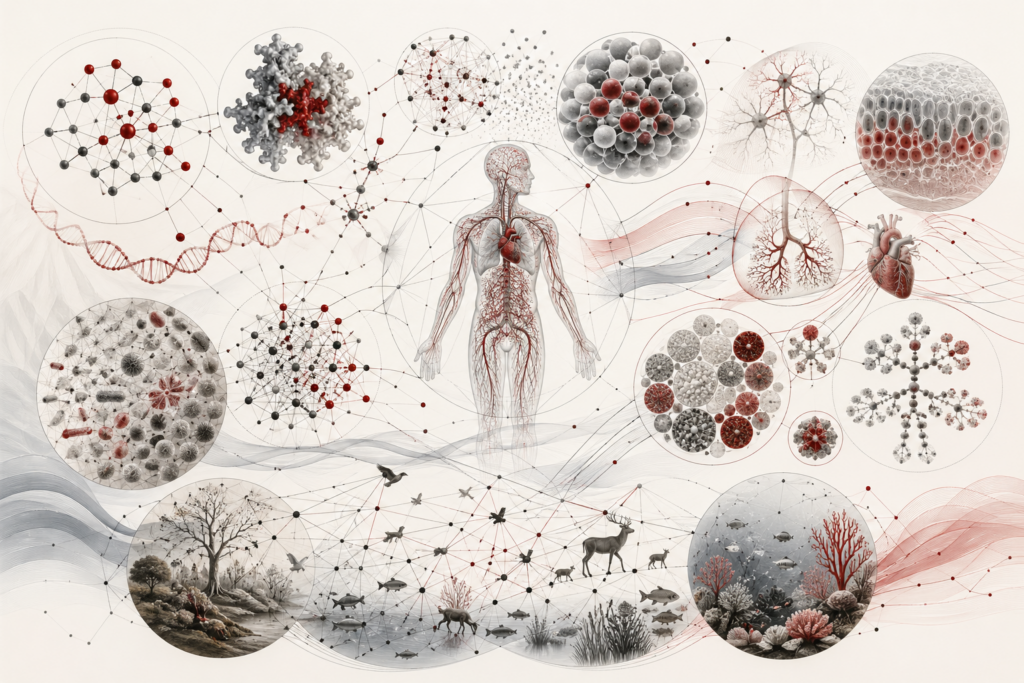
Abstract scientific illustration of networks, systems, and biological complexity showing gene-regulatory nodes, protein structures, cellular clusters, physiological pathways, microbial communities, ecological food webs, modular systems, and multiscale biological connections without text or labels.

Networks, Systems, and Biological Complexity

Networks, Systems, and Biological Complexity examines how living order emerges from interacting genes, proteins, cells, tissues, organs, organisms, populations, microbial communities, ecosystems, and environmental processes. The article explains why biology cannot be understood only by listing parts: living systems depend on relationships, flows, feedback, modularity, hierarchy, robustness, redundancy, vulnerability, and emergence. It introduces gene-regulatory networks, protein-interaction networks, metabolic networks, microbiome associations, physiological systems, ecological food webs, modular organization, disease dysregulation, and computational systems biology. Written for biologists, ecologists, systems biologists, computational scientists, biomedical researchers, engineers, and environmental scientists, the article shows how graph theory, network analysis, and systems modeling help explain function, resilience, fragility, perturbation spread, and multiscale biological organization.

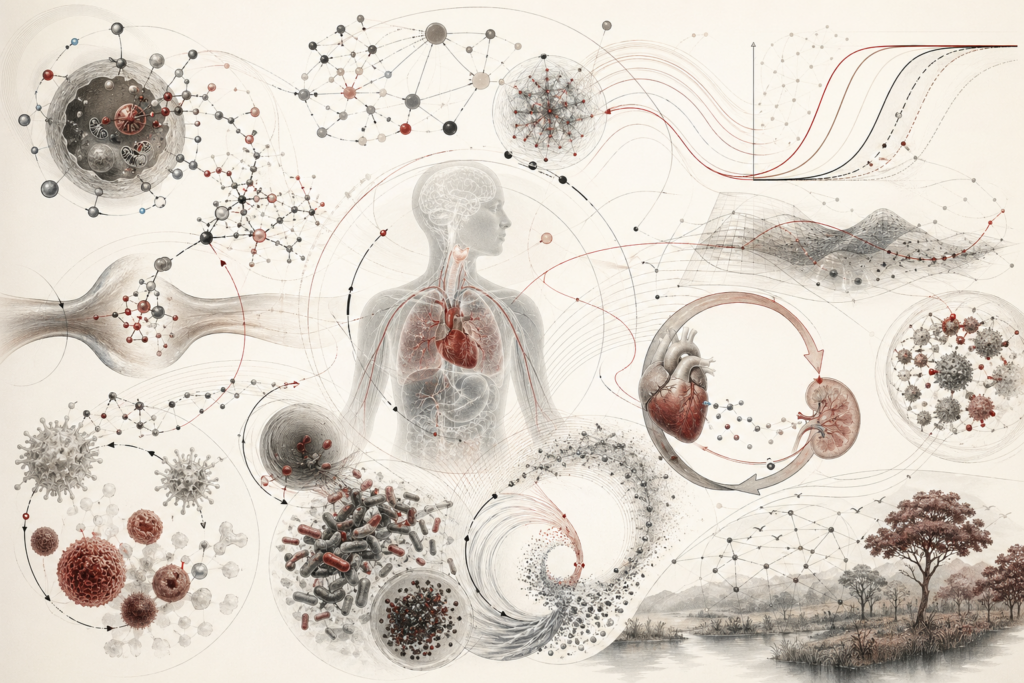
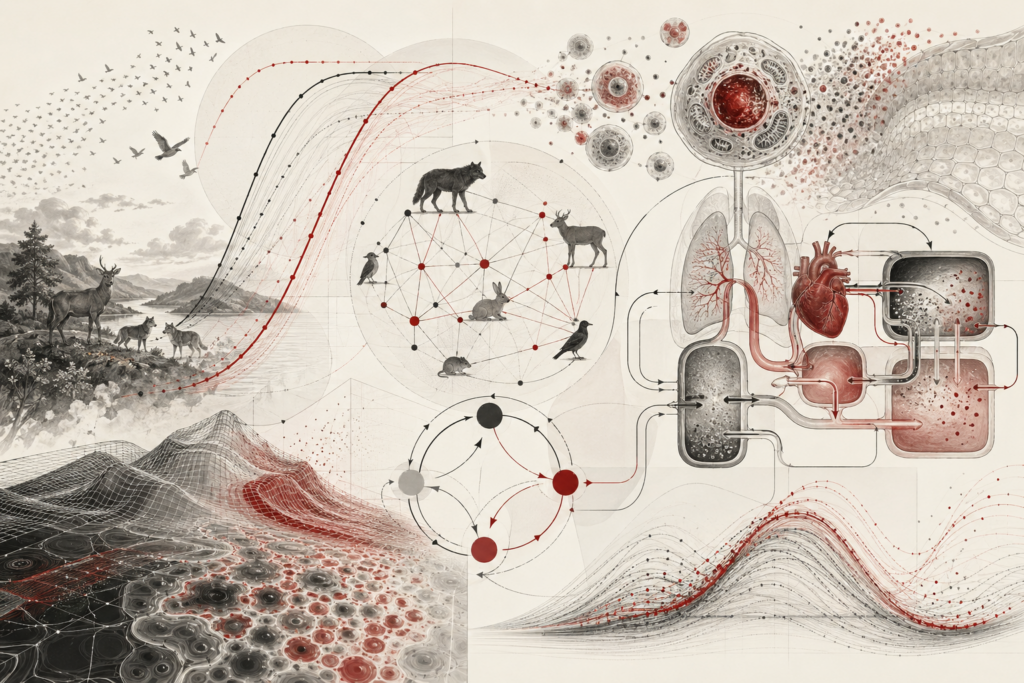
Abstract scientific illustration of differential equations in population and physiological modeling showing population trajectories, ecological networks, cells, physiological compartments, feedback loops, compartmental flows, reaction-diffusion patterns, and computational simulation without text or labels.

Differential Equations in Population and Physiological Modeling

Differential Equations in Population and Physiological Modeling examines how rate-based models help biologists, physiologists, ecologists, engineers, and computational scientists study living systems through time. The article explains why differential equations are essential for modeling population growth, density dependence, predator-prey interaction, disease transmission, physiological homeostasis, pharmacokinetics, chemostat dynamics, reaction-diffusion systems, stability, feedback, and biological resilience. It introduces ordinary, partial, delay, and stochastic differential equations as tools for making biological assumptions explicit and computationally testable. Through mathematical examples and R/Python workflows, the article shows how scientists can simulate mechanisms, estimate dynamic behavior, explore thresholds, test sensitivity, and connect biological theory to reproducible computation. It emphasizes that differential-equation models do not replace empirical evidence; they structure biological reasoning about change, regulation, constraint, and uncertainty across populations, organs, cells, ecosystems, and engineered biological systems.

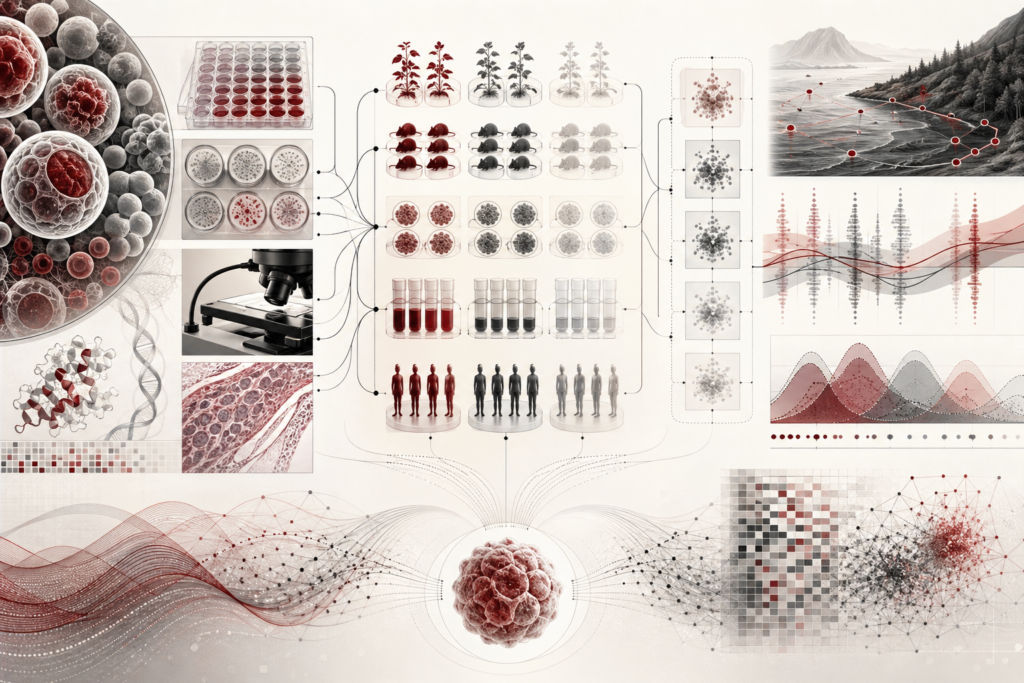
Abstract scientific illustration of biostatistics and experimental design in biology showing grouped cell structures, assay wells, balanced treatment groups, blocked sample clusters, ecological sampling points, uncertainty patterns, and computational data flows without text or labels.

Biostatistics and Experimental Design in Biology

Biostatistics and Experimental Design in Biology examines how biological questions become reliable evidence through planned comparisons, defined experimental units, replication, randomization, blocking, blinding, sample-size reasoning, effect-size estimation, uncertainty quantification, and reproducible analysis. The article explains why statistics should guide study design before data collection begins, not merely analyze results afterward. It distinguishes biological replication from technical replication, clarifies the problem of pseudoreplication, and shows how controls, blocking variables, factorial designs, nested structures, and mixed-effects thinking strengthen inference. Written for biologists, ecologists, biomedical researchers, biotechnology scientists, engineers, and computational scientists, the article connects experimental design to real biological variation across cells, organisms, populations, ecosystems, assays, and high-throughput platforms. Through mathematical examples and R/Python workflows, it shows how strong design turns finite data into responsible biological knowledge.

Scroll to Top