Statistics, Uncertainty, and Measurement in Biology
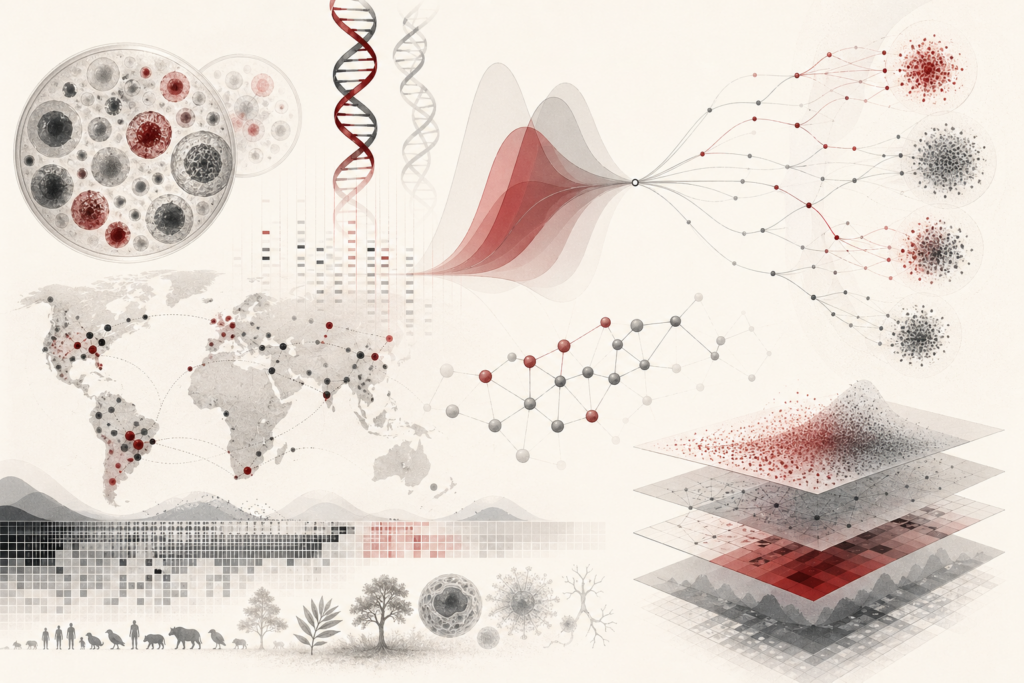
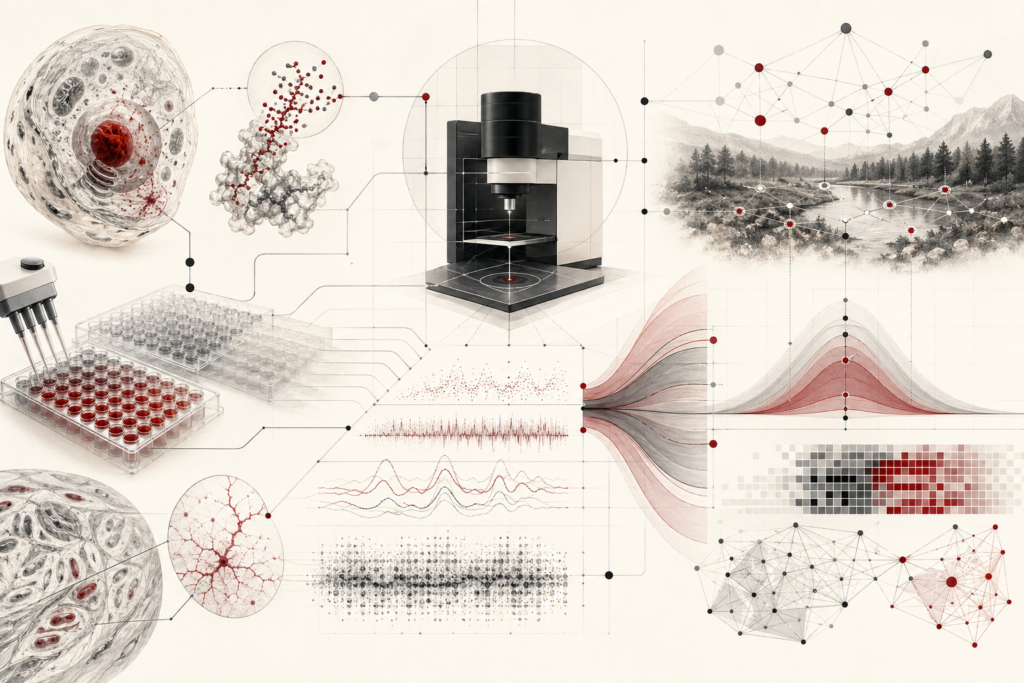
Statistics, Uncertainty, and Measurement in Biology examines how living systems become reliable scientific evidence through measurement design, calibrated instruments, replication, uncertainty quantification, statistical modeling, and reproducible analysis. The article explains why biological measurement is never just the recording of numbers: cells, organisms, ecosystems, biomarkers, genomes, images, and environmental signals all vary across time, space, condition, and scale. It introduces core concepts such as accuracy, precision, bias, measurement error, biological variation, technical replication, biological replication, uncertainty budgets, calibration curves, detection limits, error propagation, variance components, and assay quality control. Through mathematical examples and R/Python workflows, the article shows how statistics helps biologists, engineers, biomedical researchers, ecologists, and computational scientists distinguish signal from noise and turn measured variation into disciplined biological inference.