The Monomyth: What Joseph Campbell Actually Argued About the Hero’s Journey
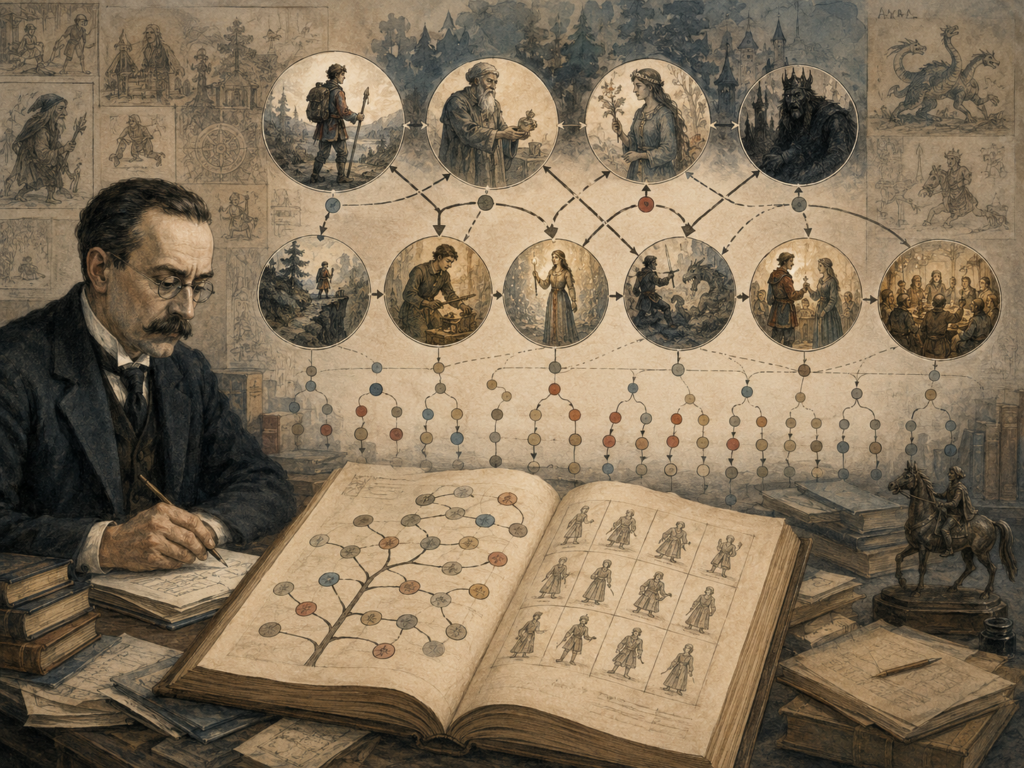
The Monomyth: What Campbell Actually Argued clarifies one of the most influential and misunderstood ideas in modern storytelling. This article explains that Joseph Campbell’s monomyth was not a rigid screenwriting formula, but a comparative and symbolic model of heroic transformation organized around departure, initiation, and return. It examines the call to adventure, threshold crossing, trial, descent, symbolic death, boon, reentry, and the difficult problem of bringing transformation back into the ordinary world. The article also distinguishes Campbell’s actual argument from later formulaic uses of the hero’s journey in writing guides, film analysis, branding, and leadership culture. It addresses strengths, limits, gender critique, cultural specificity, counterexamples, formula drift, and ethical risk. As part of the Storytelling series, it connects myth studies, comparative mythology, analytical psychology, narrative structure, cultural memory, and responsible interpretation across ancient, modern, sacred, literary, and institutional stories.