Building a Solar-Powered Arduino Charging System (SDG 7: Affordable and Clean Energy)
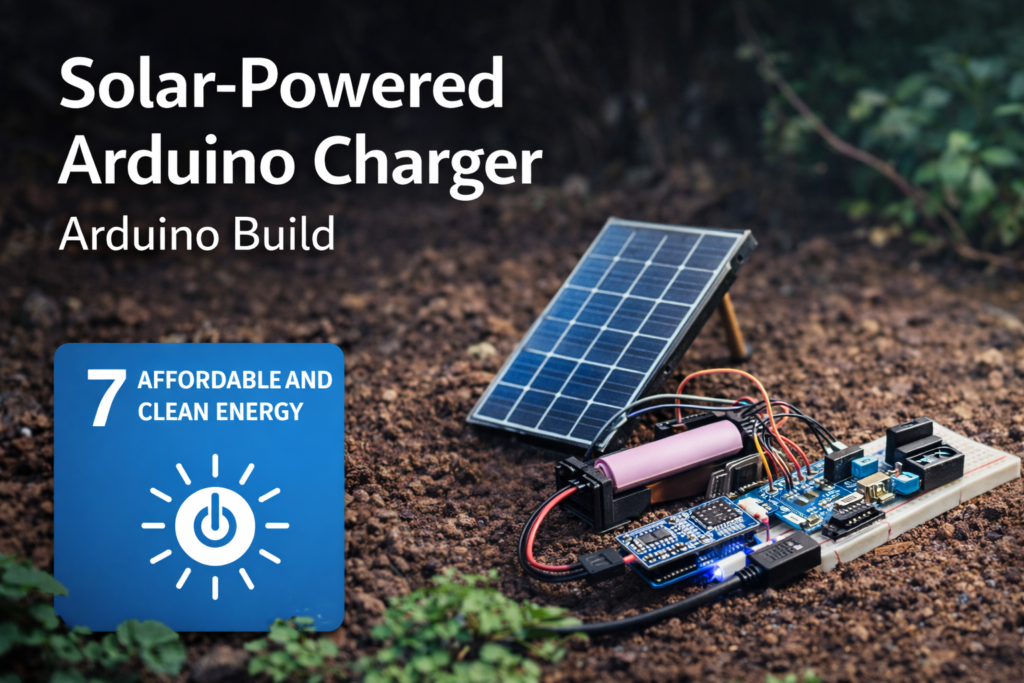
A solar-powered Arduino charger demonstrates how small renewable energy systems can capture, store, regulate, and distribute electricity at the edge of the grid. This project combines a solar panel, lithium-ion battery, TP4056 charging module, boost converter, and Arduino-based voltage monitoring circuit to create a compact renewable charging prototype. While the build is not a certified consumer charger or replacement for grid infrastructure, it shows how decentralized energy systems can support energy access, field monitoring, emergency resilience, and clean-energy education. The article connects the project to intelligent infrastructure, environmental monitoring systems, SDG 7: Affordable and Clean Energy, climate change as a planetary boundary, and sustainable development, showing how practical maker-scale systems can make renewable energy generation, storage, and monitoring more tangible.