
Last Updated May 24, 2026
Wide-area IoT protocols for disaster recovery are becoming essential because they address one of the most persistent failures in remote crisis response: the loss of visibility when roads, power systems, cellular towers, fiber routes, clinics, bridges, water systems, supply depots, and local institutions are disrupted at the same time.
Floods, landslides, storms, earthquakes, wildfires, volcanic events, coastal hazards, drought emergencies, and conflict-related infrastructure failures can isolate mountain settlements, rural river basins, islands, coastal communities, agricultural districts, and Indigenous or historically underserved regions precisely when timely information matters most. In these conditions, disaster recovery is not only a logistics problem. It is a communications problem, an energy problem, a data-governance problem, a maintenance problem, and a justice problem.
Main Library
Publications
Article Map
Embedded & Edge Systems
Related Topic
Risk & Resilience
Related Topic
Infrastructure Systems
Related Topic
Environmental Monitoring
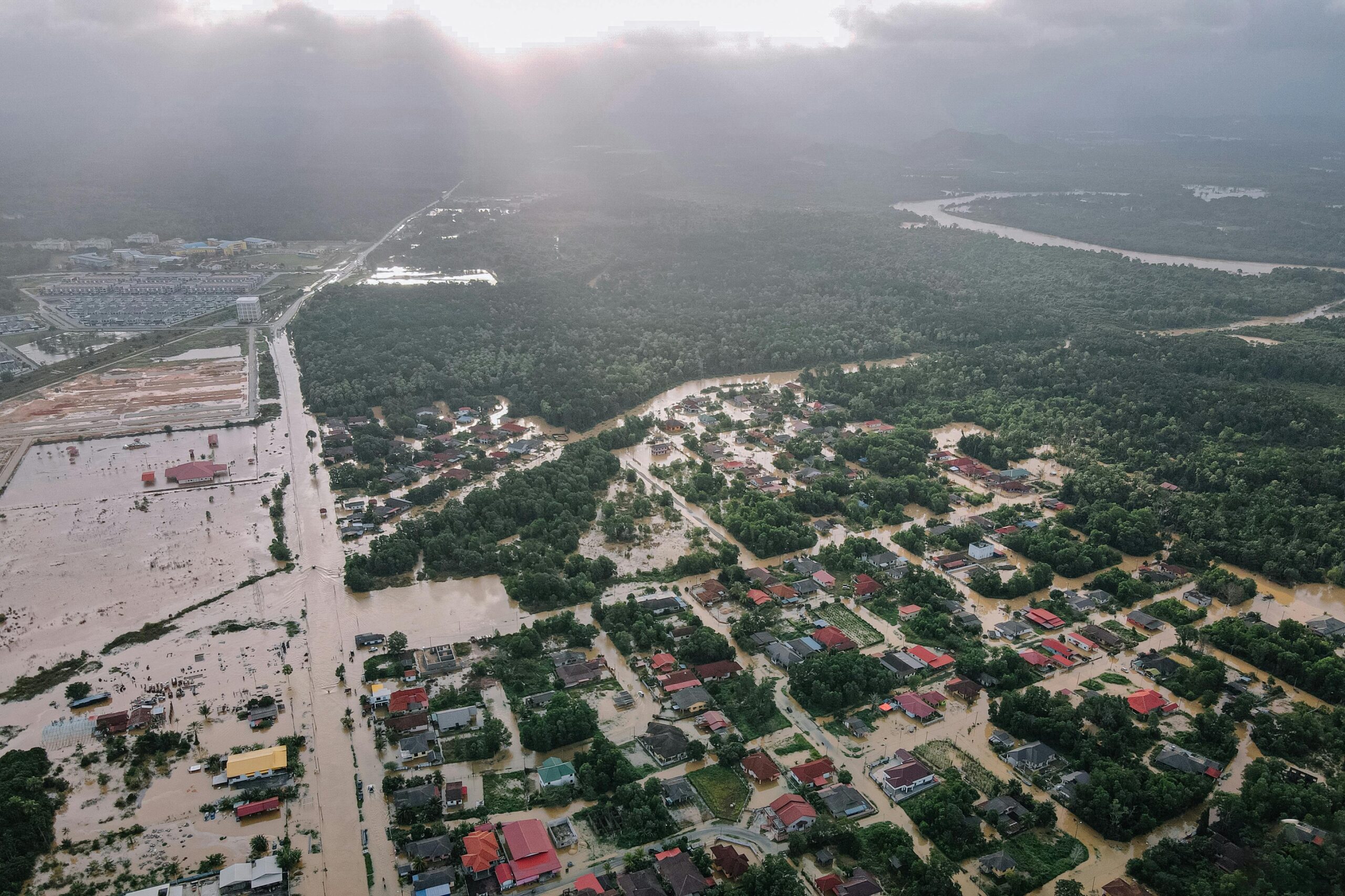
Remote communities often begin from a position of infrastructural disadvantage. They may have fewer redundant communications paths, weaker road access, limited grid reliability, sparse health infrastructure, fewer repair crews, weaker public-service coverage, and less political visibility within national disaster planning. When disaster strikes, these inequalities can become operational blind spots. A village may be cut off but not yet visible to responders. A clinic may lose cold-chain capacity without being able to report it. A bridge may become unsafe without triggering a regional warning. A flood gauge may fail silently. A road may wash out while emergency logistics plans still assume it is passable.
Wide-area IoT protocols such as LoRaWAN, NB-IoT, LTE-M, and satellite IoT create low-power, long-range communication layers that can preserve basic situational awareness even when conventional infrastructure is degraded. These technologies are not designed to replace broadband, emergency radio, public alerting, satellite voice, community messengers, or human responders. Their value lies in a more modest but often decisive function: moving small, structured, timely messages from remote sensors and field nodes when other channels are unavailable, overloaded, or too expensive to deploy.
This article examines wide-area IoT protocols as an Embedded & Edge Systems problem. It argues that resilient disaster IoT is not defined by a single protocol. It is defined by the architecture that connects low-power devices, gateway placement, backhaul redundancy, battery budgets, message delivery probability, alert latency, local governance, data sovereignty, and trusted public action.
Why Wide-Area IoT Protocols Matter in Disasters
In many urban disasters, at least some baseline communications infrastructure may survive. A damaged city may still have partial cellular coverage, emergency radio networks, nearby fiber routes, municipal command centers, backup generators, hospitals, fuel depots, road access, and accessible repair crews. Even under severe stress, dense infrastructure can provide multiple fallback paths.
Remote disasters frequently unfold under harsher conditions. A single landslide can isolate an entire valley. A flood can disable the few roads and power links connecting scattered communities to regional hubs. A wildfire can destroy towers, power poles, and backhaul links across a large forested area. A storm can take down one tower on which a wide territory depends. An earthquake can break bridges, roads, fiber routes, and local water systems at the same time.
Wide-area IoT protocols matter because they are built for constrained environments. They support long-range communication, low energy use, small data payloads, sparse infrastructure, and large numbers of simple endpoints. In disaster recovery, these properties can be more useful than high bandwidth. A remote flood gauge does not need to stream video. It needs to report water level, battery status, timestamp, device identity, and alert state. A rural clinic may not need full broadband during the first hours after a disaster. It may need to send a structured message confirming whether it has power, staff, critical medicines, water, refrigeration, safe access, and patients requiring evacuation.
This shift from bandwidth-rich communication to resilient minimal communication is central to disaster IoT design. The goal is not to transmit everything. The goal is to transmit what matters enough, soon enough, with sufficient reliability, under severe constraints.
Wide-area IoT systems can support several disaster functions:
- early warning: monitoring rivers, rainfall, slopes, wind, fire risk, air quality, coastal hazards, and water levels;
- situational awareness: receiving basic status reports from remote settlements, shelters, clinics, schools, roads, bridges, and water systems;
- asset tracking: following generators, medical supplies, cold-chain boxes, boats, vehicles, drones, pumps, and emergency kits;
- infrastructure monitoring: detecting damage or stress in roads, culverts, bridges, reservoirs, towers, microgrids, and water systems;
- recovery coordination: prioritizing repair crews, supply drops, evacuation routes, field teams, and medical support.
These systems are especially valuable where the loss of information compounds the original disaster. A flooded road may delay medical evacuation. A failed bridge sensor may conceal structural danger. A silent village may be assumed safe when it is actually cut off. A cold-chain failure may destroy vaccines or medicines before responders know there is a problem. In this sense, communications failure becomes a risk multiplier.
Why Remote Regions Need a Different Connectivity Model
Remote regions require a different connectivity model because conventional telecommunications planning often assumes density: dense populations, dense infrastructure, dense markets, dense service demand, and relatively low cost per user. Remote disaster environments invert those assumptions. They involve sparse populations across wide territories, long distances between infrastructure nodes, limited commercial incentives for redundancy, difficult terrain, high repair costs, and lower political visibility.
Common constraints include:
- sparse populations distributed across large geographic areas;
- limited grid power, fuel access, and backup generation;
- few redundant communications paths;
- difficult terrain, including mountains, forests, deserts, wetlands, islands, and river basins;
- seasonal isolation caused by snow, monsoon rains, flooding, heat, or road degradation;
- limited local technical support for maintaining complex systems;
- insufficient historical investment in marginalized, low-income, Indigenous, island, or rural regions;
- limited access to spare parts, replacement batteries, antennas, trained technicians, and secure maintenance records.
The technical design question is straightforward but demanding: how can situational awareness and coordination be preserved across tens or hundreds of kilometers using devices that may need to operate for days, weeks, months, or years on batteries, small solar systems, microgrids, vehicle charging, or intermittent generator access?
The institutional design question is equally important: who owns the system, who controls the data, who receives alerts, who maintains the devices, who verifies the sensors, who pays for replacement parts, and who is accountable when warnings fail?
Wide-area IoT protocols are one answer because they align with the physical realities of remote environments. They do not require every sensor to maintain a broadband connection. They do not assume that every village has fiber. They do not require continuous transmission. Instead, they allow simple devices to sleep most of the time, wake briefly, transmit compact messages, and return to low-power operation.
This makes them well suited to disaster risk reduction, where the most important data are often intermittent, threshold-based, and geographically distributed. A sensor does not need to speak constantly. It needs to speak when it matters—and be trusted when it does.
Wide-Area IoT as Embedded and Edge Infrastructure
Wide-area IoT for disaster recovery belongs naturally within Embedded & Edge Systems because the intelligence is distributed across physical devices close to the hazard. The system begins not in a cloud dashboard but in field-deployed sensors, microcontrollers, radios, antennas, batteries, firmware, local gateways, edge rules, and rugged enclosures exposed to weather, terrain, dust, heat, water, animals, tampering, and long periods without maintenance.
The embedded layer matters because remote disaster systems are constrained. Devices must make local decisions about when to sense, when to sleep, when to transmit, when to retry, when to escalate, and when to conserve energy. A flood sensor may need to shift from hourly reporting to minute-level alerting when water crosses a threshold. A slope sensor may need to detect movement locally before transmitting an alert. A bridge monitor may need to send a compact status code rather than raw vibration data. A clinic node may need to store messages until a gateway or satellite window is available.
The edge layer matters because not all disaster decisions can depend on centralized platforms. A village warning light, local siren, clinic display, community radio relay, or shelter dashboard may need to operate even when regional servers are unreachable. A system that can sense danger but cannot notify the people at risk is incomplete.
A resilient disaster IoT architecture therefore has at least four embedded-edge responsibilities:
- local sensing: measuring water level, slope movement, rainfall, fire conditions, bridge vibration, power status, temperature, or clinic conditions;
- local interpretation: detecting thresholds, abnormal patterns, missing heartbeats, battery risk, or infrastructure status changes;
- local communication: transmitting compact messages through LoRaWAN, NB-IoT, LTE-M, satellite IoT, or hybrid routes;
- local action: triggering community alerts, logging events, displaying status, changing reporting frequency, or escalating emergency messages.
The embedded-edge perspective also makes maintenance visible. A disaster IoT system is not only a network diagram. It is a fleet of devices that must be installed, labeled, protected, tested, updated, repaired, and eventually retired. Without this operational layer, the best protocol choice will not produce resilience.
Wide-Area IoT Protocols and LPWAN Fundamentals
Most wide-area IoT protocols belong to the broader category of Low Power Wide Area Networks, or LPWAN. These systems trade bandwidth for range, energy efficiency, cost efficiency, and large-scale endpoint support. They are optimized for sensor readings, alerts, telemetry, status updates, and machine-to-machine communication rather than voice, video, or high-volume internet access.
LPWAN design generally emphasizes five properties:
- long range: the ability to communicate over kilometers rather than meters;
- low power: the ability to support battery-powered sensors over long periods;
- low data rates: the transmission of small payloads rather than continuous media;
- scalability: support for many devices across a geographic area;
- cost control: reduced device, network, and operating costs compared with denser broadband infrastructure.
These advantages come with tradeoffs. LPWAN systems are not appropriate for all disaster communications. They cannot replace emergency voice networks, satellite broadband, public warning sirens, community radio, mesh radio, first-responder systems, or human coordination. Their payload sizes, duty-cycle limits, spectrum constraints, latency profiles, downlink limitations, gateway dependencies, operator dependencies, and regulatory requirements require careful design. A poorly designed LPWAN deployment can create false confidence if it is treated as a universal solution.
The most relevant wide-area IoT options for remote disaster recovery include:
| Protocol / category | Strengths | Limitations | Disaster-recovery use cases |
|---|---|---|---|
| LoRaWAN | Long range, low power, deployable without cellular infrastructure, suitable for public, private, community, NGO, or research networks | Small payloads, duty-cycle constraints, gateway placement matters, shared-spectrum interference risk, limited downlink capacity | Flood gauges, village beacons, slope sensors, bridge alerts, water-quality sensors, local environmental monitoring |
| NB-IoT | Licensed spectrum, deep coverage, low power, strong mobile-operator integration | Depends on cellular infrastructure and operator support; mobility and latency may be limited depending on deployment | Utility meters, water infrastructure, static sensors, shelter telemetry, building condition reports |
| LTE-M | Licensed spectrum, better mobility and lower latency than NB-IoT in many applications, supports broader IoT use cases | Depends on cellular coverage and operator deployment; generally higher power draw than some ultra-low-power approaches | Asset tracking, mobile medical equipment, vehicle telemetry, responder logistics, mobile emergency kits |
| Satellite IoT | Coverage where terrestrial infrastructure is absent or destroyed; useful for gateway backhaul and direct remote sensors | Higher cost, power and antenna constraints, latency and visibility windows depending on system architecture | Remote community gateways, maritime and island alerts, mountain monitoring, humanitarian logistics, critical infrastructure telemetry |
The right architecture often combines several of these rather than choosing one. A remote river basin may use LoRaWAN sensors for local coverage, LTE-M trackers for vehicles where cellular coverage exists, and satellite backhaul for a gateway serving communities beyond terrestrial networks. A mountainous region may use local LoRaWAN clusters connected through high-elevation gateways and satellite backhaul. A coastal island chain may use direct-to-satellite trackers for medical supply packages and LoRaWAN for village-level flood sensors.
Disaster architecture should be designed around layered continuity, not protocol loyalty.
LoRaWAN for Disaster Recovery
Among wide-area IoT protocols, LoRaWAN is especially attractive in remote disaster recovery because it can be deployed independently of existing cellular infrastructure. A LoRaWAN deployment can be community-owned, municipality-operated, NGO-supported, research-led, utility-managed, or integrated into public emergency management systems. This flexibility matters in regions where commercial network coverage is weak, absent, unaffordable, or unreliable.
LoRaWAN networks typically use a star-of-stars architecture. End devices transmit small packets to one or more gateways. Gateways forward those packets to a network server, which routes data to application servers, dashboards, alert systems, or local decision tools. In disaster contexts, the gateway may connect through wired internet, cellular backhaul, microwave, Wi-Fi relay, radio links, or satellite.
LoRaWAN supports several important disaster-recovery functions:
- flood and river monitoring: water-level sensors can report threshold breaches from remote riverbanks;
- landslide and slope monitoring: tilt, vibration, rainfall, and soil-moisture sensors can provide early warning signals;
- village status beacons: simple devices can report whether a settlement has power, water, communications, medical needs, or road access;
- infrastructure sensing: bridges, culverts, roads, clinics, schools, reservoirs, wells, and towers can transmit condition alerts;
- agricultural and food-system monitoring: remote farms, storage facilities, irrigation points, and cold-chain assets can send condition data after storms, floods, drought, or power outages.
The value of LoRaWAN in disasters comes from its modesty. It is not a high-bandwidth system. Its strength is that a small amount of carefully designed data can travel over long distances using low energy. A message such as water level exceeded threshold, clinic has no power, bridge vibration abnormal, village beacon silent for six hours, or cold-chain temperature exceeded safe range can guide urgent decisions.
However, LoRaWAN deployments require disciplined planning. Gateway elevation, antenna quality, link budget, terrain, vegetation, building obstruction, spreading factor, duty-cycle constraints, interference, weather exposure, security keys, device classes, firmware, and gateway power all affect performance. Disaster systems also require field maintenance, local training, backup power, clear ownership, and redundancy. A network that works in a pilot project may fail during a crisis if operations and governance are neglected.
The best LoRaWAN disaster systems are designed with field realism: rugged enclosures, known maintenance intervals, tested antenna placement, battery telemetry, offline procedures, local alerting, redundant gateways where possible, and regular drills before disaster season.
NB-IoT and LTE-M in Remote Disaster Recovery
NB-IoT and LTE-M extend wide-area IoT over licensed cellular spectrum. Where cellular infrastructure exists and remains partially operational, these technologies can support low-bitrate sensor data, asset tracking, utility monitoring, structured alerts, and recovery coordination even when conventional voice or broadband services are congested or degraded.
NB-IoT is particularly useful for stationary or low-mobility devices that send small amounts of data. It can support deep coverage scenarios such as buildings, basements, water facilities, shelters, storage sites, utility cabinets, and remote infrastructure where devices do not need frequent movement. LTE-M generally supports higher data rates, lower latency, and better mobility than NB-IoT in many applications, making it useful for moving assets, vehicles, emergency equipment, medical logistics, and more interactive IoT use cases.
In disaster recovery, cellular IoT has several advantages:
- licensed-spectrum reliability: reduced interference risk compared with unlicensed deployments;
- operator-managed infrastructure: integration with mobile network operations, SIM management, security systems, roaming, and national coverage planning;
- regional or national scalability: potential to deploy across existing cellular footprints;
- integration with public and private infrastructure: utilities, transport networks, health facilities, water systems, and emergency operations centers.
The limitation is dependency. NB-IoT and LTE-M are only as useful as the surviving cellular network and the operator’s deployment footprint. If towers lose power, backhaul fails, SIM provisioning is not prepared, coverage does not reach remote valleys, or operators have not deployed the relevant technology in rural areas, cellular IoT may be unavailable. This is why disaster architecture should avoid assuming a single network layer.
Where NB-IoT and LTE-M exist, they can be powerful. Where they do not, LoRaWAN, satellite IoT, radio mesh, microwave relays, local gateways, or human-carried synchronization may be necessary. The technical design should ask not only which protocol works under normal conditions, but which protocol continues to provide value when infrastructure is damaged.
Satellite IoT for Remote Regions
For some remote communities, terrestrial backhaul is not realistic even under normal conditions. For others, terrestrial backhaul may exist but fail during disaster. Satellite IoT helps close this gap by connecting gateways, sensors, trackers, and emergency devices beyond the reach of cellular, fiber, microwave, or road-based infrastructure.
Satellite IoT can support two major patterns:
- Gateway backhaul: local LoRaWAN or other sensor networks collect data from a community or region, and a satellite link carries aggregated data to responders, regional platforms, or cloud systems.
- Direct-to-satellite IoT: individual devices transmit directly to satellites without relying on terrestrial gateways.
Each pattern has tradeoffs. Gateway backhaul can support many local devices, but requires gateway power, maintenance, antenna placement, local installation, and physical protection. Direct-to-satellite devices reduce dependence on local infrastructure but may involve higher device costs, stricter antenna requirements, lower message frequency, higher energy per message, or satellite visibility constraints.
Satellite IoT is particularly relevant for:
- islands and archipelagos;
- mountain communities;
- pastoral and agricultural regions;
- remote water systems and reservoirs;
- maritime and coastal monitoring;
- wildfire and forest monitoring;
- humanitarian logistics and supply-chain tracking;
- border regions, deserts, tundra, and sparsely populated river basins.
As non-terrestrial network standards mature, the boundary between terrestrial IoT and satellite IoT is likely to become less rigid. For disaster recovery, interoperability is more important than technological purity. The strongest systems will degrade gracefully: cellular when available, LoRaWAN locally, satellite when terrestrial backhaul fails, and offline storage when all transmission paths are temporarily unavailable.
Satellite IoT should not be treated as a universal replacement for local systems. It is often best understood as the resilience layer that keeps the most essential messages moving when terrestrial assumptions fail.
Wide-Area IoT Protocols as Disaster Architecture
Wide-area IoT protocols should not be treated as isolated technologies. They should be designed as part of a layered disaster communications architecture. The architecture must connect sensors, people, institutions, alerts, data platforms, local knowledge, maintenance procedures, and response decisions.
1. Distributed Sensor Layer
- water-level, rainfall, soil-moisture, slope, wind, fire, air-quality, seismic, temperature, and coastal sensors;
- structural sensors on bridges, culverts, roads, schools, clinics, towers, reservoirs, wells, and microgrids;
- village-level status nodes for shelters, local councils, health posts, community organizations, and emergency stores;
- trackers for emergency vehicles, generators, medical supplies, boats, drones, fuel, pumps, and relief goods.
2. LPWAN Access Layer
- LoRaWAN gateways where independent local coverage is needed;
- NB-IoT endpoints where stationary cellular IoT coverage exists;
- LTE-M endpoints for mobile assets and higher-interactivity IoT use cases;
- satellite IoT devices for remote assets outside terrestrial coverage;
- adaptive reporting rules based on hazard level, battery life, and network conditions.
3. Backhaul Layer
- fiber or wired internet where available;
- cellular backhaul where towers remain operational;
- satellite backhaul for remote gateways and emergency continuity;
- microwave or radio links where line-of-sight paths exist;
- intermittent synchronization through vehicles, drones, boats, or field teams where continuous connectivity is impossible.
4. Edge Decision Layer
- local threshold detection for flood, slope, structural, water-quality, and power-risk conditions;
- edge buffering when backhaul is unavailable;
- local displays for village leaders, clinics, shelters, and field teams;
- fallback alerts through lights, sirens, SMS relays, radio relays, or printed procedures;
- rules for escalating from routine telemetry to emergency alerting.
5. Data and Institutional Layer
- regional dashboards for emergency operations centers;
- data-sharing rules for emergency responders, utilities, public agencies, NGOs, and community organizations;
- audit logs for alert changes, device status, data access, and maintenance history;
- post-disaster review processes to evaluate false alarms, missed alerts, battery failure, coverage gaps, and institutional response.
This layered architecture matters because disaster response is a system-of-systems problem. Sensors without alerts do not save lives. Alerts without trusted institutions may be ignored. Dashboards without local access may reproduce centralized blind spots. Data without maintenance plans may disappear when devices fail. The protocol layer is necessary, but it is never sufficient by itself.
Message Design: What Needs to Move When Bandwidth Is Scarce?
Disaster IoT systems should be designed around message discipline. The first question is not “How much data can the network transmit?” The better question is “What is the smallest reliable message that can trigger the right action?”
A useful disaster IoT message often includes:
- device identifier;
- location or location code;
- timestamp;
- sensor value or status code;
- alert level;
- battery status;
- signal or link-quality metadata;
- sequence number or message counter;
- optional checksum or validation field;
- human-readable interpretation at the application layer.
For example, a flood gauge message may include water level, rate of rise, threshold status, battery percentage, and timestamp. A clinic node may include power status, refrigeration status, medicine stock flag, staff flag, water flag, road access flag, and emergency priority. A bridge node may include vibration threshold status, tilt reading, temperature, battery status, and inspection-needed flag.
The design goal is to make every byte accountable. Low-power networks should not carry unnecessary complexity. But messages must be rich enough to support decisions without ambiguity.
| Use case | Minimal useful message | Likely action |
|---|---|---|
| Flood gauge | Water level, rate of rise, threshold flag, battery, timestamp | Issue local alert, inspect downstream risk, prepare evacuation |
| Rural clinic | Power status, refrigeration status, critical stock flag, access flag | Prioritize generator, medical supply delivery, or evacuation support |
| Bridge monitor | Tilt/vibration threshold, damage flag, last inspection status | Close route, dispatch inspection crew, reroute supplies |
| Village beacon | Community status, power, water, road access, medical need flag | Confirm isolation, prioritize relief, avoid assuming silence means safety |
| Cold-chain tracker | Temperature, time out of range, battery, location | Protect vaccines, medicine, blood, insulin, or food supplies |
Message design is where engineering meets governance. A message is not only a packet. It is a commitment about what the system considers important, who gets notified, and what action should follow.
Mathematical Lens: Coverage, Energy, Reliability, and Latency
A mathematical lens helps clarify why wide-area IoT design requires tradeoffs among range, energy, message frequency, reliability, and alert latency. Disaster systems are not optimized by maximizing every variable. They are optimized by balancing constraints.
1. Link Budget and Coverage
A simplified link budget estimates whether a transmitted signal can be received above the receiver sensitivity threshold:
P_r = P_t + G_t + G_r – L_p – L_o
\]
Interpretation: Received power \(P_r\) depends on transmit power \(P_t\), transmit antenna gain \(G_t\), receive antenna gain \(G_r\), path loss \(L_p\), and other losses \(L_o\). In remote disaster settings, antenna placement, terrain, vegetation, flood conditions, buildings, and gateway elevation can determine whether a message arrives.
A message is likely to be received only if:
P_r \geq S_r
\]
Interpretation: Receiver sensitivity \(S_r\) is the minimum signal level needed for successful reception. If received power falls below this threshold, the device may fail even if it is functioning correctly.
In rugged terrain, path loss is not merely a distance function. Vegetation, mountain ridges, flooded lowlands, building materials, antenna placement, and weather conditions can all change performance. This is why field testing and redundancy are necessary for disaster networks.
2. Energy Budget
Battery life depends on the energy consumed during sleep, sensing, processing, transmission, reception, acknowledgments, and retries. A simplified daily energy model can be written as:
E_{day} = N_m(E_s + E_p + E_t + E_r) + E_{sleep}
\]
Interpretation: Daily energy use \(E_{day}\) depends on the number of messages \(N_m\), sensing energy \(E_s\), processing energy \(E_p\), transmit energy \(E_t\), receive energy \(E_r\), and sleep-mode energy \(E_{sleep}\).
If battery capacity is \(B\), estimated battery life in days is:
L = \frac{B}{E_{day}}
\]
Interpretation: Battery life \(L\) falls as reporting frequency, transmission energy, retries, listening windows, or processing loads increase. Disaster systems often require adaptive schedules: low-frequency reporting under normal conditions, higher-frequency reporting during hazard escalation, and emergency priority transmission when thresholds are crossed.
3. Message Delivery Probability
If a single transmission succeeds with probability \(p\), and a device attempts \(k\) independent retries, the probability of at least one successful delivery can be approximated as:
P_{deliver} = 1 – (1 – p)^k
\]
Interpretation: Retries increase delivery probability, but they also consume energy, increase channel occupancy, and may worsen congestion when many devices transmit during a disaster.
4. Alert Latency
For early warning, latency can be more important than routine reliability. A simplified alert latency model is:
T_{alert} = T_{sense} + T_{queue} + T_{tx} + T_{backhaul} + T_{process} + T_{notify}
\]
Interpretation: Alert latency includes sensing interval, device queueing, radio transmission, gateway backhaul, server or edge processing, and notification delivery. A technically successful network may still fail as a warning system if alerts arrive too late or do not reach the right people.
5. Expected Value of an IoT Warning System
A simple decision model can express the expected value of a disaster IoT system as avoided loss minus system cost:
EV = P_h \cdot P_d \cdot A_l – C_s
\]
Interpretation: Expected value \(EV\) depends on the probability of a hazardous event \(P_h\), the probability that the IoT system detects and communicates the hazard in time \(P_d\), avoided loss \(A_l\), and total system cost \(C_s\), including devices, installation, maintenance, training, data systems, and governance.
This formula is intentionally simple, but it clarifies an important policy point: the value of wide-area IoT should not be measured only by device cost. It should be measured by whether timely information reduces losses, speeds response, protects vulnerable communities, and improves recovery decisions.
Python Workflow: Battery Life and Message Delivery
The following Python workflow provides a simplified model for comparing disaster IoT node configurations. It estimates daily energy use, approximate battery life, and message delivery probability under different retry settings. This is not a substitute for field testing, but it is useful for early-stage planning and sensitivity analysis.
"""
Wide-area IoT disaster recovery planning model.

This simplified Python script estimates:
1. Daily energy use for a remote IoT node.
2. Approximate battery life in days.
3. Probability of message delivery after retries.

Use this as a planning scaffold, not as a final engineering model.
Field measurements, radio testing, terrain analysis, and device-specific
datasheets are required for production deployments.
"""

from dataclasses import dataclass
from math import pow


@dataclass
class IoTNodeProfile:
    """Configuration profile for a remote disaster IoT sensor node."""

    battery_wh: float                 # Battery capacity in watt-hours
    messages_per_day: int             # Number of scheduled messages per day
    sensing_energy_wh: float          # Energy per sensing event
    processing_energy_wh: float       # Energy per processing event
    transmit_energy_wh: float         # Energy per transmission attempt
    receive_energy_wh: float          # Energy for acknowledgment/listening window
    sleep_energy_wh_per_day: float    # Sleep-mode energy per day
    single_attempt_success: float     # Probability one transmission succeeds
    retries: int                      # Number of transmission attempts


def daily_energy_use(profile: IoTNodeProfile) -> float:
    """
    Estimate daily energy consumption in watt-hours.

    Each message includes sensing, processing, transmission, and receive/listen energy.
    Sleep energy is added once per day.
    """

    energy_per_message = (
        profile.sensing_energy_wh
        + profile.processing_energy_wh
        + profile.transmit_energy_wh * profile.retries
        + profile.receive_energy_wh * profile.retries
    )

    return profile.messages_per_day * energy_per_message + profile.sleep_energy_wh_per_day


def battery_life_days(profile: IoTNodeProfile) -> float:
    """Estimate battery life in days."""

    daily_energy = daily_energy_use(profile)

    if daily_energy <= 0:
        raise ValueError("Daily energy use must be greater than zero.")

    return profile.battery_wh / daily_energy


def delivery_probability(profile: IoTNodeProfile) -> float:
    """
    Estimate probability that at least one message attempt succeeds.

    Formula:
        P(deliver) = 1 - (1 - p)^k

    where:
        p = probability of success for one attempt
        k = number of attempts/retries
    """

    p = profile.single_attempt_success
    k = profile.retries

    if not 0 <= p <= 1:
        raise ValueError("single_attempt_success must be between 0 and 1.")

    if k < 1:
        raise ValueError("retries must be at least 1.")

    return 1 - pow(1 - p, k)


def summarize_profile(name: str, profile: IoTNodeProfile) -> None:
    """Print a readable summary of the node profile."""

    print(f"Scenario: {name}")
    print("-" * (10 + len(name)))
    print(f"Daily energy use: {daily_energy_use(profile):.4f} Wh/day")
    print(f"Estimated battery life: {battery_life_days(profile):.1f} days")
    print(f"Delivery probability per message: {delivery_probability(profile):.2%}")
    print()


# Example 1: Routine flood gauge in low-risk monitoring mode.
routine_profile = IoTNodeProfile(
    battery_wh=20.0,
    messages_per_day=24,
    sensing_energy_wh=0.001,
    processing_energy_wh=0.0005,
    transmit_energy_wh=0.003,
    receive_energy_wh=0.001,
    sleep_energy_wh_per_day=0.02,
    single_attempt_success=0.80,
    retries=2,
)

# Example 2: Emergency mode during rising flood conditions.
emergency_profile = IoTNodeProfile(
    battery_wh=20.0,
    messages_per_day=144,
    sensing_energy_wh=0.001,
    processing_energy_wh=0.0005,
    transmit_energy_wh=0.003,
    receive_energy_wh=0.001,
    sleep_energy_wh_per_day=0.02,
    single_attempt_success=0.80,
    retries=3,
)

summarize_profile("Routine monitoring mode", routine_profile)
summarize_profile("Emergency reporting mode", emergency_profile)
This simple model demonstrates a recurring design tension. Emergency reporting improves situational awareness, but it can sharply reduce battery life. Retries improve delivery probability, but they also consume energy and increase channel use. A resilient disaster system therefore needs adaptive rules rather than fixed reporting schedules.
R Workflow: Comparing Deployment Scenarios
The following R workflow compares several simplified deployment scenarios. It estimates daily energy use, battery life, and message delivery probability across LoRaWAN, NB-IoT, LTE-M, and satellite IoT profiles. The values are illustrative placeholders. In a real deployment, they should be replaced with field measurements, device datasheets, operator coverage data, terrain studies, and disaster-response requirements.
# Wide-area IoT disaster recovery scenario comparison.
#
# This R script estimates:
# 1. Daily energy use.
# 2. Battery life.
# 3. Message delivery probability after retries.
#
# The values below are illustrative placeholders for planning.
# Replace them with device-specific and field-tested values.

library(dplyr)

# Create example scenario table.
iot_scenarios <- tibble::tibble(
  protocol = c("LoRaWAN", "NB-IoT", "LTE-M", "Satellite IoT"),
  battery_wh = c(20, 20, 20, 30),
  messages_per_day = c(48, 48, 96, 12),
  sensing_energy_wh = c(0.001, 0.001, 0.001, 0.001),
  processing_energy_wh = c(0.0005, 0.0005, 0.0005, 0.0005),
  transmit_energy_wh = c(0.003, 0.004, 0.006, 0.025),
  receive_energy_wh = c(0.001, 0.0015, 0.002, 0.004),
  sleep_energy_wh_per_day = c(0.02, 0.025, 0.03, 0.04),
  single_attempt_success = c(0.78, 0.85, 0.88, 0.92),
  retries = c(2, 2, 2, 1)
)

# Define helper function for delivery probability.
delivery_probability <- function(p, k) {
  1 - (1 - p)^k
}

# Calculate results.
results <- iot_scenarios %>%
  mutate(
    energy_per_message_wh =
      sensing_energy_wh +
      processing_energy_wh +
      transmit_energy_wh * retries +
      receive_energy_wh * retries,
    daily_energy_wh =
      messages_per_day * energy_per_message_wh + sleep_energy_wh_per_day,
    estimated_battery_life_days =
      battery_wh / daily_energy_wh,
    delivery_probability =
      delivery_probability(single_attempt_success, retries)
  ) %>%
  select(
    protocol,
    messages_per_day,
    retries,
    daily_energy_wh,
    estimated_battery_life_days,
    delivery_probability
  )

print(results)

# Optional: create a basic comparison plot.
# This uses base R to avoid additional visualization dependencies.
barplot(
  height = results$estimated_battery_life_days,
  names.arg = results$protocol,
  las = 2,
  main = "Estimated Battery Life by Wide-Area IoT Scenario",
  ylab = "Battery life in days"
)
The purpose of this kind of analysis is not to declare one protocol universally superior. It is to expose tradeoffs. A satellite IoT node may have excellent reach but higher transmission energy and cost. A LoRaWAN node may last a long time but require careful gateway placement. LTE-M may be useful for mobile assets but depends on cellular infrastructure. NB-IoT may be highly efficient for static sensors but unsuitable where no operator coverage exists.
For disaster planning, the best question is rarely Which protocol is best? A better question is: Which mix of protocols provides the minimum reliable information needed by the right people, within the available power, cost, governance, and maintenance constraints?
Edge Device Design for Disaster Conditions
Disaster IoT devices must be designed for adverse conditions, not laboratory assumptions. A device may be installed on a remote riverbank, bridge, clinic roof, reservoir, hillside, village hall, water tank, mast, forest tower, or roadside cabinet. It may face heat, humidity, flooding, dust, animals, insects, theft, corrosion, vegetation growth, vandalism, lightning, firmware bugs, battery decay, and long intervals between technician visits.
Good edge device design should address:
- power resilience: batteries, solar charging, low-power modes, battery-health telemetry, and emergency reporting modes;
- environmental hardening: waterproofing, dust protection, UV resistance, corrosion resistance, mounting security, and strain relief;
- sensor validation: calibration procedures, drift detection, redundant measurements, and sanity checks;
- firmware reliability: watchdog timers, safe boot, rollback, offline operation, and local threshold logic;
- message discipline: compact payloads, sequence numbers, timestamps, device identity, and alert levels;
- field maintainability: replaceable parts, documented installation, local-language instructions, and safe access;
- security: device identity, encryption where available, tamper detection, access control, and secure key management.
Disaster devices should also report their own health. A sensor that silently fails can be worse than no sensor because it creates false confidence. Required telemetry should include battery level, last transmission time, signal quality, sensor status, firmware version, and maintenance flag.
The most important engineering principle is graceful degradation. When energy is low, the device should reduce routine reporting but preserve emergency alerts. When backhaul is unavailable, the gateway should store messages. When a sensor becomes unreliable, the system should flag uncertainty rather than continue reporting false precision. When a device stops reporting, the dashboard should show silence as a status, not simply omit the device from view.
Disaster IoT systems fail in the field. Resilience comes from designing for that fact before the disaster.
Gateways, Backhaul, and Graceful Degradation
Gateways are often the most important and most vulnerable part of wide-area IoT disaster architecture. A field sensor may operate for years on a battery, but it still needs a path to decision-makers. In LoRaWAN and hybrid LPWAN deployments, gateways collect local traffic and forward it through backhaul links. If the gateway loses power, antenna alignment, backhaul, or physical protection, many sensors may become silent at once.
Gateway design should therefore include:
- elevated placement where terrain requires it;
- protected but serviceable installation;
- solar, battery, or microgrid backup where grid power is unreliable;
- multiple backhaul options where possible;
- local storage for store-and-forward operation;
- health telemetry for power, temperature, network status, and packet counts;
- local alert capability if regional backhaul fails;
- clear ownership and maintenance responsibility.
Backhaul should be layered. Fiber may be fast but vulnerable to physical cuts. Cellular may be available but fail if towers lose power or backhaul. Satellite may survive local infrastructure damage but cost more and require antenna placement. Microwave may work well with line of sight but fail under obstruction or power loss. Field teams, vehicles, boats, and drones may support intermittent synchronization when networks are down.
A good disaster IoT system should be explicit about degraded operating modes:
- Normal mode: routine reporting through preferred gateway and backhaul.
- Hazard mode: increased reporting frequency for affected sensors.
- Backhaul outage mode: local gateway stores messages and triggers local alerts.
- Gateway failure mode: sensors retry through alternate gateways or shift to local signaling where possible.
- Energy emergency mode: devices reduce noncritical reporting and preserve emergency transmissions.
- Manual recovery mode: field teams retrieve logs, replace batteries, or physically inspect devices.
Graceful degradation is the difference between a system that fails completely and one that continues providing partial but valuable information under stress.
Security, Trust, and Failure Modes
Disaster IoT systems handle sensitive information: clinic status, road access, infrastructure weakness, supply locations, evacuation routes, bridge conditions, power failures, water-system status, and community vulnerability. Security cannot be an afterthought.
Important security practices include:
- device authentication;
- encrypted transmission where supported;
- secure key management;
- role-based access control for dashboards;
- tamper detection for critical devices;
- audit logs for alert changes and data access;
- clear procedures for compromised devices;
- firmware signing and controlled update processes;
- separation between public alerts and sensitive operational data.
Security is not only technical. It is also social. Communities are more likely to use and maintain systems when they understand what data are collected, who can see them, how long they are retained, and how they support public safety rather than surveillance, policing, land control, or extractive planning.
Failure modes should be documented before deployment. Common failures include:
- battery depletion;
- sensor drift or fouling;
- gateway power loss;
- backhaul outage;
- antenna damage;
- firmware lockup;
- device theft or tampering;
- misconfigured thresholds;
- false alarms;
- missed alerts;
- dashboard access failure;
- alert fatigue;
- institutional nonresponse.
The last failure mode is crucial. A disaster IoT system may detect a problem correctly and still fail if no trusted institution acts. Security and reliability must therefore be paired with response governance. The system should identify not only what happened, but who is responsible for acting on the signal.
Governance, Data Sovereignty, and Equity
Wide-area IoT for disaster recovery should be evaluated not only by technical performance but also by governance. Remote regions are often last in line for infrastructure investment and first in line for environmental exposure, extraction, climate risk, or political neglect. A poorly governed IoT deployment can reproduce this inequality by collecting data from communities without giving them control, access, or benefit.
Data governance should address several questions:
- ownership: who owns the devices, gateways, datasets, dashboards, and historical records?
- access: can local communities see and use the data, or is it available only to central agencies, vendors, contractors, or emergency managers?
- consent: were residents consulted before sensors were installed?
- purpose limitation: can disaster data later be reused for policing, land control, insurance exclusion, resource extraction, or commercial analytics?
- accountability: who is responsible if an alert fails, a sensor is not maintained, or a dashboard gives misleading information?
- equity: are the most vulnerable communities prioritized, or only the easiest and cheapest locations?
- language and access: are alerts understandable to local users and available in relevant languages and formats?
- maintenance: is there long-term funding for batteries, gateways, firmware updates, calibration, and replacement devices?
Data sovereignty is especially important for Indigenous communities, remote villages, island states, pastoral regions, and historically marginalized populations. Disaster risk data may include information about land, water, sacred sites, livelihoods, mobility patterns, environmental vulnerability, community infrastructure, and political neglect. Technical systems should therefore be designed with local governance, not simply deployed over local territory.
Open standards can reduce lock-in, but open standards alone do not guarantee justice. Public-interest procurement, transparent data-sharing agreements, community training, multilingual alerts, accessible dashboards, local maintenance capacity, and long-term funding are all part of responsible deployment.
Disaster IoT becomes legitimate when communities are not passive data sources. They must be users, stewards, interpreters, and beneficiaries of the system.
Policy and Systems Questions
For policymakers, the central issue is not whether wide-area IoT protocols can work. The central issue is how they are funded, governed, standardized, maintained, and integrated into disaster risk reduction.
Key policy questions include:
- Pre-disaster investment: who pays for networks before a disaster occurs, especially in regions with limited commercial return?
- Emergency telecommunications planning: how do wide-area IoT systems fit into national and regional emergency telecommunications plans?
- Spectrum management: how can regulators support community-scale networks while preserving reliability, safety, and interoperability?
- Public procurement: can governments avoid vendor lock-in and require open interfaces, documented APIs, data portability, and maintenance guarantees?
- Maintenance funding: who replaces batteries, repairs gateways, updates firmware, and verifies sensor accuracy?
- Early warning integration: how are IoT alerts connected to public warnings, local evacuation plans, anticipatory action, and trusted community channels?
- Humanitarian coordination: how can local data be shared responsibly with emergency responders, NGOs, utilities, public agencies, and community organizations?
- Equity: are remote, low-income, Indigenous, island, and rural communities included in system design, or only treated as passive data sources?
- Evaluation: how are false alarms, missed warnings, device failures, and institutional delays reviewed after each event?
Wide-area IoT protocols are among the few technology families capable of addressing the physical and institutional blind spots in which remote communities often sit. Whether they become extractive telemetry systems or shared public infrastructure depends on governance choices made before the next disaster arrives.
The strongest policy approach treats these systems as part of resilience infrastructure. They should be planned alongside flood defenses, clinics, roads, microgrids, water systems, early-warning protocols, emergency shelters, evacuation routes, and local governance capacity. A sensor network that is not connected to action is only measurement. A sensor network connected to trusted institutions, clear thresholds, trained responders, and community authority can become lifesaving infrastructure.
GitHub Repository
The companion repository for this article can support reproducible embedded-and-edge systems workflows, LPWAN scenario modeling, battery-life calculations, link-budget examples, message-delivery analysis, gateway/backhaul planning, and disaster IoT governance documentation.
Complete Code Repository
This repository provides a companion technical workspace for wide-area IoT disaster recovery systems, including synthetic deployment scenarios, LoRaWAN/NB-IoT/LTE-M/satellite IoT comparison data, battery-life models, message-delivery calculations, link-budget examples, edge-device governance templates, and reproducible Python, R, SQL, and systems-code examples for resilient remote communication infrastructure.
Frequently Asked Questions
What are wide-area IoT protocols?
Wide-area IoT protocols are communication systems designed to transmit small data payloads across long distances using low power. Examples include LoRaWAN, NB-IoT, LTE-M, and satellite IoT. They are commonly used for sensors, alerts, asset tracking, utility monitoring, and remote telemetry.
Why are wide-area IoT protocols useful in disaster recovery?
They help maintain situational awareness when conventional communications infrastructure is damaged, overloaded, unavailable, or too expensive to deploy across remote terrain. They can transmit essential messages from sensors, shelters, clinics, roads, bridges, water systems, supply depots, and remote communities.
Which protocol is best for remote disaster recovery?
There is no universal best protocol. LoRaWAN is useful for independent local deployments. NB-IoT works well for static devices where cellular IoT coverage exists. LTE-M is useful for mobile assets and higher-interactivity IoT applications. Satellite IoT is essential where terrestrial networks are absent or disrupted. Many strong designs combine multiple protocols.
Can wide-area IoT replace emergency radio or broadband?
No. Wide-area IoT should complement emergency radio, satellite broadband, public warning systems, cellular networks, community communication channels, and human response. Its role is to move small, critical data messages reliably under constrained conditions.
What are the main risks of disaster IoT systems?
Risks include poor maintenance, false confidence, weak data governance, cybersecurity vulnerabilities, vendor lock-in, inaccessible dashboards, battery failure, coverage gaps, alert fatigue, untested thresholds, and systems that collect data from communities without giving them meaningful control or benefit.
How should communities evaluate a proposed disaster IoT deployment?
They should ask who owns the system, who maintains it, who receives the data, how alerts trigger action, whether local people were involved in design, whether the system works during power and backhaul failure, and whether the deployment strengthens community resilience rather than simply extracting telemetry.
From Telemetry to Resilience Infrastructure
Wide-area IoT protocols matter because disasters often begin with invisibility. Roads fail. Power fails. Towers fail. Fiber fails. Institutions lose contact with the places most exposed to harm. In remote regions, the absence of timely information can turn a hazard into a prolonged crisis.
LoRaWAN, NB-IoT, LTE-M, and satellite IoT offer different ways to keep small but essential messages moving under constraint. Their value is not that they replace broadband, emergency radio, public warning systems, or human responders. Their value is that they create a low-power, long-range, structured communication layer that can preserve situational awareness when larger systems are disrupted.
But technology alone is not resilience. A sensor without maintenance is temporary. A gateway without power is a failure point. A dashboard without local access can deepen centralized blind spots. A warning without trusted responders may be ignored. A data system without governance can become extractive rather than protective.
The future of wide-area IoT in disaster recovery should therefore be measured by more than coverage maps or device counts. It should be judged by whether remote communities gain visibility, authority, preparedness, and faster support when disaster strikes.
In the strongest designs, wide-area IoT becomes more than telemetry. It becomes embedded resilience infrastructure: local, low-power, accountable, maintainable, and connected to action.
Related articles
- Embedded & Edge Systems
- Risk & Resilience
- Intelligent Infrastructure Systems
- Environmental Monitoring Systems
- Data Systems & Analytics
Further reading
- LoRa Alliance. What is LoRaWAN?
- LoRa Alliance. LoRaWAN Technical Specifications.
- 3GPP. The Cellular Internet of Things.
- GSMA. Mobile IoT LPWA: LTE-M and NB-IoT Commercial Launches.
- International Telecommunication Union. Emergency Telecommunications.
- International Telecommunication Union. Emergency Telecommunications and Disaster Response.
- World Meteorological Organization. Early Warnings for All.
- United Nations Office for Disaster Risk Reduction. Early Warnings for All.
References
- 3GPP. The Cellular Internet of Things.
- GSMA. Internet of Things: Mobile IoT Commercial Launches.
- GSMA. Internet of Things: NB-IoT.
- International Telecommunication Union. Emergency Telecommunications.
- International Telecommunication Union. Emergency Telecommunications and Disaster Response.
- LoRa Alliance. What is LoRaWAN?
- LoRa Alliance. LoRaWAN Technical Specifications.
- United Nations Office for Disaster Risk Reduction. Early Warnings for All.
- World Meteorological Organization. Early Warnings for All.