
Last Updated May 24, 2026
The environmental cost of data centers is becoming one of the central infrastructure questions of the artificial intelligence era. Digital systems are often described through the language of “the cloud,” but cloud computing is not weightless, immaterial, or detached from the physical world. It depends on buildings, servers, chips, cooling systems, electrical substations, transmission capacity, backup power, fiber networks, water systems, land, construction materials, and global industrial supply chains.
As artificial intelligence, cloud computing, streaming, enterprise software, scientific computing, and digital public services expand, the data center has become a defining infrastructure form of the twenty-first century. These facilities now sit at the intersection of energy planning, water governance, climate policy, land use, semiconductor supply chains, grid reliability, digital sovereignty, and public accountability. They are no longer merely technical back-end facilities for the technology sector. They are major physical infrastructures whose environmental footprint increasingly shapes regional development and sustainability policy.
Main Library
Publications
Article Map
Infrastructure Systems
Related Topic
AI Systems
Related Topic
Data Systems
Related Topic
Environmental Monitoring
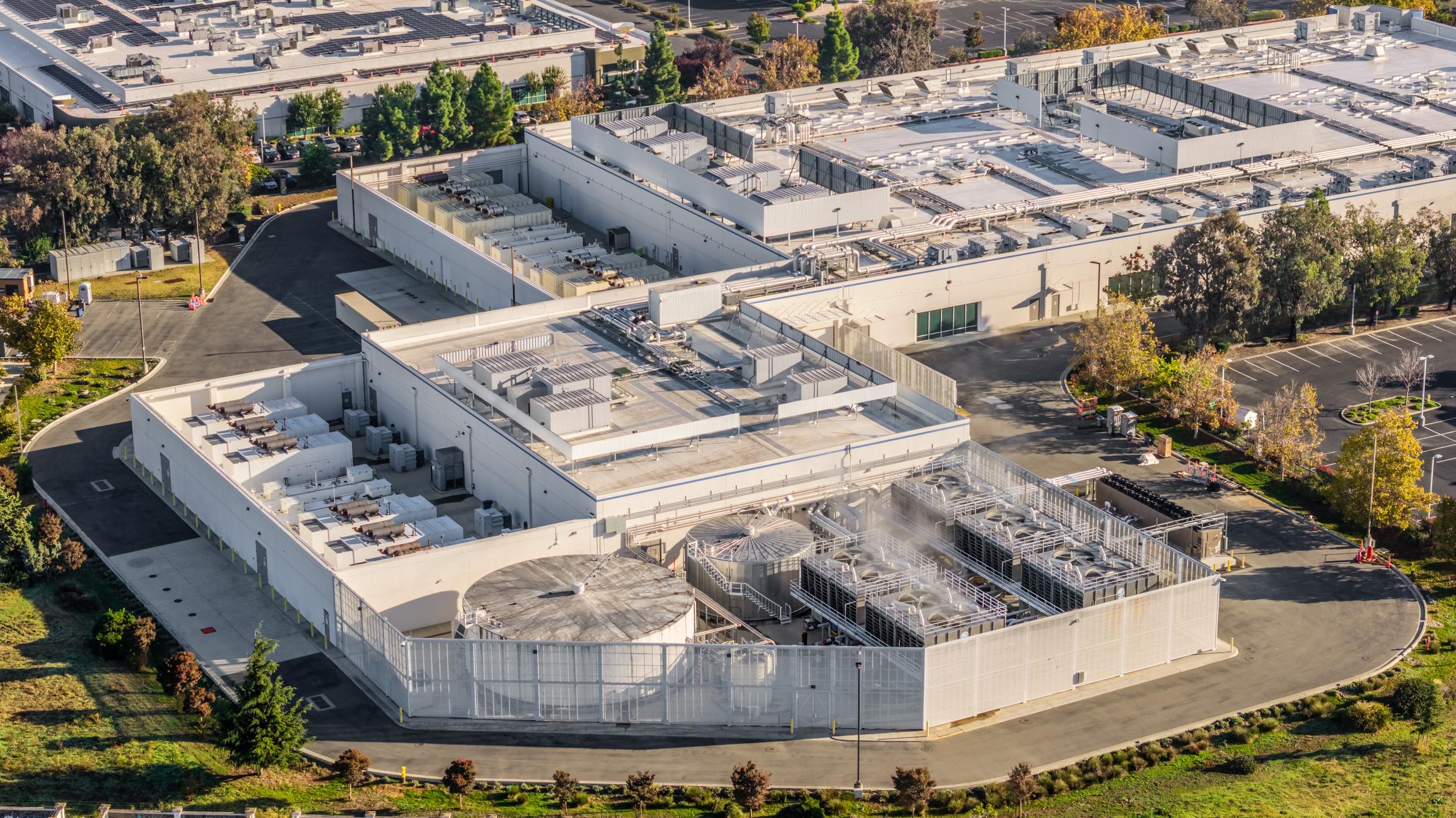
The core issue is not whether data centers provide valuable services. They do. Data centers support hospitals, research institutions, logistics networks, financial systems, schools, government agencies, communications networks, climate modeling, public records, and everyday digital life. The challenge is that the growth of computing infrastructure now carries environmental costs that must be measured honestly: electricity demand, cooling demand, water consumption, embodied materials, land conversion, grid expansion, diesel backup systems, and the industrial footprint of high-performance computing hardware.
Artificial intelligence intensifies this question. Training and operating large models require dense clusters of specialized accelerators, high-bandwidth networking, advanced cooling, power redundancy, and continuous operational support. AI does not exist only in software. It exists inside buildings connected to grids, water systems, supply chains, and local communities. Understanding the environmental cost of data centers is therefore essential for evaluating whether digital infrastructure can expand without undermining broader goals for climate stability, water security, ecological stewardship, and public resilience.
This article examines data centers as intelligent infrastructure systems. It argues that the environmental cost of data centers should be evaluated not only through narrow efficiency metrics, but through the full infrastructure stack: energy, water, cooling, materials, land, grid capacity, regional planning, governance, and the rebound effects of rapidly expanding digital demand.
The Physical Reality Behind the Cloud
The language of cloud computing can make digital systems seem immaterial. Files are “in the cloud.” Software is “hosted.” Artificial intelligence is “deployed.” Video is “streamed.” Search results appear instantly. Enterprise software runs through browser windows. Public records, logistics systems, health platforms, financial transactions, and machine-learning tools feel like services rather than infrastructures.
In reality, the cloud consists of large physical facilities that store, process, and transmit data. Modern data centers house servers, storage systems, networking hardware, power distribution equipment, backup systems, cooling infrastructure, fire suppression systems, security systems, fiber connections, and operational staff. Some facilities contain thousands of servers. Large hyperscale campuses may operate at the scale of major industrial complexes.
Every digital action has a physical pathway. A search query, streaming session, model inference, enterprise database request, hospital record lookup, or scientific simulation depends on electricity moving through wires, chips switching states, servers generating heat, cooling systems removing that heat, networks moving packets, and physical infrastructure staying online. Even when the user experiences the service as instantaneous and invisible, the underlying system is material.
This matters because infrastructure choices determine environmental consequences. A data center located on a stressed grid has different implications than one connected to abundant low-carbon power. A facility using evaporative cooling in a water-stressed region has different consequences than one using air cooling or closed-loop liquid cooling in a cooler climate. A facility that relies on diesel backup generators has different local impacts than one designed with cleaner backup systems, demand flexibility, or integrated storage. A data center supplied by short-lived hardware replacement cycles has different material consequences than one designed for reuse, repair, and responsible retirement.
The environmental cost of data centers begins with this physical reality. Digital infrastructure is not separate from the built environment. It is part of it.
Data Centers as Intelligent Infrastructure Systems
Data centers should be understood as intelligent infrastructure systems because they combine physical assets, digital workloads, energy flows, cooling systems, monitoring platforms, automation, predictive maintenance, security layers, and regional resource dependencies. They are not merely buildings full of computers. They are cyber-physical infrastructures designed to support continuous computation under strict reliability requirements.
Several infrastructure layers operate together:
- Compute layer: servers, CPUs, GPUs, accelerators, memory, storage, and high-speed interconnects.
- Power layer: utility connections, substations, switchgear, transformers, uninterruptible power supplies, batteries, backup generation, and power distribution units.
- Cooling layer: air cooling, liquid cooling, chillers, cooling towers, heat exchangers, pumps, fans, containment systems, and environmental controls.
- Network layer: fiber connections, switches, routers, data transmission equipment, and redundancy paths.
- Building layer: land, concrete, steel, fire suppression, physical security, access systems, and maintenance facilities.
- Operations layer: monitoring, automation, workload scheduling, energy management, maintenance, incident response, and cybersecurity.
- Governance layer: siting decisions, resource disclosure, energy procurement, water policy, permitting, community review, and environmental reporting.
When these layers are designed well, data centers can deliver reliable digital services with improved efficiency and reduced environmental burden. When they are designed narrowly around rapid capacity expansion, they can strain local grids, compete for water, increase land pressure, extend fossil-fuel infrastructure, and create opaque environmental costs.
The infrastructure lens changes the conversation. Data centers are not only assets owned by technology firms, cloud providers, colocation companies, or enterprise operators. They are part of regional energy systems, water systems, land-use systems, and public economies. Their growth affects utilities, ratepayers, communities, regulators, local governments, and ecosystems.
That makes the environmental cost of data centers a public issue, not only a corporate sustainability issue.
Energy Consumption and Data Center Expansion
Electricity consumption is one of the most significant environmental dimensions of data center operations. Servers, storage systems, networking hardware, cooling systems, pumps, fans, and power-conversion equipment require continuous electricity. Unlike many buildings, data centers operate around the clock. Their load profiles can be highly persistent, and large facilities can require power capacity comparable to major industrial sites.
The International Energy Agency estimated that global data center electricity consumption in 2022 was roughly 240–340 terawatt-hours, excluding cryptocurrency mining. That represented around 1–1.3 percent of global final electricity demand. More recent projections indicate that data-center electricity consumption could more than double by 2030, reaching around 945 terawatt-hours in the IEA base case, with artificial intelligence as the most important driver of growth.
These numbers matter because electricity demand is not environmentally neutral. The same data-center workload has different emissions consequences depending on when and where electricity is consumed. A facility supplied by low-carbon electricity has different climate impacts than one served by a fossil-heavy grid. A facility that increases peak load may require additional grid investment, generation capacity, or transmission expansion. A data center that signs renewable power contracts may still rely on grid electricity when renewable generation is unavailable unless procurement is matched temporally and regionally to consumption.
Electricity demand also creates regional planning challenges. In some areas, data center development is growing faster than transmission capacity, interconnection queues, utility planning cycles, or public review processes. This can create tension between economic development, grid reliability, household electricity rates, climate goals, and community priorities.
Energy efficiency remains important, but efficiency alone cannot answer the whole question. A more efficient data center can still increase total electricity demand if the volume of computing grows rapidly. This is the rebound problem of digital infrastructure: efficiency gains may reduce energy per computation while total computation expands even faster.
For that reason, data center sustainability requires both efficiency and demand governance. The relevant question is not only, “How efficient is each facility?” It is also, “How much computing demand is being created, where is it located, what power system supports it, and who bears the infrastructure cost?”
AI Compute and the New Infrastructure Demand
The expansion of artificial intelligence has intensified demand for data center capacity. AI workloads often require dense clusters of specialized hardware, including GPUs and other accelerators, high-bandwidth memory, advanced networking, and large-scale storage. Training large models can be extremely compute-intensive, while inference at scale can create persistent and growing operational demand as AI tools are integrated into search, productivity software, enterprise platforms, coding tools, scientific workflows, customer service, healthcare applications, and public-sector systems.
This changes the infrastructure profile of data centers. AI-optimized facilities may require higher rack densities, more advanced cooling, upgraded electrical systems, stronger network fabrics, and specialized operational practices. Traditional enterprise data centers and older facilities may not be designed for these thermal and power requirements, leading to retrofits or new construction.
AI also changes the geography of digital infrastructure. Developers may seek locations with abundant power, available land, favorable permitting, renewable electricity potential, tax incentives, fiber connectivity, and access to water or advanced cooling options. This can shift infrastructure pressure into regions that may not have planned for rapid industrial-scale load growth.
The environmental question is not limited to model training. In many public conversations, AI energy use is associated with training large models, but inference also matters. Once AI systems are deployed widely, millions or billions of daily interactions can create substantial recurring demand. The infrastructure footprint therefore depends on both frontier model development and the everyday normalization of AI across digital services.
AI compute also raises a prioritization question. Not all computation has equal social value. Medical research, climate modeling, accessibility tools, grid optimization, scientific discovery, and public-interest analytics differ from low-value automation, surveillance, speculative content generation, or wasteful digital consumption. Environmental governance of compute should therefore consider not only how efficiently computation is performed, but what computation is being scaled and why.
Data centers make this question material. The social value of computation must be weighed against energy, water, land, and supply-chain costs.
Cooling Systems and Water Consumption
Cooling is central to data center sustainability because servers generate substantial heat. That heat must be removed continuously to keep equipment within safe operating conditions. Cooling systems can consume significant electricity, and many designs also require water.
Traditional air-cooled facilities move large volumes of air across server racks. Chilled-water systems, evaporative cooling, cooling towers, economizers, and containment strategies can improve efficiency depending on climate and facility design. As rack densities rise, especially with AI workloads, liquid cooling is becoming more important. Liquid cooling can remove heat more efficiently than air in high-density environments, but it introduces its own engineering, operational, and water-management questions.
Water use depends on cooling technology, climate, facility design, workload density, and operational strategy. Evaporative cooling can reduce electricity use in some contexts but consume water through evaporation. Closed-loop systems may reduce water consumption but require different energy and capital tradeoffs. Facilities in cooler climates may use outside air or water-side economizers more effectively. Facilities in hot or arid regions may face greater tension between cooling efficiency and water stewardship.
This creates a central sustainability tradeoff: reducing electricity use may sometimes increase water use, while reducing water use may increase electricity use. The best design depends on local conditions. A cooling strategy that makes sense in a water-abundant, cool region may be inappropriate in a drought-prone basin. Data center sustainability must therefore be evaluated locally, not only globally.
Water also creates community and ecological questions. If a facility draws freshwater in a water-stressed region, the impact is not only technical. It may affect municipal planning, agricultural users, ecosystems, local residents, and future water security. Even when total regional water use appears small, local hydrology matters. Timing matters. Source matters. Basin stress matters.
For this reason, data center disclosure should include not only electricity metrics, but water metrics. A credible sustainability assessment should report water withdrawal, water consumption, cooling method, water source, discharge conditions, basin stress, seasonal sensitivity, and the relationship between cooling design and local water governance.
Grid Planning, Power Procurement, and Regional Stress
Data centers are increasingly important actors in regional electricity planning. Large facilities can require hundreds of megawatts of capacity, while data center campuses can create demand comparable to major industrial loads. This affects utilities, grid operators, transmission planners, regulators, communities, and ratepayers.
Grid impacts depend on several factors:
- the size and timing of the load;
- whether the facility increases peak demand;
- the carbon intensity of the local grid;
- the availability of transmission capacity;
- the structure of power purchase agreements;
- the relationship between renewable procurement and actual hourly consumption;
- whether backup systems rely on diesel, gas, batteries, fuel cells, or other technologies;
- who pays for grid upgrades required to serve the facility.
Power procurement is often presented through renewable-energy claims. A data center operator may purchase renewable electricity or renewable energy certificates. These mechanisms can support clean-energy deployment, but they do not automatically mean that the facility runs on carbon-free electricity every hour. A facility may claim annual renewable matching while drawing grid electricity during periods when fossil generation is still operating. More rigorous approaches require hourly matching, regional alignment, additional clean-energy capacity, storage, demand flexibility, and grid-aware workload scheduling.
Data centers can also create opportunities. Their steady loads may support investment in new generation and transmission. Flexible workloads could, in principle, shift some computing demand to times and places with cleaner electricity. Waste heat could be reused in district heating where feasible. Backup batteries could support grid stability if designed and governed appropriately. But these benefits are not automatic. They require planning, transparency, and regulatory alignment.
The public question is whether data center expansion strengthens or strains the energy transition. If new facilities accelerate clean power, improve grid flexibility, and pay fairly for infrastructure, they may support broader modernization. If they increase fossil generation, raise local energy costs, or outpace grid planning, they may undermine sustainability goals.
Electricity is not just an operating expense for data centers. It is a public infrastructure dependency.
Supply Chains and Industrial Inputs
The environmental footprint of data centers extends beyond on-site operations. Data centers depend on complex supply chains: semiconductors, memory, storage devices, networking equipment, power electronics, batteries, backup systems, steel, concrete, copper, rare materials, cooling hardware, electrical equipment, and construction materials.
AI infrastructure intensifies this issue because specialized accelerators and high-performance chips depend on advanced semiconductor manufacturing. Semiconductor fabrication is resource-intensive, requiring electricity, ultrapure water, chemicals, cleanrooms, specialized equipment, and global logistics. The environmental cost of AI compute therefore includes not only the electricity used during model training or inference, but also the embodied impacts of the hardware that makes those workloads possible.
Construction also matters. Large data center campuses require land, roads, substations, transmission connections, concrete foundations, steel structures, cooling equipment, and backup infrastructure. These embodied impacts may be smaller than operational electricity over the lifetime of a high-load facility, but they are still part of the full systems footprint.
Hardware replacement cycles are another concern. Servers and accelerators may be upgraded frequently as computing demand grows and chip performance improves. Short replacement cycles can increase electronic waste and embodied material demand unless reuse, refurbishment, recycling, and responsible procurement are built into lifecycle planning.
A full environmental assessment should therefore include:
- operational electricity use;
- cooling energy and water use;
- embodied carbon in construction materials;
- embodied impacts of servers, accelerators, and networking equipment;
- semiconductor manufacturing impacts;
- backup power systems and fuel supply;
- equipment replacement cycles;
- e-waste management and hardware reuse;
- land-use and ecosystem impacts.
The cloud is physical not only at the facility level. It is physical across the entire industrial chain that produces, powers, cools, maintains, and replaces computing infrastructure.
A Mathematical Lens: Power, Water, and Workload Efficiency
Data center sustainability is often discussed through metrics. Metrics can clarify tradeoffs, but they can also obscure system-level consequences if used narrowly. A mathematical lens helps distinguish facility efficiency from total environmental burden.
One common metric is power usage effectiveness, or PUE:
PUE = \frac{E_{total}}{E_{IT}}
\]
Interpretation: Power usage effectiveness compares total facility energy \(E_{total}\) to IT equipment energy \(E_{IT}\). A lower PUE generally indicates less overhead for cooling, power conversion, and other facility systems. However, PUE does not measure total energy demand, carbon intensity, water use, or whether the computing workload is socially valuable.
Water usage effectiveness, or WUE, can be represented as:
WUE = \frac{W_{site}}{E_{IT}}
\]
Interpretation: Water usage effectiveness compares site water use \(W_{site}\) to IT energy. It can help evaluate cooling-related water intensity, but it should be interpreted alongside local water stress, water source, seasonal conditions, and cooling design.
Carbon intensity can be estimated by combining electricity consumption with the emissions intensity of the electricity supply:
CO_2e = E_{grid} \cdot CI_{grid}
\]
Interpretation: Operational emissions depend on grid electricity consumption \(E_{grid}\) and the carbon intensity \(CI_{grid}\) of that electricity. The same workload can have different climate impacts depending on where and when it runs.
Workload efficiency can be expressed conceptually as useful computation per unit of energy:
\eta_{compute} = \frac{C_{useful}}{E_{IT}}
\]
Interpretation: Compute efficiency \( \eta_{compute} \) compares useful computational output \(C_{useful}\) to IT energy consumption. This is harder to measure than facility efficiency because “useful computation” depends on workload, application, performance target, and social value.
The system-level footprint combines scale and intensity:
Impact = Demand \times Intensity
\]
Interpretation: Even if intensity falls through efficiency improvements, total impact can rise if demand grows faster. This is why data center sustainability cannot rely on efficiency metrics alone.
These equations show why narrow metrics can mislead. A facility can have an excellent PUE while still consuming enormous electricity. A data center can reduce water use while increasing electricity demand. A company can purchase renewable energy certificates while still increasing local grid stress. A model can become more efficient per query while total AI usage expands dramatically.
Sustainability therefore requires a dashboard of metrics, not one number. The relevant questions include: how much electricity is used, when it is used, where it is used, how it is generated, how much water is consumed, what cooling strategy is used, what hardware is required, how often it is replaced, and what social purpose the computation serves.
Data Centers as Critical Infrastructure
Data centers are now best understood as critical infrastructure. Earlier industrial eras depended on railways, ports, power plants, water systems, roads, and telecommunications networks. The contemporary digital economy depends on computing infrastructure. Data centers support finance, healthcare, scientific research, logistics, communications, education, entertainment, government services, and emergency systems.
This criticality creates two linked responsibilities. First, data centers must be reliable. Outages can affect businesses, hospitals, public agencies, communications, and digital services. Second, data centers must be sustainable enough that their growth does not undermine the energy, water, and environmental systems on which society depends.
Critical infrastructure status also changes the governance question. If data centers are essential to public and economic life, then their siting, resource demand, and environmental impacts cannot be treated as purely private decisions. Public institutions have legitimate interests in grid planning, water allocation, land use, emergency preparedness, environmental disclosure, and community impacts.
Data centers also create resilience challenges. Facilities require backup power, redundant connections, physical security, cybersecurity, fire protection, thermal management, and disaster planning. Climate hazards such as heatwaves, floods, wildfires, drought, storms, and grid instability can threaten operations. At the same time, data centers themselves can intensify regional energy and water pressures if not planned carefully.
A resilience-oriented approach asks:
- Can the local grid serve the facility without undermining reliability or climate goals?
- Is water use compatible with basin-level water security?
- Are backup systems clean, safe, and transparent?
- Does facility siting account for climate hazards?
- Are local communities informed and meaningfully consulted?
- Are environmental claims independently verifiable?
- Who pays for infrastructure upgrades required by data center growth?
Data centers are critical infrastructure not only because digital services depend on them, but because their environmental demands now affect other critical systems.
Environmental Monitoring for Data Center Sustainability
Data center sustainability requires measurement. Without transparent monitoring, public claims about efficiency, renewable energy, water stewardship, and environmental performance remain difficult to evaluate.
A serious monitoring framework should include facility-level, regional, and lifecycle indicators. Facility-level metrics capture operational performance. Regional indicators capture grid and water impacts. Lifecycle indicators capture supply-chain and construction impacts.
| Monitoring domain | Example indicators | Why it matters |
|---|---|---|
| Electricity use | Total MWh, peak demand, hourly load profile, IT load, cooling load | Shows the scale, timing, and operational structure of energy demand |
| Carbon intensity | Hourly grid emissions, renewable matching, avoided emissions claims | Distinguishes annual procurement claims from real-time emissions exposure |
| Water use | Withdrawal, consumption, source, discharge, WUE, basin stress | Connects cooling choices to local hydrology and water governance |
| Cooling performance | PUE, cooling technology, temperature setpoints, liquid-cooling share, heat reuse | Identifies opportunities for efficiency and tradeoff management |
| Backup systems | Generator type, fuel use, emissions, battery capacity, testing frequency | Reveals local air-quality and resilience impacts |
| Hardware lifecycle | Server age, accelerator turnover, reuse, repair, recycling, e-waste flows | Captures embodied material and waste impacts |
| Community impacts | Water competition, grid-cost allocation, land use, noise, local emissions | Connects infrastructure performance to public accountability |
Monitoring should be transparent enough for public institutions, researchers, regulators, and communities to evaluate claims. Companies may report sustainability metrics voluntarily, but voluntary disclosure can be inconsistent. Public-interest governance may require standardized reporting, independent verification, and locally relevant indicators.
Data centers are themselves measurement infrastructures. They monitor temperature, load, airflow, humidity, power quality, equipment health, network traffic, and security continuously. The same operational sophistication should be extended to environmental accountability.
What cannot be measured cannot be governed. What is measured privately but not disclosed cannot be publicly trusted.
Governance, Transparency, and Public Accountability
The environmental cost of data centers is not only a technical problem. It is a governance problem. Decisions about data center siting, energy procurement, grid upgrades, water use, tax incentives, permitting, and environmental disclosure shape public outcomes. These decisions determine who benefits from digital infrastructure and who bears its costs.
Several governance challenges are especially important:
- Disclosure: communities and regulators need clear information about electricity demand, water use, backup systems, and environmental impacts.
- Grid cost allocation: utilities and regulators must decide who pays for transmission upgrades, substations, and generation capacity required by large loads.
- Water governance: permitting should account for local hydrology, drought risk, competing users, ecosystem needs, and long-term climate stress.
- Land use: large campuses affect land availability, local planning, transportation, noise, and regional development patterns.
- Tax incentives: public subsidies should be evaluated against jobs, resource demand, environmental costs, and opportunity costs.
- Renewable-energy claims: procurement should be transparent about additionality, location, and time matching.
- Community participation: affected residents should have meaningful opportunities to understand and contest infrastructure decisions.
Governance should also distinguish between public value and private scale. Data centers may support essential services, but not all workloads are equally valuable. A region may accept environmental burdens for medical research, public services, climate science, or critical communications more readily than for speculative or low-value computation. Public debate should not treat all digital demand as inevitable.
Policy frameworks may need to evolve around compute infrastructure in the same way earlier eras developed policy frameworks for railroads, electric utilities, telecommunications, water systems, and industrial facilities. Data centers now shape public resource systems. That makes their governance a matter of infrastructure policy.
Transparency is essential. Without it, communities may be asked to accept large energy and water demands without knowing the long-term consequences. Trust requires more than corporate claims. It requires comparable metrics, public review, enforceable standards, and accountability when impacts exceed promises.
The Sustainability Challenge
The sustainability challenge facing data centers is not simple. Digital infrastructure provides real benefits. It enables scientific research, communications, medical records, climate modeling, education, logistics, financial systems, remote work, accessibility tools, and many public services. At the same time, its environmental demands are growing rapidly, especially as artificial intelligence increases the appetite for compute.
This creates a dual imperative: society needs reliable digital infrastructure, but that infrastructure must be designed within climate, water, material, and community limits. Sustainability cannot mean simply making each facility more efficient while total demand expands without governance. It must mean aligning digital growth with broader ecological and public-interest constraints.
The key sustainability challenges include:
- reducing electricity intensity while also managing total electricity demand;
- matching data center growth with clean, additional, reliable electricity;
- designing cooling systems that reflect local water conditions;
- reducing embodied impacts in construction and hardware supply chains;
- extending hardware lifetimes where possible;
- recovering waste heat where feasible;
- minimizing diesel backup dependence and local air pollution;
- preventing data center development from increasing energy costs for residents;
- ensuring public transparency around resource use;
- evaluating whether computational growth serves meaningful public and economic value.
No single solution will resolve these tensions. Renewable energy matters, but so do grid constraints. Efficient cooling matters, but so does water stress. Better chips matter, but so do rebound effects. Carbon accounting matters, but so do local environmental impacts. Data center sustainability requires systems thinking.
The most important shift is conceptual. Data centers should not be evaluated as isolated facilities. They should be evaluated as nodes in interconnected systems: grids, water basins, supply chains, urban regions, climate policy, digital economies, and public institutions.
Design Principles for Lower-Impact Digital Infrastructure
Lower-impact data center infrastructure requires both engineering improvement and governance discipline. The strongest approaches combine facility design, workload management, procurement reform, environmental monitoring, and public accountability.
| Design principle | Infrastructure practice | Governance question |
|---|---|---|
| Match workloads to energy conditions | Shift flexible computing to times and regions with cleaner or less constrained electricity | Are operators reporting hourly energy and emissions impacts? |
| Design cooling for local hydrology | Use cooling strategies appropriate to climate, water stress, and workload density | Is water use compatible with basin-level resilience? |
| Improve facility efficiency | Optimize airflow, containment, liquid cooling, power conversion, and thermal management | Do efficiency gains reduce total impact or enable unchecked demand growth? |
| Reduce embodied impacts | Extend hardware life, reuse servers, recycle materials, and reduce construction emissions | Are lifecycle impacts included in reporting? |
| Integrate with clean power | Support additional renewable generation, storage, grid upgrades, and hourly matching | Do procurement claims reflect real grid decarbonization? |
| Design for resilience | Protect against heatwaves, floods, wildfire, grid instability, and water scarcity | Are climate hazards included in siting and continuity plans? |
| Strengthen public transparency | Report energy, water, emissions, backup systems, and community impacts | Can communities verify environmental claims? |
These principles show that sustainability is not a single engineering target. It is a design philosophy. A data center can be efficient but poorly sited. It can be powered by renewable contracts but worsen grid congestion. It can use advanced cooling but increase water stress. It can support digital services while externalizing infrastructure costs to local communities.
Lower-impact digital infrastructure therefore requires integrated planning. Facility designers, utilities, regulators, local governments, environmental agencies, communities, and technology firms all have roles. Data centers are too important to be governed only through private procurement and marketing claims.
The future of computing infrastructure should be judged not only by speed, scale, and uptime, but by whether its growth is compatible with the public systems that sustain it.
GitHub Repository
The companion repository for this article can support reproducible infrastructure analysis, synthetic data center energy and water datasets, PUE and WUE calculations, workload growth scenarios, grid-impact estimates, cooling tradeoff models, and environmental monitoring documentation templates.
Complete Code Repository
This repository provides a companion technical workspace for analyzing the environmental cost of data centers, including synthetic energy, water, cooling, and workload data; reproducible Python, R, SQL, and systems-code examples; and infrastructure metrics for evaluating AI and cloud computing impacts.
The Cloud Is Physical Infrastructure
The environmental cost of data centers reveals a basic truth of the digital age: the cloud is physical infrastructure. It is made of chips, servers, cooling systems, electrical systems, backup power, water flows, buildings, land, fiber networks, supply chains, and human labor. The more societies depend on digital systems, the more important it becomes to govern that physical reality honestly.
Artificial intelligence makes the issue more urgent, but the underlying question is broader than AI. Cloud software, streaming, enterprise computing, scientific research, public services, and digital platforms all depend on data centers. As these systems expand, their energy, water, and material demands become central to infrastructure policy.
The challenge is not to reject digital infrastructure. The challenge is to design it responsibly. Data centers can support important public and economic functions, but they must be aligned with clean energy, water stewardship, lifecycle accountability, community transparency, and climate resilience. Efficiency metrics matter, but they are not enough. Total demand, local impacts, supply chains, and public value matter as well.
The cloud may feel intangible to the user, but its environmental footprint is increasingly visible to grids, water systems, landscapes, and communities. A sustainable digital future will require treating data centers not as invisible back-end facilities, but as major infrastructure systems whose costs and benefits must be governed in the open.
Related articles
- Intelligent Infrastructure Systems
- Artificial Intelligence Systems
- Data Systems & Analytics
- Environmental Monitoring Systems
- Risk & Resilience
Further reading
- International Energy Agency. Data Centres and Data Transmission Networks.
- International Energy Agency. Energy and AI.
- OECD. Measuring the Environmental Impacts of Artificial Intelligence Compute and Applications.
- OECD.AI. The Hidden Costs of AI: Unpacking its Energy and Water Footprint.
- U.S. Department of Energy. DOE releases report evaluating increased electricity demand from data centers.
- U.S. Department of Energy. Data Centers and Servers.
- U.S. Department of Energy. More Efficient Cooling for Data Centers.
References
- International Energy Agency. Data Centres and Data Transmission Networks.
- International Energy Agency. Energy and AI.
- International Energy Agency. Energy Demand from AI.
- OECD. Measuring the Environmental Impacts of Artificial Intelligence Compute and Applications.
- OECD.AI. The Hidden Costs of AI: Unpacking its Energy and Water Footprint.
- U.S. Department of Energy. DOE Releases New Report Evaluating Increase in Electricity Demand from Data Centers.
- U.S. Department of Energy. Data Centers and Servers.
- U.S. Department of Energy. DOE Announces $40 Million for More Efficient Cooling for Data Centers.