Author name: Tariq Ahmad

Arduino projects supporting sustainable development and the UN Sustainable Development Goals including water monitoring, renewable energy, and environmental sensing

Arduino Projects for Sustainable Development: 10 SDG-Aligned Builds

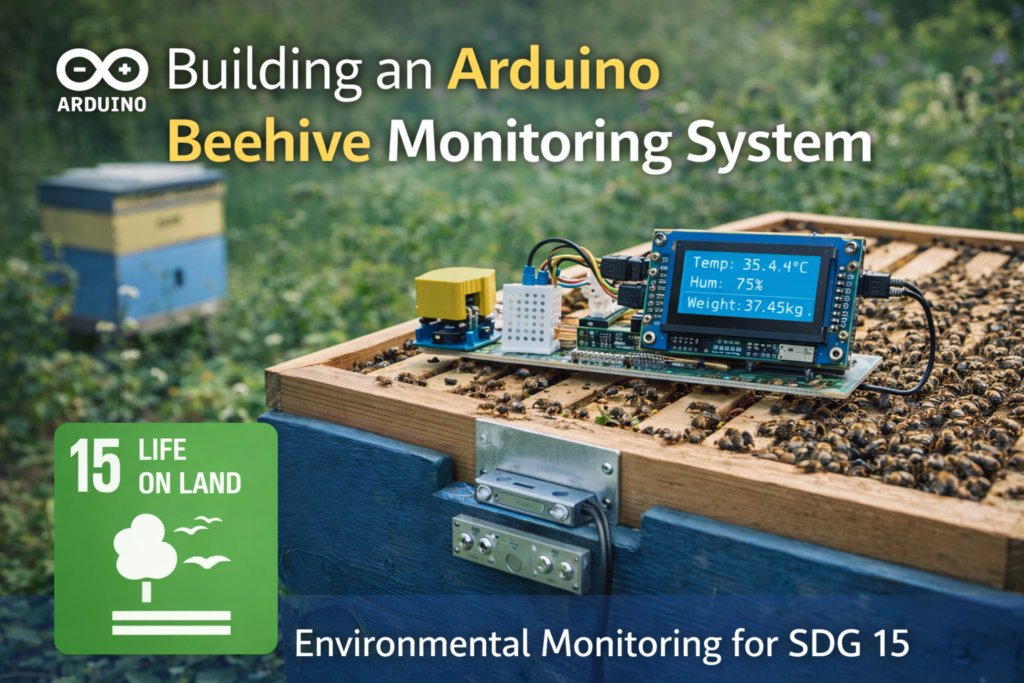
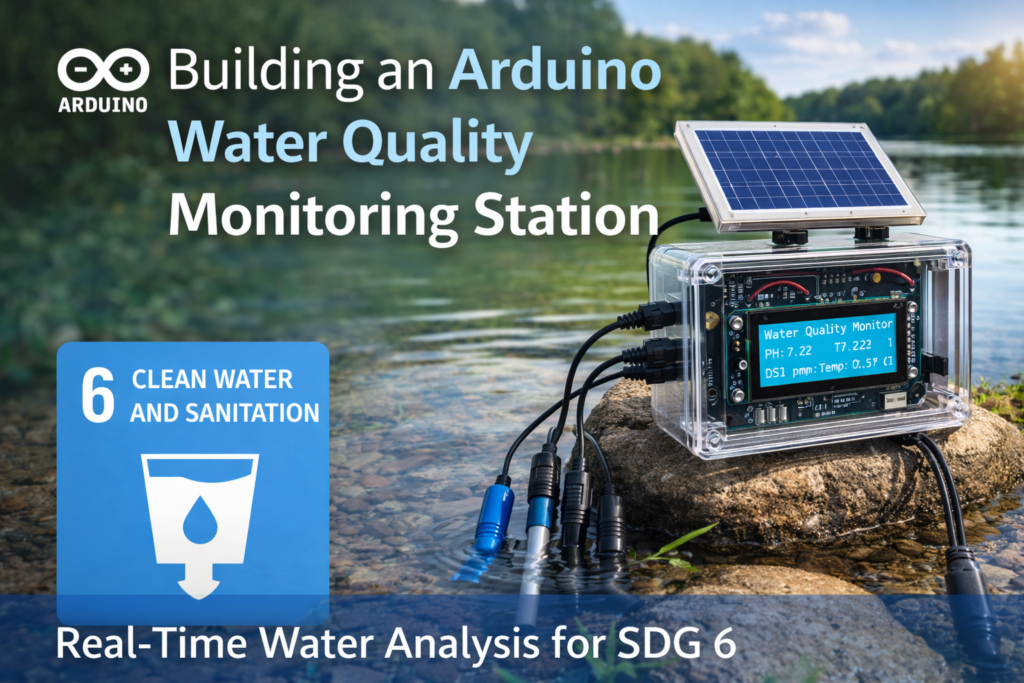
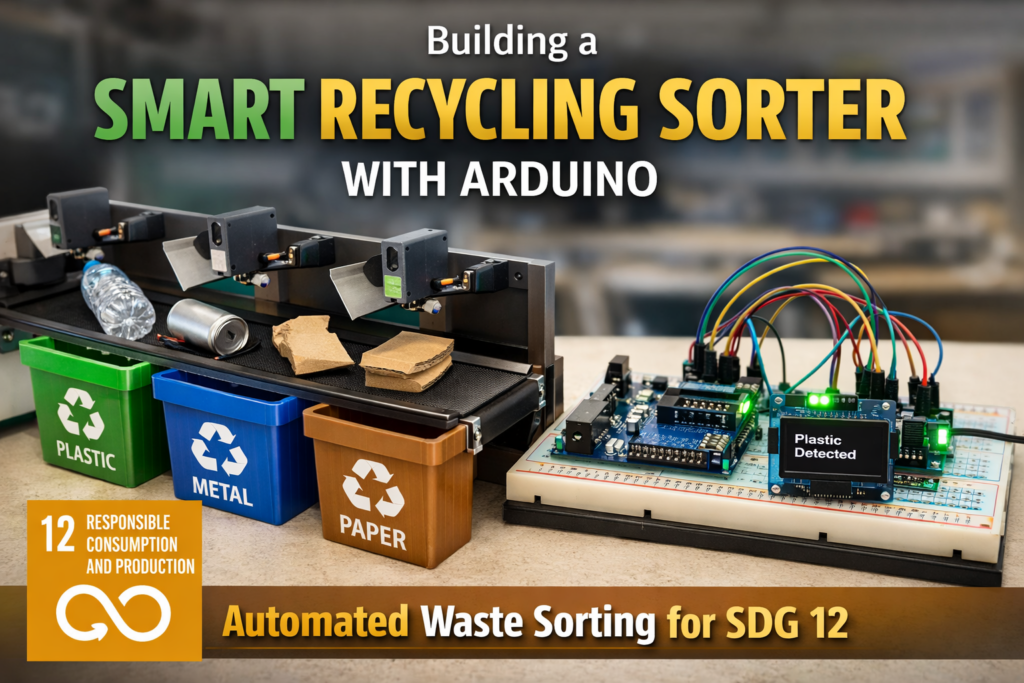
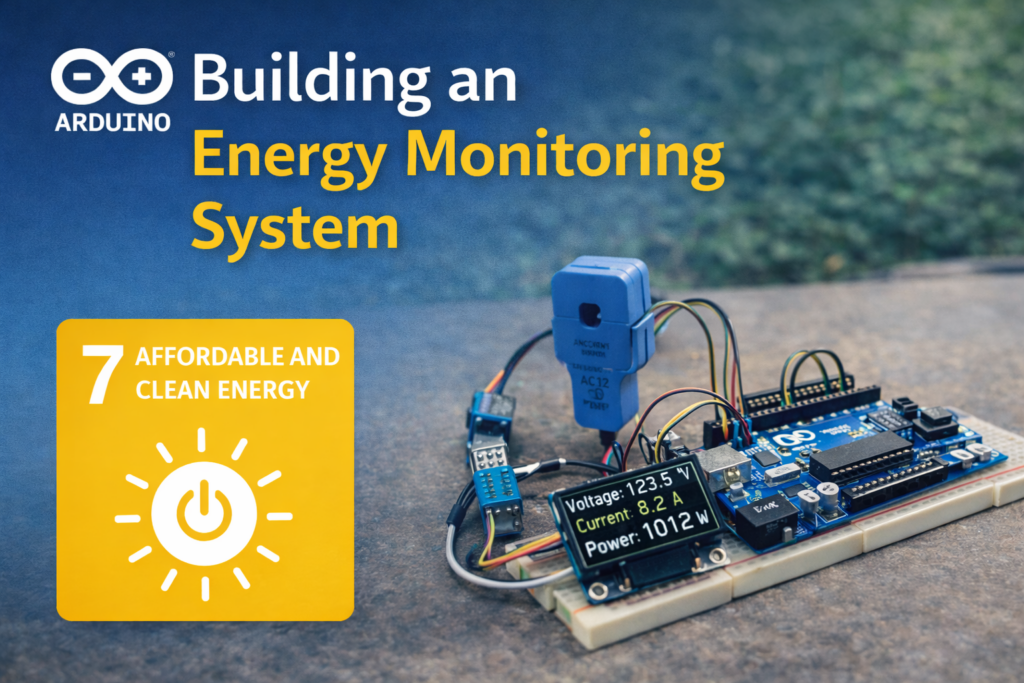
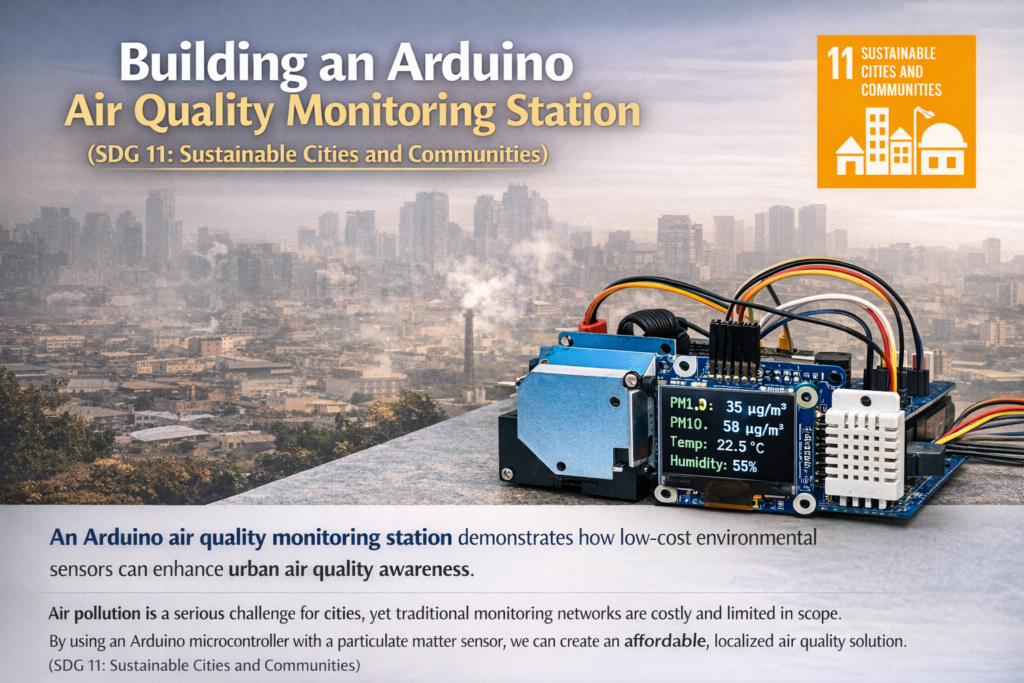
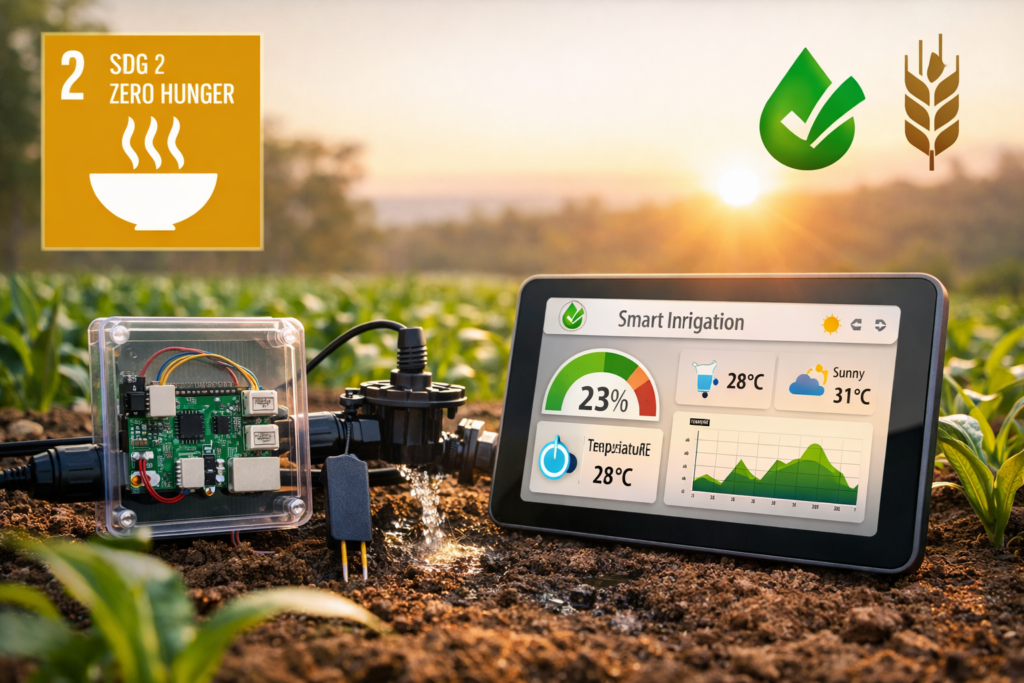
Arduino projects for sustainable development show how low-cost embedded systems can support environmental monitoring, renewable energy experimentation, water stewardship, circular resource use, and biodiversity protection aligned with the United Nations Sustainable Development Goals. This pillar serves as the central index for ten hands-on projects, including smart irrigation, solar charging, air quality monitoring, compost sensing, litter-collecting robotics, energy monitoring, recycling sorting, wildlife tracking, water quality sensing, and beehive health monitoring. Each project connects practical Arduino prototyping with broader sustainability themes such as freshwater risk, climate change, intelligent infrastructure, environmental monitoring systems, circular material flows, and biosphere integrity. Together, the series shows how sustainable development depends not only on policy frameworks, but also on measurable systems that observe environmental conditions and support better decisions.

Technical embedded systems workspace featuring a PYNQ-Z2 FPGA board, STM32 microcontroller board, breadboarded sensors, logic analyzer traces, Linux terminal windows, TinyML inference visualizations, and PYNQ Python code displayed across multiple monitors.

Energy-Efficient Embedded Systems for Sustainable Digital Infrastructure

Energy-Efficient Embedded Systems for Sustainable Digital Infrastructure examines how sustainable digital infrastructure depends on mapping workloads across ultra-low-power MCU endpoints, Linux-capable edge nodes, and adaptive acceleration platforms rather than treating all embedded compute as the same design problem. The article argues that embedded efficiency is best understood as a systems-engineering question about duty-cycling, memory discipline, local inference, power-state control, and lifecycle servicing, since billions of deployed devices turn small per-device inefficiencies into infrastructure-scale energy, maintenance, and material burdens. It explores Cortex-M event-driven design, TinyML on constrained endpoints, Linux CPUFreq and scheduler-aware edge tuning, and PYNQ-based adaptive acceleration, showing that durable digital infrastructure depends on choosing the lightest adequate compute tier and minimizing both active-time energy and long-run maintenance overhead.

Environmental cost of data centers powering artificial intelligence infrastructure

Environmental Cost of Data Centers: Energy, Water, and AI Infrastructure

Data centers make the cloud physically visible: servers, cooling systems, electrical substations, backup power, water systems, land, buildings, and global supply chains. As artificial intelligence and cloud computing expand, these facilities are becoming major infrastructure systems with significant environmental costs. This article examines data centers through the lens of energy demand, water consumption, cooling design, grid expansion, AI compute growth, hardware supply chains, and public accountability. It argues that digital infrastructure cannot be evaluated only by speed, scale, or efficiency metrics. Its sustainability depends on where power comes from, how water is used, how cooling systems are designed, how hardware is produced and retired, and whether communities can understand and govern the impacts of the infrastructure behind the cloud.

Destroyed urban landscape illustrating the long-term impact of attrition warfare in armed conflict.

War of Attrition Game Theory: Strategic Endurance in Prolonged Conflict

War of Attrition Game Theory explains why conflicts can persist long after their costs appear to outweigh the value of victory. In prolonged contests, strategy turns on endurance, uncertainty, signaling, resource depletion, and the credibility of each actor’s willingness to suffer longer than its opponent. This article examines the war-of-attrition model from evolutionary game theory and applies it to military conflict, bargaining, commitment problems, sunk costs, asymmetric warfare, logistics, institutions, and humanitarian limits. It shows how wars become systemic stress tests for societies, exposing the resilience or fragility of states, alliances, economies, public legitimacy, and social cohesion. Rather than treating attrition as simple persistence, the article frames it as a dynamic interaction among power, time, information, suffering, and political order.

Smart agriculture scene with an FPGA board in the foreground connected visually to field sensors, irrigation infrastructure, solar-powered monitoring stations, and a greenhouse, representing reconfigurable edge hardware for environmental monitoring.

FPGA Environmental Monitoring: Reconfigurable Edge Hardware for Smart Agriculture

FPGA Environmental Monitoring: Reconfigurable Edge Hardware for Smart Agriculture examines how agricultural monitoring becomes more responsive when sensing, filtering, feature extraction, and control logic move into reconfigurable edge hardware rather than remaining entirely dependent on sequential software and cloud backhaul. The article argues that FPGA-based monitoring is most valuable where multiple noisy sensor streams, strict latency requirements, constrained communications, and local actuation needs converge, such as in irrigation control, greenhouse climate systems, pump and pipeline monitoring, and water infrastructure management. It develops the topic through workload structure, platform comparison, sensor front ends, streaming hardware pipelines, fixed-point and timing-closure considerations, Linux and PYNQ gateway integration, lightweight inference, and field verification strategy. Its central claim is that reconfigurable edge hardware can make smart agriculture more deterministic, resilient, and operationally useful under real deployment conditions.

Aerial view of a flooded community showing the need for wide-area IoT networks and resilient communication systems for disaster recovery

Wide-Area IoT Protocols: Resilient Communication Infrastructure for Disaster Recovery in Remote Regions

Wide-area IoT protocols are becoming critical to disaster recovery in remote regions where floods, storms, landslides, earthquakes, or infrastructure failures can sever roads, power, cellular service, and conventional communications at once. This article examines how LoRaWAN, NB-IoT, LTE-M, and satellite IoT can preserve basic situational awareness through low-power, long-range transmission of small but essential messages from sensors, clinics, shelters, bridges, roads, supply depots, and isolated communities. It explains the technical foundations of LPWAN systems, compares protocol strengths and limitations, and shows how disaster IoT depends on coverage, energy budgets, delivery probability, latency, governance, maintenance, and local trust. Rather than treating connectivity as a purely technical problem, the article frames wide-area IoT as resilience infrastructure: a layered system for early warning, accountable recovery, data sovereignty, and equitable disaster response.

Agricultural drone flying over a crop field as part of a precision farming system

Precision Farming: IoT Sensors, Agricultural Drones, and Data-Driven Agriculture

Precision farming transforms agriculture into an environmental monitoring system. By combining IoT sensors, drones, remote sensing, geospatial analytics, and decision-support tools, farmers can observe soil moisture, crop stress, nutrient variability, irrigation needs, and field conditions with far greater precision than fixed schedules or broad averages allow. This article examines precision farming as more than a farm-technology upgrade: it is a new data infrastructure for food systems, water stewardship, soil health, and climate adaptation. It argues that sensors and drones are most valuable when they strengthen farmer judgment, reduce waste, improve input efficiency, and support sustainable decision-making. But precision agriculture also raises questions of data ownership, platform dependency, equity, interoperability, and governance. Its future depends on whether digital agriculture is designed for resilience, transparency, and ecological responsibility.

Vintage car driving past Che Guevara mural in Havana Cuba illustrating the long-term impact of economic sanctions on Cuban society and infrastructure

Why Economic Sanctions Are Bad Policy

Economic sanctions are often framed as a civilized alternative to war, but their real-world effects are far more complex. This article examines sanctions as instruments of economic statecraft that can punish aggression, corruption, human-rights violations, and breaches of international law while also weakening institutions, harming civilians, disrupting development, and destabilizing critical infrastructure. It explores the institutional impact of sanctions, the ethical problem of collective punishment, their long-term consequences for sustainable development, and their uneven record of policy effectiveness. Through a systems lens, mathematical framing, and Python and R modeling snippets, the article shows how sanctions reshape financial networks, public services, trade systems, humanitarian access, and political incentives. Rather than treating sanctions as clean or bloodless tools, it argues for more precise, accountable, humane, and evidence-based forms of economic statecraft.

War-damaged buildings in Syria showing destroyed civilian infrastructure during armed conflict.

Does International Law Still Matter? The Erosion of Global Legal Norms

International law remains one of the central legal frameworks for limiting force, protecting civilians, and holding power accountable in global politics. Emerging from the devastation of world war, decolonization, genocide, and mass displacement, the modern international legal system is built around the UN Charter, Geneva Conventions, International Court of Justice, International Criminal Court, human-rights law, humanitarian law, and customary legal norms. This article examines whether international law still meaningfully constrains state behavior in an era of armed conflict, selective enforcement, sovereignty disputes, civilian harm, geopolitical rivalry, and institutional distrust. It explores the foundations of international law, the protection of civilians, international criminal accountability, enforcement gaps, legitimacy, marginalized peoples, and the tension between law and power. Rather than treating international law as either powerless or perfect, it frames it as a fragile but necessary guardrail against impunity.

Scroll to Top