Inflation, Energy Shocks, and Supply Constraints
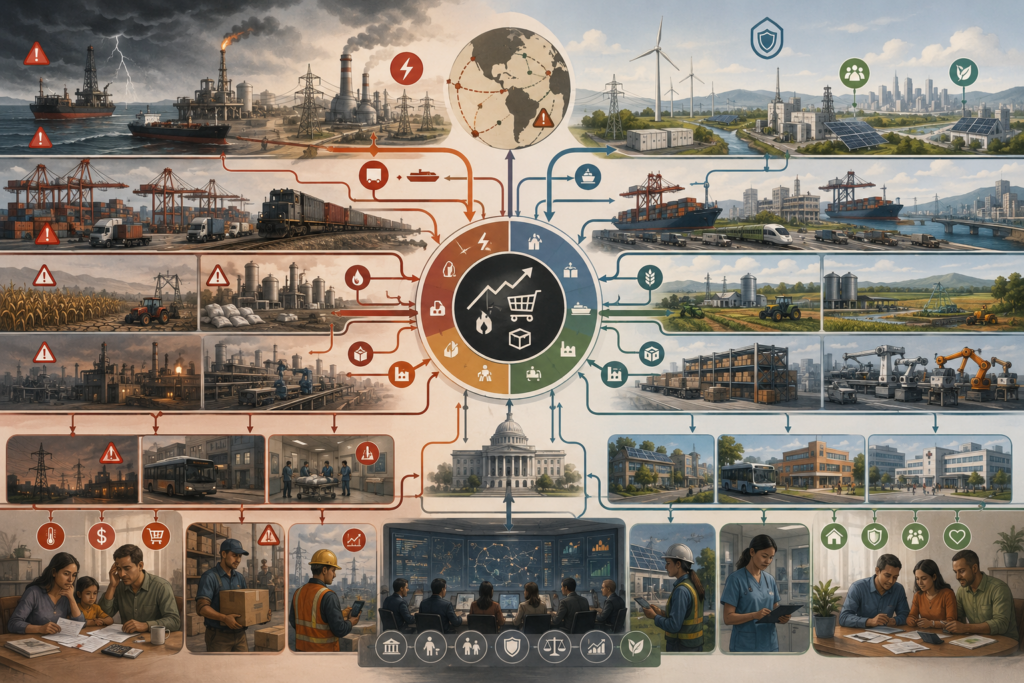
Inflation, energy shocks, and supply constraints are central to economic analysis because price instability often reflects more than excess demand or loose money alone. This article examines how inflation can emerge from rising input costs, fragile logistics, concentrated supply, energy dependence, exchange-rate exposure, and unresolved distributional conflict over who absorbs real loss when scarcity intensifies. It explores energy as a system-wide input, traces how supply bottlenecks and fuel shocks spread through production chains and household budgets, and shows why inflation management cannot be reduced to interest-rate policy when the underlying problem is infrastructural, geopolitical, or ecological. Within sustainable systems, the deeper issue is not only whether prices are rising, but whether the economy is organized in ways that convert inevitable shocks into manageable adjustment or into recurring monetary, social, and political strain.