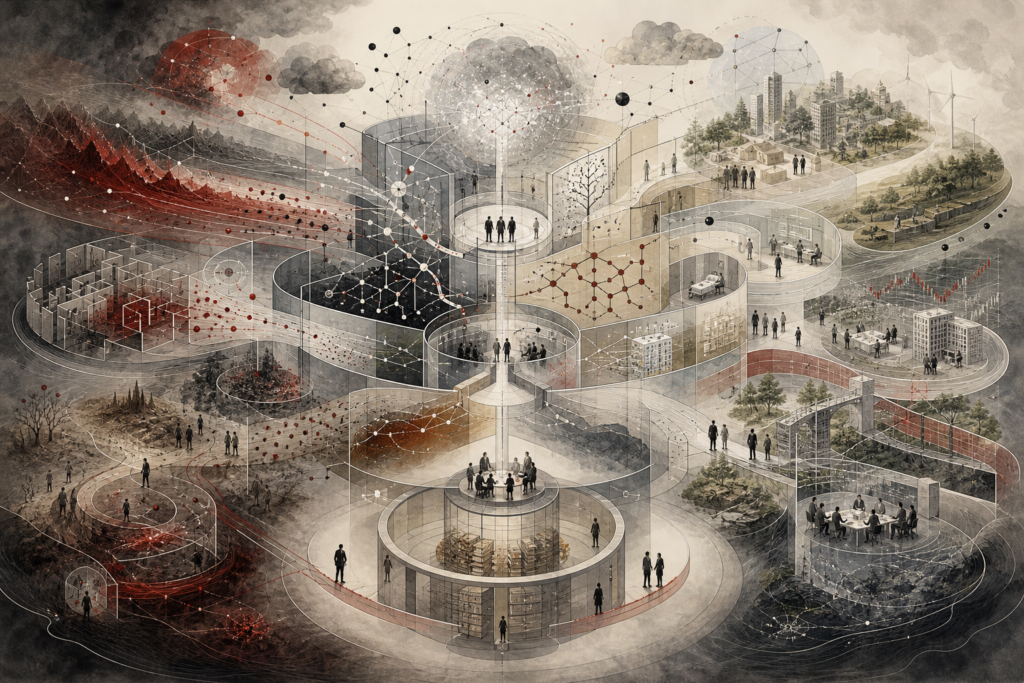
Economic Systems Modeling: Understanding Markets as Complex Systems
Economic systems modeling examines how markets, institutions, finance, policy, technology, and human decision-making interact through feedback-rich dynamics rather than as isolated variables or static equilibria. Instead of assuming that economic systems naturally settle into stable balance, systems-based approaches analyze how growth, recession, inequality, financial instability, and structural change emerge from recursive interactions among households, firms, governments, and financial networks over time. This article explains why economic systems require modeling, outlines major approaches such as system dynamics, agent-based models, network models, stock–flow consistent models, and complexity economics, and shows how these methods help researchers analyze macroeconomic cycles, contagion, sustainability transitions, and policy scenarios. In practice, economic systems modeling matters because it treats the economy as an evolving adaptive system shaped by accumulation, delay, interdependence, and institutional change rather than as a purely static market-clearing mechanism.