Consumer Choice, Household Welfare, and Everyday Economic Life
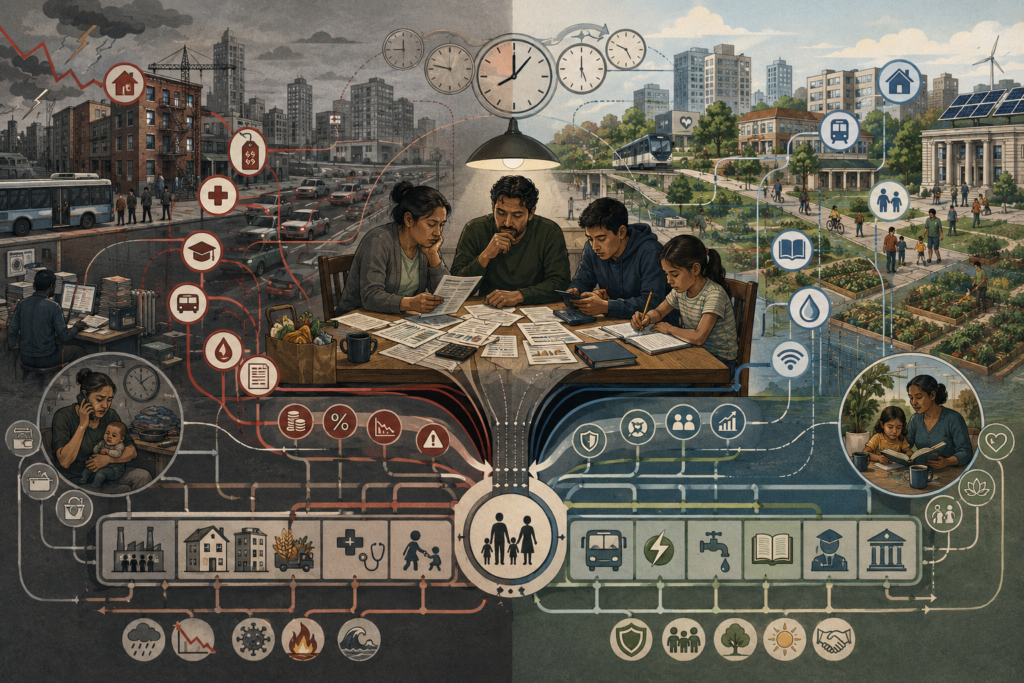
Consumer choice is often presented as individual preference, but household welfare reveals a deeper systems problem: how everyday life is provisioned under conditions of income, prices, debt, care, time scarcity, public goods, and unequal access. This article examines how households allocate limited resources across rent, food, transport, utilities, health care, education, debt service, savings, and caregiving while navigating constraints shaped by wages, assets, public provision, infrastructure, and market power. It moves beyond narrow utility and budget-constraint models to explore essentials burdens, time poverty, household fragility, public goods, debt, effective access, and welfare measurement. By connecting consumer choice with Python, R, Stata, SQL, and Julia workflows, the article frames household welfare as a lived test of whether economic systems support dignity, resilience, and durable everyday life.